REVIEW · CAPE TOWN
Cape Town City: Full Day Tour
Book on GetYourGuide →Operated by The Great South Adventure Club · Bookable on GetYourGuide
Cape Town stacks history and views in one day. This full-day tour strings together big sights on the Cape Town Peninsula, starting with the skyline-smashing Table Mountain and then dropping you into the colorful stories of Bo-Kaap.
I love how the day makes geography and culture easy to connect: a mountain ecosystem you can read like a map, then a neighborhood where 18th-century Cape Malay roots show up in the streets, mosques, and everyday life. I’d also flag a quick consideration: the Table Mountain cable car and the Castle of Good Hope entrance aren’t included, so you’ll want to budget for those add-ons.
A big plus is the human factor. You’re not just handed a route; you have a specialized guide who can shape the pacing as you go. In one example, guide Mr. Sajjad Goshi picked up guests from their accommodation and kept the walking stops full of context, including Table Mountain and a drive through Signal Hill—great if you want the day to double as planning time for what to do next.
The only real drawback is that you’ll be on the move. With multiple walk-and-look stops (plus the possibility of cable car timing depending on conditions), it’s not a sit-down-everywhere kind of day. If you’re sensitive to long periods outdoors, you’ll want to bring your patience and good walking shoes.
In This Review
- Key highlights worth your attention
- How this Cape Town day tour is built: mountain views, Cape Malay streets, and forts
- Table Mountain: the 1,086-metre icon (and the extra cable car cost)
- Bo-Kaap: colorful homes, mosques, and 18th-century Cape Malay roots
- Company’s Gardens and Iziko Slave Lodge: green breaks and a harder lens on the past
- Castle of Good Hope: a 1666–1679 fortress that still teaches
- Greenmarket Square: where the day turns into shopping and street life
- Your guide and the open-plan advantage: how to get more out of a full day
- Price and value: what $109 covers, and what costs extra
- Who this tour suits best (and who should think twice)
- Should you book the Cape Town City Full Day Tour?
- FAQ
- What’s included in the Cape Town City Full Day Tour?
- Are tickets or entrance fees included?
- Does the tour include hotel pickup and drop-off?
- What languages is the tour offered in?
- Can I reserve without paying right away?
- What happens if I need to cancel?
Key highlights worth your attention
- Table Mountain’s flat-top peak at 1,086 metres and its mix of endemic plants and animals you might spot
- Bo-Kaap’s Cape Malay roots plus bright homes, mosques, local shops, and places to eat
- Company’s Gardens as a Dutch East India refreshment station turned calm public park with major landmarks
- Iziko Slave Lodge for a direct slavery-era perspective alongside the other historical stops
- Castle of Good Hope’s pentagonal fortress design from the 1600s, now a museum
- Greenmarket Square’s trading-market energy, with crafts and live performances
How this Cape Town day tour is built: mountain views, Cape Malay streets, and forts

This is the kind of day that works because it gives you contrast. You start with the big, dramatic stuff—Table Mountain—then you transition into neighborhoods and institutions where Cape Town’s past becomes more personal. Bo-Kaap shows how communities took root. Company’s Gardens gives you a breather in the middle of the sightseeing. Then you shift back into fortress-and-memory mode at Iziko Slave Lodge and the Castle of Good Hope.
If you’re visiting Cape Town for the first time, I like the way this tour helps you “place” the city. The mountain isn’t just a view; it’s a system. The gardens aren’t just greenery; they connect to how Europeans ran operations through the Dutch East India Company. And the forts aren’t just old walls; they’re built to function—administration, defense, and punishment—so you feel the weight behind the architecture.
You also get practical comfort. The tour includes an air-conditioned vehicle and hotel pickup/drop-off, which matters in a city where your best plans can fall apart if you’re hauling bags and waiting around for transport.
You can also read our reviews of more city tours in Cape Town



Table Mountain: the 1,086-metre icon (and the extra cable car cost)
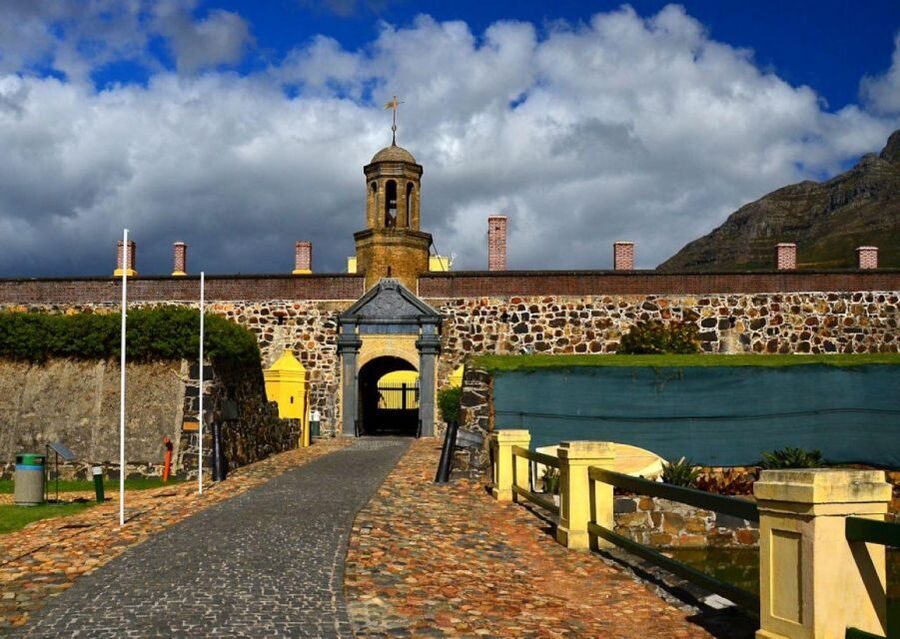
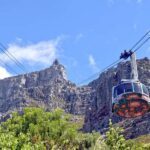
Table Mountain is the headline for a reason. It’s the most photographed landmark in South Africa, and it’s not just a mountain-shaped photo prop. The flat top reaches 1,086 metres above sea level, and because it sits so close to both the city and the sea, it can look even more imposing than the numbers suggest.
Here’s what I find useful for you to know before you go: it’s also a living hotspot. The mountain is home to about 2,200 plant species, including many endemic varieties, plus around 1,470 floral species. If you’re the type who likes to notice details, the mountain rewards you with more than a skyline.
Wildlife is part of the story too. You may spot caracals, rock hyraxes, and chacma baboons. Real talk: sightings aren’t guaranteed, but having that chance makes your lookout time more interesting than a plain viewpoint stop.
Budget note: the Table Mountain Cable Car ticket costs R420 per adult and is not included. That’s the main extra cost that can catch people off guard, so I’d check your plan early—especially if you’re doing the day tour as part of a short Cape Town stay.
Bo-Kaap: colorful homes, mosques, and 18th-century Cape Malay roots
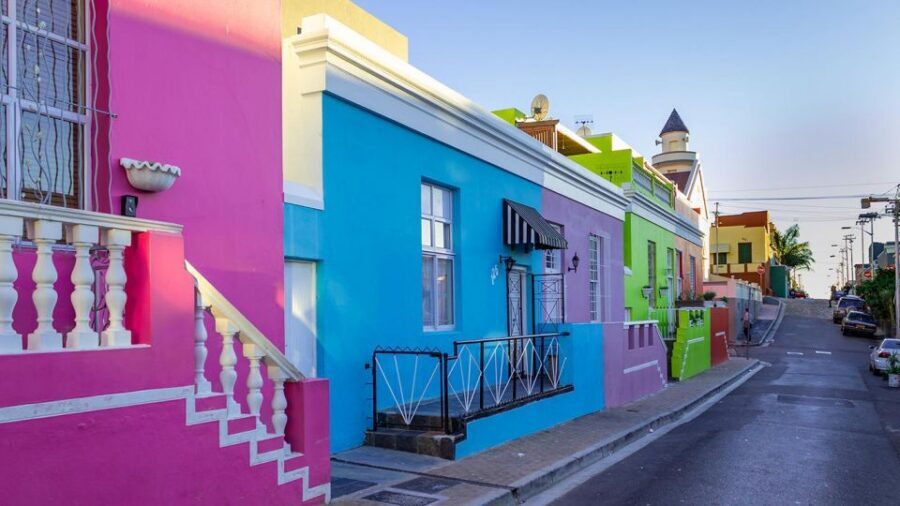
After the mountain, Bo-Kaap hits you with texture. It’s a neighborhood on the slopes of Signal Hill and was originally established by members of the Cape Malay community brought to Cape Town during the 18th century. That history matters, because it shows why the area feels like more than a set of photogenic streets.
The hallmark here is the look: brightly colored homes and beautiful mosques. But there’s also the everyday stuff. Bo-Kaap is known for its strong community feel, and you’ll find restaurants, cafes, and shops where you can try traditional cuisine and browse handmade crafts from local artisans.
What I like about including Bo-Kaap on a first full day is that it’s both walking-friendly and explanation-friendly. You can explore on foot, and a guided approach helps you understand what you’re seeing instead of only collecting photos. If you’re choosing what to focus on, I’d spend time at a couple of street corners rather than rushing the whole area. Let the colors and details sink in.
Company’s Gardens and Iziko Slave Lodge: green breaks and a harder lens on the past
Company’s Gardens is a classic reset button. This historic garden dates back to the 17th century and started as a refreshment station linked to the Dutch East India Company. Today it functions as a public park, so you can actually pause and breathe between more intense stops.
It’s also not just lawns. You’ll find lush lawns, flower beds, and majestic trees. And if you’re the type who likes seeing what’s around you, the gardens act like a small hub of Cape Town culture with landmarks including the South African Museum, the Planetarium, and the Delville Wood Memorial Garden.
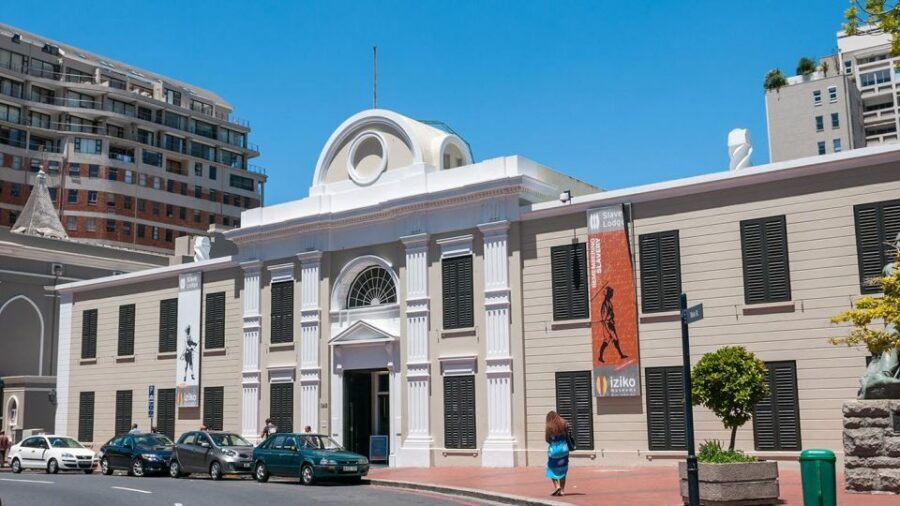
Then the tour shifts to Iziko Slave Lodge. Even without going deep into numbers and dates, the name alone tells you this stop is about slavery and its footprint in the city. Pairing this with Company’s Gardens is powerful because it shows how the same city can hold both leisure space and painful machinery of the past. It’s not comfortable sightseeing, but it helps you understand Cape Town as a place with layered meanings.
Castle of Good Hope: a 1666–1679 fortress that still teaches
The Castle of Good Hope is where the tour’s history becomes physical. It’s one of the oldest surviving colonial buildings in the country, and it was constructed between 1666 and 1679 as a replenishment station for ships of the Dutch East India Company. Over time, it served as a fortress, an administrative center, and a prison during the colonial period.
Pay attention to the shape when you arrive: it’s designed in a pentagonal layout with distinctive bastions at each corner. That matters because it tells you the fortifications were planned for defense, not aesthetics. The construction is stone, blending Dutch and Cape architectural styles, which gives you a visual clue that this wasn’t a copy-paste system—it adapted to local realities.
Today, the castle works as a museum, so you’re not only seeing walls. You’re using the space to learn.
Budget note: the Castle of Good Hope entrance fee is R50 per adult, and it’s not included.
A few more Cape Town tours and experiences worth a look




Greenmarket Square: where the day turns into shopping and street life
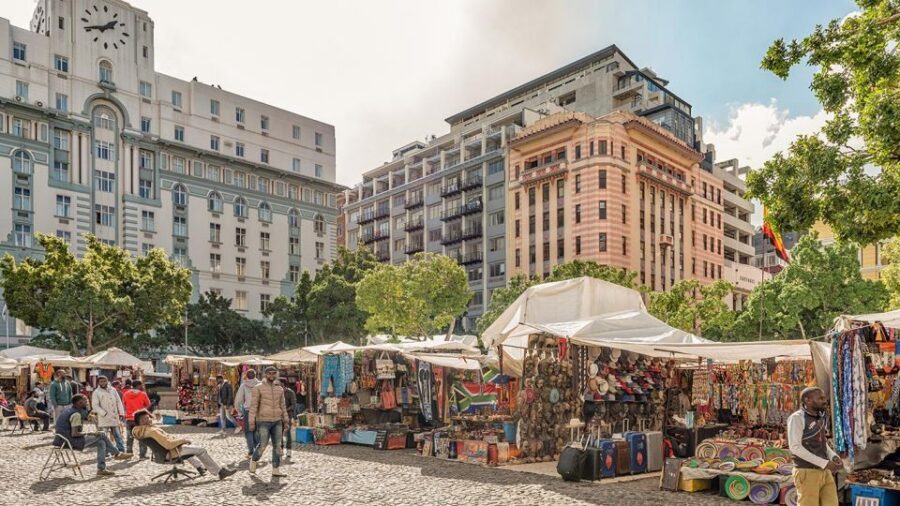
Right after the fort museum and historical stops, Greenmarket Square feels like a smart landing. It dates back to the 17th century and originally functioned as a trading hub for fresh vegetables sourced from Company’s Garden.
Now it’s famous for its flea market. Stalls can include local crafts, artwork, clothing, and souvenirs, and the square also hosts live performances. I like this stop because it lets you reset your brain from “museum mode” into “real Cape Town life.” It also gives you a practical chance to pick up small items without hunting for a store later.
If you’re shopping, keep it simple: set a small budget, take your time for a couple of comparisons, and use the rest of the day to enjoy the atmosphere.
Your guide and the open-plan advantage: how to get more out of a full day
The guide role here isn’t just narration. You’re in an open offer style, meaning you can express wishes and have that influence how the day unfolds. In an example, guests used the tour as an overview before planning their next day via sightseeing buses. That’s a smart use of a full-day format: you get context fast, then decide what deserves a second pass later.
You can also use the guide to make trade-offs. For instance, if the goal is views, you can focus energy where the best lookouts happen (including areas like Signal Hill, which may come up depending on the day). If the goal is history, you can spend more time on the sites built to explain Cape Town’s systems—like Slave Lodge and the Castle of Good Hope.
Also, you’re not stuck with one language barrier. The tour runs in English and Hindi, which is a real comfort if you’re traveling with someone who prefers one of those languages.
Price and value: what $109 covers, and what costs extra
The tour price is $109 per person, which is the main thing you’ll compare when deciding if it fits your budget. The included value is solid for a full-day loop: air-conditioned vehicle plus hotel pickup and drop-off plus a specialized guide. Those three items matter because they reduce planning stress and make it easier to get from one major area to the next without logistical headaches.
Just don’t miss the add-ons:
- Table Mountain Cable Car ticket: R420 per adult (not included)
- Castle of Good Hope entrance fee: R50 per adult (not included)
My take on value: if you want the convenience of a guided day that hits multiple top-tier landmarks with city context, $109 can be a fair deal—especially when transport and guiding are included. If you’re trying to keep costs ultra-tight and you already know you won’t use the cable car, you may want to price out your exact options before you commit.
Who this tour suits best (and who should think twice)
This tour is best for you if:
- It’s your first time in Cape Town and you want an orientation-style day that connects place to story
- You like a mix of big sights (Table Mountain) and human-scale neighborhoods (Bo-Kaap)
- You want history that’s not only on walls, but also in institutions and neighborhoods (Iziko Slave Lodge and the Castle)
- You appreciate having a guide who can adapt when plans shift
Think twice if:
- You dislike walking and being outdoors for long stretches
- You’re on a shoestring budget and the two extra tickets/fees would feel like a strain
- You want a slower, more relaxed day that’s mostly optional stops
Should you book the Cape Town City Full Day Tour?
I’d book it if your goal is efficient, guided Cape Town—one day that helps you understand what to explore next. The combination of Table Mountain, Bo-Kaap, Company’s Gardens, Iziko Slave Lodge, and the Castle of Good Hope is a strong sweep, and the open offer approach means you can steer the day toward what you care about.
Before you book, do two quick checks: first, confirm you’re comfortable paying extra for the R420 cable car and R50 castle entry. Second, plan for an active day—good shoes, water, and patience for timing.
If that fits your style, this is a practical way to get your bearings fast and see Cape Town’s most important contrasts in a single outing.
FAQ
What’s included in the Cape Town City Full Day Tour?
The tour includes an air-conditioned vehicle, pick up and drop off at your hotel, and a specialized guide.
Are tickets or entrance fees included?
No. The Table Mountain Cable Car ticket (R420 per adult) and the Castle of Good Hope entrance fee (R50 per adult) are not included.
Does the tour include hotel pickup and drop-off?
Yes, pickup and drop-off at your hotel are included.
What languages is the tour offered in?
The tour is offered in English and Hindi.
Can I reserve without paying right away?
Yes. It lists a reserve & pay later option where you can book and pay nothing today.
What happens if I need to cancel?
It states you can cancel up to 24 hours in advance for a full refund. It also notes that if the activity is canceled or delayed due to bad weather or a provider’s decision, refunds or rescheduling are not offered.