
REVIEW · CAPE TOWN
Cape Town: Introductory City Tour by Foot and Minibus
Book on GetYourGuide →Operated by Mile By Mile Tours · Bookable on GetYourGuide
A quick first taste of Cape Town’s highlights. This small-group tour is a smart way to get oriented fast and see the sea, streets, gardens, and history in just four hours. I especially like the mix of classic viewpoints plus a walk through Bo-Kaap’s brightly colored streets and the chance to understand the diamond story beyond postcards. One thing to consider: you’ll be in and out of the minibus a lot, and the route includes optional museum and Castle stops that may add extra entrance fees.
What makes this tour feel practical is the pacing. You start at the Victoria & Alfred Waterfront, drive along the Atlantic-facing suburbs of Clifton and Camps Bay, then shift to older Cape Town neighborhoods on foot. My only caution is simple: plan for comfortable shoes and accept that meals and drink breaks are not part of the package.
In This Review
- Quick Key Points to Know Before You Go
- Getting Oriented With Waterfront Views and Atlantic Suburbs
- Bo-Kaap and the Cape Malay Quarter: Colorful Streets on Foot
- Company Gardens and the South African Museum Stop (Optional)
- Castle of Good Hope: A Fort Built for Dutch-Era Maritime Power
- The Diamond Factory Visit and Why Cape Town’s Gem Story Matters
- Price and Logistics: How $47 Works for a 4-Hour Mix
- Who This Tour Suits Best (and Who Might Prefer Different Plans)
- Should You Book This Cape Town Foot and Minibus Tour?
- FAQ
- How long is the Cape Town introductory city tour?
- What is the price per person?
- Is hotel pickup included, and where does it pick up from?
- How big is the group?
- Is the tour guide available in English?
- Which major stops are included, and what is optional?
- Are meals, museum entrances, and cable car fees included?
- Do I need to bring anything specific, and are pets allowed?
Quick Key Points to Know Before You Go
- Hotel pickup in central Cape Town and nearby areas saves you time and hassle.
- Small group size (10 participants) keeps the guide’s attention focused.
- Bo-Kaap and the Cape Malay Quarter gives you colorful streets and cobblestone walking time.
- Company Gardens is a calm central break with a 17th-century purpose.
- Castle of Good Hope (optional) connects the city to Dutch-era maritime strategy.
- Diamond factory visit turns a global story into a hands-on style viewing experience.
Getting Oriented With Waterfront Views and Atlantic Suburbs

If Cape Town feels big and scattered when you first arrive, this tour helps you make sense of it quickly. You begin at the Victoria & Alfred Waterfront, South Africa’s most visited destination, drawing millions of people each year. Even if you skip extra spending there, it’s a useful starting point because you can orient yourself visually right away.
The Waterfront stop is also a good “reset” moment. It’s described as having a huge range of restaurants, shops, activities, and free entertainment, so you’re not locked into one narrow attraction. Think of it as a lively reference point: you’ll later see how the city changes from the coast into the older central neighborhoods.
Then you switch to the drive-and-look portion of the day. The minibus route takes you past the residential areas of Clifton and Camps Bay along the Atlantic seaboard. The point here isn’t to hop out for a long hike—it’s to connect Cape Town’s reputation for dramatic coastal scenery with real neighborhoods you can actually see from the road.
You can also read our reviews of more city tours in Cape Town



Bo-Kaap and the Cape Malay Quarter: Colorful Streets on Foot

After the coastal views, you go to Bo-Kaap, formerly known as the Malay Quarter. This is where the tour slows down in a satisfying way: instead of just seeing Cape Town from a window, you get a chance to experience the look and feel of the area up close.
Bo-Kaap is famous for its brightly colored homes and romantic cobblestoned streets. That combination matters because it shapes how you remember the place. You’re not just collecting views—you’re walking through a neighborhood identity.
There’s also a museum stop built into the Bo-Kaap time. You’ll be taken to a museum connected to the area, dating back to the 1760s and described as the oldest house in the neighborhood still in its original form. It highlights the cultural contribution of early Muslim settlers, so the colorful streets aren’t just a photo opportunity—they tie into who lived here and why the community took shape.
Practical note: the cobblestones are part of the charm, but they also mean you’ll want shoes that don’t make your feet complain by hour two.
Company Gardens and the South African Museum Stop (Optional)

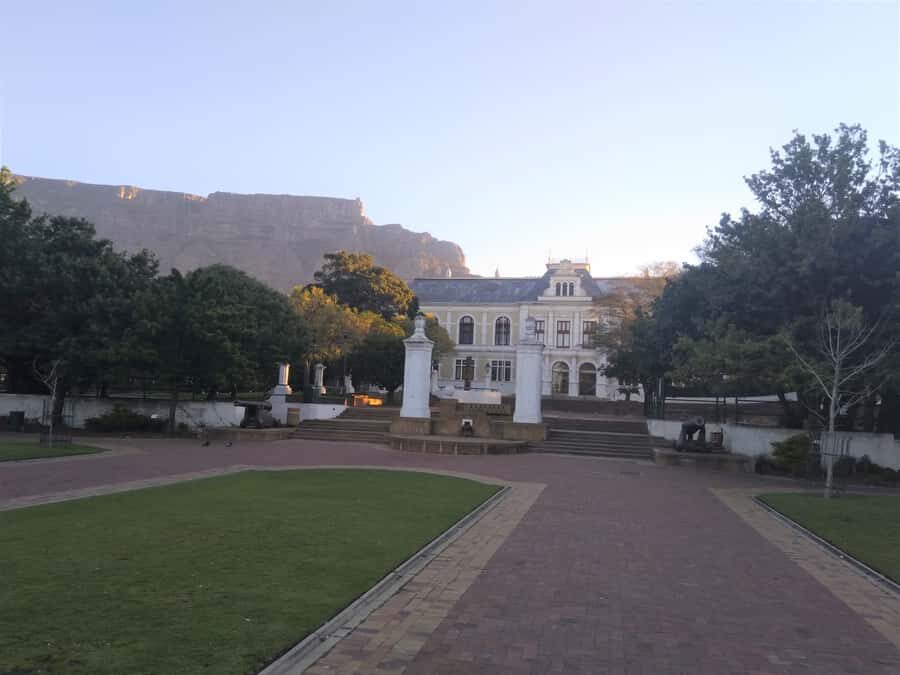
Next comes central Cape Town, and the tour makes a smart choice by heading to Company Gardens. These gardens were created in the 17th century with an everyday purpose: to produce fresh produce and help refurnish European ships passing through the Cape. That’s one of those details that makes a park feel more than scenic.
A lot of people visit gardens and think of them as a break from the city. Here, you get a sense of how the city worked when it was deeply tied to sea travel and provisioning. In other words, the gardens are a central pause that also carries practical meaning.
After walking around for a bit, there’s a quick visit option to the South African Museum. The tour data describes it as optional, and it also notes that museum entrance isn’t included. So you’ll likely have limited time there, enough for a taste rather than a full museum day.
The value of this stop for you is pacing. You’re moving from neighborhoods and streets into a calmer, greener central space, then you get a quick museum connection without the day turning into an all-day ticket line.
Castle of Good Hope: A Fort Built for Dutch-Era Maritime Power

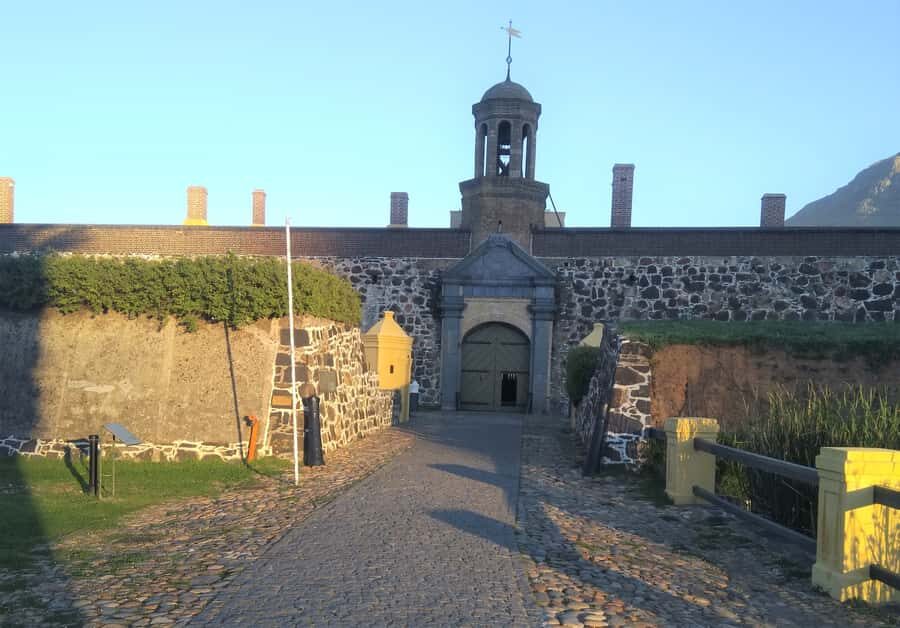
One of the most historically grounded parts of the tour is the drive past the Castle of Good Hope, which is the oldest surviving building in South Africa. The tour also provides specific build details: it was built between 1666 and 1679 and replaced an earlier small clay and timber fort from 1652, tied to Commander Jan van Riebeeck and the Dutch East India Company.
That background helps you understand what you’re seeing. Even if you’re not a history super-nerd, it gives you a clear reason the Cape developed the way it did—maritime operations, supply points, and control of a key sea route. Cape Town’s drama isn’t only in views. It’s also in strategy.
The Castle stop is listed as optional, and museum or site entrances are not included. So if you’re the type who likes to add one “serious” site to balance the colorful street scenes, it’s worth considering. If you’d rather keep the pace lighter, the drive-by element still gives you the reference point.
The Diamond Factory Visit and Why Cape Town’s Gem Story Matters
The tour culminates with a short visit to a diamond factory. This is a very practical ending choice because it takes you from places and people into an industry story you can actually visualize.
You’ll learn about the history of the South African diamond rush and where it began. Then you’ll see the transformation of rough diamonds into finished pieces described as creations of fire and light. The tour also notes life-size replicas on display of the world’s most famous diamonds.
Why this stop is good value for you, especially on a short tour: it answers the question behind all the jewelry shopping. Instead of only seeing polished stones, you understand the pipeline and the scale of the industry. It also gives you a different kind of learning—less about walking time, more about visuals and interpretation.
If you’re worried this might feel like a sales pitch, keep the bigger goal in mind: the tour is giving context. You’re there to connect a global legend to the local origin story.






Price and Logistics: How $47 Works for a 4-Hour Mix
At $47 per person for about four hours, this tour is priced as a compact “highlights tour” with real variety. You’re getting hotel pickup, a live English-speaking guide, sightseeing by minibus, a walk component in Bo-Kaap, and a diamond factory visit.
Value-wise, pickup matters more than it sounds. You’re told you’ll be picked up from your hotel in central Cape Town and nearby areas like Sea Point, Camps Bay, Bantry Bay, Gardens, Oranjezicht, Vredehoek, and Woodstock. That reduces the stress of figuring out transport on arrival day.
It’s also a small group experience, limited to 10 participants. That small size is why this kind of tour can feel more personal. You’re not stuck listening to a guide lecture while the group shuffles in big numbers.
What isn’t included is equally important. Meals and drinks are not part of the tour, and table mountain cable car fees are not included. Entrance to museums is also not included, even though you may have optional museum time at the stops. So budget for small add-ons if you choose the optional elements.
Timing is another quiet factor. Four hours is enough to see multiple zones of Cape Town, but it’s not enough for slow wandering. If you like to linger, this tour is best as a first pass—then you can return later under your own steam.
Who This Tour Suits Best (and Who Might Prefer Different Plans)
This tour is a strong fit if you want an efficient introduction without turning the day into a checklist. I like it for first-time Cape Town visits because it connects the city’s coastal identity with its older streets and central heritage sites in one loop.
You’ll also enjoy it if you like guided context. The tour isn’t just photos from a vehicle. The plan includes stops where you learn why places matter—like the provisioning purpose behind Company Gardens and the Dutch-era strategy tied to the Castle of Good Hope.
It may not be ideal if you prefer long, independent time in just one area. The tour is designed around a set schedule, with optional stops rather than full museum sessions. If your main goal is deep museum time, you might want a different format.
Also, it’s not set up for everyone’s comfort needs. The tour requires comfortable shoes, and the route includes cobblestoned streets in Bo-Kaap. If you hate uneven ground, you’ll want to take that seriously.
Finally, note the rule: pets are not allowed.
Should You Book This Cape Town Foot and Minibus Tour?
I’d book it if you want a smart, guided sampler that helps you understand Cape Town in a few hours. The combination of Waterfront orientation, coastal neighborhood drives past Clifton and Camps Bay, a walk in Bo-Kaap, and at least one optional history-focused stop (Castle, museum) makes it more balanced than a pure sightseeing drive.
It’s especially worth booking if you value convenience—hotel pickup, small group size, and a live English guide keep the day simple. You also get a less common ending point: the diamond factory visit, which turns a global story into something you can see and understand.
I’d hesitate only if you know you want long, unstructured time in museums or if the optional sites are essential and you don’t want to deal with extra entrance costs. As a first introduction to Cape Town, though, this tour hits a practical sweet spot.
FAQ
How long is the Cape Town introductory city tour?
The tour duration is 4 hours.
What is the price per person?
The price is listed as $47 per person.
Is hotel pickup included, and where does it pick up from?
Yes, pickup is included from central Cape Town and surrounding areas, including Sea Point, Camps Bay, Bantry Bay, Gardens, Oranjezicht, Vredehoek, and Woodstock.
How big is the group?
The tour is described as a small group limited to 10 participants.
Is the tour guide available in English?
Yes, the live tour guide speaks English.
Which major stops are included, and what is optional?
Included highlights include the Victoria & Alfred Waterfront drive/pick-up start, the Bo-Kaap/Cape Malay Quarter visit, walking in Company Gardens, and a diamond factory visit. The Castle of Good Hope stop is optional, and the South African Museum visit is also optional.
Are meals, museum entrances, and cable car fees included?
No. Meals and drinks are not included. Entrance to museums is not included, and table mountain cable car fee is also not included.
Do I need to bring anything specific, and are pets allowed?
Bring comfortable shoes. Pets are not allowed.
If you want, tell me your travel style (more photos vs. more walking vs. more museums), and I’ll suggest whether to lean into the optional Castle and museum stops.