REVIEW · CAPE TOWN
Cape Town: Stand-Up Paddle Board Rental with Basic Training
Book on GetYourGuide →Operated by City Pass Cape Town · Bookable on GetYourGuide
Glide over Cape Town canal water. It’s a fast intro to stand-up paddleboarding with a pro guiding your first strokes near the V&A Waterfront. You’re not just renting gear. You’re getting a short lesson, then using that new skill to cruise the canals for a sightseeing view most people never get.
I love two things most: the basic training from an English-speaking instructor, and the fact that your time is focused on an actual canal ride, not a long wait or awkward shuffle. At $19 per person for an hour on the board, it feels like a practical way to try SUP without committing to a bigger tour.
One consideration: this activity only makes sense if you’re comfortable in the water. It’s not suitable for non-swimmers or people with back problems, and you’ll want to plan for sun and splashes with the right gear.
In This Review
- Key things to know before you paddle
- Where you start: Battery Park by the V&A Waterfront canals
- The 1-hour plan: basic SUP training that actually helps
- Cruising Cape Town’s canals: sightseeing from your own paddle pace
- How hard is it: the total-body workout you’ll feel
- What to bring for a smooth session (and skip the mistakes)
- Price and value: what $19 really buys you
- Who this SUP rental suits best (and who should skip it)
- The small-group factor: better safety, better learning, better photos
- Timing: arrive early so training doesn’t get rushed
- Should you book this Cape Town SUP rental?
- FAQ
- Where is the meeting point for the SUP rental?
- How long is the SUP board rental?
- Do I get SUP training or instruction?
- What language is the instructor?
- How big is the group?
- How much does it cost?
- What should I bring?
- What type of participants is this not suitable for?
- Is transportation included?
- What’s the cancellation option?
Key things to know before you paddle
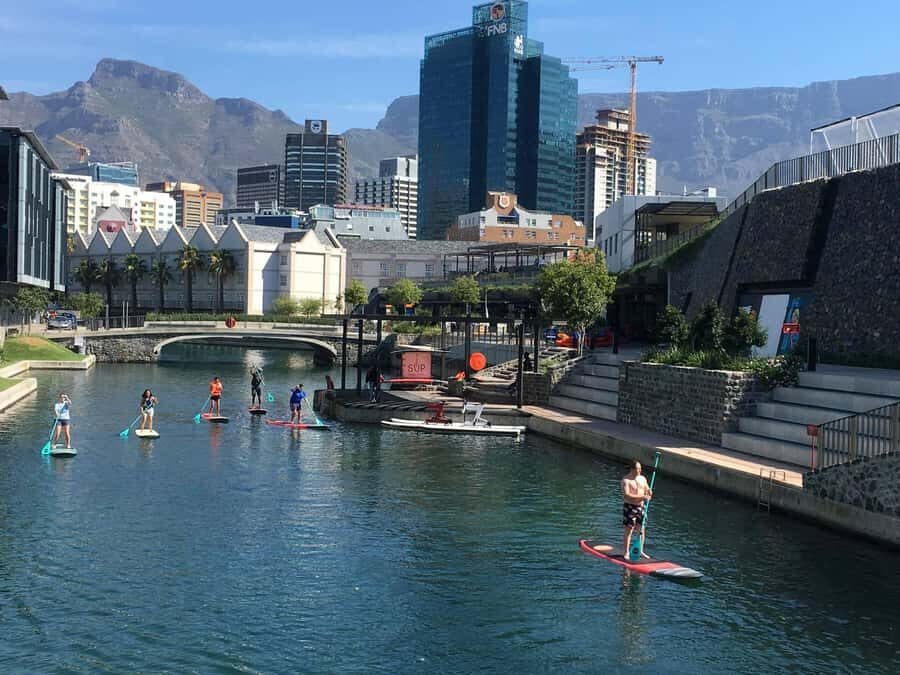
- Battery Park start point: right near the V&A Waterfront, opposite the canal from the Ferrari Garage.
- One hour on the water: training plus cruising, built into a short, easy schedule.
- Small group feel: limited to 10 participants, so you’re not lost in a crowd.
- English instruction: you can follow cues clearly as you learn the basics.
- Fitness + fun: it’s a total body workout, with reviews calling out serious calorie burn.
- Safety-focused service: staff help you feel safe, and they even take photos for you.
Where you start: Battery Park by the V&A Waterfront canals
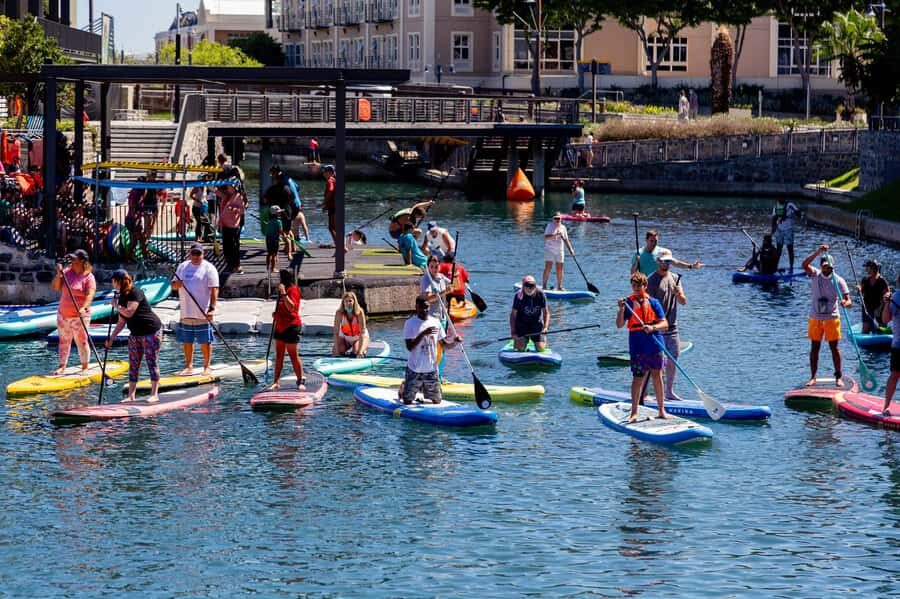
This is a SUP experience designed for convenience. You meet at SUP Cape Town at Battery Park, right opposite the canal from the V&A Waterfront Ferrari Garage. That matters more than you might think.
First, it keeps the experience simple. You’ll be close to one of Cape Town’s best-known waterfront areas, so it’s easy to pair this with other day plans. Second, you’re starting in a setting built for public access and water activity, not some remote launch where you’re figuring out the basics on your own.
And because you’re on canal water, the vibe is different from open ocean SUP. You get sightseeing from the water without the same kind of big-water uncertainty that scares off beginners. If you’re new to SUP, that canal environment is a smart place to learn.
A few more Cape Town tours and experiences worth a look


The 1-hour plan: basic SUP training that actually helps
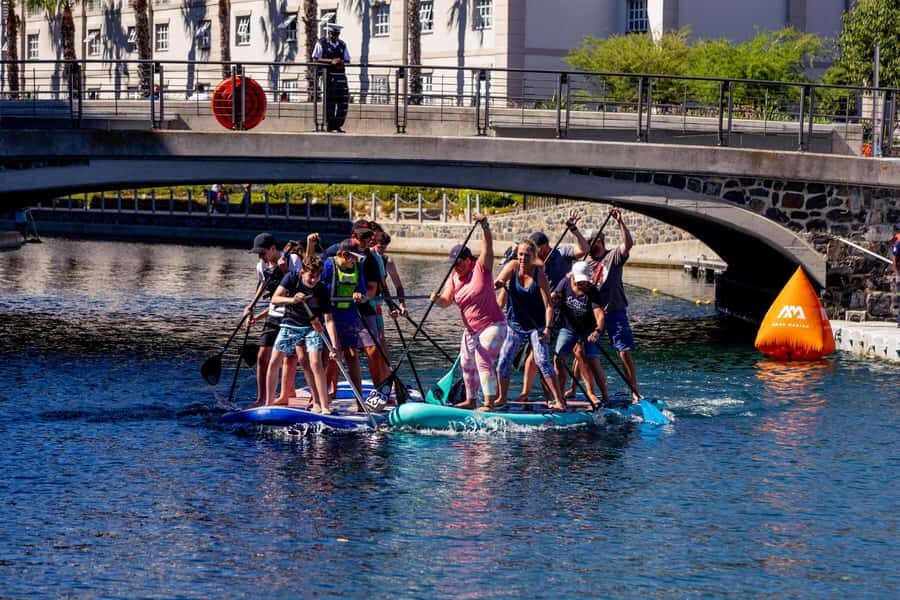
You’re renting a board and getting basic instruction before you cruise. The rental time is one hour, and the training is part of that package—so you’re not just handed a paddle and told good luck.
Here’s how this kind of intro is usually useful for you:
- You learn the core stance and paddle rhythm first, so your arms and legs don’t burn out in the first few minutes.
- You get the instructor’s corrections early, which is when they matter most.
- You’re shown how to move around on the board, so you can focus on the canal scenery right after.
The instructor is English-speaking, and the group is kept small (up to 10). That size is a big deal. With a smaller group, you’re more likely to get direct help when something feels awkward—especially if standing on a moving board is new.
Also, the staff are friendly and attentive. One of the strongest themes from the experience is how safe and comfortable people felt, and how the staff goes the extra mile (including taking photos). If you’re worried about looking silly at first, that kind of support helps a lot.
Cruising Cape Town’s canals: sightseeing from your own paddle pace
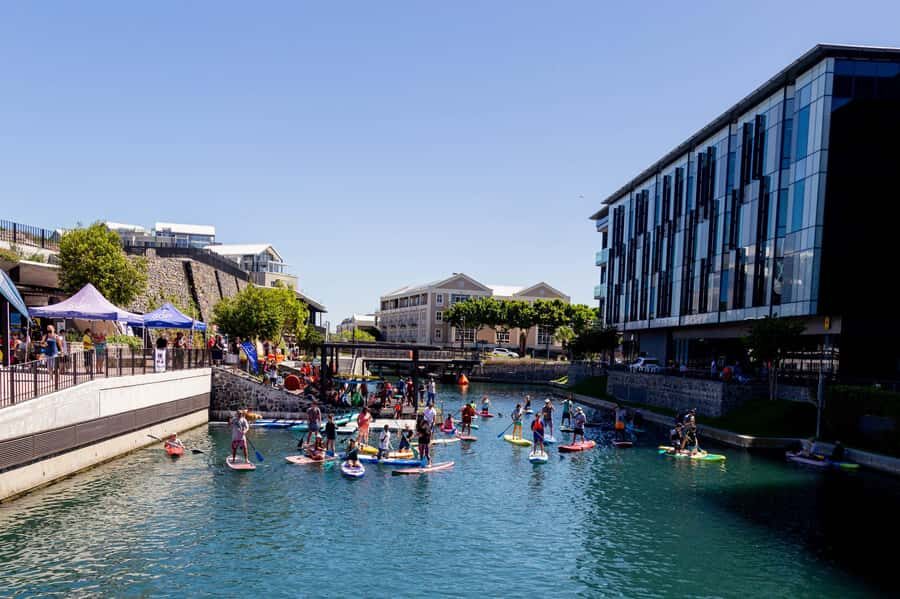
Once you’re on the board, the goal shifts from learning to exploring. You’ll cruise the canals of Cape Town for a sightseeing perspective that’s honestly hard to replicate on foot.
From a SUP board, you naturally slow down. Your attention goes where the water takes you: canal bends, waterfront angles, and views that open up as you glide. It’s sightseeing with motion, not sightseeing while standing still.
And SUP itself has a cool story. The sport is often described as the fastest-growing in the world, but the idea isn’t brand new. Long ago, people used small watercraft with long sticks to fish and travel. Fishermen are often the most famous SUP-style users—standing on simple reed boats and paddling with bamboo-like sticks between spots.
There’s also a parallel you can appreciate while you’re out there. In Venice, gondola sailors use a long paddle to move through canals. Same basic principle. Different setting. And the recreation version of modern SUP is commonly linked to Hawaii, where surfers reportedly used paddles to help navigate waves more effectively.
So what you get today is a modern, sport-ready take on an old water skill—performed in a very Cape Town way, right by the V&A Waterfront.
How hard is it: the total-body workout you’ll feel
SUP looks simple. Then you stand on the board and feel your core get involved fast.
This is a total body workout in the most practical sense: your legs stabilize you, your core keeps you balanced, and your arms do the work every time you paddle. Even if you’re not trying to train for anything, that combination is why people describe it as a real burn.
One review specifically called out that it burnt a lot of calories. That lines up with the effort level you’ll experience on a board that keeps wobbling just enough to demand control.
If you’re coming from a “just sightseeing” mindset, switch it. Plan to use muscles, not just eyeballs. You’ll likely feel it in your legs and shoulders later, especially if you’re new to balancing.
What to bring for a smooth session (and skip the mistakes)
You don’t need heavy gear, but you do need the right basics. The activity list is simple and focused on comfort and sun protection:
Bring:
- Hat
- Swimwear
- Towel
- Sunscreen
- Water
- Comfortable clothes
A smart move: wear swimwear under your clothes. That way you’re not stuck changing if you get splashed or decide you want to feel more comfortable once you’re on the water.
Also, bring a towel that can handle wet gear. You’ll be in and around water, and you’ll want something practical to dry off quickly after your paddle time.
Not allowed includes smoking, alcohol and drugs, glass objects, and littering. In other words, you’re operating in a standard water-safety environment with a “leave no mess” expectation.





Price and value: what $19 really buys you
At $19 per person, this is priced like an accessible activity, not a luxury add-on. And the value comes from what’s included:
Included:
- SUP board rental for one hour
- Basic training instructions from a professional instructor
- Opportunity to cruise the canals
Not included:
- Transportation to and from the activity location
- Meals and drinks
- Personal expenses
So how do you judge value? You’re paying for a skill start plus water time, not just board time alone. That matters because beginners often lose time if they have to figure things out themselves. Here, the training helps you make better use of the hour you’re actually on the board.
If you’re traveling on a budget, this also works because you can fit it into a half-day without wrecking your schedule. If you want a fun active break by the waterfront, it’s a strong candidate.
Who this SUP rental suits best (and who should skip it)
This activity works best for:
- People who are comfortable in water and want an easy first SUP experience
- Visitors who want to combine active exercise with quick canal sightseeing
- Anyone who prefers a short, structured session with an instructor rather than solo experimenting
It’s not suitable for:
- Children under 10
- People with back problems
- Non-swimmers
That list isn’t just a formality. Balancing on a board and paddling takes stability and confidence in the water. If you’re not comfortable floating and moving in water, don’t force it. Choose a different type of water activity instead.
Age note: it’s a small group limited to 10 participants, which usually supports a beginner-friendly environment. Still, if you’re in the “I’m nervous around water” category, be honest with yourself.
The small-group factor: better safety, better learning, better photos
One underrated part of SUP lessons is attention. When a group is large, you wait your turn and you learn slower. When the group is small, you get faster feedback.
Here you’re capped at 10 participants. That makes instruction more personal and helps you feel steady before you start cruising. One review highlighted how the staff made people feel safe and comfortable, and that extra care is exactly what you want at the start of a new sport.
Another praised detail: staff taking photos. That’s a practical bonus. You get proof you were out there, without having to risk dropping your phone while you try to pose on a wobbling board.
Timing: arrive early so training doesn’t get rushed
Plan to arrive at least 15 minutes early. That gives time for any paperwork and lets you settle before your training starts.
With SUP, your confidence ramps up once you’re comfortable on the board. If you show up late and the session starts before you’re ready, it’s harder to absorb the instructions quickly.
So treat the early arrival as part of the experience. It’s how you start the hour feeling prepared, not flustered.
Should you book this Cape Town SUP rental?
Book it if you want a beginner-friendly way to try SUP in a real sightseeing setting. The setup is simple: you start at Battery Park near the V&A Waterfront, you get basic training in English, and you paddle the canals for about an hour. At $19, it’s also a low-risk way to see if SUP is your kind of thing.
Skip it if you’re a non-swimmer or if you have back problems. Also skip it if you’re expecting a long, multi-stop tour. This is focused and time-bound, built around training plus canal cruising.
FAQ
Where is the meeting point for the SUP rental?
SUP Cape Town meets at Battery Park, right opposite the canal from the V&A Waterfront Ferrari Garage.
How long is the SUP board rental?
The rental includes one hour on the board.
Do I get SUP training or instruction?
Yes. You get basic training instructions from a professional instructor.
What language is the instructor?
The instructor speaks English.
How big is the group?
The group is small, limited to 10 participants.
How much does it cost?
The price is $19 per person.
What should I bring?
Bring a hat, swimwear, a towel, sunscreen, water, and comfortable clothes.
What type of participants is this not suitable for?
It’s not suitable for children under 10, people with back problems, and non-swimmers.
Is transportation included?
No. Transportation to and from the activity location is not included.
What’s the cancellation option?
Free cancellation is available up to 24 hours in advance for a full refund.