REVIEW · CAPE TOWN
Kayak Chapman’s Peak and Karbonkelberg in Hout Bay
Book on Viator →Operated by Gravity Micro Adventures · Bookable on Viator
Chapman’s Peak looks dramatic from the road.
Now try it from the water. This Hout Bay kayak trip is built around Chapman’s Peak Drive scenery, but the real draw is the chance to spot wildlife up close while you paddle a relaxed, mostly circular route. I like the way the guides focus on practical kayaking first, then turn it into a nature-and-local-culture outing through Hout Bay Harbour and the coastline beneath the cliffs.
Two things I especially like: the kayaks are described as stable and easy to paddle, and the guides are clearly invested in teaching you how to read the ocean for wildlife. One thing to consider: this is weather-dependent, so if conditions aren’t right you may have to switch dates, and you should come ready for a moderate effort for the full paddle.
In This Review
- Quick highlights: what makes this Hout Bay kayaking special
- Where you start: Hout Bay Boatyard and the feel of the trip
- What happens before you paddle: PFDs, foot pegs, and a real safety briefing
- The kayaks: stable tandem sit-on-tops that help first-timers
- The main route under Chapman’s Peak: scenery you can actually appreciate at sea level
- Hout Bay Harbour segment: seals, fishing boats, and close-up ocean life
- Wildlife spotting style: how the guides increase your odds without rushing you
- How hard is it? Moderate fitness, steady pacing, and sensible expectations
- Price and value: is $54.31 worth it?
- What to bring: the practical packing list that matters on the water
- Timing, group size, and why your guide matters
- Weather and safety: plan around ocean conditions
- Is this the right fit for you? Who should book
- Should you book Kayak Chapman’s Peak and Karbonkelberg in Hout Bay?
- FAQ
- How long is the kayaking trip?
- Where does the tour start and end?
- What equipment is included?
- What should I bring?
- Do I need prior kayaking experience?
- What wildlife might I see?
- How many people are in a group?
- What if the weather is poor?
Quick highlights: what makes this Hout Bay kayaking special

- Stable tandem sit-on-top kayaks that are easier to get comfortable in
- Guides who actively look for wildlife, including birds, cape fur seals, and sometimes dolphins
- A scenic Chapman’s Peak cliff route plus time around Hout Bay Harbour with fishing boats and yacht moorings
- Small group size (up to 12) for a more controlled, personal experience
- ~2 hours on the water with a short instruction and safety setup before you go
- Equipment provided: boat, paddles, and PFD (life vest)
Where you start: Hout Bay Boatyard and the feel of the trip
You begin at the Hout Bay Boatyard on Harbour Rd, right inside the working harbor area. That matters more than it sounds. Starting in a real harbor means your first minutes on the water are grounded and practical: calm enough to practice basic strokes, get your balance, and settle into the rhythm before you follow the route under Chapman’s Peak.
From there, you’ll be out for about 2 hours total, and the experience runs back to the same meeting point. For me, that loop style is a good fit for visitors who want a clear time frame without the stress of a complicated end-point logistics.
The tour caps at 12 travelers, which typically helps the guides manage spacing if the sea gets busy or winds pick up. It also means you’re more likely to get hands-on help early on, when adjusting the foot pegs and getting comfortable is the difference between grinning and clenching.
A few more Cape Town tours and experiences worth a look


What happens before you paddle: PFDs, foot pegs, and a real safety briefing
The trip starts with kitting you out. You’ll get well-fitting PFDs (life vests). Then comes the part you’ll be glad you pay attention to: the guides help adjust your foot pegs so your kayak feels natural and controlled.
After that, you get a safety briefing and paddling instruction. This is not just a checkbox. Kayaks look simple until you’re trying to steer and keep your direction while seated. The guides’ focus on technique makes the rest of the trip much easier, especially if you’re new.
Also, pay attention to the early coaching. The ocean around Hout Bay can be playful—waves, wind shifts, and changing light. The guides you’ll meet include people like Brent, Mishack, and Andrew, and the tone across their stories is the same: friendly, welcoming, and fast to get you confident. If you’ve got someone in your group who’s nervous, this kind of early guidance makes a noticeable difference.
The kayaks: stable tandem sit-on-tops that help first-timers
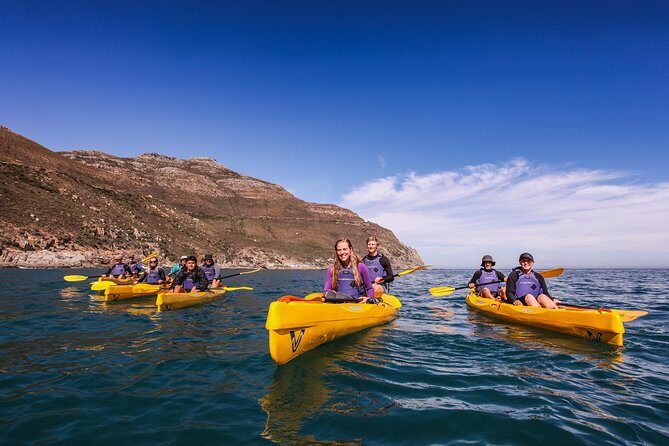
Your gear includes the kayak itself, paddles, and the PFD—so you’re not hunting down a rental setup in town. The kayaks are described as stable and easy to paddle, and one of the trips shared using tandem sit-on-top kayaks. That combination is ideal for two reasons.
First, sit-on-top kayaks tend to give you a stable feeling once you’re seated, because you’re not trapped and you can adjust your posture easily. Second, tandem setup means you can share the work and settle into coordination—helpful if one person is stronger with paddling or more comfortable in open water.
You still should show up ready to work. This is a paddle, not a float. But it’s designed so you spend your energy moving forward instead of fighting the kayak.
The main route under Chapman’s Peak: scenery you can actually appreciate at sea level
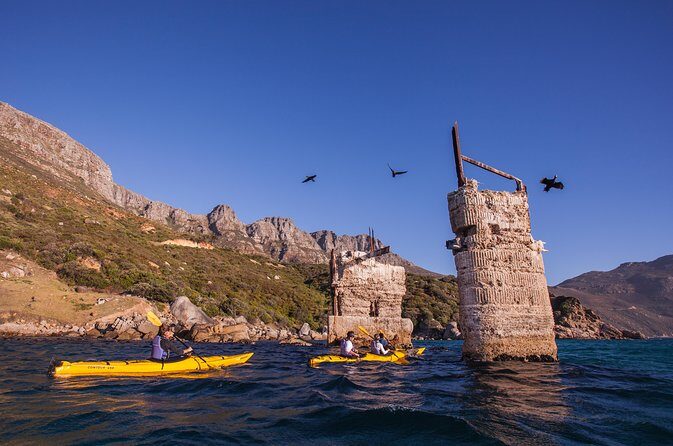
Once you’re out, you’ll paddle along a route that runs beneath the towering cliffs of Chapman’s Peak. This is the part you’ll remember because it changes scale fast. From the road, Chapman’s Peak Drive is a viewpoint. From the water, the cliffs feel like they’re rising directly from the sea.
The route is described as a more or less circular loop. Practically, that means you’re not doing a strict out-and-back sprint the whole time. You’re following the coastline and taking in the harbor approach too, which keeps the trip from feeling like one long, repetitive paddle.
What you’ll likely notice along this stretch is how the ocean shapes the view. Sun angle and small wave patterns can turn the cliff line into something almost three-dimensional. And when you’re moving slowly, you can actually watch wildlife behavior, not just catch glimpses.
Hout Bay Harbour segment: seals, fishing boats, and close-up ocean life
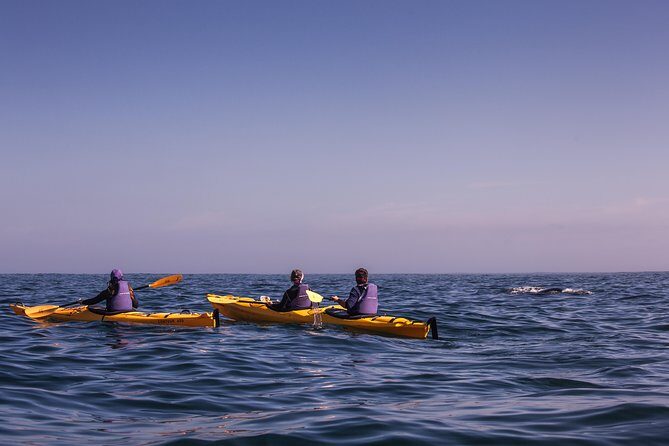
After the cliff section, the route brings you around toward Hout Bay Harbour, where you’ll see a working mix of fishing boats and yacht moorings. This is where the trip becomes more than scenery. It’s where wildlife sightings have the best odds.
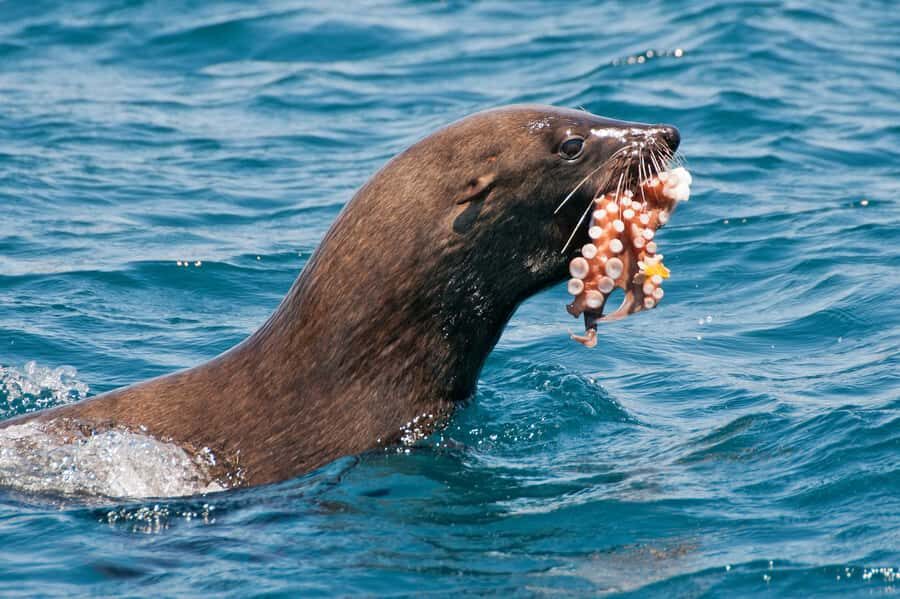
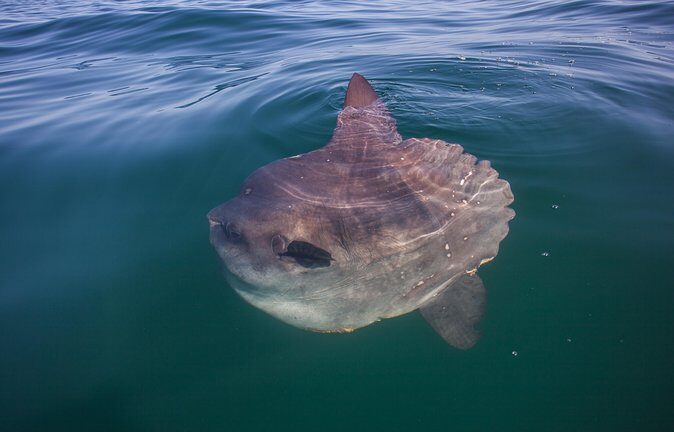
The experience notes mention cape fur seals and various bird species, plus the possibility of sunfish and even whales under the right conditions. That doesn’t mean you’ll see all of that. It means your guide has enough local know-how and patience to look for signs and adjust the route as opportunities pop up.
A big reason I like these harbor-and-coast segments is that seals often react to presence—popping up near areas where food and currents line up. In plain terms: you get a good chance of seeing behavior, not just a silhouette in the distance.
And dolphins do come up. One guide story highlights Heaviside’s dolphins, and another trip mentions dolphins and seals with the guides helping spot them. Again, wildlife is never guaranteed—but the consistent theme is that the guides don’t just paddle in a straight line and hope.




Wildlife spotting style: how the guides increase your odds without rushing you
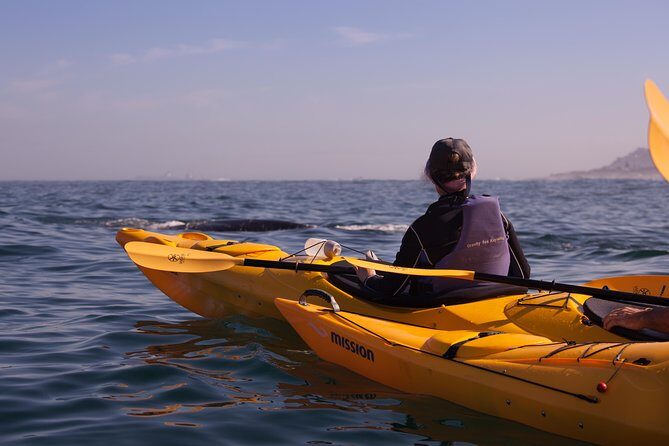
Here’s the thing about wildlife kayaking: it’s not about frantic searching. It’s about steady observation and knowing what to look for as conditions change.
Guides like Mishack are described as knowing where to go to show Heaviside’s dolphins. That tells you they’re reading the water and taking cues from what’s happening around the area, not randomly steering toward excitement.
The best part for your comfort is how quickly beginners get comfortable while the guide still watches the ocean. In one shared experience, a wife and son who hadn’t kayaked before got out quickly after instruction, and soon they were watching dolphins jumping around them. That’s a great reminder: you don’t need previous kayaking hours to have a memorable wildlife moment—you just need good coaching and a guide who keeps the pace sensible.
How hard is it? Moderate fitness, steady pacing, and sensible expectations
This trip calls for moderate physical fitness. That’s the right warning label. You’re paddling for about 2 hours, so you should expect some arm and core work, plus the normal balancing effort of staying steady on water.
If you’re active—walking, light hiking, gym workouts—you’ll likely be fine. If you’re coming straight from a long flight and doing zero movement that week, you might find the paddle portion tiring. Not dangerous, just fatiguing.
Also, bring your mindset. Think of this as a guided workout with sea views, not a fitness test. You’ll be moving, but the route and instruction are built for real-world first-timer comfort.
Price and value: is $54.31 worth it?
At $54.31 per person, you’re paying for more than “just a kayak.” You’re paying for a full guided setup: PFDs, instruction, equipment, and a route designed around both scenery and wildlife odds in Hout Bay.
Here’s why it feels fair for this area. Many water activities end up charging extra for equipment, and you still have to figure out where to go and what to do when you arrive. Here, the guide handles the big friction points: correct PFD fit, foot peg adjustments, how to paddle, and how to manage your time on the water.
You’re also getting a small group experience (max 12), and that usually improves safety, comfort, and the chance to get personal help. There’s also mention of group discounts. If you’re traveling with family or friends, the per-person price can feel even more reasonable.
If your priority is wildlife and you enjoy ocean views, this is strong value. If you’re only chasing a view and you’d rather stay dry, you might feel like kayaking is a lot of effort for a sightseeing alternative.
What to bring: the practical packing list that matters on the water
Personal gear is not included, so you’ll want to pack for a windy coastal paddle. The essentials listed include:
- a swimming costume
- paddling shorts
- a windbreaker (or something light that cuts wind)
- sun hat and sunscreen
I’d also suggest bringing a small dry bag or zip pouch if you have one. You’ll be on water, and even if everything feels calm, salt air is salt air.
One more tip: dress for cool-to-mixed conditions, not just sunshine. In coastal areas, temperatures can shift and wind can sneak in fast once you’re out on the water.
Timing, group size, and why your guide matters
The trip is about 2 hours and is booked with an average lead time of about 32 days. That tells you it’s popular in season, so plan ahead if you can. Also, the maximum group size is 12, which is a key quality signal for guided kayaking—more manageable for safety, spacing, and wildlife patience.
The guides have names that stand out because they show up in multiple experiences. Brent and his son Mishack get praised for friendly hosting and for delivering private-tour style attention, including dolphins and seals. Andrew gets highlighted for understanding and helping someone nervous about kayaking settle in fast.
That human element is part of the value. If you’re paying for an experience, you want someone who can keep you calm, help you paddle well, and still watch the water for animals.
Weather and safety: plan around ocean conditions
This experience requires good weather. If it’s canceled due to poor conditions, you’ll be offered a different date or a full refund. That’s important. You’re not just buying a ticket—you’re buying access to a water environment that has to be safe and paddleable.
Even when the forecast looks promising, coastal winds can change. So dress for it and expect that the guide may steer decisions based on what the water is doing that day.
Is this the right fit for you? Who should book
I’d book this if you want:
- a hands-on way to see Chapman’s Peak that goes beyond a road viewpoint
- a guided kayak experience with a solid focus on wildlife chances
- something active but not extreme—roughly 2 hours with instruction built in
- a small-group outing in Hout Bay, with friendly guides who’ll help you get comfortable fast
You should reconsider if:
- you’re only interested in a casual, no-effort sightseeing option
- you’re not comfortable paddling for about 2 hours with some physical work
- weather in your travel window is very uncertain (because the operator will base decisions on good conditions)
Should you book Kayak Chapman’s Peak and Karbonkelberg in Hout Bay?
Yes, if wildlife and coastal scenery are on your Cape Town must-do list. The stable tandem kayaks, the PFD fitting and paddling instruction, and the fact that the guides work to spot animals like cape fur seals and even dolphins (conditions permitting) make it a strong value for the price.
My advice: treat it as a guided day on the water first, and a wildlife bonus second. When you do that, you’ll enjoy the paddle, learn something about the ocean from the guides, and feel like you got a real sense of Hout Bay—not just a quick photo stop.
FAQ
How long is the kayaking trip?
It lasts about 2 hours.
Where does the tour start and end?
The tour starts and ends at Hout Bay Boatyard, 29 Harbour Rd, Hout Bay Harbour, Cape Town.
What equipment is included?
You get kayaking equipment including the boat/kayak, paddles, and a life vest (PFD).
What should I bring?
Bring personal items such as a swimming costume, paddling shorts, windbreaker, sun hat, and sunscreen.
Do I need prior kayaking experience?
The trip includes a safety briefing and paddling instruction, and it’s aimed at riders with at least moderate comfort being active on the water.
What wildlife might I see?
There’s a chance of seeing bird species, cape fur seals, sunfish, and possibly whales.
How many people are in a group?
The tour has a maximum of 12 travelers.
What if the weather is poor?
The experience requires good weather. If it’s canceled due to poor weather, you’ll be offered a different date or a full refund.