REVIEW · CAPE TOWN
Private Cape Town City Tour Table Mountain + Cable car ticket H/D
Book on Viator →Operated by Remigeous Tsuro · Bookable on Viator
A morning in Cape Town can change how you see the city. This private tour connects Table Mountain with color-soaked neighborhoods and major history stops, all in a tight 4 to 5 hours. I like that you get a cable car ticket to the top included, so you’re not stuck budgeting and planning at the last minute. I also like the mix of views and context, from the Atlantic outlooks to museums tied to real Cape Town stories. The main drawback to consider: even with a private tour, you may still face long lines for Table Mountain depending on conditions, so it’s not a guaranteed queue-free experience.
Key points that make this one worth looking at
- Table Mountain cable car ticket included for a fast route to the best viewpoints
- Private format means you can move at your pace and focus on what you care about
- Blue Flag beach viewpoints at Camps Bay and other Atlantic outlooks
- Color + heritage in Bo-Kaap, with a museum and strong local culture
- Company’s Garden and Iziko area for parks, monuments, and museum time if you want it
- History-heavy stops like Iziko Slave Lodge and the Castle of Good Hope
In This Review
- A private Cape Town circuit built around Table Mountain
- Where you start: Silo Hotel at Victoria & Alfred Waterfront (9:00 am)
- Camps Bay Beach: the rich-and-famous postcard, plus context
- Table Mountain by cable car: the views you came for
- The main caution: lines can still happen
- Bo-Kaap: color, cobbles, and Malay heritage
- Company’s Garden (and nearby Iziko): walking in the city’s green pause
- Iziko Slave Lodge: history you can’t outrun
- Signal Hill: sunset views, paragliders, and the canon
- Cape Flats history and the forced removals story
- Castle of Good Hope: Dutch defense meets Cape administration
- Price and value: what you’re paying for (and what could disappoint)
- Who this tour suits best
- Should you book this Cape Town City Tour with Table Mountain?
- FAQ
- How long is the private Cape Town city tour with Table Mountain?
- Is the Table Mountain cable car ticket included?
- What’s included in the price?
- Are museum entry fees included?
- Is lunch part of the tour?
- Where does the tour start and end?
- What time does the tour begin?
- What if the weather isn’t good?
A private Cape Town circuit built around Table Mountain
Cape Town is one of those cities where everything feels close—until you try to do it efficiently on your own. This tour solves that problem with one main idea: hit the signature sights (especially Table Mountain) and then connect them to the human stories of the city.
You get an air-conditioned vehicle, bottled water, and a registered guide. You also get a mobile ticket, which is handy in a place where schedules and lines can shift quickly. It’s private, so it’s just your group, not a busload of strangers.
The real value is the way the day moves. You don’t just stop for photos; you also get a coherent thread—geography, city life, and history—so the views feel like more than postcards.
Where you start: Silo Hotel at Victoria & Alfred Waterfront (9:00 am)
The tour starts at the Silo Hotel at Silo Square, Victoria & Alfred Waterfront. That location is convenient because it’s a central, easy-to-find anchor point with plenty going on nearby. Starting at 9:00 am also helps. Table Mountain lines and daylight viewpoints both tend to behave better earlier in the day.
Since the tour ends back at the meeting point, it’s simple to plan your next move. If you’re on a cruise or tight schedule, this structure can work well—you can still think about getting back with your timing intact. (In one case, a guest noted they were able to handle luggage and get dropped closer to the pier area, but I’d treat that as situational rather than a guaranteed feature.)
A few more Cape Town tours and experiences worth a look



Camps Bay Beach: the rich-and-famous postcard, plus context
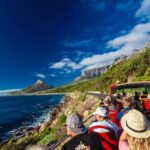
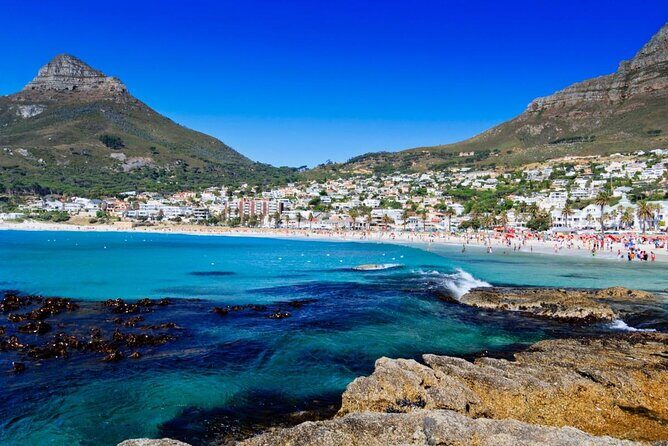
Your day kicks off with Atlantic outlooks, starting with a Blue Flag beach view area and then Camp’s Bay Beach. This is one of the most recognizable beach stretches in Cape Town, and you’ll immediately see why people flock here: white sand, palm-lined streets, and the dramatic backdrop of Table Mountain and the Twelve Apostles peaks.
At Camp’s Bay you get a photo stop and a short walk. It’s also a good place to notice Cape Town’s mix of worlds. The route passes opulent coffee shops, bars, and a few hotels, and you may spot luxury cars in the area that signal how much status and wealth concentrate here.
Just keep expectations grounded. This part of town can feel like “look, don’t touch”—more window-viewing and quick walking than deep immersion. But for orientation, it’s great. It helps you understand what the city looks like when you’re facing the ocean and staring up at the mountains.
Table Mountain by cable car: the views you came for
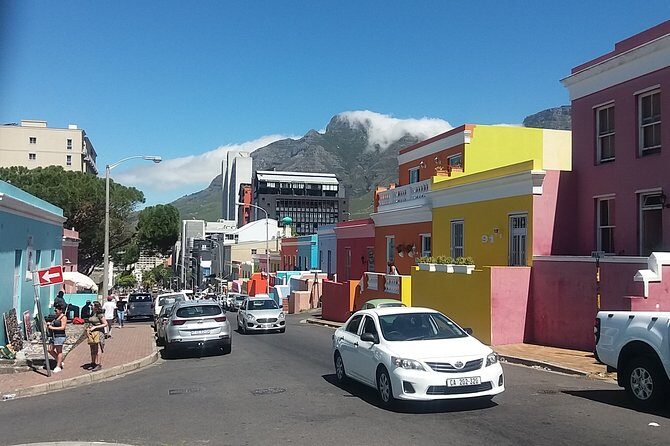
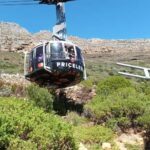
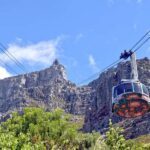
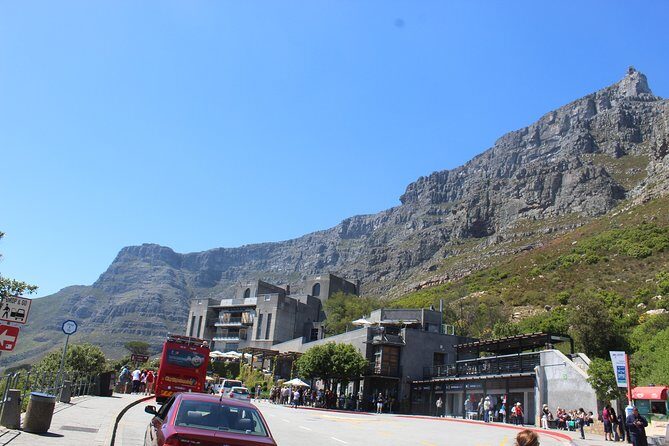
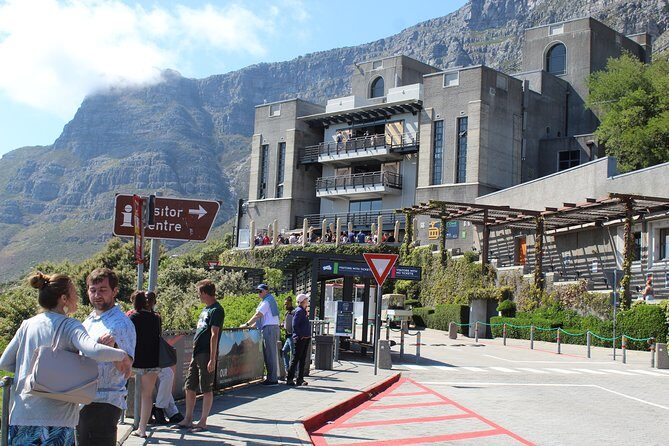
Table Mountain is the headline. The tour takes you to the cable car station at the foot of the mountain, and the cable car ticket to the top is included. Once you’re up, the payoff is immediate: a wide, 360-degree view of the city and shoreline.
You’ll have time for practical things too. There’s a coffee shop on-site, and you can grab a cappuccino if you want a warm moment mid-viewing. If time allows, you can ride the rotating cable car (about 3 minutes) to the summit area.
From the top, you’re meant to scan for the Blue Flag beaches—Camps Bay and Clifton in particular. And because Table Mountain is a living stage for adventure sports, you might also spot thrill-seekers like abseilers along the cliff routes, plus paragliding activity when conditions line up.
The main caution: lines can still happen
One important reality check: a private tour does not automatically mean a queue-free cable car. If your day’s success depends on avoiding lines, build in patience. Weather and crowds are real variables here, and the tour notes it depends on good conditions.
If you’re the type who gets stressed by waiting, show up ready to relax. If you’re flexible, Table Mountain can still deliver the kind of views that make the hours feel worth it.
Bo-Kaap: color, cobbles, and Malay heritage
After the mountain, you head into Bo-Kaap, one of Cape Town’s most photographed areas. You’ll see rows of colorful houses and cobbled streets that feel intentionally scenic—like a living gallery.
This stop is more than a quick photo walk. The area ties to the descendants of the Malay community, and there’s a museum that explains history and heritage. You may also find African art and craft stalls and shops. If you enjoy browsing, this is a good place to slow down for a few minutes.
The tone here is friendly. You can expect local residents to greet you warmly. And if you want a simple cultural touch, the tour experience includes a local greeting: Awee my ma sekind (a kind, playful phrase meaning halo my mother’s child). Even if you use it only once, it helps you connect with the place instead of just documenting it.
You can also read our reviews of more city tours in Cape Town





Company’s Garden (and nearby Iziko): walking in the city’s green pause
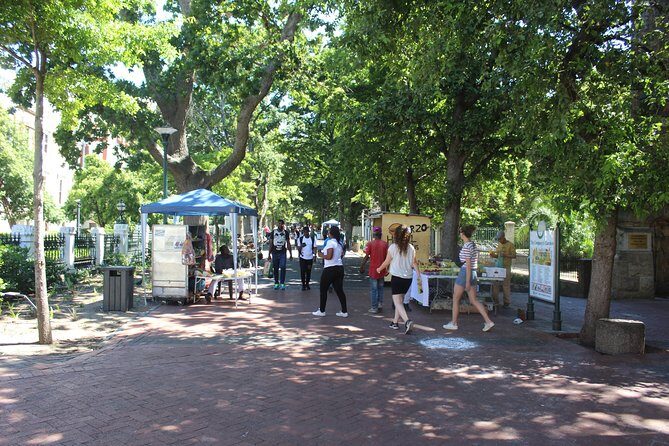
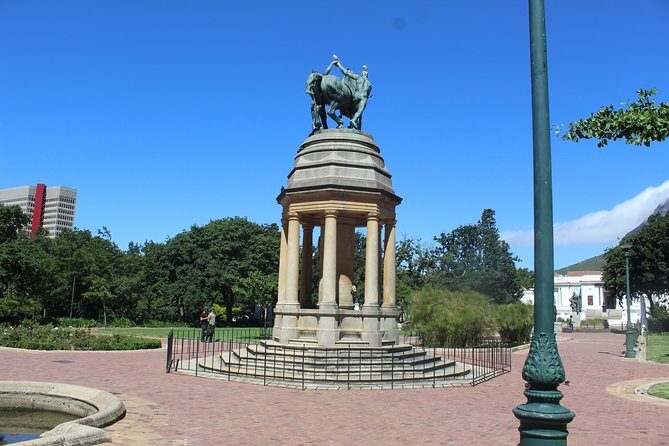
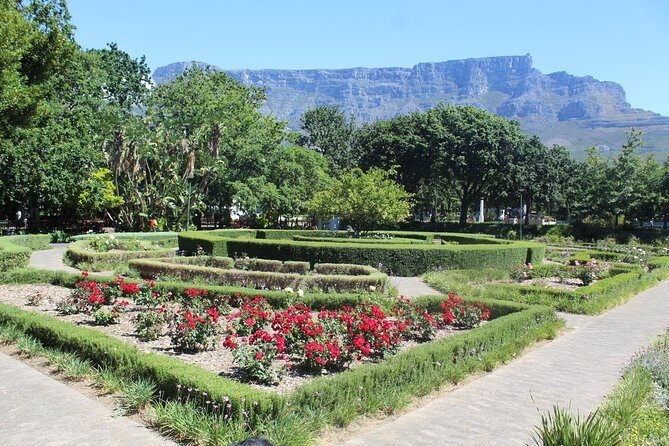
Next comes The Company’s Garden, right in the heart of Cape Town. This is a nice shift from road-and-viewpoint time to stroll time. You walk through landscaped gardens and you’ll likely spot critters along the way—birds and small wildlife seem to make the place feel alive.
It’s also loaded with details that make it more interesting than a basic park stop. You’ll find monuments tied to people who shaped the future of South Africa, and you can take photos around highlights like the oldest cultivated pear tree in South Africa, an 800-year-old tree. There’s also a fish pond and a rose garden, plus an aviary and the Dellville Wood Memorial Garden.
If you like museums but don’t want a full day, this area helps you pick a level of intensity. The Iziko South African Museum is part of the complex, and an art gallery sits nearby along the avenue—so you can decide how much you want to add without changing your whole schedule.
Iziko Slave Lodge: history you can’t outrun
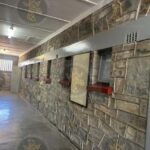
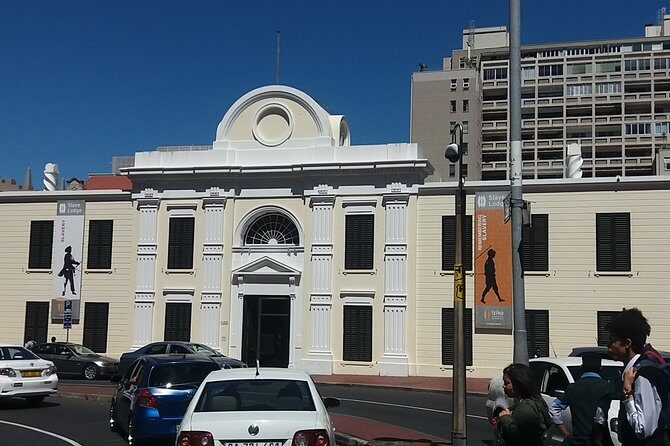
From leafy city gardens, you move into Iziko Slave Lodge, and the energy changes fast. This museum focuses on the harsh reality of slavery at the Cape and helps you understand how the system worked—what brought enslaved people to the region and how it shaped Cape Town.
You’ll learn about the slave triangle, slavery at the Cape, and its origins. The stop is described as heart wrenching, and that’s accurate in the sense that the subject matter is heavy and personal. There are also photo opportunities around ancient weaponry used during and before slavery at the Cape, plus explanations of how enslaved communities contributed to developments in the area.
If you want Cape Town to feel complete, this stop matters. It gives weight to everything you see later—because it reminds you that today’s neighborhoods and institutions were built through difficult, unequal systems.
Signal Hill: sunset views, paragliders, and the canon
Then you head to Signal Hill, one of the most popular outlooks in Cape Town. The big reason people love it: the view. From here you can see the city spread out, with the Cape Town stadium and Robben Island visible in the right conditions.
This is also a strong sundown pick. The tour frames it as a must, especially if you time things toward golden hour. It’s a short stop (around 20 minutes), so you’re not doing a long hike—just getting a major sight in a small window.
A quirky detail adds texture to the stop: the canon is fired three times a week at mid-day. If your timing lines up, that’s a memorable little moment that makes the hill feel like an active part of city tradition rather than just a lookout.
You may also see paragliders launching close to the ocean side when the weather permits.
Cape Flats history and the forced removals story
One of the most important parts of the tour is the stop addressing the forced removals of 1968, tied to non-white communities being settled in the Cape Flats. In the local language, people often refer to these areas as ekasi (townships).
This is presented through a museum-style experience, with information and testimonials from people affected by the removals. The point isn’t only to learn facts, but to understand how policy shaped everyday life—where people could live, where they could work, and what stability looked like or didn’t look like.
If you’re on a short trip, this type of stop is still worth making time for, because it turns Cape Town from scenery into a place with lived experience.
Castle of Good Hope: Dutch defense meets Cape administration
The last major history stop is the Castle of Good Hope. This is described as the oldest standing colonial building in South Africa, built between 1666 and 1679. It served as a headquarters at the Cape and also as a defensive structure.
The tour experience also explains its administrative role. It was used as a main office of governments at the Cape, covering both Dutch and British periods. It wasn’t only offices and defenses; it also served as a residential place of high rank and functioned as a court, plus a prison (including solitary confinement).
It’s been recognized as a national monument since 1936, and you’ll feel that gravity when you walk through. This is one of the best places on the tour to understand how power was organized in the colonial era—and how tightly those buildings were tied to systems of control.
Price and value: what you’re paying for (and what could disappoint)
At $142.43 per person, this is a mid-range private tour for Cape Town. The big value elements you’re paying for are pretty clear:
- Private vehicle + registered guide
- Cable car ticket to the top (a major expense by itself)
- Multiple major stops that would be time-consuming to stitch together on your own
But you should also weigh the possible downside. One review called out that it didn’t feel like great value because they still had to stand in long queues for Table Mountain. That’s the risk with any Table Mountain plan: the attraction is popular. Even if your transport is handled, the mountain itself is still the mountain, and lines are a variable.
My practical take: this tour is best value when your time is tight and you want a structured route. If you have days to spare and you’re happy to plan and manage logistics, you might prefer a DIY approach with separate tickets. If you only have a few hours, private + cable car included usually makes sense.
Who this tour suits best
I’d point this one at you if:
- You want a big-sight route in one morning
- You’re okay with a mix of scenery and serious history
- You’d rather have someone handle navigation and timing than bounce between taxis
- You want Table Mountain without building the whole plan around it
It may not fit if:
- You hate queues and need a guaranteed skip-the-line experience
- You want a beach-focused day with lots of long downtime
- You want lunch included (it isn’t)
Should you book this Cape Town City Tour with Table Mountain?
Book it if you want an efficient, private way to understand Cape Town fast—views from Table Mountain, color and culture in Bo-Kaap, and history stops that make the city feel real. The fact that the cable car ticket is included is a strong anchor for value, especially when your days are limited.
Don’t book it expecting total avoidance of lines at Table Mountain. If that’s your deal-breaker, message the operator ahead about timing expectations and where you’ll fit into the day. Also keep a little flexibility for weather, since the experience depends on good conditions.
If you want Cape Town in a single focused loop, this tour gives you a solid start—and it does it with enough context that the “wow” doesn’t fade when you get back to your hotel.
FAQ
How long is the private Cape Town city tour with Table Mountain?
The tour duration is about 4 to 5 hours.
Is the Table Mountain cable car ticket included?
Yes. The tour includes the cable car ticket to the Table Mountain top.
What’s included in the price?
Included items are an air-conditioned vehicle, a registered guide, the cable car ticket, bottled water, and a complimentary visit to The Diamond Works – Museum if time allows.
Are museum entry fees included?
No. Optional entry fees to museums up to R50 per adult per entry are not included.
Is lunch part of the tour?
No. Lunch is not included.
Where does the tour start and end?
It starts at the Silo Hotel, Silo Square, Victoria & Alfred Waterfront in Cape Town and ends back at the meeting point.
What time does the tour begin?
The start time is 9:00 am.
What if the weather isn’t good?
The tour requires good weather. If it’s canceled due to poor weather, you’ll be offered a different date or a full refund.