REVIEW · CAPE TOWN
Cape Town City and Woodstock Bicycle Tour
Book on Viator →Operated by One Day Africa · Bookable on Viator
Cape Town can feel huge until you’re on a bike. This city center ride strings together street art and landmark history in a tight 3-hour loop, so you get a lot of contrast without burning the day. I love that equipment is handled for you (no bike-spotting hassle), and I love the way the route keeps switching neighborhoods, from Woodstock’s art scene to places tied to apartheid-era forced removals. One consideration: this tour depends on good weather, so if skies are rough, plans can change.
The small group size (max 15) helps the guide keep things personal, and the history doesn’t get reduced to a quick photo stop. If your guide is Sipho or Terrence, expect a lot of care in the storytelling and plenty of time for questions—especially around art and neighborhood context. If you’re hoping for long, slow pauses at every stop, the pace might feel a bit brisk, since it’s designed to cover ground.
In This Review
- Key things you’ll notice on this bike tour
- A bike tour that links Cape Town’s art scene with real-world history
- How the 3-hour route works (and why it’s time-smart)
- Woodstock’s Old Biscuit Mill: starting in art and local energy
- District Six Museum: a stop that lands emotionally
- Grand Parade and the old Town Hall: where politics played out in public
- Bo-Kaap on Signal Hill: color, faith, and migration history
- Company’s Garden: the Dutch started with food, and it became a refuge
- Greenmarket Square and St George’s Mall: market life in motion
- Long Street and the street-level feel of Cape Town’s center
- Cape Town’s old City Hall: Mandela’s first speech as a free man
- Castle of Good Hope: a fort that moved inland with the coastline
- Bicycles, small groups, and guide style: what you can expect
- Price and value: $54.83 for a lot of stops in one go
- Practical riding tips for Cape Town streets and squares
- Should you book this Cape Town City and Woodstock Bicycle Tour?
- FAQ
- FAQ
- How long is the Cape Town City and Woodstock Bicycle Tour?
- Where does the tour start?
- Does the tour include a bicycle?
- Are entrance fees included?
- What stops are included on the route?
- What’s the group size?
- Do I need good weather?
- What is the cancellation policy?
Key things you’ll notice on this bike tour
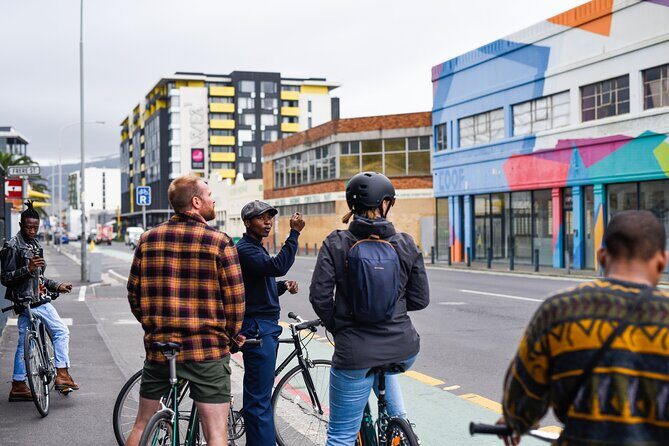
- Street art + history in one route: you’ll move between murals, markets, and major civic landmarks.
- No bike needed from you: bicycle use is included, which saves time and stress.
- District Six Museum stop: a serious stop with direct links to forced removals and its aftermath.
- Classic Cape Town public squares: Grand Parade, Greenmarket Square, and St George’s Mall keep changing the vibe.
- Bo-Kaap and its cultural roots: you’ll learn how freed-slave and Muslim immigrant communities shaped the area.
- Castle of Good Hope may be on your route: depending on the host’s chosen path.
A bike tour that links Cape Town’s art scene with real-world history
This isn’t a “ride past a few views” kind of tour. The whole point is mixing two sides of Cape Town that are often separated in day trips: the creative, street-level Cape (murals, shops, market energy) and the heavy, documented parts of the city’s past (forced removals, civic turning points, and major historic sites).
The format helps. With a bicycle, you cover more distance than you could on foot, but you still move slowly enough to absorb details: architecture styles, street layouts, and the reasons certain places matter. In a compact 3-hour window, that combination is hard to beat for value.
You can also read our reviews of more city tours in Cape Town



How the 3-hour route works (and why it’s time-smart)
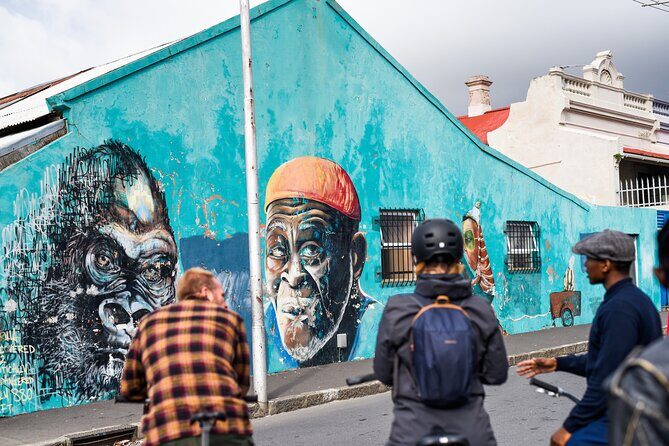
Your tour starts back in Woodstock at the Salt Circle Arcade (Shop 5, 374 Albert Rd). From there, you’ll ride through central Cape Town and hit major landmarks along the way, then return to the meeting point.
The schedule is built around efficiency:
- You’ll move between neighborhoods without long taxi breaks.
- Stops are spaced so you learn something at each one, instead of repeating the same “here’s a view” pattern.
- The group stays small (up to 15), which keeps the ride from turning into a herd.
Duration matters in a city like Cape Town. You can absolutely spend a full day piecing sites together yourself, but you’ll often lose time to transport logistics and deciding what to prioritize. This route is a shortcut to a balanced sampler.
Woodstock’s Old Biscuit Mill: starting in art and local energy
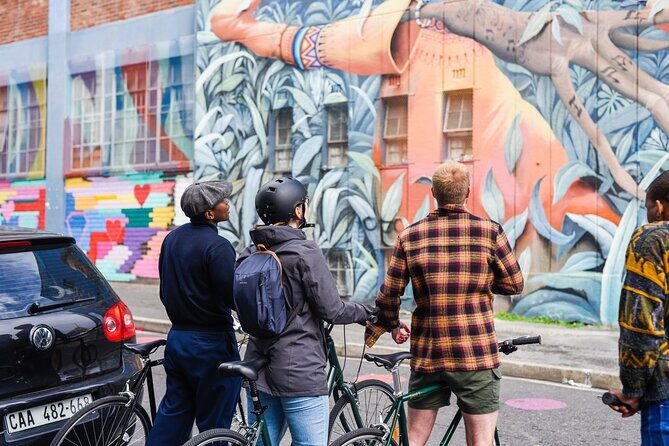
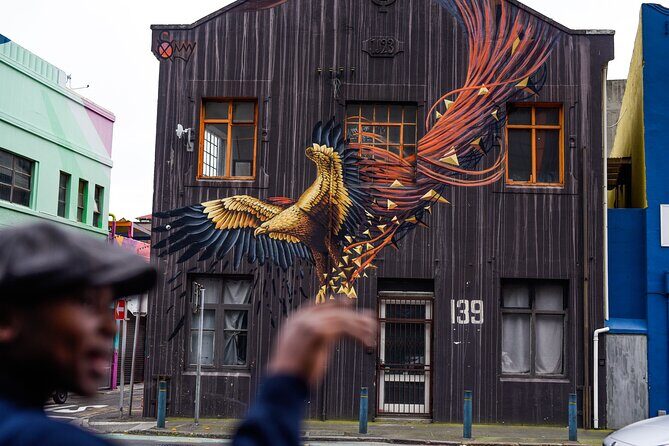
You’ll begin at the Old Biscuit Mill, now a shopping, dining, and arts hub in Woodstock. The building itself has been converted, but the real hook here is what’s on the walls—street art from local and international artists.
This first stop is a smart choice because it sets the tone. Before you hit the more formal historic landmarks, you get a sense of Cape Town as a city of making and changing. Even if you don’t buy anything, you’ll likely enjoy just walking around and reading the visual language of the place.
A practical tip: weekends can include Neighbourgoods Market activity, so the area can feel more event-like. If you’re sensitive to crowds, pay attention to the day of your tour when possible.
District Six Museum: a stop that lands emotionally
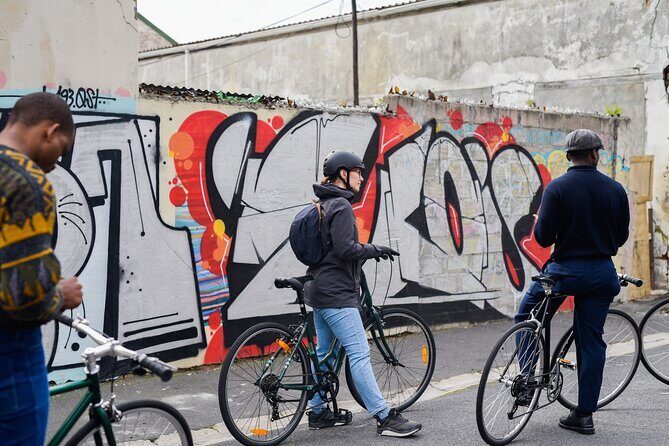
Then you move into District Six Museum, founded in 1994 to honor people who were forcibly removed from their homes. The story is brutal and specific: in the mid-1960s, the South African government relocated around 60,000 nonwhite residents to a distant, slum-like township and destroyed the neighborhood to create a whites-only area.
This is one of those stops where the bicycle matters less than the context. You’re not just seeing a site; you’re learning a mechanism—how segregation was enforced physically, not just socially. It also explains why District Six still resonates in Cape Town’s identity and memory.
If you want to understand the city beyond postcards, this is the kind of place that does the heavy lifting on a short tour.
Grand Parade and the old Town Hall: where politics played out in public

Next up is the Grand Parade area. It’s described as a prime location for Cape Town’s history because so much happened here over centuries:
- The Dutch built their first fort in 1652.
- Slaves were sold and punished.
- Crowds gathered for Nelson Mandela’s first address as a free man after 27 years in jail, delivered from the balcony of the Old Town Hall.
Even if you don’t memorize every date, you’ll feel the significance because the site is civic-scale and open. You can picture how public spaces became stages—whether the story was colonial control, human cruelty, or a turning point toward freedom.
You should also note that a market setup can be part of the square’s rhythm, and parking may be used in part of the area. That means it can feel like a working public space, not just a museum setting.




Bo-Kaap on Signal Hill: color, faith, and migration history
After the civic centerpiece, the tour moves to Bo-Kaap. This historic neighborhood sits just outside central Cape Town on the flanks of Signal Hill, and it’s closely tied to Muslim culture and South African migration history.
Bo-Kaap is shaped by Malaysian, Indian, Sri Lankan, and African cultural influences. It was also one of the first settlements of freed slaves and Muslim immigrants in South Africa. So you’ll notice that the streets aren’t just pretty. They’re mapped to movement, community building, and faith.
For photos, you’ll have plenty to work with, but don’t treat this as only a picture-stop. Use your guide’s context to look past the houses and ask what made the settlement possible and enduring.
Company’s Garden: the Dutch started with food, and it became a refuge
The ride includes Company’s Garden, which still functions today as a public park—an oasis in the center of the city.
Here’s the key historical link: when the Dutch East India Company arrived in 1652, one of the first things they did was plant a garden to feed the settlers. That original idea is why this spot exists in the middle of a modern city.
For me, this kind of stop is a breather. After squares and museums, Company’s Garden gives you space to reset your brain and see how planning for daily life (food, growing, settlement survival) evolved into public green space.
Greenmarket Square and St George’s Mall: market life in motion
Next, you’ll roll into two of the most active central areas: Greenmarket Square and St George’s Mall.
Greenmarket Square’s cobblestone plaza is famous for its vendor energy. It was originally a slave market and then a produce market; now vendors sell painted fabrics, handcrafted jewelry, and other items, while street performers add a constant layer of entertainment.
St George’s Mall is the pedestrian heart of the CBD. Once a congested street, it’s now car-free, with buskers, dancers, drummers, and street artists moving through a corridor lined with coffee shops and restaurants. People watch is part of the point here—this is where locals and visitors sit and let the city flow past.
Worth keeping in mind: market and street performance energy can be noisy and crowded. If you prefer quiet, just manage your expectations and use your time at each stop with purpose (look, listen, and move on).
Long Street and the street-level feel of Cape Town’s center
Long Street cuts through the heart of the city and runs from the Cape Town Convention Centre toward Kloof Street. It plays a major role in Cape Town’s culture and history and tends to draw visitors from all over.
On this tour, Long Street isn’t only about atmosphere. It helps you connect the dots between what you learned at civic sites (Grand Parade, Mandela’s address) and the everyday rhythm of the streets. You get a sense of how the city’s “important moments” sit right next to its daily life.
If you get a guide like Sipho or Terrence, this is also a good place to ask questions about street art and how neighborhood identity shows up in public spaces.
Cape Town’s old City Hall: Mandela’s first speech as a free man
The tour includes Cape Town’s old city hall, an Edwardian building dating to 1905. Mandela made his first public speech from the front balcony after his release in February 1990.
This isn’t a casual stop. It gives you a physical landmark for a moment that’s often explained in abstract terms. Standing near the balcony area (or at least taking in the façade and position) can make the timeline feel more human.
It’s also a helpful anchor stop before you head to the fort context that follows.
Castle of Good Hope: a fort that moved inland with the coastline
Depending on the route your host chooses, you may also ride to the Castle of Good Hope (Kasteel de Goede Hoop / Kasteel die Goeie Hoop). This is a 17th-century bastion fort in Cape Town.
Originally it was located on the coastline of Table Bay. After land reclamation, the fort ended up inland. In 1936, it was declared a historical monument.
That inland shift is a neat detail because it’s a reminder: geography changes, and so do the reasons a place matters. The Castle isn’t just old stone. It’s a record of how Cape Town expanded and how defensive architecture responded to a changing shoreline.
Bicycles, small groups, and guide style: what you can expect
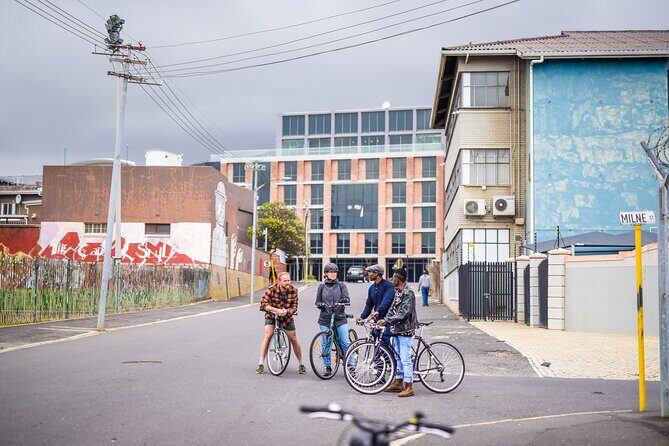
Bicycle use is included, and you don’t need to bring your own bike. That’s a real convenience in Cape Town, where finding a suitable rental, helmet rules, and picking up gear can eat time you’d rather spend learning.
Group size is capped at 15, which usually means:
- You can actually hear explanations at stops.
- The ride doesn’t feel like a moving parade.
- You get more personal interaction if you have questions.
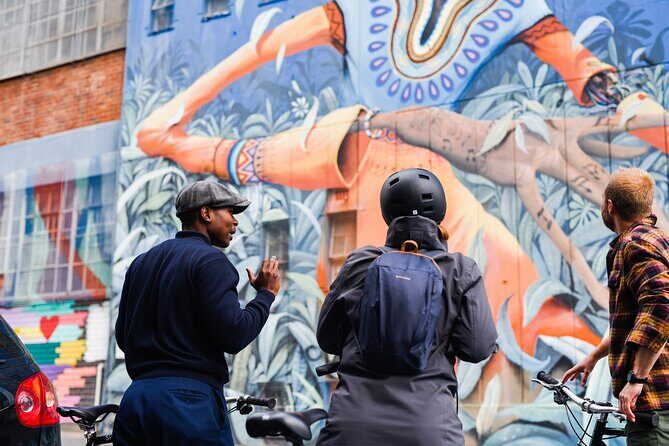
On the guide side, the named guides you might encounter include Sipho and Terrence. Based on the overall pattern of comments, the guide role tends to be strong in two areas: street art interpretation and neighborhood context, with a patient tone for questions.
Price and value: $54.83 for a lot of stops in one go
At about $54.83 per person, the tour can feel like a “splurge” compared to walking around for free—but the value is in the structure.
You’re paying for:
- Bike rental included (not just “a guide,” but actual transportation).
- Entrance fee included.
- A guided route that links multiple neighborhoods and major landmarks.
- The time saved versus piecing everything together.
If you tried to replicate the route on your own, the hard costs would add up quickly—especially once you factor in paid entry at historic sites plus transit time between far-apart stops. For a time-limited visit, this is a practical way to buy back hours and still get depth.
Practical riding tips for Cape Town streets and squares
This tour requires good weather. That matters because you’ll be outside for the full ride, and you’ll move through city blocks and public spaces.
To keep the experience smooth:
- Wear comfortable shoes you can use for short walks between bike points.
- Bring sun protection (Cape Town sun can be strong even when the air feels mild).
- If you’re sensitive to wind, a light layer is smart for the ride.
- Keep your phone charged if you plan to save photos at Bo-Kaap, Greenmarket Square, and along Long Street.
Also, bring a mindset shift: this is not a “stand and stare” tour. You’ll learn best when you keep moving and let the guide’s explanations connect the dots.
Should you book this Cape Town City and Woodstock Bicycle Tour?
Book it if you want:
- A short, high-value way to see central Cape Town by bike.
- A route that balances art, street life, and major historic sites.
- Less logistical stress than building your own plan from scratch.
Skip it (or rethink it) if:
- Weather sensitivity is an issue for you, since good conditions are required.
- You prefer long, slow stays at only one or two neighborhoods.
- You mainly want scenery and not structured context.
Overall, this tour is a strong choice for travelers who want their Cape Town to have both color and consequence—and who like learning while moving through real streets.
FAQ
FAQ
How long is the Cape Town City and Woodstock Bicycle Tour?
It runs for about 3 hours.
Where does the tour start?
The meeting point is Shop 5 at the Arcade, Salt Circle Arcade, 374 Albert Rd, Woodstock, Cape Town.
Does the tour include a bicycle?
Yes. Use of bicycle is included, so you don’t need to bring your own bike.
Are entrance fees included?
Yes. Entrance fee is included.
What stops are included on the route?
The tour includes stops such as Old Biscuit Mill, District Six Museum, Grand Parade, Bo-Kaap, Company’s Garden, Greenmarket Square, St George’s Mall, Long Street, and Cape Town old city hall. The Castle of Good Hope may be included depending on the host’s chosen route.
What’s the group size?
The tour has a maximum of 15 travelers.
Do I need good weather?
Yes. The experience requires good weather, and if it’s canceled due to poor weather you’ll be offered another date or a full refund.
What is the cancellation policy?
You can cancel for a full refund up to 24 hours before the experience’s start time. If you cancel less than 24 hours before, the amount paid is not refunded.