REVIEW · CAPE TOWN
Cape Town Helicopter Tour: Atlantic Coast
Book on Viator →Operated by Cape Town Helicopters · Bookable on Viator
Cape Town from the air hits different. This Atlantic Coast helicopter tour gives you quick, high-impact views of Table Mountain, City Bowl, and the coastline around Cape Peninsula in about 20 minutes.
I really like how the route is built around big visual hits right away: you leave from the V&A Waterfront harbor area and climb into the geometry of the city. I also love the live on-board commentary, because it turns what you see into something you can actually place on a map.
One heads-up: the tour needs good visibility, and cloud cover can make the experience feel shorter than it really is. If you show up on a misty day, you may not get the sharp “wow” you hoped for—though if it’s canceled for poor weather, you’ll be offered an alternative date or a full refund.
In This Review
- Key highlights before you take off
- From the V&A Waterfront to open sky: what your first minutes feel like
- City Bowl and the Table Mountain circle: the real reason this tour works
- The Atlantic coastline route: beaches, Twelve Apostles, and that coastline geometry
- Quick stop moments: where each view fits your Cape Town plan
- Signal Hill and Lion’s Head
- Camps Bay and Clifton
- Llandudno’s boulder framing
- Hout Bay Harbour: the working port view
- Timing, pace, and why 20 minutes can feel both perfect and short
- Price and value: when $211.65 makes sense
- Safety, comfort, and the one thing to plan for: seating
- Weather reality: clouds are the hidden boss
- Should you book this Atlantic Coast helicopter tour?
- FAQ
- How long is the Cape Town Helicopter Tour: Atlantic Coast?
- Where does the tour start and end?
- Is hotel pickup included?
- Do you get live commentary during the flight?
- Is this a private tour?
- Is there a weight limit?
- Can I bring cameras or binoculars?
- What happens if weather is poor?
- Are any items like handbags allowed on the flight?
Key highlights before you take off
- V&A Waterfront departure: You start above one of the oldest working harbors in the Southern Hemisphere.
- Table Mountain from all sides: You circle it instead of just skimming past.
- Big-name views with context: Lion’s Head, Signal Hill, Twelve Apostles, and the Atlantic beaches come with real-time commentary.
- Atlantic Seaboard shoreline: Camps Bay, Clifton Beach, and Llandudno sit in your flight path.
- Hout Bay Harbour pass: You get a bird’s-eye look at a working fishing harbor and the tuna/snoek/crayfish industry.
- Small-group feel: Up to 6 seats per helicopter, and the max group size is 12 on the activity.
From the V&A Waterfront to open sky: what your first minutes feel like
Your ride starts at Cape Town Helicopters at 36 E Pier Rd inside the V&A Waterfront area. If you book pickup, they’ll collect you from your hotel and bring you to the helipad in the city center, which saves time and stress—especially if you’re coming from the waterfront anyway.
Once you’re in the helicopter, expect a straightforward setup. There’s no mention of a long safety talk marathon; the bigger thing is planning around gear. No handbags or carry-on bags are allowed on the flight, but lockers are available free of charge, so you can bring what you need and still keep the cabin uncluttered.
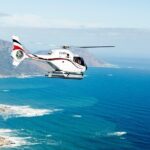
Inside the cabin, seating is allocated based on weight and balance approval. That matters because helicopter seats aren’t always “perfect view” from every angle. The good news: the aircraft uses cinema-style seating, which helps keep sightlines fair. Still, if you’re picky about where your head lands relative to the window, consider asking about seating options—there’s mention of private flights where seating can be chosen within helicopter limits.
A few more Cape Town tours and experiences worth a look


City Bowl and the Table Mountain circle: the real reason this tour works
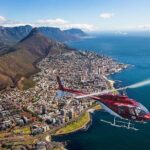
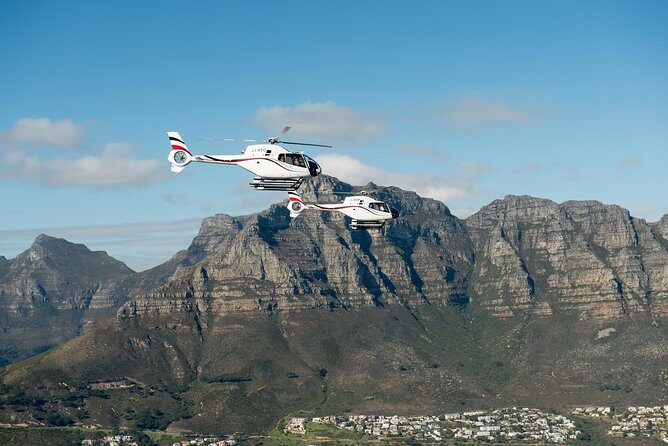
The main event here is Table Mountain—and not in a casual, “you got a glimpse” way. You fly up and see Cape Town’s City Bowl first, with the amphitheater-like bowl of the city opening up from above.
Then you circle Table Mountain. From the ground, Table Mountain can feel like one mountain with one shape. From the air, it becomes a landmark with edges, ridges, and a relationship to everything around it. That’s the difference between seeing a postcard and understanding how the city sits at its base.
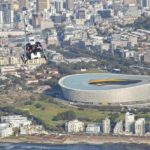
You’ll also fly over Cape Town Stadium, built for the 2010 FIFA World Cup. From above, stadiums are more than sports venues—they become big “orientation points,” especially when your brain is trying to match today’s aerial view to tomorrow’s walking plan.
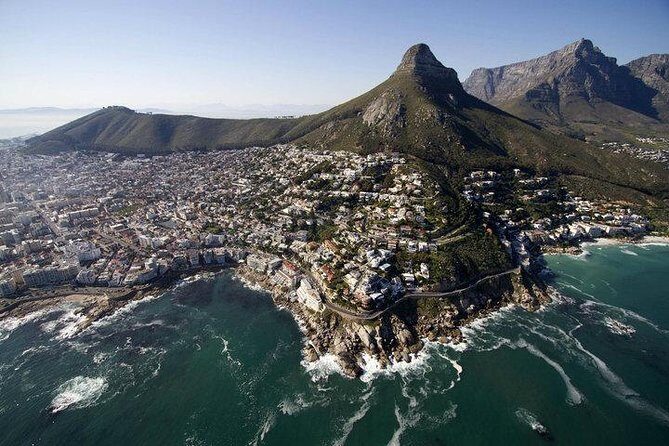
As you get higher, you start picking out smaller landmarks that define the city’s shape. Signal Hill—also known as Lion’s Rump—sits near Lion’s Head, and seeing them from the air helps you understand why locals talk about these mountains like they’re part of the city’s neighborhoods.
The Atlantic coastline route: beaches, Twelve Apostles, and that coastline geometry
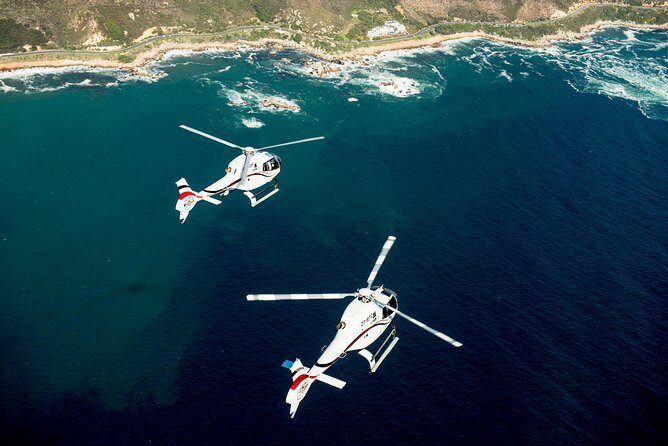
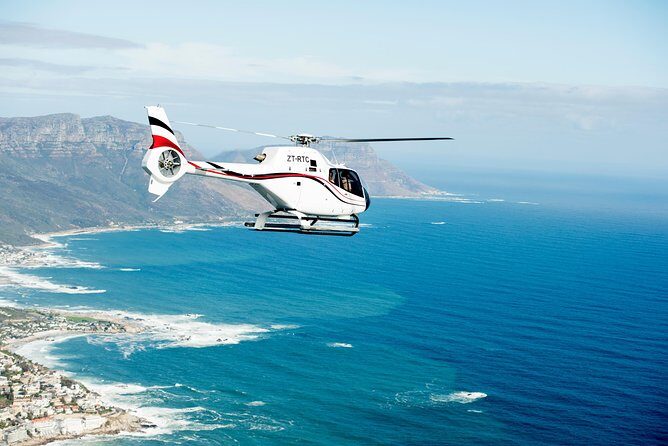
After Table Mountain, the helicopter route pushes you toward the Atlantic Seaboard, where the shoreline does its own thing—coves, beaches, and rock formations all mixed into one view.
You fly past Lion’s Head and then along the Atlantic coast. On a clear day, you may even catch Robben Island in the distance. That one is worth a reality check: visibility matters, and “maybe” is exactly right here.
Then comes one of the most recognizable scenery stretches on the Peninsula: the Twelve Apostles. From the air, this mountain range is easier to read as a long line along the coast, rather than a group of peaks you just happen to see from one viewpoint.
The beaches below are the next payoff. Keep an eye out for Camps Bay, Clifton Beach, and Llandudno Beach—white sand sections that look like they were cut into the coastline. Camps Bay is especially fun from above because it’s linked to the Twelve Apostles backdrop, and you get the sense of how the town faces the water. Llandudno is more rugged-looking, with granite boulders and mountain framing, and that kind of texture is easier to appreciate when you’re not locked into a street-level angle.
If you’re a first-time visitor, this is the moment when the tour starts doing more than sightseeing. It helps you understand why Cape Town has such a strong “coast + mountains” identity. From above, the city’s geography stops being trivia and starts being useful.
Quick stop moments: where each view fits your Cape Town plan
Helicopter tours are short, so each segment is really about giving you context. Here’s how the route parts connect to real-world planning.
Signal Hill and Lion’s Head
These are near the “signature postcard triangle” of Table Mountain, Lion’s Head, and Signal Hill. Seeing them from overhead is helpful if you later want to choose between viewpoints, hikes, or driving routes. Even if you never hike, you’ll still know what you’re aiming at.



Camps Bay and Clifton
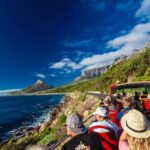
From the air, these places are easy to distinguish by how the coastline bends. Camps Bay tends to read as a sheltered bay, while Clifton looks more like long, exposed beach frontage. That helps you decide where you want time on the ground, depending on whether you’re chasing calmer-feeling beach vibes or more open Atlantic energy.
Llandudno’s boulder framing
Llandudno’s scenery includes large granite boulders and mountain surroundings. On a walk, you’d only spot pieces at a time. From the air, the whole “structure” of the area becomes visible in one sweep, which makes it easier to pick the best spot to explore later.
Hout Bay Harbour: the working port view
Near the end of the flight, you pass Hout Bay Harbour, one of the busiest fishing harbors in the Western Cape. The highlight here is that it’s not a pretend harbor. It’s tied to an established industry that includes tuna, snoek, and crayfish, and you can see the working-port layout from above.
That last stretch helps the flight feel grounded. After all the dramatic mountains and beaches, Hout Bay is your reminder that Cape Town’s coast is also about work, not just views.
Timing, pace, and why 20 minutes can feel both perfect and short
This tour is about 20 minutes flight time, with the activity lasting roughly 20 minutes overall. You’re in the air long enough to see a lot of coastline geometry and major landmarks, and then you’re back toward the helipad shortly after—around the 18-minute mark you start heading back.
Because it’s short, it’s smart for people who don’t want a half-day detour. It also works well for families and couples who want one big “wow” moment without needing hours of prep.
Still, one drawback comes up in real life: it can feel brief once you’re locked into the view. If you tend to get impatient when you’re having fun, you might leave wishing it lasted longer. The upside is that the tour still does something many longer tours can’t: it delivers a concentrated hit of top landmarks without dragging.
Price and value: when $211.65 makes sense
At $211.65 per person, this isn’t a budget activity. But helicopter rides in Cape Town are mostly paying for three things: time saved (vs. getting all these views by car), the perspective shift (mountain-and-ocean relationships), and the live pilot commentary that helps you interpret what you see.
Is it worth it? For most people, yes—if you treat it like a highlight moment, not a full sightseeing replacement. The booking is also described as having pickup offered, which can add value if you’re staying outside the waterfront zone.
A fair way to judge it is to ask: would I pay for the ability to see Table Mountain, the Atlantic beaches, and Hout Bay from above in one go? If the answer is yes, this price is easier to swallow. If your dream is a relaxed afternoon exploring neighborhoods, then save your money for time on the ground.
One more value detail: the tour can include wildlife sightings. In one on-board account, a pilot spotted a humpback whale with her calf from the air. That’s not guaranteed, but it’s a real example of the kind of surprise this route can deliver.
Safety, comfort, and the one thing to plan for: seating
Safety and professionalism come up in the feedback. People describe the team as professional, well organized, and making them feel very safe. That matters in a helicopter, where your comfort level is closely tied to how smooth everything feels on the ground and in the air.
Comfort is mostly about expectations. The ride is in a small aircraft, and seating depends on weight and balance. In most cases, cinema-style seating helps everyone see. But one experience reported an obstructed view because another couple was also on the same ride, pushing one person into a middle seat in the second row.
What you can do with that information: if you care a lot about view placement, consider booking a private flight option if it’s available to you (there’s mention of private flights where seating can be chosen within limits). If you don’t mind a seat that isn’t front-and-center, you’ll likely find the main landmarks still very easy to enjoy.
Weather reality: clouds are the hidden boss
This is where helicopter tours can swing from “bucket list” to “why did I pay for this.” The operation requires good weather, and if they cancel due to poor weather, you’ll get either a different date or a full refund.
But there’s also the human side of weather. One disappointment described a flight where clouds made it hard to see Cape Town as well as hoped. That’s the risk you accept when you plan a sky day.
My practical advice is simple: schedule this early in your Cape Town stay if you can. That way, if visibility is questionable, you have room to move plans around and still hit the trip on a better day.
Should you book this Atlantic Coast helicopter tour?
Book it if you want one high-impact view of Cape Town’s signature geography—Table Mountain, the City Bowl, and the Atlantic shoreline—in a tight time window. It’s especially good for first-timers who want to get their bearings fast and then explore the places you now understand from above.
Skip or think hard if you’re chasing a calm, long nature experience on the ground. This is a ride, not a walking tour. It’s also sensitive to weather, so if you’re visiting during a cloudy stretch and you hate uncertainty, consider reserving flexibility.
If you do book, do it with the right mindset: you’re paying to see Cape Town’s big picture from the sky. When the visibility is good, the experience lands exactly where it’s supposed to—fast, dramatic, and memorable.
FAQ
How long is the Cape Town Helicopter Tour: Atlantic Coast?
The flight time is about 20 minutes, and the overall activity is approximately 20 minutes.
Where does the tour start and end?
It starts and ends back at Cape Town Helicopters at 36 E Pier Rd, Victoria & Alfred Waterfront.
Is hotel pickup included?
Yes. Hotel pickup is offered and is included with the tour.
Do you get live commentary during the flight?
Yes, there is live commentary provided on board by the pilot.
Is this a private tour?
No. Helicopter tours may be shared with other parties, and helicopters seat up to 6 people.
Is there a weight limit?
Yes. The provided maximum total weight per passenger is 276 lbs.
Can I bring cameras or binoculars?
Yes. Personal cameras, video cameras, and binoculars are allowed on board.
What happens if weather is poor?
This experience requires good weather. If it is canceled due to poor weather, you will be offered a different date or a full refund.
Are any items like handbags allowed on the flight?
No. No handbags or carry-on bags are allowed, but lockers are available free of charge.