REVIEW · CAPE TOWN
Cape Town: Tandem Paragliding with views of Table Mountain
Book on GetYourGuide →Operated by AirVentures Paragliding · Bookable on GetYourGuide
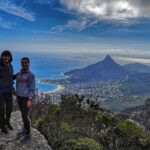
Table Mountain from the sky is hard to beat, and I really like how experienced pilots put you at ease fast. I also love the 360-degree views you get overhead, including Sea Point and Lions Head, with Cape Town spread out beneath you.
The main thing to plan for is that this is weather-dependent, so your start point and exact time in the air can shift (sometimes a bit shorter than you’d hope).
In This Review
- Key Points You Should Know
- Soaring Over Cape Town: Why This Flight Feels Like a Real View Upgrade
- Launch Location: Signal Hill or Lions Head Depends on the Wind
- Meeting Witness on Signal Hill: How the Start Gets You Sorted Quickly
- The Preflight Briefing: What You Actually Learn Before Takeoff
- Up in the Air: 360 Views, Sea-Air Vibes, and a Glider That Feels Smooth
- Photos and Video: Optional R 400, Then Straight to Your Phone
- Landing and the Two Endpoints: Promenade vs The Glen Club
- Shuttle Back Up: The Little Logistics Win You’ll Appreciate
- Price and Value: What You’re Paying For at About $109
- Who Should Book This Tandem Flight (and Who Should Skip It)
- Weather Reality: What Happens When Wind Changes the Plan
- Should You Book This Tandem Paragliding Flight?
- FAQ
- How long is the experience?
- Where do I meet the team?
- Do you always fly from Signal Hill?
- What views will I see?
- Is there an engine during the flight?
- Are photos and videos included?
- What languages are available?
- What should I bring and wear?
- Who is the activity not suitable for?
- What if the weather affects my scheduled time?
Key Points You Should Know
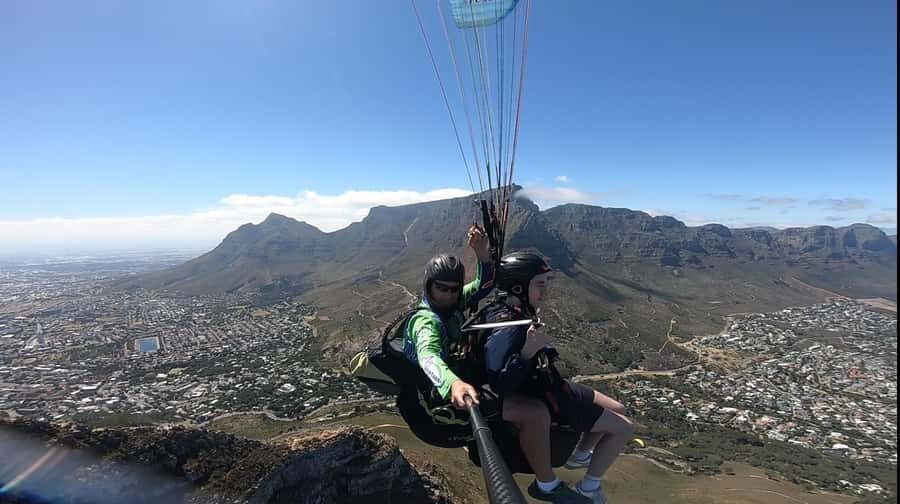
- Signal Hill vs Lions Head takeoffs swap based on wind direction for the best flying conditions
- Safety briefing is hands-on, covering the glider basics, takeoff sequence, and how you’ll stay aloft without a motor
- Your pilot chats while flying, and you can enjoy the view instead of working out what’s happening
- A classic glide to land over either Sea Point or Camps Bay, ending near the Sea Point Promenade or The Glen Club
- Optional photo/video add-on (R 400) is delivered directly to your phone at landing
- Free shuttle back up means you can leave your vehicle at the top and not stress about getting it later
Soaring Over Cape Town: Why This Flight Feels Like a Real View Upgrade
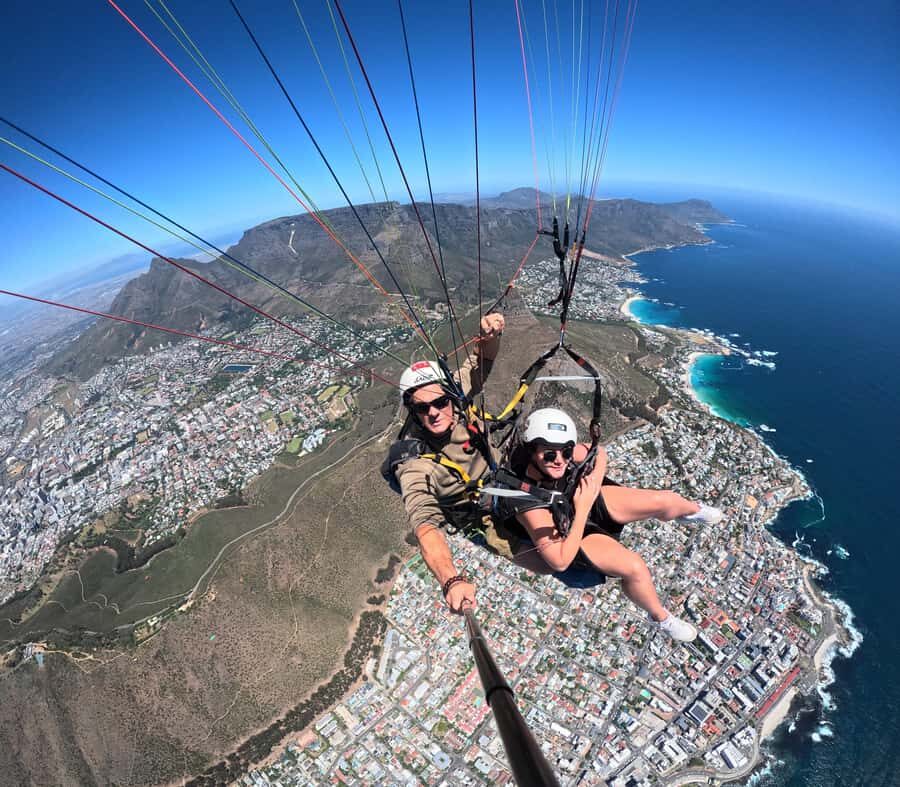
If Cape Town is on your list, you’ve probably seen it from the road and from viewpoints. This activity gives you a different angle: you look down at the city, the ocean, and the mountains in one continuous sweep. In a place like this, that change in perspective is the whole point.
You’re in a tandem setup with an experienced instructor pilot, so the experience is designed for you to enjoy it rather than manage it. You’ll get a structured preflight run-through, then once you’re airborne, your pilot explains how paragliding works in real time—how you can stay in the air without an engine, and even how altitude can happen while gliding.
And the view priorities are very Cape Town: Table Mountain, Sea Point, and Lions Head are the big names you’re there for. If wind favors a Lions Head launch, you add Camps Bay into the mix on the glide out.
You can also read our reviews of more tours and experiences in Cape Town.


Launch Location: Signal Hill or Lions Head Depends on the Wind
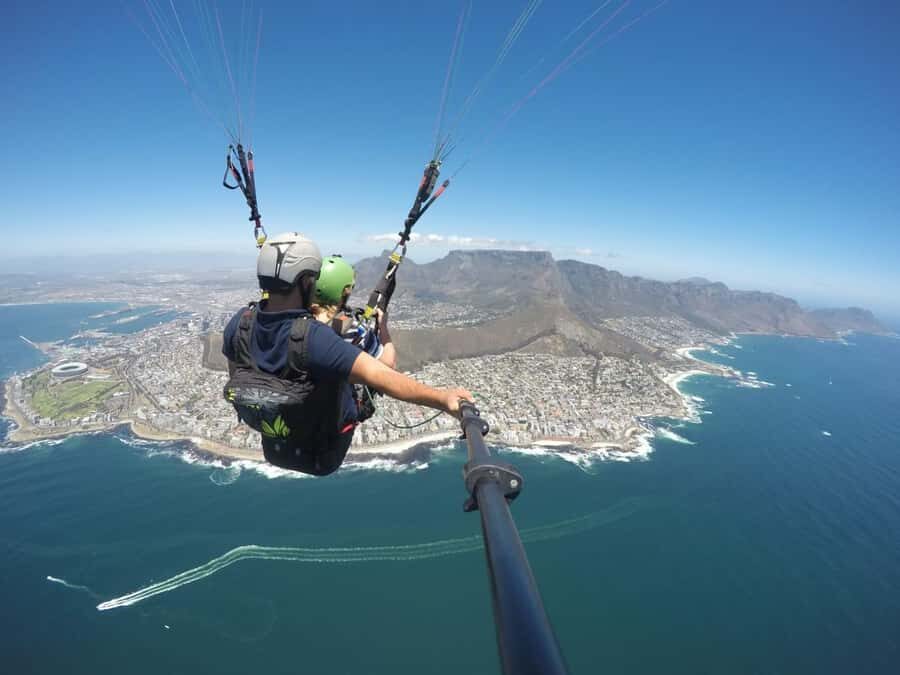
This flight doesn’t treat the launch point as fixed. Instead, you launch from Signal Hill or Lions Head depending on what the wind is doing that day. That matters because paragliding is about airflow. The better the wind direction and conditions, the smoother the ride and the more time you can realistically spend aloft.
Practically, it also changes the geography you’ll see during the glide:
- From Signal Hill, you’ll glide out toward Sea Point and land by the Sea Point Promenade.
- If you launch from Lions Head, you glide out over Camps Bay and land near The Glen Club.
Either way, the goal stays the same: get you a memorable route that makes sense for the weather, not just the schedule.
Meeting Witness on Signal Hill: How the Start Gets You Sorted Quickly
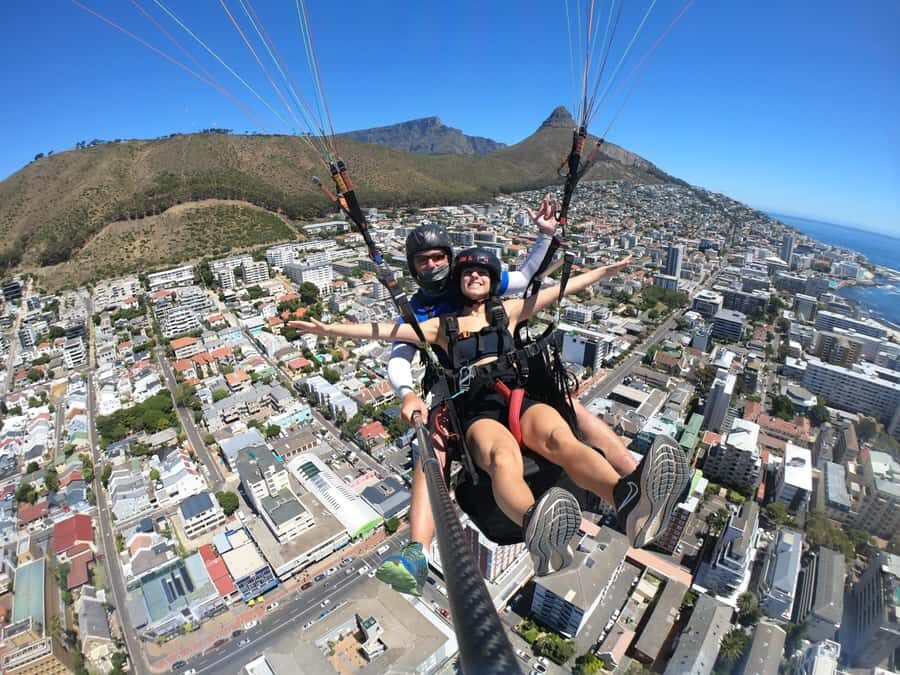
You meet the team by the paragliders launching next to the car park at the top area on Signal Hill, at the end of Signal Hill Road. Just ask for Witness, the manager on takeoff, and he’ll guide you through the start and paperwork.
One thing I like about how this runs is that it’s built to reduce uncertainty. You arrive, you find the team fast, and you move into the process without long wandering. You’ll also do the usual paperwork (they use a phone for the waiver), and then it shifts into real prep: helmet, getting clipped in, and a clear briefing so you know what’s coming.
If you’re a nervous first-timer, this part helps. Several pilots and crew members are described as friendly and communicative, including pilots like Lamont, Britt, Brett, Cal, Carl, Burrat, Hanse, and Alois and the manager Witness. The consistency isn’t about a single famous personality; it’s about keeping you calm and informed.
Language support is another value point. Flights are run with an instructor pilot fluent in your chosen language—English, Turkish, German, or Dutch—so you’re not stuck guessing during safety instructions.
The Preflight Briefing: What You Actually Learn Before Takeoff
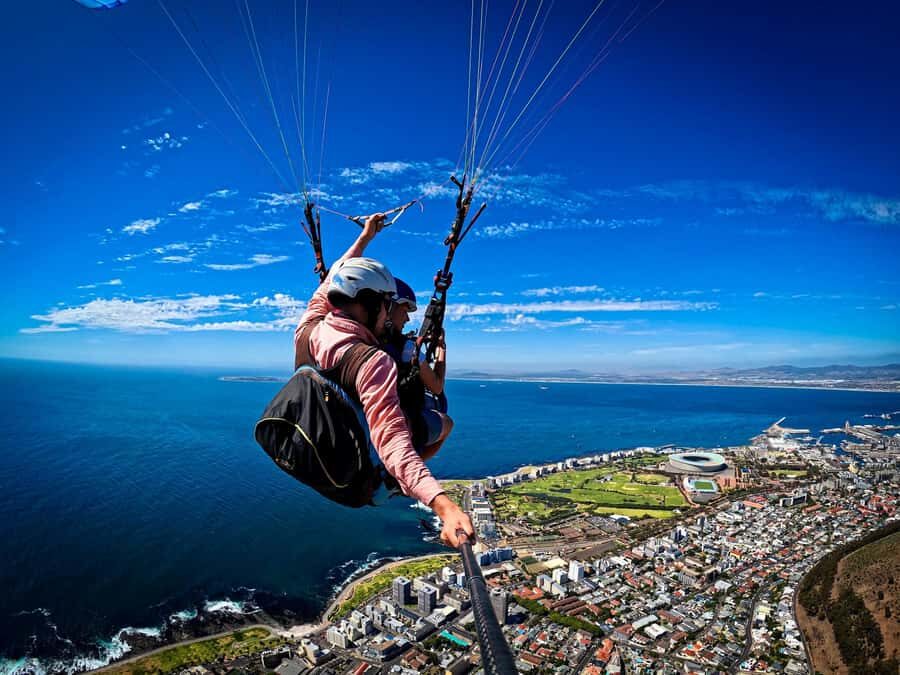
Before you run, jump, or anything else, you’ll get a preflight briefing. Expect a quick but structured explanation of the paraglider, including basic parts, plus the takeoff sequence and launching instructions.
This is more than “don’t worry, you’re safe.” The pilot also explains the key paragliding idea: you’re flying without a motor. That means staying in the air is about the air around you—how the glider uses airflow and how altitude can change while you glide.
You’ll also learn how to handle the experience mentally. Your pilot may encourage you to enjoy the view, pause correctly, and keep your comfort level steady during the move from ground to air. That’s a small detail, but it makes a difference if you’re anxious at the moment your feet leave the launch.
And while you’re getting briefed and prepared, you’ll see the setup you’re flying on. A helmet is used, and you’re clipped in before the launch.
Up in the Air: 360 Views, Sea-Air Vibes, and a Glider That Feels Smooth
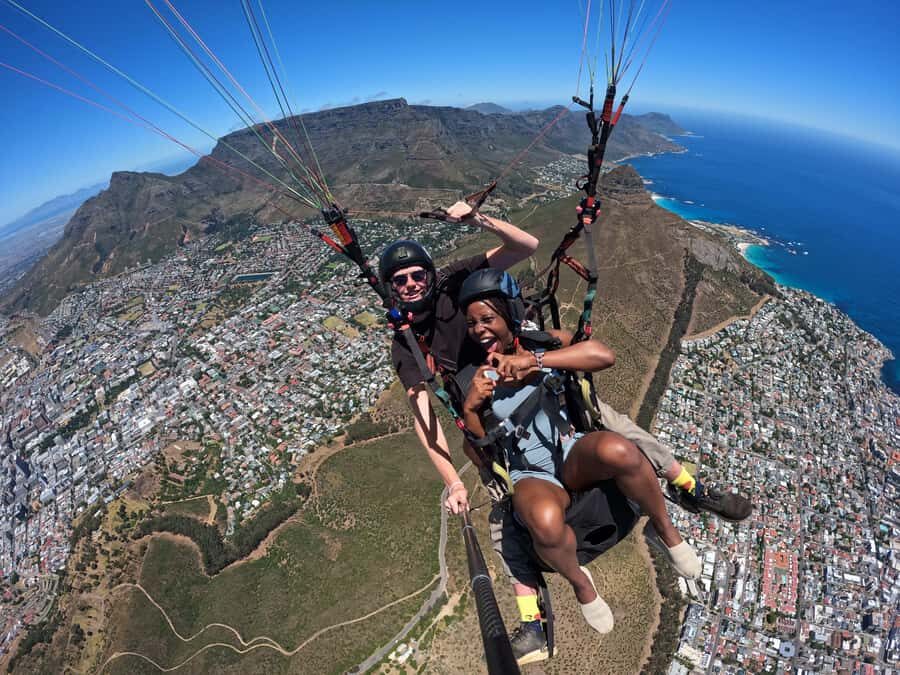
Once you’re airborne, the experience becomes mostly about the view. You’re not watching gauges or steering. Instead, your pilot chats with you and talks you through how the flight is unfolding and where you can stay in the air without an engine.
The views are the headline, and the route is designed to hit the famous parts of Cape Town:
- Over Table Mountain territory, with a sense of scale you don’t get from street level
- Across Sea Point, with the coastline and city structure spread below
- Over Lions Head area, if you’re launching there
- Potentially over Camps Bay too, depending on wind and launch site
The typical time in the air is designed around weather conditions. The goal is to keep flights around 5–15 minutes in the air when conditions allow. Sometimes that time feels perfect—long enough to feel like it was real, short enough that you don’t get stuck waiting for the thrill to happen. If weather limits things, airtime may end up shorter.
What I find smart here is that the company isn’t selling you a guaranteed long flight in every kind of wind. They’re selling the experience, then flying it responsibly based on conditions.

Photos and Video: Optional R 400, Then Straight to Your Phone
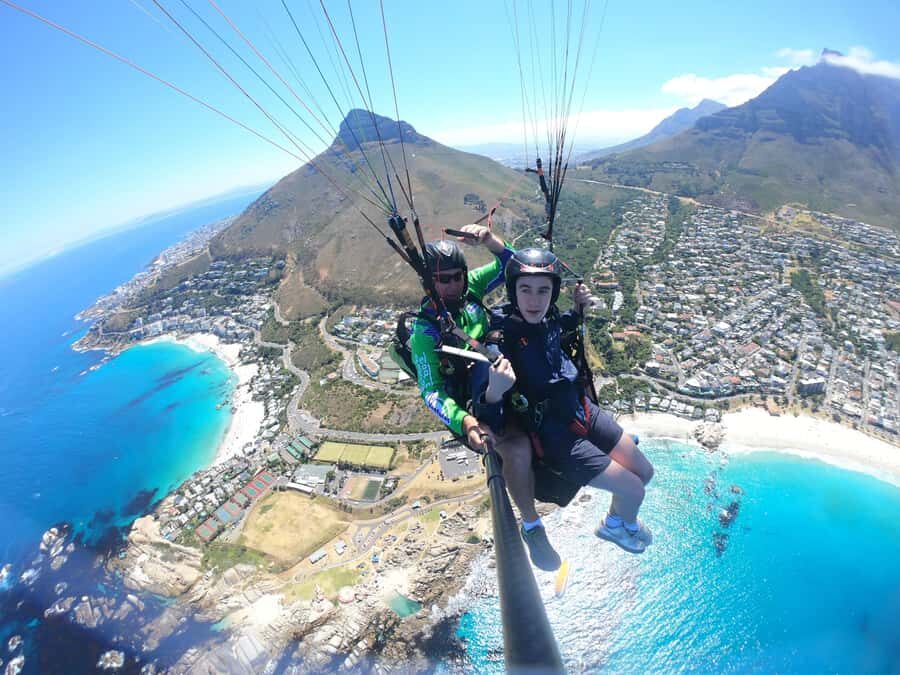
You can get photos and video during the flight. The important part for value and convenience is delivery: at landing, your photos and videos are copied directly onto your mobile phone.
That also means you’ll likely want enough phone storage before you arrive. If you know you’re low on space, clear room ahead of time so you don’t miss the files at the end.
There is a cost: the photo/video option is listed as an extra R 400. Some people love this add-on and call the shots fantastic. Others feel it should be included, so decide based on how much you care about having the record right away rather than using your own camera.
Landing and the Two Endpoints: Promenade vs The Glen Club
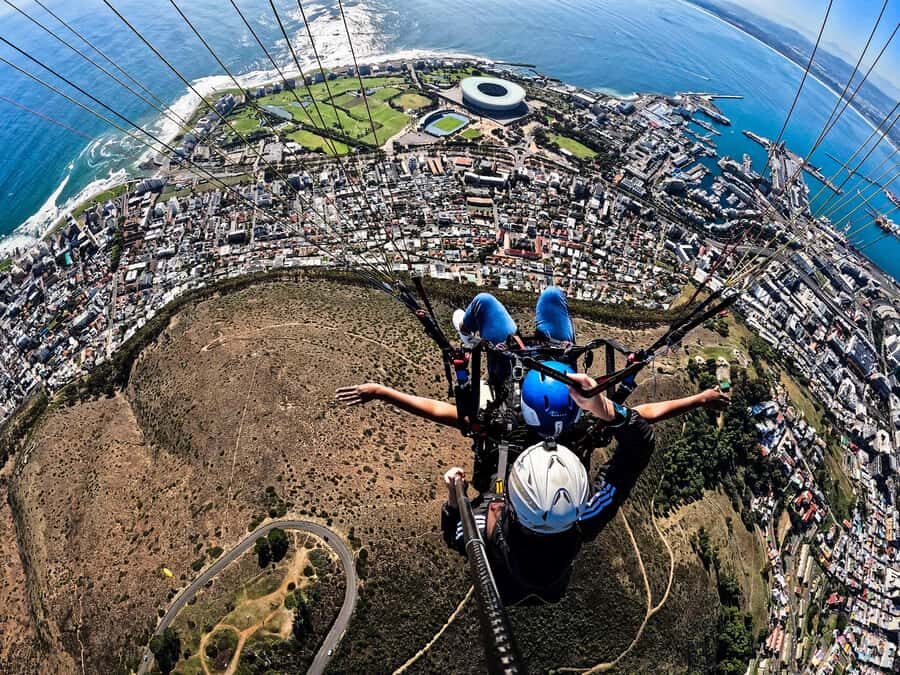
The landing is part of why this activity works well for visitors. You get a glide out and a landing setup that’s close to recognizable areas, so you’re not stuck trekking back across Cape Town streets after flight.
From a Sea Point route, you’ll glide toward the landing near the Sea Point Promenade. You may have a short window to regroup and take a breath—small break time so you’re not immediately rushed into leaving.
From a Lions Head route, you’ll land at The Glen Club after gliding out over Camps Bay. The experience still finishes with a short postflight moment so you can ask questions and get closure on what you just did.
In both cases, you’ll get a post-flight briefing and the chance to ask anything you were wondering about during the flight.
Shuttle Back Up: The Little Logistics Win You’ll Appreciate
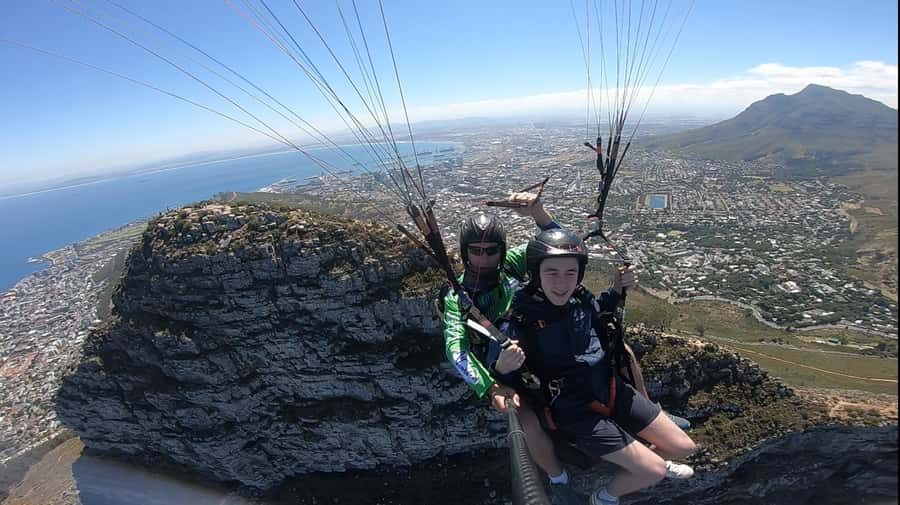
One practical detail that makes this easier than many outdoor activities: you get a free shuttle back up to the takeoff location after landing. That’s huge if you don’t want to play transport chess with taxis and parking.
It’s also a comfort factor. You don’t have to stand around thinking through your next move while your adrenaline fades. You’re done, you’re looked after, and then you get back to where you started.
Price and Value: What You’re Paying For at About $109
At about $109 per person for roughly 40 minutes total, the value depends on what you think “the experience” includes. Here, the flying time itself is usually 5–15 minutes in the air, with the rest of the time spent on briefings and setup.
That means you’re paying mostly for:
- the tandem instruction (someone else runs the show in the air)
- the route over iconic Cape Town spots (Table Mountain, Sea Point, Lions Head, and sometimes Camps Bay)
- the equipment and safety process
- the convenience extras like the shuttle back up
Most people rate the flight extremely highly for comfort and safety, plus the smoothness of the whole process. Many also say the pilot’s engagement helped them stop worrying and start enjoying.
The main value complaint is that the airtime can feel short. Weather is the reason, not laziness. But if you’re the type who wants longer time overhead no matter what, you might feel the difference.
Then there’s the photo/video add-on. If you choose it, you’ll pay R 400. If you don’t, you still get the memory, but you won’t have the professional shots delivered automatically.
Who Should Book This Tandem Flight (and Who Should Skip It)
This experience can be a great match if you:
- want a first-time-friendly intro to paragliding in Cape Town
- like guided experiences where the pilot talks you through what’s happening
- enjoy skyline views and want your photos to look like they were shot from a different planet
It can also be a confidence booster. Several people describe feeling scared at first but comfortable after the briefing and reassurance from the pilot and crew.
Who shouldn’t go is clearly stated:
- Children under 14
- Pregnant women
- People with heart problems
Also note the basic footwear rule: bring closed-toe shoes. Open-toed shoes are not allowed. You’ll be moving around during setup, and you don’t want loose footwear while you’re clipped in and launching.
Weather Reality: What Happens When Wind Changes the Plan
You’re in Cape Town, and the sky rules there. Paragliding is weather dependent, and that affects both timing and conditions. The company tries to fly when it’s safe, which can mean waiting until later or shifting things around.
One helpful approach from the operation is communication. Guests mention updates while waiting and clear messaging when wind doesn’t cooperate at the first booked time.
Also, don’t assume you’ll always start at the same point. Since the launch can be Signal Hill or Lions Head, you should be ready for a different takeoff location than you expected.
Should You Book This Tandem Paragliding Flight?
I’d book this if you want the iconic Cape Town views from above and you’re okay with flying time that can flex with weather. The big selling point is that the experience is built around comfort and safety: a proper briefing, an experienced instructor pilot, and a smooth landing process that ends with help getting back up.
Skip it or reconsider if you need guaranteed long airtime, dislike paying extra for photos, or you fall into the listed categories that aren’t suitable (under 14, pregnant, or heart problems). And if you’re the kind of traveler who hates uncertainty, remember that wind can change everything outdoors—here, that’s not a bug, it’s the job.
If you’re open-minded and want a memorable sky ride over Table Mountain and the Atlantic coast, this is an easy yes.
FAQ
How long is the experience?
The total experience time is listed as 40 minutes. The time you spend in the air is weather dependent, with a goal of around 5–15 minutes aloft when conditions allow.
Where do I meet the team?
You meet the paragliders launching next to the car park at the end of Signal Hill Road. Ask for Witness, the manager on takeoff.
Do you always fly from Signal Hill?
No. Flights start from either Signal Hill or Lions Head depending on the wind direction. You’ll be informed which location is used on the day.
What views will I see?
You’ll see spectacular views including Table Mountain, Sea Point, and Lions Head. If the flight launches from Lions Head, you’ll glide out over Camps Bay as well.
Is there an engine during the flight?
No. It’s a gliding flight with no motor, and your instructor pilot will explain how you stay in the air and can gain altitude.
Are photos and videos included?
Photos and videos are an optional extra. They are listed at R 400, and they are copied directly onto your mobile phone at the landing field.
What languages are available?
The instructor pilot is listed as fluent in English, Turkish, German, and Dutch.
What should I bring and wear?
Bring closed-toe shoes. Open-toed shoes are not allowed.
Who is the activity not suitable for?
It’s not suitable for children under 14, pregnant women, or people with heart problems.
What if the weather affects my scheduled time?
Paragliding is very weather dependent. If conditions aren’t conducive, your flight may be slightly shorter, and timing may change as they wait for suitable wind.