REVIEW · ST LUCIA
iSimangaliso Wetland Park, Night Drive Safari
Book on Viator →Operated by Heritage Tours & Safaris · Bookable on Viator
Night falls, and the bush gets honest. An iSimangaliso Wetland Park night drive is where you trade daylight certainty for raw, living darkness. I like that this tour keeps the group small (up to 10) and runs into the Western shores for nocturnal action like leopard, hippos, buffalo, elephants, giraffe, rhino, and even chameleons. One possible drawback: the route focus can affect what you spot, and some people expected specific sightings more reliably than they got.
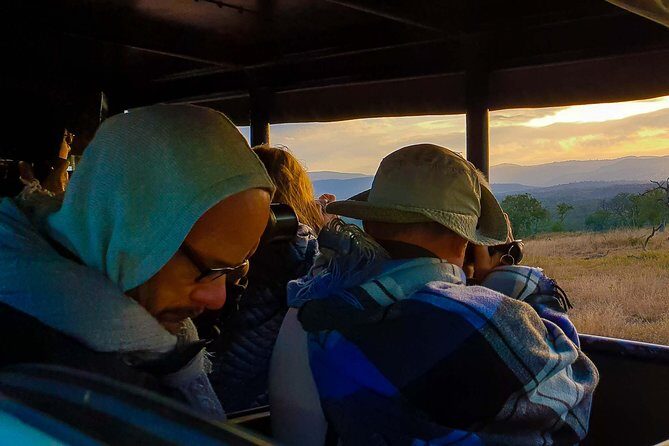
You meet at Heritage House in St Lucia and start at 8:00pm. You’ll ride out for about 3 to 4 hours, scanning the bush while you listen for movement, calls, and that eerie rustle that means something is close. The value angle is strong here: conservation levies are included, pickup is offered, and blankets are available on all vehicles—perfect when the evening cool creeps in.
In This Review
- Key highlights to look for
- Why iSimangaliso at Night Changes the Game
- Price and what $43.29 really covers
- Meeting at Heritage House: getting started without stress
- The 3 to 4 hours on the night drive (what to expect)
- Wildlife odds: what you can realistically watch for
- Guide impact: blankets, scanning, and Sia’s animal knowledge
- The Western shores expectation: a real-world caution
- Who this night safari suits best (and who might hesitate)
- Should you book iSimangaliso’s Night Drive Safari with Heritage Tours & Safaris?
- FAQ
- What time does the safari start?
- How long is the night drive safari?
- How much does it cost?
- Where do I meet the tour?
- Is pickup offered?
- Do I need a physical ticket?
- Are blankets provided?
- What wildlife might I see?
- Is there an age limit?
- What if the weather is bad or the tour is canceled?
- Can I get a full refund if I cancel?
Key highlights to look for
- Up to 10 people: a calmer safari feel and more chances to ask questions as you go
- 8:00pm start in St Lucia: timing that’s built for nocturnal wildlife activity
- Blankets on every vehicle: less fuss with what to pack for the chill
- Western shores focus in iSimangaliso: a specific slice of habitat worth seeing after dark
- Chameleon to leopard range: wildlife variety on a night drive is often the surprise
- Guide-led scanning: you’ll learn what to watch for in the dark and how to interpret it
Why iSimangaliso at Night Changes the Game
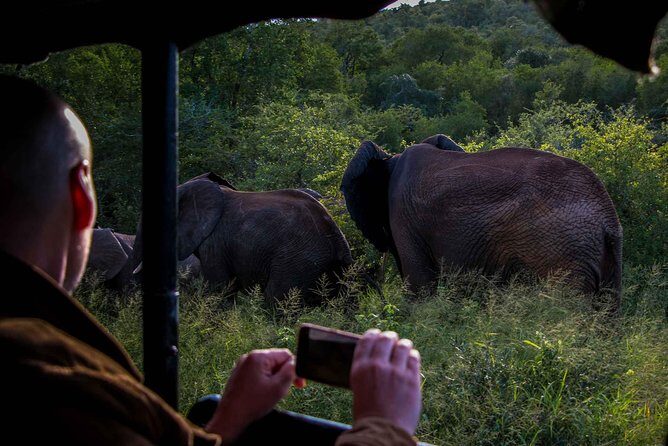
Day safaris are about seeing. Night safaris are about noticing.
At night, your senses switch modes. You start watching for eye shine, listening for snorts or crashing steps, and tracking movement by shape rather than detail. That shift is the whole point of doing a night drive in a place like iSimangaliso, where wetland edges and bush thickens can funnel animals into view.
This is also one of those experiences where the “wow” moments aren’t only about the biggest animals. Seeing hippos at grazing time, spotting a buffalo moving with purpose, or catching the quick silhouette of something smaller like a chameleon can be just as thrilling—because at night, you’re always one slow turn away from a new clue.
And the setting matters. iSimangaliso Wetland Park isn’t just a background. It’s the reason a night drive can feel different from day. You get the sense that the landscape changes its rules after sunset, and the wildlife follows those rules.
You can also read our reviews of more evening experiences in St Lucia



Price and what $43.29 really covers
At $43.29 per person for roughly 3 to 4 hours, this tour looks budget-friendlier than many night safaris—especially because it includes conservation levies and gives you blankets on the vehicles.
Here’s what I consider good value in practical terms:
- Conservation levies included: you’re paying for access and protection rather than paying extra later.
- Blankets included: it saves you from overpacking warm gear just to survive the evening.
- Small maximum group (10): fewer people usually means less crowd noise and more room to focus when an animal appears.
- Pickup offered: it reduces friction, particularly in St Lucia when you don’t want to hunt for parking and timing at night.
The only “value risk” is the age of the activity window and conditions. Night drives depend on weather and on where animals are active. If you’re the type who needs guaranteed leopard photos no matter what, no safari can promise that. But if you want a solid chance at major wildlife encounters, this price-to-experience ratio makes sense.
Meeting at Heritage House: getting started without stress
The tour begins at Heritage House St Lucia, at the corner of Flamingo and Katonkel St. Pickup is offered, but even if you’re going directly, the meeting point is straightforward.
Starting at 8:00pm means you should plan for an on-time arrival and a bit of waiting for the group to collect and settle. Bring something you can comfortably wear in low light. You don’t want a tight outfit that makes you uncomfortable when you’re scanning for movement for long stretches.
A helpful mindset: treat the start as your briefing and warm-up. Once you’re driving, focus on your guide’s cues. Night drives are better when you follow the rhythm—slow scans, quick checks, then quiet attention when the vehicle pauses.
The 3 to 4 hours on the night drive (what to expect)
This experience is a single, continuous safari-style outing: you head out into the bush on the Western shores of iSimangaliso Wetland Park for about 3 hours (often described as 3 to 4 hours overall).
You can expect the sequence to feel like this:
- Arrive, confirm, and settle
You’ll use the mobile ticket, and your confirmation should arrive at booking time. Then you get organized with the vehicle seating and, if you need it, the blankets.
- Head out and start scanning
The guide directs your attention to likely sighting spots based on what’s moving and what’s likely to be active at night. The “bush comes alive” feeling is real here: calls, insects, and distant movement fill the gaps between sightings.
- Look for nocturnal wildlife
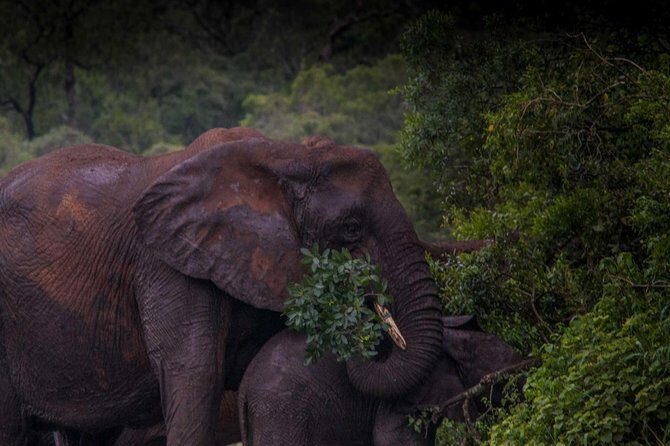
The wildlife search aims at both large mammals and smaller night-active creatures. This is where you might catch leopard behavior, hippos nearby, buffalo crossing, elephants close enough to matter, or giraffe where they’re feeding and moving. You may also see rhino and chameleons, depending on conditions and route.
- Return to the meeting point
The activity ends back where you started at Heritage House.
One important “expectation management” point: you’re not touring from one named viewpoint to the next. This is a moving search. That’s part of the fun. But it means the timing of sightings can be uneven—sometimes quick, sometimes you ride in silence for a bit while your guide watches.
Wildlife odds: what you can realistically watch for
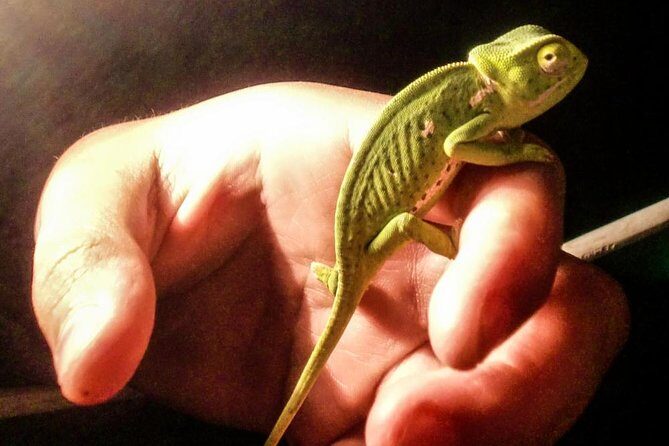
The tour focuses on nocturnal wildlife, with a wish list that’s big enough to keep you hopeful: leopard, hippos, buffalo, elephants, giraffe, rhino, and chameleons.
Here’s how I’d think about those sightings at night:
- Leopard: you’re watching for stillness, crouched movement, and sudden changes. Leopards can be silent when they want to be, so your guide’s scanning skill matters.
- Hippos: often easier to connect with than you’d think, especially if you’re near water or activity zones. You’re listening as much as looking.
- Elephants and buffalo: these are heavier signals. When they move, you tend to notice the presence before you can identify every detail.
- Giraffe: at night, you’re more likely to spot silhouettes and posture than crisp daylight features.
- Rhino: rarer by nature, and night spotting can be tricky—so go in with patience.
- Chameleons: small sightings are a bonus. When you see one, it’s a reminder that night isn’t only about the “big stuff.”
The best approach is curiosity without panic. If you feel rushed, you’ll miss the slow tells—ears shifting, heads turning, or movement that looks like nothing until it suddenly looks like everything.
A few more St Lucia tours and experiences worth a look

Guide impact: blankets, scanning, and Sia’s animal knowledge
A night drive lives or dies by the guide’s ability to read the dark.
In this case, the experience is clearly guide-led, and one name stands out: Sia. People praised how hard he worked to spot animals and shared animal knowledge in a way that made the sightings more meaningful. That matters. If you only see a shape in the dark, it’s less satisfying. If you understand what you’re looking at—feeding vs moving, threat vs calm—then even a brief sighting sticks with you.
So when you’re on the vehicle, do this:
- Ask questions during natural pauses.
- Pay attention to how Sia or your guide explains what you’re seeing and why.
- Don’t be afraid to ask what animals might be doing right then.
Also, the comfort piece helps your focus. Blankets on all vehicles mean you can stay attentive instead of thinking about freezing hands and stiff shoulders. Warmth isn’t a luxury on a night safari. It’s a concentration tool.
The Western shores expectation: a real-world caution
This tour is described as entering the Western shores of iSimangaliso. That’s a clear promise.
But here’s the practical caution: wildlife isn’t on a schedule you can set with a reservation. One disappointment mentioned was that a Western-shores promise didn’t translate into the specific animals people expected, like elephants and giraffes. The implication is simple: your sighting odds can shift with where the night drive ends up focusing and what the local conditions support that evening.
How to manage this without ruining your excitement:
- Go for the night experience first, not a single animal checklist.
- If elephants and giraffes are your top target, keep your expectations flexible and ask your guide what they’ll be looking for tonight.
- Remember that night wildlife viewing is partly luck, partly skill, and partly habitat behavior.
Even with that risk, the tour’s overall rating points to strong results most of the time—especially when your guide is active and the group stays focused.
Who this night safari suits best (and who might hesitate)
This is best for you if:
- You enjoy wildlife hunting by sound and motion, not just by big daytime sightings.
- You’re okay spending hours in darkness while your guide works the roads and the bush edge.
- You want a smaller-group safari feel.
It’s a tougher fit if:
- You need daytime-style comfort and steady, predictable viewing every few minutes.
- You dislike cold evenings, even with blankets.
- You’re traveling with children under 6 years old. This tour doesn’t permit them.
And because the safari has a maximum group size of 10 travelers, it’s also a good choice when you want a more intimate experience rather than a crowded night scene.
Should you book iSimangaliso’s Night Drive Safari with Heritage Tours & Safaris?
I’d book this if you want a genuine night-in-the-bush safari experience in iSimangaliso, with strong value details like included conservation levies and blankets, and a small group size that helps your odds and your comfort.
I’d think twice only if your plan depends on seeing a specific animal like giraffes and elephants on a guaranteed basis. Night drives can be wonderfully unpredictable, and your success depends on route choices and what animals are active that evening.
If you like wildlife, can handle the dark, and want a thoughtful guide-led safari session starting at 8:00pm from Heritage House, this one looks like a solid pick.
FAQ
What time does the safari start?
The night drive safari starts at 8:00 pm.
How long is the night drive safari?
It lasts approximately 3 to 4 hours.
How much does it cost?
It costs $43.29 per person.
Where do I meet the tour?
You meet at Heritage House St Lucia, at the corner of Flamingo and Katonkel St, St Lucia 3936, South Africa.
Is pickup offered?
Yes, pickup is offered.
Do I need a physical ticket?
No, you’ll use a mobile ticket.
Are blankets provided?
Yes, blankets are available on all vehicles.
What wildlife might I see?
The experience mentions potential sightings of leopard, hippos, buffalo, elephants, giraffe, rhino, and chameleons.
Is there an age limit?
Yes. No children under the age of 6 years old are permitted.
What if the weather is bad or the tour is canceled?
The activity requires good weather. If it’s canceled due to poor weather, you’ll be offered a different date or a full refund.
Can I get a full refund if I cancel?
Yes. You can cancel up to 24 hours in advance for a full refund.