REVIEW · JOHANNESBURG
Johannesburg: Inner City Guided Cycling Tour
Book on GetYourGuide →Operated by Honest Travel Experience · Bookable on GetYourGuide
Street art hits different in Johannesburg on a bike. I like this tour for how it strings together street art with local history across several inner-city neighborhoods. You also get a clear sense of how Johannesburg changed from the 1990s to today, not just a quick photo stop.
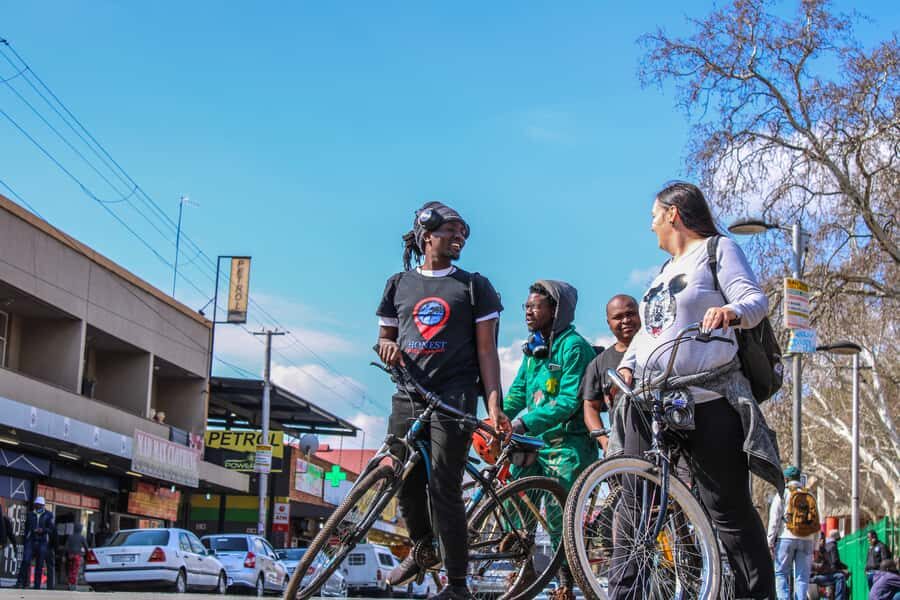
I also like the human factor: the guides focus on keeping you moving and explaining what you’re seeing. In particular, I love how Lebo steers the group safely through traffic, and how guides like Franck bring real energy and context to the ride.
One consideration: traffic is described as chaotic, and some bikes are single-gear, so you’ll want to be comfortable riding in city conditions and with that riding setup. If you prefer a calmer pace, you might want to pair this with a walking tour or bus time.
In This Review
- Key highlights worth circling
- Why this inner-city ride makes sense in Johannesburg
- The bike, helmet, and flat-route reality
- Braamfontein/Braamdontein street art: where the story shows up fast
- Newtown for jazz: listening with your eyes
- Marshalltown mining history and the Industrial Johannesburg thread
- Jewel City and Jeppes Town: small stops that widen the picture
- Maboneng and Victoria Yards: meeting the local artist
- Ellis Park Stadium and Bertrams: big landmarks, short time
- Traffic and safety: what the guides do (and what you should expect)
- Price and value: is $84 fair for 2–4 hours?
- Who should book this cycling tour (and who shouldn’t)
- Should you book Johannesburg: Inner City Guided Cycling Tour?
- FAQ
- How long is the Johannesburg Inner City Guided Cycling Tour?
- About how far will we cycle?
- Is the route flat?
- What’s included in the tour price?
- Are hotel pickup and drop-off included?
- Is lunch included?
- What languages are the guide and audio available in?
- Is the tour suitable for children?
- Where do we meet for the tour?
- Can I get a refund if I cancel?
Key highlights worth circling
- Street art in Braamfontein/Braamdontein with a guide to read the walls, not just pass them
- Newtown for jazz so the music side of Johannesburg isn’t skipped
- Mashalltown and mining history tied to the city’s industrial past
- Meeting an artist in Maboneng for a firsthand look at local creativity
- Ellis Park Stadium for a major landmark stop on a short schedule
- About 10km on a flat route meaning you can cover a lot without lots of climbing
Why this inner-city ride makes sense in Johannesburg
Johannesburg can feel huge and confusing if you’re only doing point-to-point stops. This cycling tour is built for the opposite problem: you get to cover multiple inner-city areas in roughly 2–4 hours without spending the whole day locked into transfers.
What makes it especially appealing is the mix of themes. You’re not just riding through streets—you’re moving through neighborhoods connected to street art, jazz, mining history, and newer creative spaces. That lets you understand Johannesburg as a city that keeps transforming, especially since the 1990s.
And because it’s around a 10km loop on a flat surface with very few hills, the tour fits people who want a hands-on experience but don’t want a workout challenge.
You can also read our reviews of more cycling tours in Johannesburg


The bike, helmet, and flat-route reality
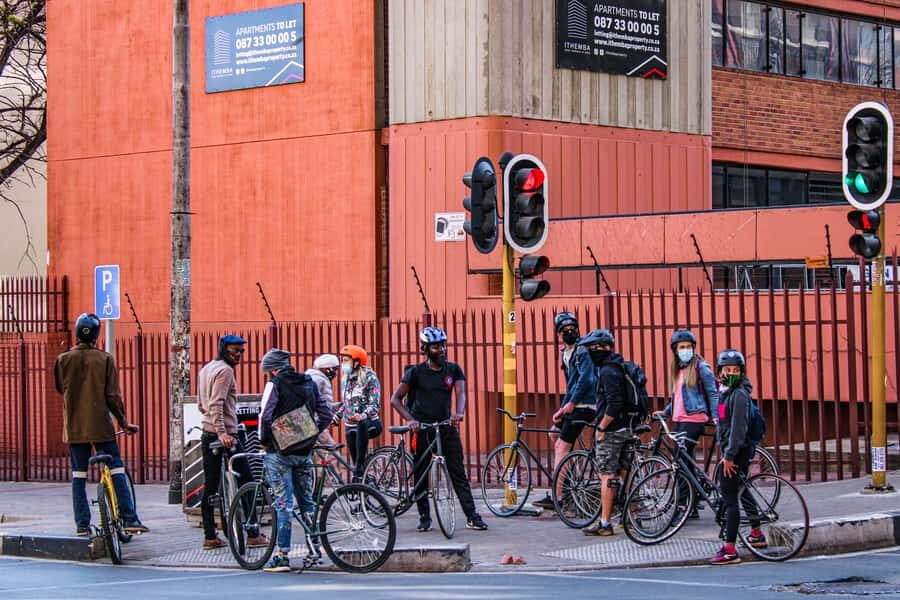
This is one of those tours where the “small” details matter. You’ll get a bike and helmet, plus water, and that’s a practical combo for an inner-city ride where you’ll be stopping, chatting, and moving again.
The route is described as flat, and the tour is about 10km with few hills. That’s good news if your legs aren’t looking for a training day. The expectation is moderate fitness, and it’s also framed as child-friendly—so long as the kids can ride and the group pace works for them.
Now the trade-off: at least one guide-style description notes the bikes can be one gear. If you’re used to shifting gears on hills and uneven terrain, a single-gear bike can feel more demanding than you expect, even on a mostly flat route. Also, one gear means you’ll likely keep a steadier effort rather than adjusting.
Finally, the basics still apply: bring comfortable clothes and comfortable shoes. You’ll be spending time at stops, so shoes that handle quick walking and standing are worth it.
Braamfontein/Braamdontein street art: where the story shows up fast
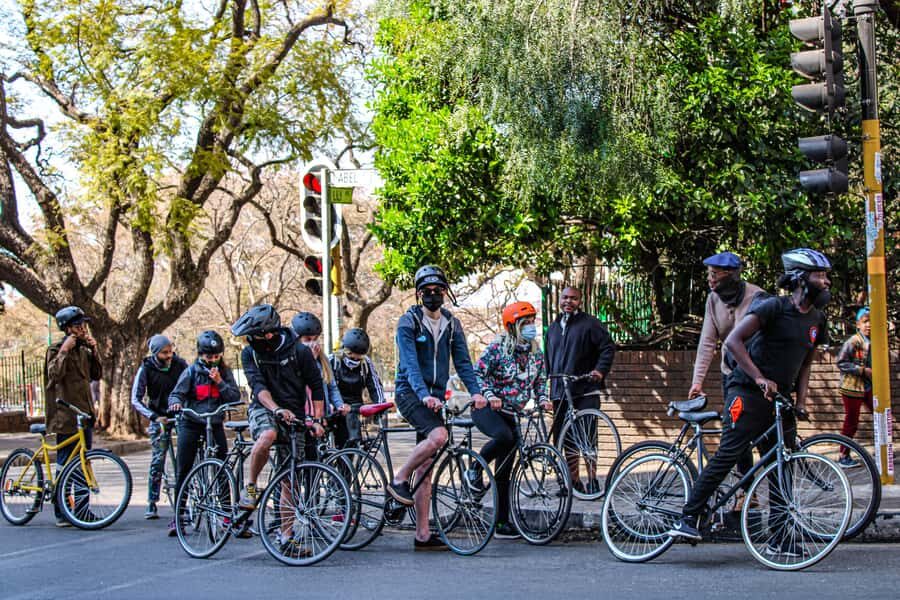
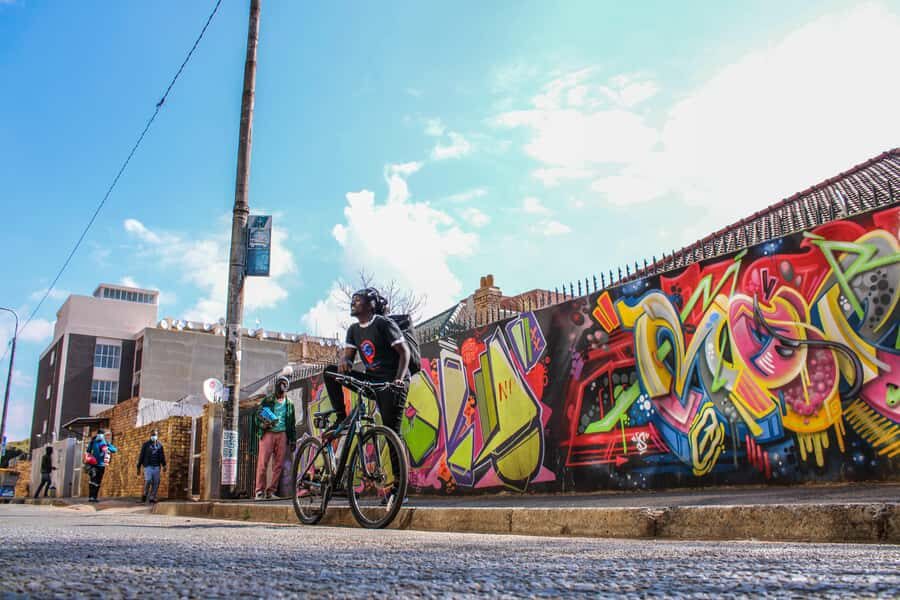
The tour’s street-art stop is one of its best reasons to do this instead of just taking photos from the sidewalk. Braamfontein (sometimes shown as Braamdontein) is part of the experience for a reason: this is where you can see Johannesburg’s creative voice in the open, in a way that’s hard to understand from a single museum visit.
On a bike tour, you get two advantages. First, you cover more ground quickly, so the street art isn’t limited to one fenced-off area. Second, you slow down at the spots your guide chooses, so you can connect what you’re seeing to the surrounding neighborhood context.
Practical tip: take a few seconds before each stop to look around the edges of the artwork—doors, walls, nearby signage, and the way people move through the street. Even without extra facts, those small cues help you understand the art as part of daily life, not just decoration.
Newtown for jazz: listening with your eyes
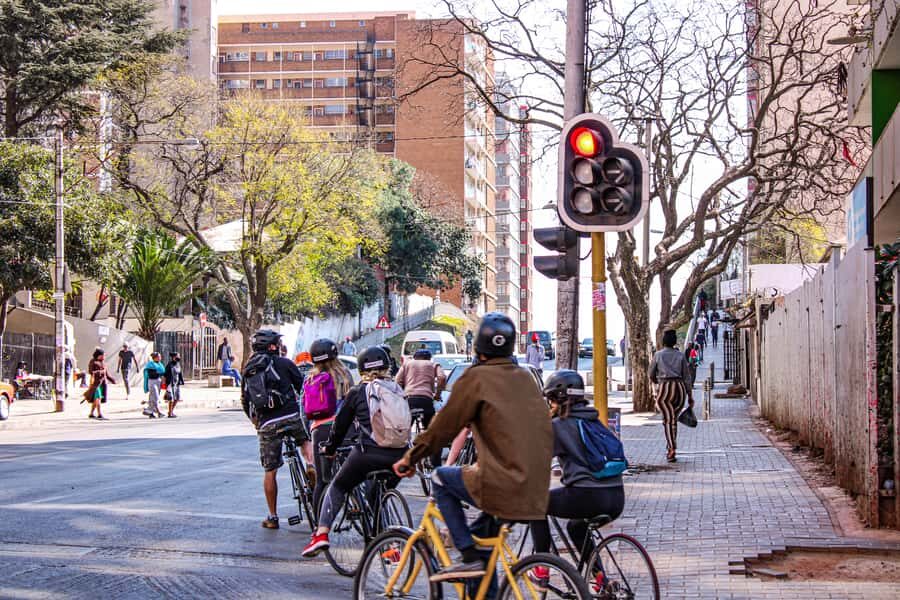
Newtown is highlighted as the home of jazz, which changes the feel of the tour. Instead of treating the inner city like a history slide show, this stop adds a living-cultural angle—music as identity, not only a past event.
Cycling through Newtown also gives you a pacing tool. You can notice how streets open up, where the movement concentrates, and how people set up around venues and hangouts. That kind of observation is easier when you’re riding and turning corners rather than sitting still.
If you’re a music fan, I’d see Newtown as the tour’s “tone-setter.” It helps you understand why the rest of the stops—creative areas and transforming neighborhoods—aren’t random; they connect back to how Johannesburg expresses itself.
Marshalltown mining history and the Industrial Johannesburg thread
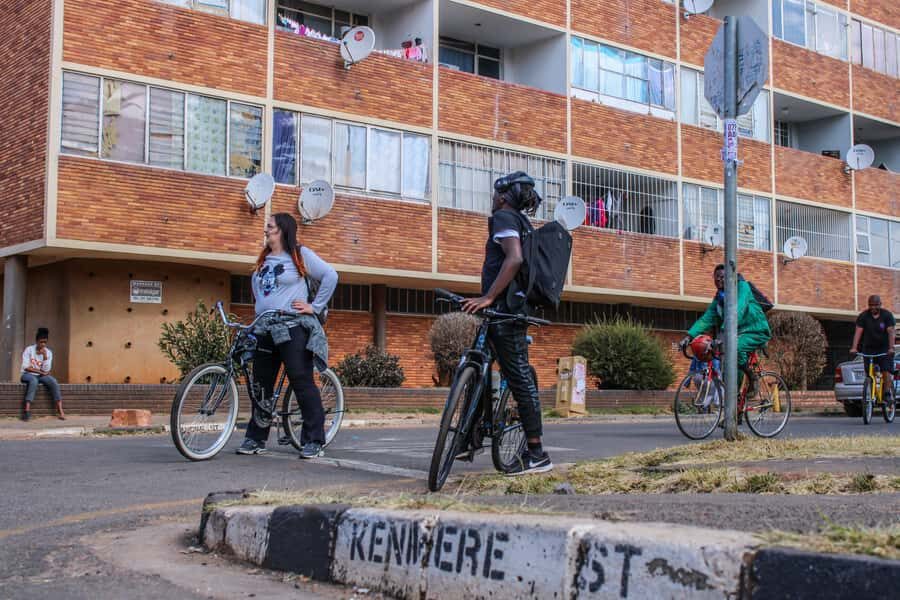
The tour name-checks Mashalltown as the place to learn about Johannesburg’s mining history. That’s not a small detail. Mining didn’t just shape jobs—it shaped neighborhoods, infrastructure, and the way money and people moved through the city.
What I like here is that you’re not learning history in isolation. You’re connecting it to the areas you can see right now. That makes the story feel practical: the city’s layout and redevelopment patterns make more sense when you’ve got a guide linking what you’re passing to why it matters.
Even if you only know the basics of mining in South Africa, this stop can help you place Johannesburg on a timeline. It also supports the tour’s larger theme: Johannesburg’s transformation from the 1990s until now, which is easier to grasp after you’ve heard where so much of the city’s earlier identity came from.
You can also read our reviews of more guided tours in Johannesburg




Jewel City and Jeppes Town: small stops that widen the picture
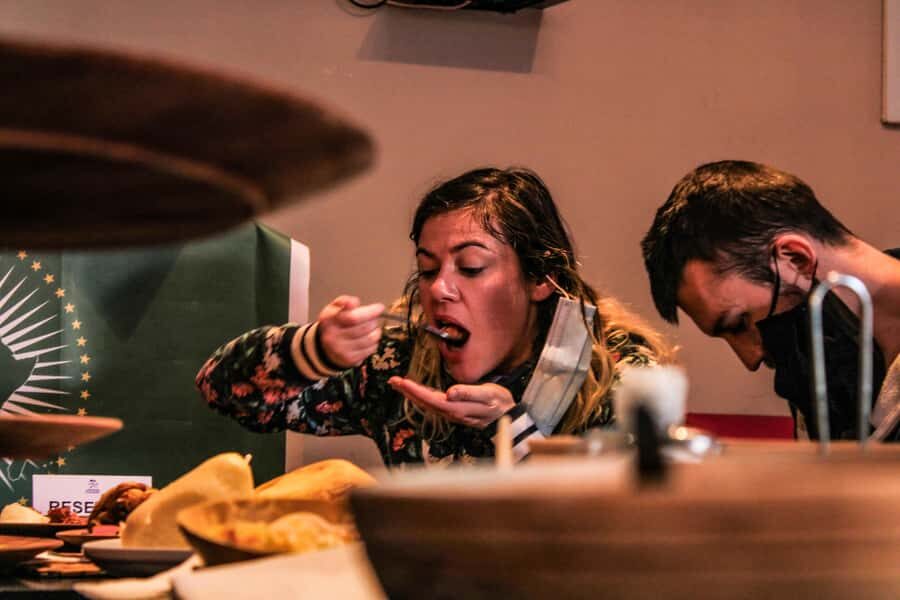
Two more inner-city names show up on the route: Jewel City and Jeppes Town. Even though the tour keeps moving, these stops are important because they keep the story from becoming too “headline-only.”
When a tour includes multiple neighborhoods with distinct identities, it stops you from thinking of Johannesburg as one single thing. It becomes a collection of places with different histories and different present-day roles.
One practical advantage: the bike pace helps you compare. You’ll notice how architecture and street life change from one area to another, even if you’re not taking notes. Then your guide’s comments help you understand the “why” behind the visual differences.
Maboneng and Victoria Yards: meeting the local artist
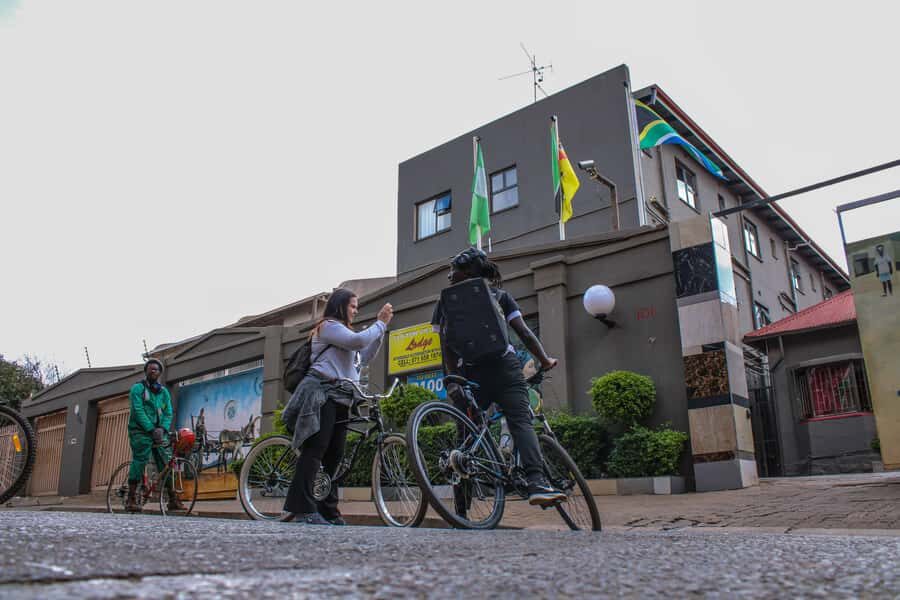
If you want one moment that feels personal, it’s Maboneng, including time to meet a local artist and visit areas connected to Victoria Yards.
This is the kind of stop that turns a guided ride into a relationship with the place. Instead of the guide only explaining from a distance, you get a chance to connect the neighborhood’s creativity to real people making it happen.
I also like how Maboneng contrasts with older Johannesburg themes. You’re moving from mining history into cultural and artistic work. That contrast helps you understand the transformation the tour is aiming to show—how creativity and community spaces have grown into a visible part of the city’s modern identity.
Tip: ask your guide what to look for during the artist stop. When you get a recommendation on where to focus, the meeting becomes more than a quick photo moment.
Ellis Park Stadium and Bertrams: big landmarks, short time
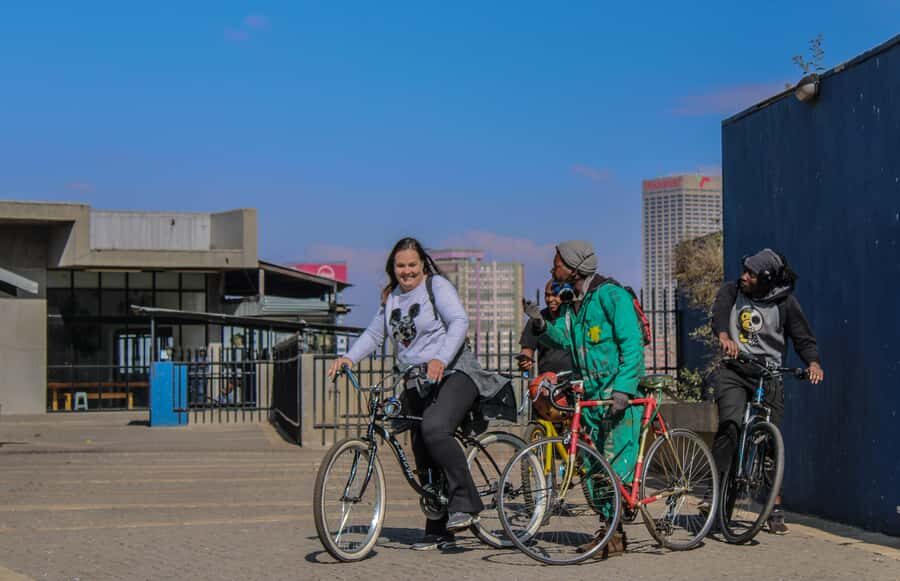
The tour includes Ellis Park Stadium as an impressive landmark stop, and it also mentions Bertrams in the broader route coverage.
A stadium doesn’t just look big—it gives you scale. When you stop at a major venue like Ellis Park, you’re reminded that Johannesburg isn’t only about neighborhoods and murals. It also holds big public spaces where crowds gather and the city’s identity gets amplified.
There’s also a note that there’s a way to skip the line through a separate entrance. The exact attraction tied to that isn’t spelled out in the info you provided, but the practical takeaway is simple: if there’s a waiting line as part of an entry stop, the tour is set up to reduce your time stuck in it.
Traffic and safety: what the guides do (and what you should expect)
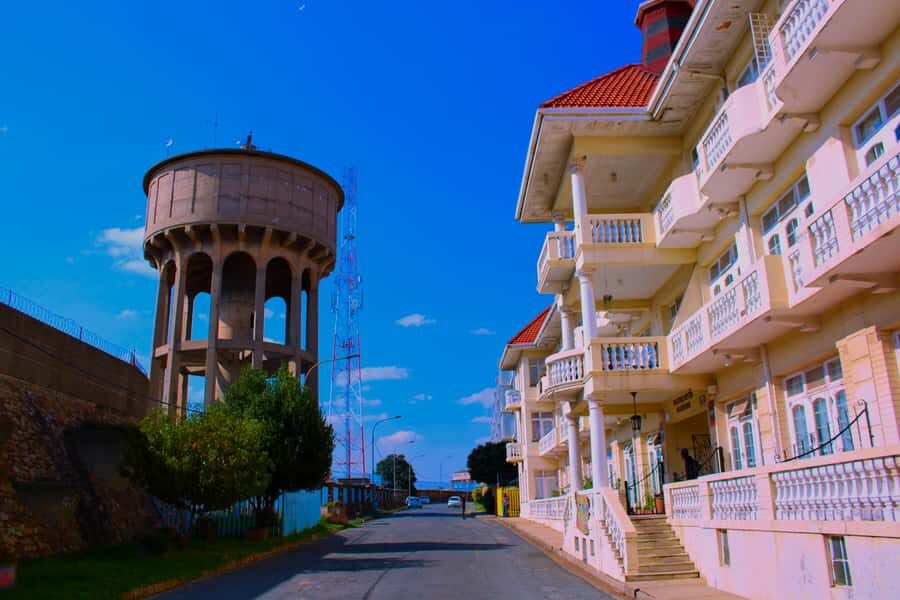
This tour rides in real city traffic, and that’s the big “know before you go” factor. One review-style detail you provided describes traffic as chaotic, and it’s true you’ll be cycling in mixed conditions. Even when you’re in a group, you’re still a cyclist out in the flow of Johannesburg.
That’s why the guide quality matters so much here. I’m drawn to the way the guide-led approach is described—especially the mention of Lebo getting the group through traffic safely. Another guide mentioned as Rambo is described as well informed and attentive, making sure participants feel protected and taken care of.
What you can do to make this smoother:
- Keep a steady pace and don’t hesitate at turns.
- Pay attention when the guide signals when to regroup.
- If you’re uneasy with traffic, consider doing the same neighborhoods at a slower speed with walking or bus time added.
Also, because the bikes may be single-gear, don’t assume you’ll be able to coast effortlessly through every section. Stay mentally ready for steady pedaling, even if the terrain isn’t hilly.
Price and value: is $84 fair for 2–4 hours?
At $84 per person for roughly 2–4 hours, this sits in the mid-range for guided city experiences. What helps it feel fair is what’s included:
- A guided cycling tour
- Bike and helmet
- Water
- An English audio guide, plus a live guide in English and French
You’re also covering several named areas, from Braamfontein to Newtown, Mashalltown, Jewel City, Jeppes Town, Maboneng, and Victoria Yards, plus stops tied to Bertrams and Ellis Park Stadium.
What’s not included matters too. Hotel pickup/drop-off isn’t included, and lunch isn’t included. That means you’ll want to plan your day so you’re not hungry or far from the meeting point when the tour ends.
My take: if you can handle city cycling with traffic and you want a guided narrative across multiple inner-city neighborhoods, $84 can be good value because it buys both movement and explanation. If you mainly want a low-stress sightseeing day, the traffic and one-gear notes could make it feel overpriced compared to slower options.
Who should book this cycling tour (and who shouldn’t)
This tour is best for you if you:
- Can ride a bike comfortably
- Want inner-city history and culture in a short window
- Like street art, jazz-related stops, and stories tied to neighborhoods
- Prefer a mostly flat route that doesn’t demand climbing
It also sounds family-friendly in the sense that it doesn’t require heavy fitness effort, and it’s described as child-friendly. That said, bikes are bikes—so if a child can’t ride confidently, you’ll be fighting the activity rather than enjoying the sightseeing.
This tour is not for you if you:
- Have heart problems
- Can’t ride a bike
- Have mobility impairments, since it’s cycling-based
And one more practical fit note: consider your comfort with traffic. If you’re an inexperienced urban cyclist, choose your expectations carefully. The guide can help, but you’re still sharing roads.
Should you book Johannesburg: Inner City Guided Cycling Tour?
I think this is a smart booking for you if you want to see a lot of Johannesburg’s inner neighborhoods in a few hours, and you care about context—street art with meaning, jazz tied to place, mining history connected to redevelopment, and a human moment in Maboneng with an artist.
I’d skip it if you’re worried about riding in active city traffic or if single-gear bikes would make you tense. In that case, you’ll likely enjoy the same areas more by combining a walking tour (for slower street-level attention) with a bus tour (for coverage without the cycling stress).
If you want a practical, city-on-a-bike introduction to Johannesburg’s modern character, this one has a strong case.
FAQ
How long is the Johannesburg Inner City Guided Cycling Tour?
The duration is listed as 2 to 4 hours.
About how far will we cycle?
The tour is about 10km long.
Is the route flat?
Yes. The cycling route is described as flat, with very few hills.
What’s included in the tour price?
It includes the cycling tour, a guide, a bike, a helmet, and water. An English audio guide is also included.
Are hotel pickup and drop-off included?
No, hotel pickup and drop-off are not included.
Is lunch included?
No, lunch is not included.
What languages are the guide and audio available in?
The live guide is available in English and French, and the audio guide is included in English.
Is the tour suitable for children?
It is described as child-friendly and not requiring a lot of fitness to complete.
Where do we meet for the tour?
The meeting point may vary depending on the option booked.
Can I get a refund if I cancel?
Yes. Free cancellation is offered up to 24 hours in advance for a full refund.