REVIEW · JOHANNESBURG
Guided Bicycle Tour of Soweto with Lunch
Book on Viator →Operated by One Day Africa · Bookable on Viator
Soweto by bike gives you momentum and context. This half-day guided ride covers key apartheid-era places while keeping you close to everyday Johannesburg streets, with stories that include Nelson Mandela and the women who helped topple apartheid. You’ll also stop for a deep-filled kota lunch, so the ride stays practical, not just scenic.
I especially love how the tour uses short, focused stops to cover a lot of ground without feeling rushed. I also like the human scale: you’ll hear from a guide who explains what life meant under apartheid, including the work of anti-apartheid activists like Lillian Mgoyi and the realities faced by domestic workers in Soweto.
The one drawback to plan for is the physical side. Soweto has hills, and some riders note the bikes can feel more like single-speed workouts than easy cruisers, even when they’ve improved the setup.
In This Review
- Key highlights you can plan around
- Entering Soweto by Bicycle: Why This Half-Day Format Works
- Your Guide Matters: Safety, Local Perspective, and the Best Parts of the Ride
- The Route Stops: Phomolong, Mzimhlophe, and Nkungu Street
- Hector Pieterson Museum and Memorial: A Clear Marker of 1976
- Orlando Stadium: Identity, Rebuilding, and Pride
- Mandela House and Vilakazi Street: Two Nobel-Prize Residences in One Ride
- Orlando Police Department: What You See When the Tour Turns Toward Institutions
- The Included Kota Lunch: Fuel That Actually Fits the Ride
- Price and Value: When $45.70 Feels Like a Deal
- How Hard Is It Really? Hills, Bike Setup, and What to Wear
- What This Tour Gives You Beyond Sightseeing
- Who Should Book This Soweto Bike Tour With Kota Lunch
- Should You Book It? My Decision Guide
- FAQ
- FAQ
- How long is the Guided Bicycle Tour of Soweto with Lunch?
- What is included in the price?
- Is lunch included, and what kind of meal is it?
- Are entrance fees included for all stops?
- Where does the tour start and end?
- How big are the groups?
- Can I cancel for free?
Key highlights you can plan around

- Vilakazi Street stops along the same road where Nelson Mandela and Desmond Tutu lived
- Women’s history beyond the headlines, including a former residential hostel for domestic workers
- Mama Lillian Mgoyi home visit, tied to the 20,000-women march against pass laws
- Hector Pieterson Museum and Memorial as a clear marker of the 1976 youth uprising
- Orlando Stadium and Mandela House, adding modern-day identity and major personal story
- Kota lunch with bottled water, included so you don’t burn time searching for food
Entering Soweto by Bicycle: Why This Half-Day Format Works
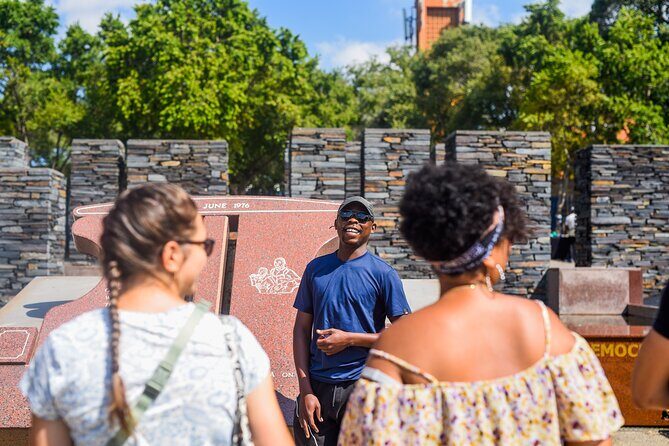
A bicycle tour is a smart way to understand Soweto because it strikes a balance. You move farther than you would on foot, yet you still keep close to the street level where daily life is visible. In about four hours, you get multiple “chapters” of the Soweto story rather than a single stop-and-go checklist.
This format also helps you pace yourself. With a guide steering you between sites, you’re not left figuring out routes, timing, and what’s worth your time. You also get a group size capped at 15, which keeps the ride social but not chaotic.
Choose your morning or afternoon slot and you can fit it into a bigger Johannesburg plan. I like that flexibility, because Soweto can shape the rest of your day once you’ve got the context.
You can also read our reviews of more guided tours in Johannesburg

Your Guide Matters: Safety, Local Perspective, and the Best Parts of the Ride
This tour lives or dies on the guide, and the feedback here is strong. Names you’ll hear in the guide lineup include Thabo, Themba, Temba, Tchbo, and Mulalo. The consistent theme is that the guide explains the places with local viewpoint, then keeps the group moving safely on the bikes.
You’ll get a tour that feels less like a lecture and more like guided street history. Guides are praised for being kind, patient, and quick to make you feel welcome. That matters in Soweto, where you’re riding through real neighborhoods and not a staged sightseeing bubble.
It’s also good to know the guides can adapt. If someone is tired or the group needs a slower pace, the tour experience tends to stay human rather than strictly timed.
The Route Stops: Phomolong, Mzimhlophe, and Nkungu Street
The ride starts with a story-based stop at Phomolong, where you’ll hear about different family generations and how apartheid shaped daily life. Even though the stop is brief, it sets the tone: oppression wasn’t abstract. It landed in families, work, movement, and opportunity.
Next is Mzimhlophe, the only former women’s residential hostel in Soweto. This is one of the tour’s most powerful ideas: instead of only focusing on famous leaders, you also look at the living conditions and constraints faced by domestic workers working in the suburbs of Johannesburg. When you understand why that hostel existed, a lot of the broader apartheid system starts to make more sense in your head.
Then you move to Nkungu Street for a visit connected to Mama Lillian Mgoyi, an anti-apartheid activist and President of the Women’s League. The story centers on her role in leading a march of 20,000 women to the Union Buildings in Pretoria, protesting pass laws that required women to carry passbooks. This isn’t just a name drop. It ties policy to people, and it helps you see women’s activism as organized action, not background noise.
These stops are short, but that’s the point. Each one gives you a specific lens, then you ride to the next lens.
Hector Pieterson Museum and Memorial: A Clear Marker of 1976
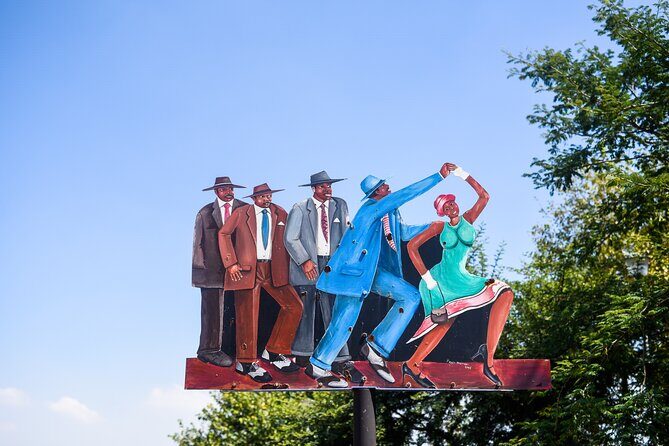
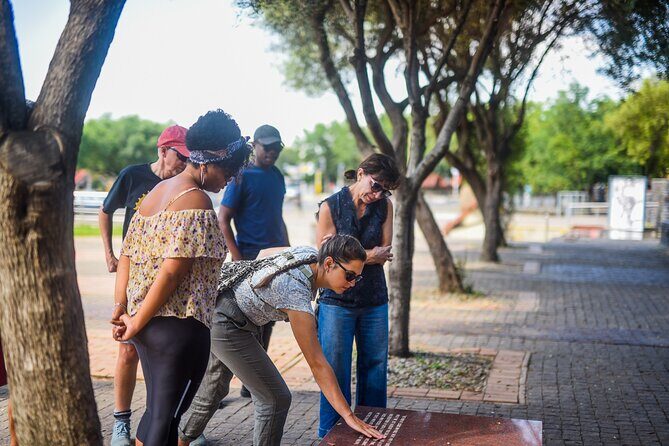
At the Hector Pieterson Museum and Memorial, you’ll focus on the 1976 youth uprising. This stop is often where first-time visitors feel the weight of the timeline, because it’s the moment when student activism and state violence collide in public memory.
The visit is listed at about 30 minutes, which works well on a bike day. It gives you enough time to read and absorb without turning your afternoon into museum fatigue. If you’re the type who wants to ask questions, this is usually a good moment to do it, since the guide can connect the event to what you’ve already heard at the earlier neighborhood stops.
One practical note: since this is a memorial site, keep your headspace respectful. It’s also a good place to slow down and take in details before you rejoin the ride.
Orlando Stadium: Identity, Rebuilding, and Pride
Then you roll toward Orlando Stadium, the heart of Soweto for sports fans. The stadium’s story starts in 1959, and it matters because it’s not just a venue. It’s tied to community identity and collective pride.
After being demolished and rebuilt, the modern Orlando Stadium came with a major price tag of R280 million and a capacity of 37,139 spectators. It also includes hospitality suites, conference rooms, a gymnasium, and an auditorium. In other words, this is where history and present-day infrastructure intersect.
The tour also connects the stadium to major football culture, including Orlando Pirates and the venue’s role in hosting sports and entertainment. This stop is about more than architecture. It’s about how people build and gather, even after upheaval.
Admission here is not included, so you’ll want to keep a little extra flexibility in your budget and time if you choose to enter further areas.
A few more Johannesburg tours and experiences worth a look

Mandela House and Vilakazi Street: Two Nobel-Prize Residences in One Ride
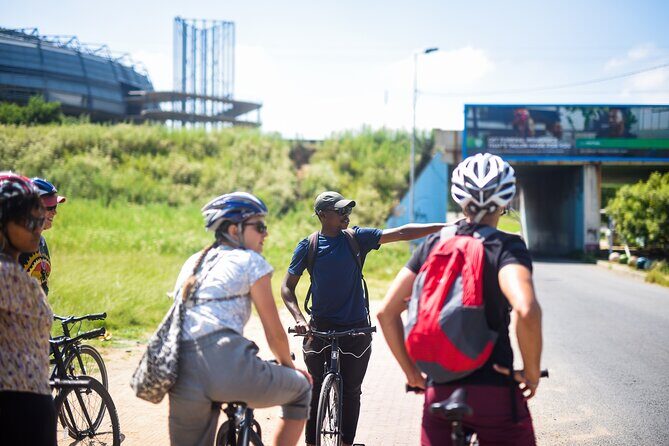
After Orlando Stadium, you’ll head to Mandela House, Nelson Mandela’s famous residence. This is usually a big emotional stop for visitors, partly because it’s personal. You’re not only hearing about politics; you’re seeing where a life unfolded.
Plan for the entrance fee of R60, since it’s not included. If you’re trying to keep expenses tight, this is the one extra payment that can help you decide how much of the stop you want to do.
Next is Vilakazi Street, often described as a must in Soweto because it’s home to two Nobel Peace Prize winners: Nelson Mandela and Desmond Tutu. The tour gives you about 40 minutes here, which is enough time to understand why this street carries so much symbolic weight.
If you like street-level travel—where you can look at everyday surroundings while absorbing big ideas—Vilakazi Street works. It also tends to be where the ride feels most like a journey through layers of South Africa’s transformation.
Orlando Police Department: What You See When the Tour Turns Toward Institutions

Your ride also includes Orlando Police Department, a shorter stop of about 10 minutes with admission not included. What’s interesting here is the framing. Instead of staying only in the apartheid past, you also look at the structure of an institution that has evolved over time.
The details provided are specific: the department was formed in 1875, and it employs over 800 sworn officers plus more than 150 civilian employees. The point is straightforward. You see how governance and public safety show up in the present, not only as an enemy of freedom during apartheid.
If you’re thinking, Wait, why include this on a history-focused bike ride? That’s the answer. Soweto isn’t frozen in 1976. It’s a living place with systems, jobs, and everyday routines.
The Included Kota Lunch: Fuel That Actually Fits the Ride
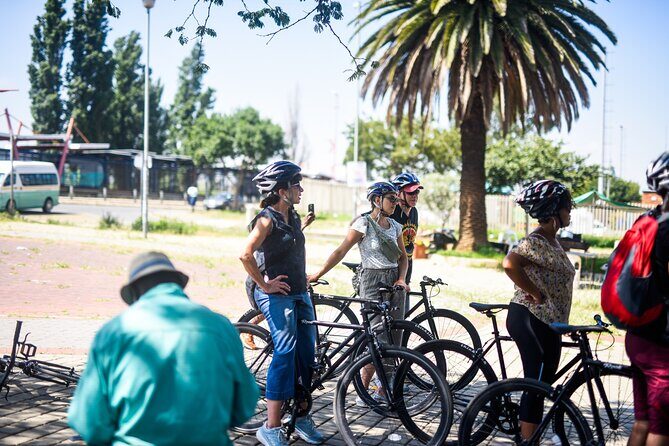
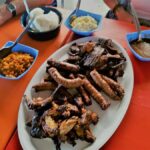
Between stops, you’ll take a break for lunch at Local Burger (Kota). The highlight is the traditional kota sandwich, described as deep-filled, and the tour includes bottled water.
This is more than a perk. A kota lunch helps you handle the hills without spending energy tracking down food. It’s also part of the cultural experience: you get a real South African street-style meal rather than a generic tourist lunch.
Expect a filling break and use it strategically. If you’re biking through Soweto’s elevation changes, eating well before the big climbs can make the second half feel way more manageable. If you’re sensitive to heat, bring a cap and keep water close.
Price and Value: When $45.70 Feels Like a Deal
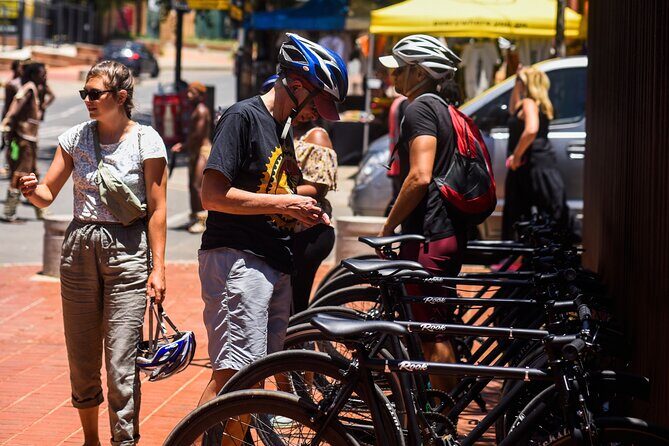
At $45.70 per person, the price can feel like a bargain if you look at what’s included. You get a bicycle and helmet, bottled water, and the kota lunch. For many visitors, that alone offsets a chunk of the cost.
What’s not included is where you should do quick planning. Mandela House costs R60. Orlando Stadium and Orlando Police Department are also marked as not included for admission, so you may need extra cash if you want to go beyond the exterior views.
Also missing is pick-up and drop-off. Since the tour starts back at the meeting point, you’ll want to be comfortable getting yourself there using nearby public transportation.
Still, the value calculation is strong because you’re paying for both logistics and interpretation. A guide keeps you from wasting time guessing, and the itinerary is designed so you cover multiple themes in a single morning or afternoon.
How Hard Is It Really? Hills, Bike Setup, and What to Wear
The most repeated practical theme is hills. Soweto has elevation changes, and even casual riders should treat it as a workout day. Some feedback praises upgraded bikes with gears that make hills easier. Other notes suggest that at times you may ride more single-speed style.
So here’s the honest advice: assume you’ll face hills. Wear comfortable closed-toe shoes, dress for sun, and bring layers if the weather shifts. If you’re not used to cycling, plan for a slower pace and don’t race the group.
One small tip from the guides: there’s also a suggestion to bring sunscreen and a cap. That’s not just comfort advice. Johannesburg sun can drain your energy fast, and a few minutes saved on reapplying can keep you cruising.
What This Tour Gives You Beyond Sightseeing
This isn’t only about famous men. The tour emphasizes women’s roles in overturning apartheid, including the story of Lillian Mgoyi and the domestic workers connected to the hostel stop. That makes the tour feel more complete than a standard “Mandela highlights” outing.
You also get the neighborhood feel. You pass through places like Phomolong and Mzimhlophe, then you transition into major landmarks like Hector Pieterson, Mandela House, and Orlando Stadium. That structure helps you connect policy, community life, and public memory.
And because the guide is local, you get context that makes the street-level experience make sense. People are often friendly as you ride past homes and along the streets, and the guide keeps the group confident and respectful.
Who Should Book This Soweto Bike Tour With Kota Lunch
This tour is a great fit if you want:
- More ground than a walking tour, with still-human scale
- A guided route that explains both apartheid history and everyday neighborhood context
- A half-day plan that includes food, water, and a clear timeline
- A cycling experience that’s group-supported rather than independent navigating
It’s especially appealing for first-timers who want a strong overview without hopping between too many unrelated activities. If you’re traveling as a couple, friends, or a small group, the max 15-person limit helps keep things organized.
If you have mobility or balance limits that make hills hard, you should think carefully. The tour is described as most travelers can participate, but the hill reality is consistent in the feedback, so choose your comfort level honestly.
Should You Book It? My Decision Guide
Yes, you should book this tour if you want a structured, guided Soweto introduction that pairs history with real-life context and includes lunch. The guide experience is a major draw, with multiple guides like Thabo and Themba praised for safety, warmth, and clear local storytelling.
I’d hesitate only if hills on a bike are a deal-breaker for you, or if you’re trying to avoid any extra spending beyond the headline price. Entrance fees for places like Mandela House can add up a little, and admission for Orlando Stadium and Orlando Police Department is not included.
If you’re flexible, bring sun protection, wear sturdy shoes, and expect hills. You’ll leave with a better map of Soweto in your head, not just photos.
FAQ
FAQ
How long is the Guided Bicycle Tour of Soweto with Lunch?
The tour is listed at about 4 hours.
What is included in the price?
The package includes the kota sandwich lunch, bicycle and helmet, and bottled water.
Is lunch included, and what kind of meal is it?
Yes. Lunch is a traditional kota sandwich (deep-filled) at Local Burger (Kota).
Are entrance fees included for all stops?
No. Mandela House has an entrance fee of R60 that is not included. Orlando Stadium and the Orlando Police Department also have admission marked as not included.
Where does the tour start and end?
It starts at 7346 Kumalo St, Orlando West, Johannesburg, 1804, South Africa and ends back at the same meeting point.
How big are the groups?
The tour has a maximum of 15 travelers.
Can I cancel for free?
Free cancellation is available. You can cancel up to 24 hours in advance for a full refund. If you cancel less than 24 hours before, the amount paid is not refunded.