REVIEW · JOHANNESBURG
Jo’berg in 1 Day: Soweto, Apartheid Museum & City Tour
Book on GetYourGuide →Operated by MoAfrika Tours (Pty)Ltd · Bookable on GetYourGuide
One day, three layers of South Africa. This tour strings together Soweto street life, hard-hitting museums, and Constitution Hill’s legal history in a single 8-hour loop around Johannesburg.
What I like most is how the day balances atmosphere with meaning: you’ll spend time on foot in Soweto around Vilakazi Street and the 16 June 1976 uprising story. I also like that Constitution Hill is guided, so the courthouse spaces connect directly to the themes of rights and resistance.
One thing to plan for: it’s a compressed schedule. You’ll have around 2 hours at the Apartheid Museum, which is enough to get the big picture, but not enough if you want to read everything slowly.
In This Review
- Key highlights that make this tour worth your time
- From pickup to Soweto: a day that starts with context
- Diepkloof and Orlando West: seeing street life without being rushed
- Hector Pieterson Museum: where 1976 becomes personal
- Regina Mundi, Vilakazi Street, and the power of names in place
- Shantytown interaction and the careful balance of respect
- Lunch on your own, then the Apartheid Museum
- Constitution Hill: the Human Rights Precinct with a guided route
- Johannesburg city sights: Telkom Tower, Nelson Mandela Bridge, and Newtown
- Guides matter: what you can expect from the day’s storytelling
- Price and value for a one-day Johannesburg-and-Soweto hit
- Who should book this tour (and who might want a different plan)
- Should you book Jo’berg in 1 Day?
- FAQ
- What’s the duration of this tour?
- What’s included in the price?
- Is lunch included?
- Where does pickup happen?
- Which key attractions are part of the tour?
- Is the Mandela House museum optional?
- Are tickets required for the museums?
- Is there free cancellation?
Key highlights that make this tour worth your time
- Soweto walking segments that bring the neighborhood story to life, not just a drive-by
- Hector Pieterson Museum entry so the 1976 uprising isn’t abstract
- Regina Mundi Church and Vilakazi Street stops that anchor key names and places
- Apartheid Museum time built in after lunch, when the day’s emotional weight really lands
- Constitution Hill Human Rights Precinct guided tour inside the court spaces
- Uncapped onboard WiFi and hotel pickup across several Johannesburg areas
From pickup to Soweto: a day that starts with context
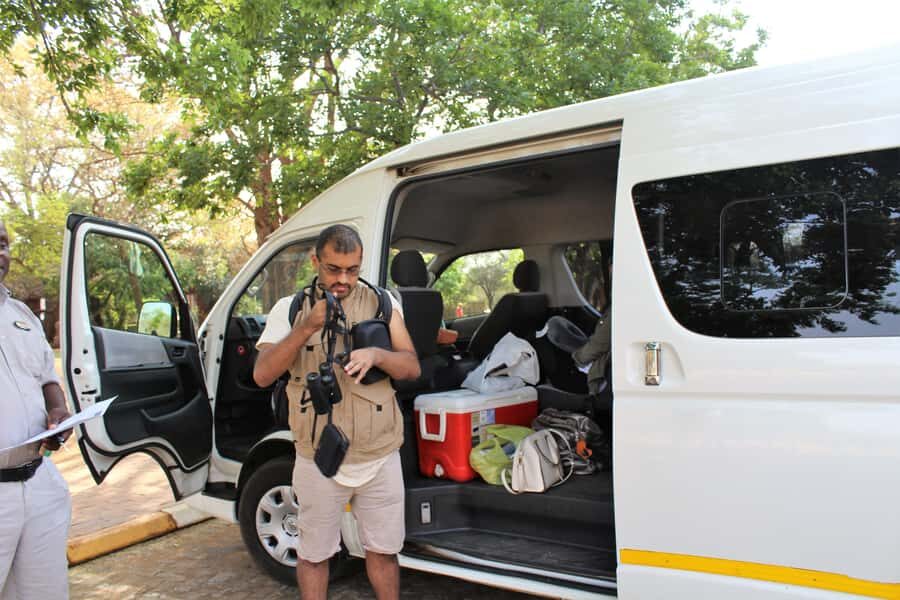
The day begins with pickup in Johannesburg—covering areas like O R Tambo, Sandton, Rosebank, Johannesburg Downtown, and Mellville. If you’re optimizing for a layover or a tight schedule, this is one of the simplest ways to get out of the city center and still hit the big, meaningful sites in one go.
Before you head out, you’ll get a quick pre-departure briefing. That matters here. Johannesburg and Soweto can feel overwhelming if you’re not sure what you’re looking at. Even a simple orientation helps you notice details as you pass them—especially on the road segments where the guide points out major landmarks.
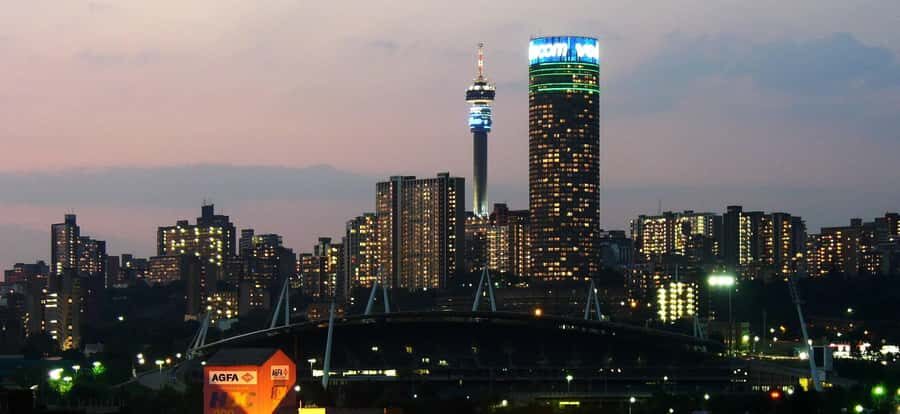
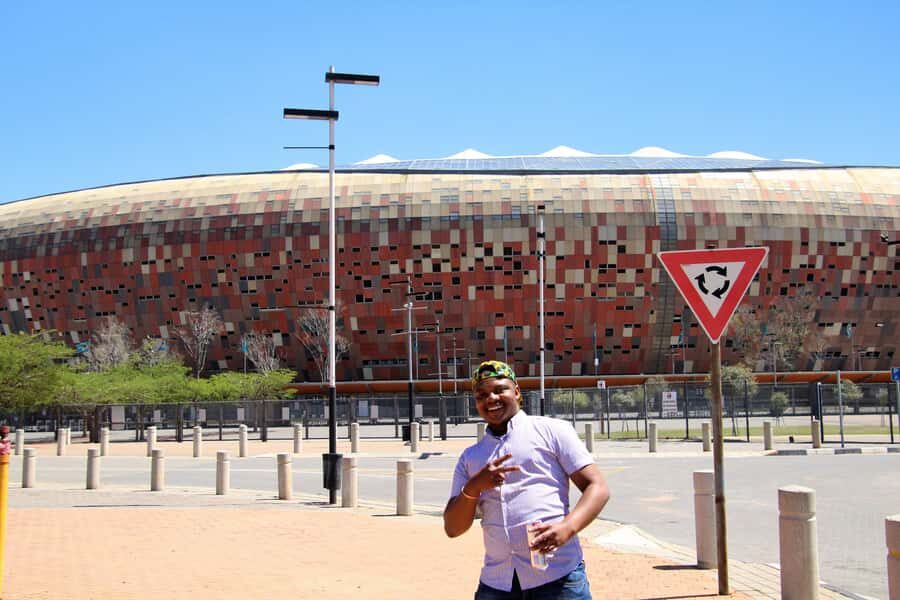
En route, you’ll also pass National Football Stadium City, which hosted the opening and closing ceremonies of the 2010 World Cup. It’s a quick stop in the overall story, but it adds an important note: modern South Africa isn’t only museums and tragedy. It’s also global stages, sports, and public life.
You can also read our reviews of more city tours in Johannesburg
Diepkloof and Orlando West: seeing street life without being rushed
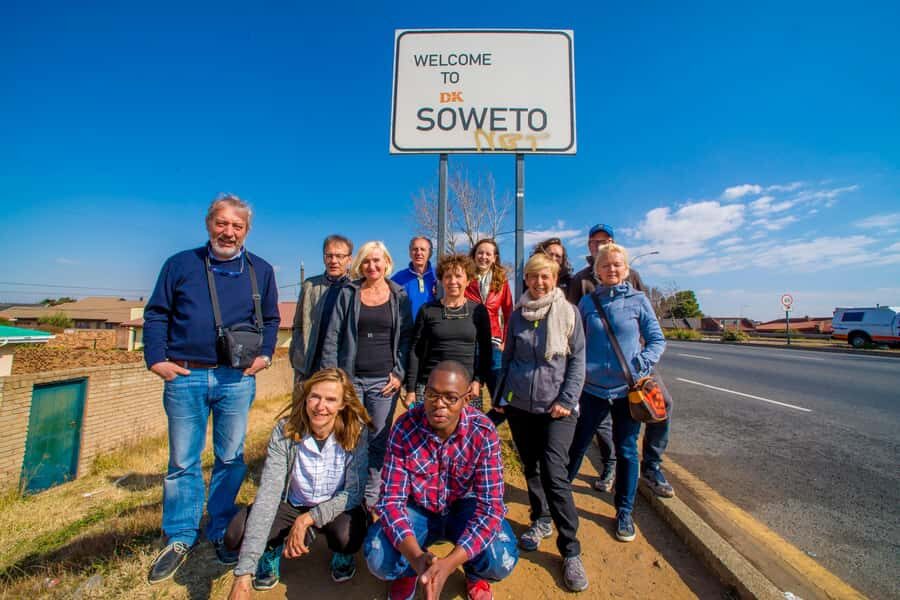
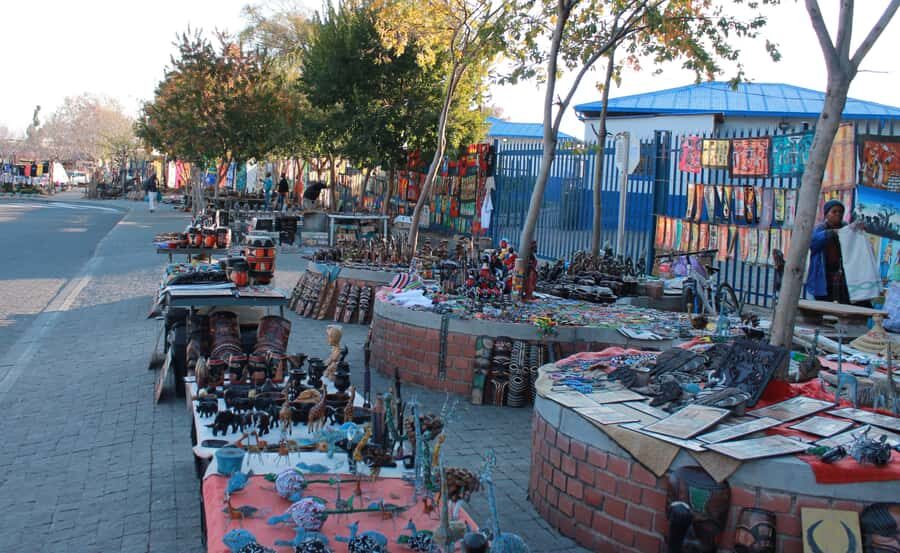
Once you reach Soweto, the tour doesn’t start with a museum. It starts with people and streets. You’ll head into areas like Diepkloof, where you can walk past vendors selling everything from everyday items to local goods. This is one of those moments that can turn a “tourist” day into a real-feeling day, because it’s sensory and un-staged.
From there, you’ll move through Orlando West and get time around Vilakazi Street. This street is famous for the concentration of major figures tied to South African history. The guide-driven storytelling here is what turns a street name into a timeline.
You’ll also pass landmarks tied to the 1976 uprising and the broader fight for freedom. Along the way, there’s an opportunity to read about 16 June 1976, when a child named Hector Pieterson became a symbol of the brutality that helped spark liberation momentum. Even if you know the basic story, seeing how the tour connects it to the physical places makes it hit differently.
Practical tip: this is a walking-and-standing day in places. Wear shoes you’re happy to use on city sidewalks and uneven paths.
Hector Pieterson Museum: where 1976 becomes personal
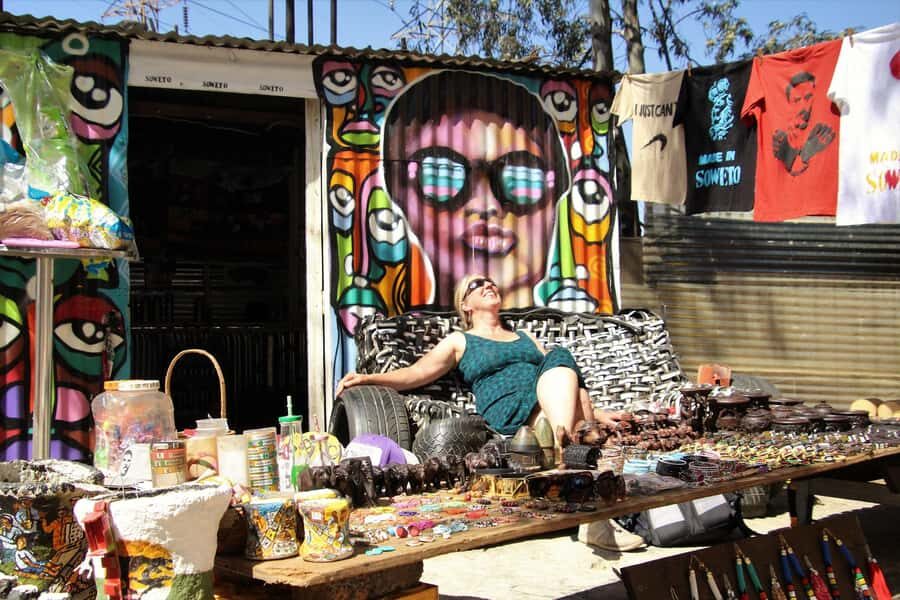
The tour includes entry to the Hector Pieterson Museum, one of the day’s most important stops. This is where the uprising shifts from background knowledge into something you can feel through objects, photos, and space.
The museum fits well inside the flow of the day because you’re not jumping in cold. You’ve already been oriented through the streets and key points around Soweto. That makes it easier to follow the story instead of treating it like a standalone attraction.
A fair heads-up: the tour is packed. If your priority is slow reading and deep museum time, you may find the museum portion moves quickly. Still, even as part of a longer day, it does the job of giving you the emotional and historical grounding you’ll want before moving on to the larger apartheid narrative.
Regina Mundi, Vilakazi Street, and the power of names in place
A standout element of this tour is how it anchors history to real locations. You’ll stop to admire Regina Mundi Church, and you’ll spend time around Vilakazi Street, including passing by the former home of Nelson Mandela and by the home of Archbishop Desmond Tutu.
Those names matter, but the bigger value is that the tour helps you understand why they matter. The guide ties the street-and-building scale to the political scale—how ordinary places turned into stages for activism, solidarity, and change.
You might also pass the Mandela House, and the visit into the museum is described as optional. That’s useful for different travel styles: if you want more time inside, you can lean in; if you’d rather keep momentum, you can skip and stay with the outdoor route.
Shantytown interaction and the careful balance of respect
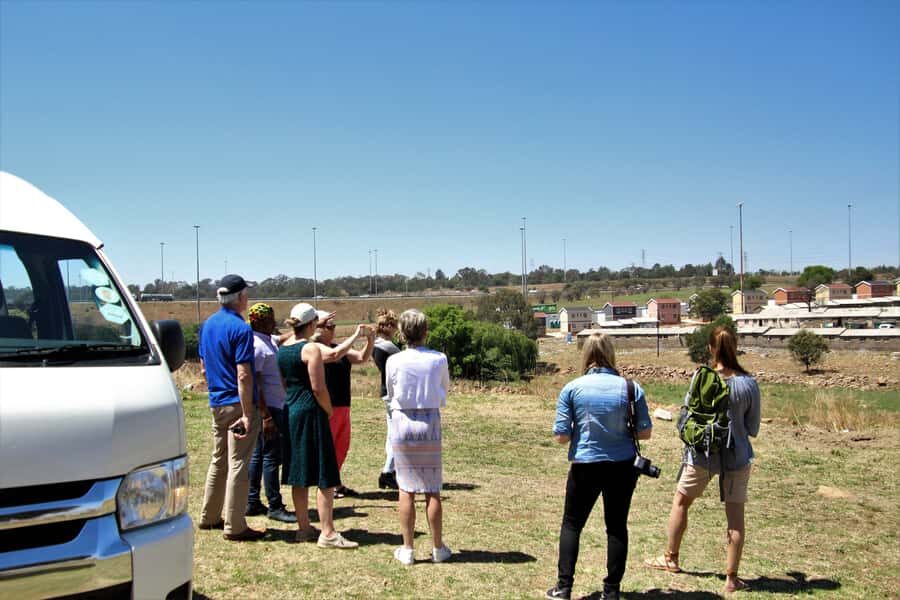
At some point, you’ll drive into a more informal settlement setting where you can interact with locals. This is one of those parts that can be both meaningful and sensitive, so I recommend approaching it the right way: be calm, be curious, and keep it respectful.
You’ll also pass the Soweto Campus of the Johannesburg University and see different grades of the neighborhood—from more established areas to rougher edges. It’s not meant as a photo safari. The guide’s context is what turns the views into understanding.
If you’re wondering whether this will feel respectful: the day is structured with a local guide leading the story, and that helps avoid the “wander in alone” problem. You’re still sharing public space, so your attitude matters, but the format is designed for learning in context.
You can also read our reviews of more museum experiences in Johannesburg


Lunch on your own, then the Apartheid Museum
After the Soweto portion, there’s time for lunch on your own, and then you continue to the Apartheid Museum. This is a good pacing choice. Soweto can be intense, so letting you reset with food helps you arrive at the museum ready to absorb rather than just endure.
The Apartheid Museum itself is the day’s major structured lesson. You’ll learn about South Africa’s apartheid system and the struggle against it. You don’t need prior knowledge to follow the main story arcs, but if you do have some background, you’ll likely enjoy how the museum builds connections between laws, everyday life, resistance, and lasting impact.
One planning note: you’ll have about 2 hours at the museum. That’s plenty for the big picture, but you’ll want to accept that you won’t cover every room at a slow pace. If you want that kind of time, plan a separate museum day in Johannesburg.
Constitution Hill: the Human Rights Precinct with a guided route
After the museum, you head back toward Johannesburg City and then to Constitution Hill Human Rights Precinct. This is where the tour shifts from “what happened” into “how justice and rights are shaped and defended.”
You’ll get a guided tour inside for about 1 hour. That guided format is valuable here because court spaces and legal history can feel abstract if you’re reading labels alone. A guide helps you connect what you’re seeing to the activists and trials tied to the site—people like Nelson Mandela and Mahatma Gandhi were once held there, and the tour explains the legal history of Johannesburg through the place itself.
I especially like Constitution Hill as a closing stop within a day itinerary. It gives you a forward-looking feeling: even after the painful context, you leave with a clearer sense of rights, institutions, and the legal fight for equality.
Johannesburg city sights: Telkom Tower, Nelson Mandela Bridge, and Newtown
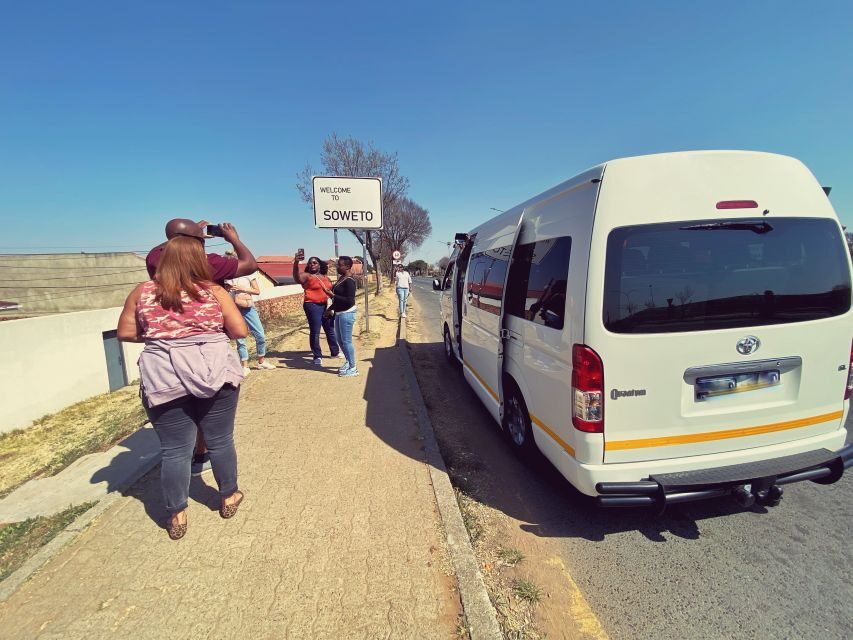
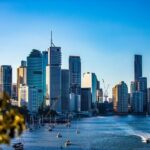
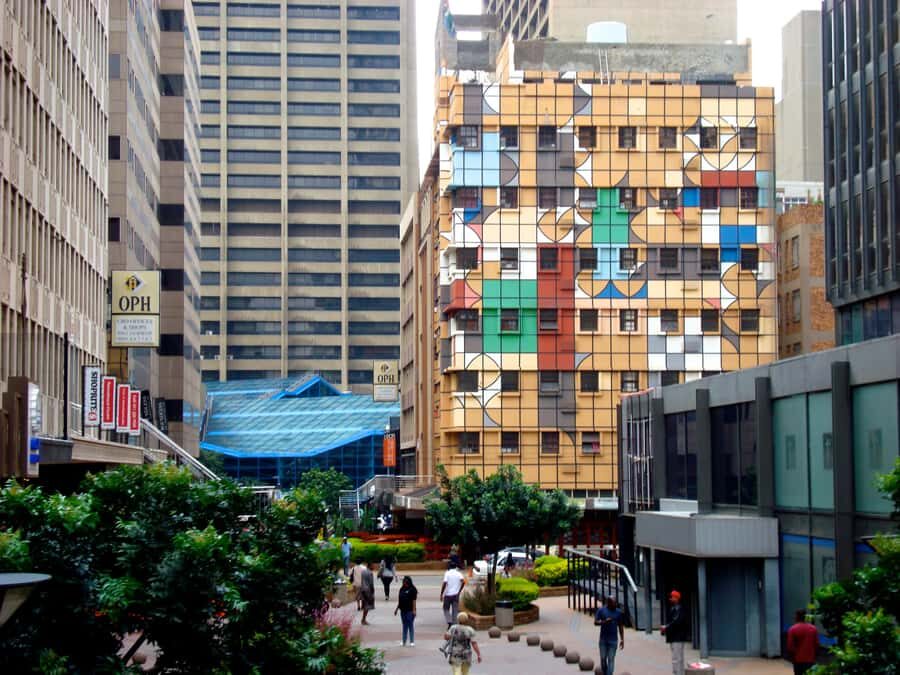
You’ll also see the city between Soweto and the museums. Part of the value of this tour is that it’s not only township stops. You’ll pass major city landmarks that help you understand how Johannesburg looks and feels as a capital of modern life.
Key city highlights include:
- Views of the 269-metre Telkom Tower, the type of postcard landmark you’ll recognize instantly
- The Nelson Mandela Bridge, described as the longest southern African bridge
- A stop at Mary Fitzgerald Square, where you can walk on the Jazz Walk of Fame
- Passing into the Newtown area
None of these are the emotional heavyweight like Soweto or the Apartheid Museum, but they’re useful for orientation. By the end of the day, you’ll better understand how Johannesburg layers neighborhoods, culture, and politics on top of each other.
Guides matter: what you can expect from the day’s storytelling
This tour stands or falls on the guide’s ability to connect places into a coherent story. The reviews you’ve been given point to guides who bring both structure and personality to the day.
Names that come up repeatedly include Khutso, Thapelo, Clement, Sello, Shumba, Thomas, Prince, and Pule. What shows up in those accounts is a consistent pattern: the guide links what you’re seeing to the reasons it matters, and they keep you moving with enough energy that the day stays engaging even when the content is heavy.
That’s especially important for museums. Two people can walk through the same rooms and leave with totally different memories depending on how the guide frames what you’re seeing.
Price and value for a one-day Johannesburg-and-Soweto hit
At $142 per person for about 8 hours, the value is strongest if you count what’s included. The tour covers hotel pickup and drop-off, entrance fees, and it also offers uncapped onboard WiFi. It’s also designed as a guided, hosted day with ticket-line skipping.
So you’re paying for:
- transportation across multiple areas of Johannesburg/Soweto
- guided context that turns drives into understanding
- museum and site entries without you hunting for tickets
Lunch and drinks are not included, so you’ll still need to budget for that break. But overall, if you only have one day and want the big-hitters—Hector Pieterson Museum, Apartheid Museum, and Constitution Hill—this price can feel fair.
One more value angle: for each individual booking, an R50 donation is made to the Motsoaledi Day Care Centre, used for upgrade projects and items on the center’s wish list. That’s a small extra reason to feel good about booking.
Who should book this tour (and who might want a different plan)
This is a smart fit if:
- you have limited time in Johannesburg and want the core history sites in one day
- you prefer a guide-led experience when topics are emotional and complex
- you like seeing a city layer by layer: street life, then museums, then courts and institutions
You might want a different plan if:
- you need lots of free time to wander independently (this day is scheduled tightly)
- you want slow, fully detailed museum reading without time pressure
- you’re not comfortable with content that can be deeply moving
Should you book Jo’berg in 1 Day?
If you’re planning a short stay, I’d say yes—with one condition: go into the day expecting a packed schedule and heavy themes. The tour’s real strength is that it doesn’t treat Soweto and Johannesburg as separate attractions. It connects them into one story: neighborhood life, the 1976 uprising, apartheid’s system, and then the legal and human-rights framework tied to Constitution Hill.
If those are exactly the sites you want and you value guided context, this is an efficient, high-value way to use a day in Joburg.
FAQ
What’s the duration of this tour?
The tour lasts about 8 hours.
What’s included in the price?
Pickup and drop-off, entrance fees, a live English-speaking tour guide, and uncapped onboard WiFi are included.
Is lunch included?
No. Lunch and drinks aren’t included. You’ll have time to handle lunch on your own before the Apartheid Museum.
Where does pickup happen?
Pickup is included for hotels in areas including O R Tambo, Sandton, Rosebank, Johannesburg Downtown, and Mellville.
Which key attractions are part of the tour?
You’ll visit Soweto (including Vilakazi Street), enter the Hector Pieterson Museum, learn at the Apartheid Museum, and take a guided tour at Constitution Hill Human Rights Precinct.
Is the Mandela House museum optional?
The visit into the museum at Mandela House is described as optional.
Are tickets required for the museums?
Entrance fees are included, and the tour also notes skipping the ticket line.
Is there free cancellation?
Yes. You can cancel up to 24 hours in advance for a full refund.