REVIEW · JOHANNESBURG
Johannesburg: City Centre Walking Tour
Book on GetYourGuide →Operated by One Day Africa · Bookable on GetYourGuide
Joburg’s CBD story clicks faster on foot. This 3-hour walking tour takes you from Gandhi Square through the Johannesburg that people remember for mining, politics, and the streets’ day-to-day reality.
I love how the route links architecture to power and change, from the Carlton Centre area to the High Court and magistrate’s court stops. I also like the human layer: guides such as Refiloe and Thabo are repeatedly praised for turning landmarks into a clear, laugh-along narrative, while also keeping the walk feeling practical and safe.
One thing to consider: it’s still a walking tour with a fairly packed stop list, and it’s marked not suitable for pregnant women and wheelchair users. Also, a site like the Workers Museum can be closed on certain days, so you may need to roll with a story-focused visit if that happens.
In This Review
- Key highlights at a glance
- Gandhi Square to Carlton Centre: getting your bearings in Johannesburg CBD
- High Court, post office, and the “politics in stone” feeling
- Beyers Naude Square and downtown power players
- Ferreirasdorp and Chancellor House: from first diggings to Mandela-era justice
- Newtown: Workers Museum, migrant labour context, and a city that keeps moving
- Market Theatre and the arts blocks: culture that’s visible on the street
- Mandela Bridge viewpoints and the finish in Braamfontein
- Price and time: does $40 feel fair for 3 hours?
- Who this tour suits best (and who should think twice)
- Should you book this Johannesburg CBD walking tour?
- FAQ
- Where do I meet the guide?
- How long is the tour?
- What’s the price, and what’s included?
- What isn’t included?
- Where does the tour end?
- Is it wheelchair accessible?
Key highlights at a glance

- Gandhi Square start with an immediate sense of where Johannesburg’s story runs through the CBD
- Mandela’s earliest law-firm site in the Chancellor House area, tied to Oliver Tambo
- Ferreirasdorp gold-diggings context that helps you understand how the city formed so fast
- Newtown and Workers Museum stop built around migrant labour history
- Market Theatre and street-art/cultural spaces for a present-day Johannesburg feel
- Nelson Mandela Bridge photo moment and scenic views before the walk ends in Braamfontein
Gandhi Square to Carlton Centre: getting your bearings in Johannesburg CBD
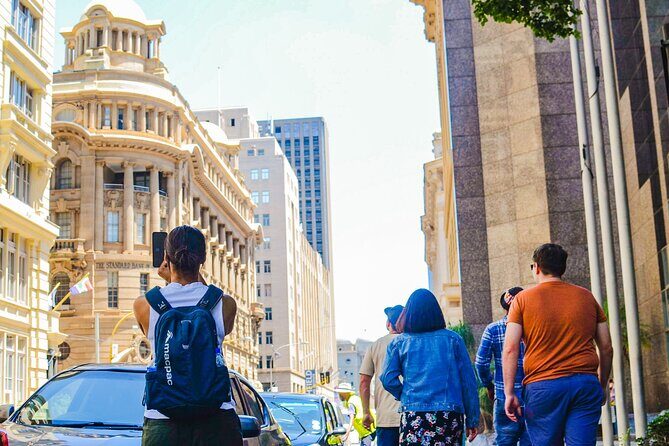
Most Johannesburg tours jump straight into big-ticket sights. This one starts at Nando’s outside Gandhi Square, which is smart. It gives you an easy meetup point, and it also anchors the tour in a place locals actually navigate.
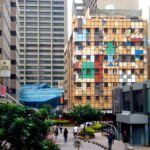
From there, you’ll head into the CBD with a guided walk that moves at a human pace. The first major stop is the Carlton Centre area (a guided visit around 20 minutes). It’s a good early moment because it helps you read the skyline and the “who runs this city” feel of the center—glass, stone, and institutions packed into tight blocks.
You’ll also get photo stops and short guided time at key civic buildings nearby, including the High Court of South Africa (Gauteng Local Division) and the Marshalltown Post Office. The way this tour works is you’re not just looking at architecture—you’re hearing how the buildings connect to Johannesburg’s shifts over time: mining money, segregation-era laws, and the ongoing shape of governance.
One practical note: you’ll be outside for a lot of this. Water is included, but bring your own sunscreen if you get sun easily, and wear shoes you don’t mind getting used in the city.
You can also read our reviews of more walking tours in Johannesburg



High Court, post office, and the “politics in stone” feeling
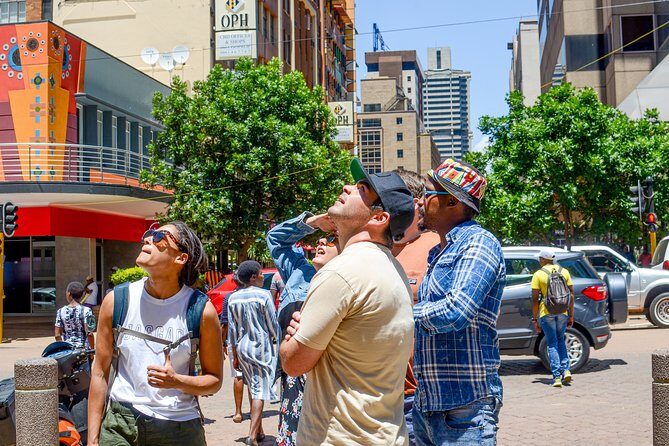
If you want history that’s attached to street corners, this is where it starts paying off. The stops around Marshalltown and the civic buildings aren’t random. They help you understand that Johannesburg is not only a mining story or a freedom story; it’s also a legal and administrative city that grew around institutions.
At the High Court area, you’ll have a photo stop plus guided time. Then you move toward Marshalltown Post Office and the broader Marshalltown/Johannesburg Central area that comes up as the walk continues. That mix of government and infrastructure tells you something important: cities like this don’t just form around people looking for gold. They also form around systems that organize people—often unequally.
In several recent bookings, guides like Refiloe have been praised for being funny while staying focused, and that matters here. Without that, a court stop can become a boring pause. With a good guide, it becomes a quick “why this matters” moment.
This part of the walk also gives you a sense of how to move through the CBD. One strong theme in the feedback: when you’re with the guide, you feel watched over in the normal, streetwise way—helpful routes, timing awareness, and confidence that you’re not wandering alone.
Beyers Naude Square and downtown power players
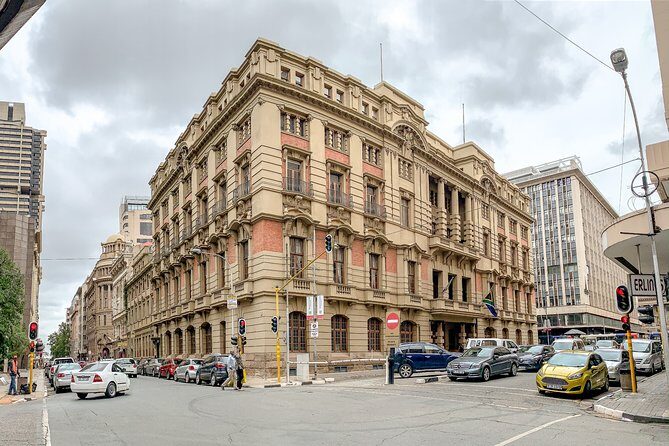
As you continue, you’ll hit Beyers Naude Square for a photo stop and guided sightseeing time. This is the kind of stop that works well mid-tour: you’ve already learned where Johannesburg’s story starts, and now you’re shown how the CBD “holds” that story in public spaces.
Then the walk points you toward major business presence—such as the Anglo American corporate office stop. You’ll have photo time and short guided context. This part can be eye-opening if you only associate Johannesburg with mining operations out in the open. Here, you see the corporate side of that legacy: names, influence, and how the money moved from extractive work into formal power.
Another stop is the Johannesburg Central Magistrate’s Court area, again with photo and guided sightseeing time. That’s a reminder that law isn’t just abstract. It has sidewalks, doors, and offices. It’s also part of why the CBD feels intense if you’re sensitive to institutions.
If you’re the kind of traveler who likes to connect dots—mining, politics, courts, then the communities that grew up around all of it—you’ll likely enjoy this stretch a lot.
Ferreirasdorp and Chancellor House: from first diggings to Mandela-era justice
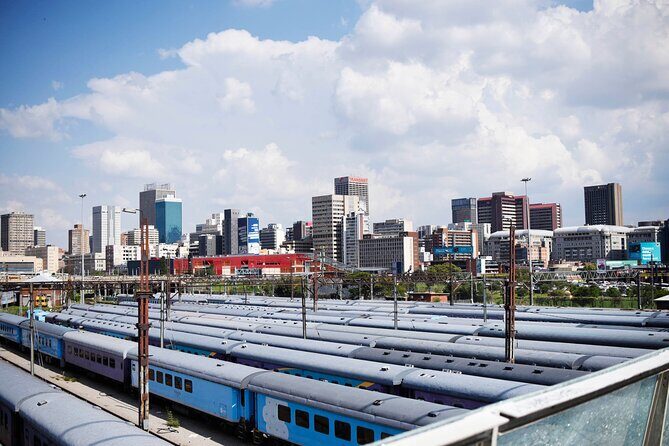
The tour’s mood shifts as you move toward Ferreirasdorp (often described as the cradle of Johannesburg). This is one of the most valuable parts of the experience because it explains how the city’s beginning wasn’t a neat plan—it was settlers, first diggings, and rapid settlement around opportunity.
The guide ties this area back to the gold rush origins so your later Mandela stops make more sense. You start understanding why Mandela’s legal work mattered in a city shaped by forced labor systems and unequal access to rights.
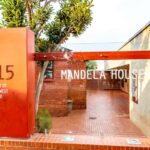
Then comes the Chancellor House stop, tied to Nelson Mandela and Oliver Tambo establishing their first black-owned law firm. This is a highlight for a clear reason: it connects two big ideas in one place—Johannesburg’s city-making energy and the political/justice work that pushed back against oppression.
Even if you’re not a “legal history” fan, this stop tends to land because it’s human and specific. A guide gives you names, a place, and an arc: why people ended up where they did, and why law became a weapon.
Newtown: Workers Museum, migrant labour context, and a city that keeps moving
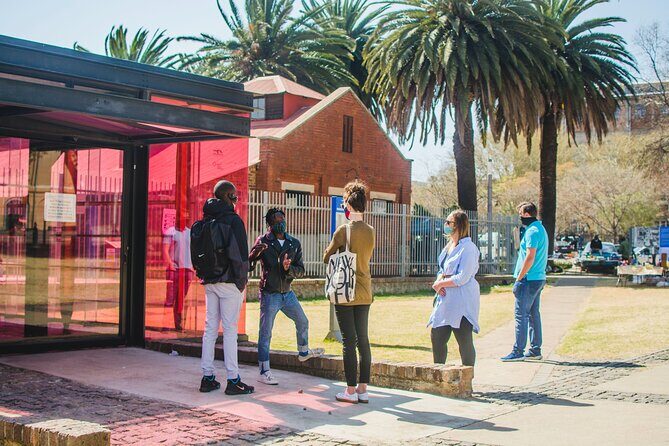
Newtown is where Johannesburg becomes less about institutions and more about people, culture, and lived experience. The tour includes a stop at the Workers Museum, with guided time designed to give you insight into migrant labour history.
This topic can hit differently depending on your own background, but it’s often a turning point for first-time visitors. It helps you understand Johannesburg as a destination created by movement—people arriving for work, people navigating systems, and people building communities in the shadow of economic demand.
One practical catch: the Workers Museum has been reported as closed on Mondays in at least one experience, with the guide still sharing the context even if doors weren’t open. So if you’re traveling on a Monday, don’t assume you’ll get the same “inside the building” experience. You might still get a strong version of the story, just in a different form.
After that, you’ll move through Mary Fitzgerald Square and continue toward the Market Theatre area. In a short time like this, these stops work because they give contrasts: from the labor story to the arts and public culture spaces nearby.
You can also read our reviews of more city tours in Johannesburg

Market Theatre and the arts blocks: culture that’s visible on the street
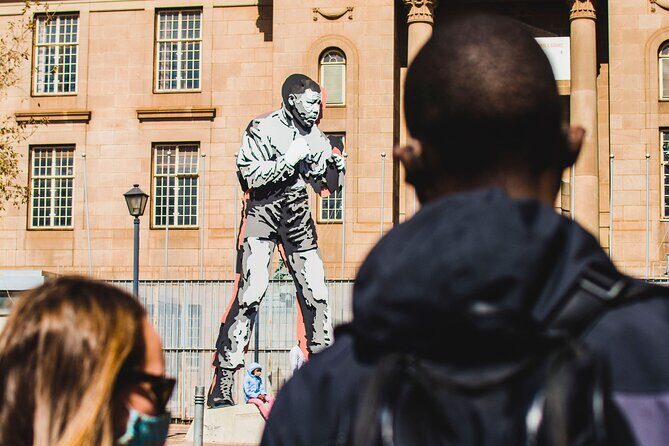
At the Market Theatre, you’ll have photo time and guided commentary, but it’s a quick stop rather than a long sit-down visit. That still works because the tour’s goal is to give you a map of Johannesburg’s “creative neighbourhood” energy without turning your day into museum fatigue.
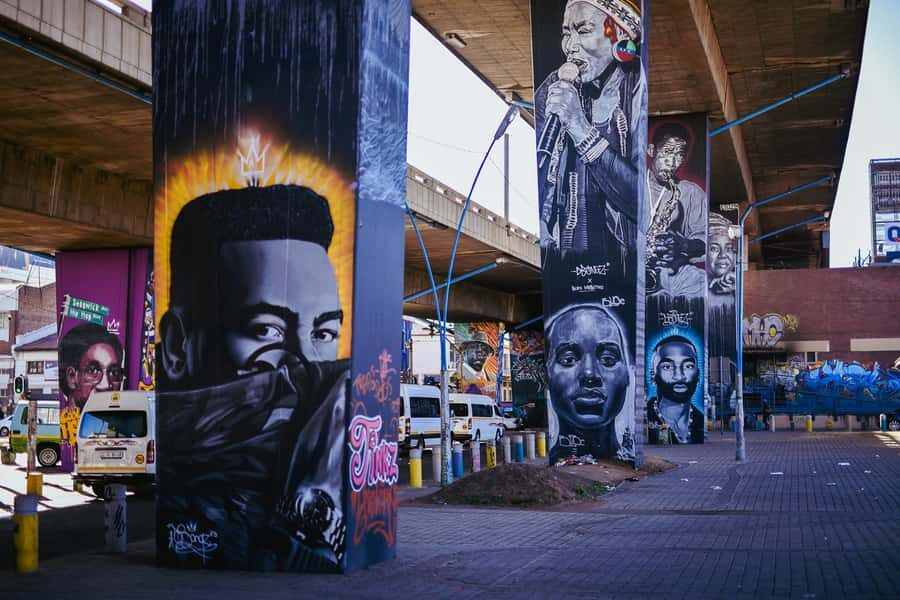
You’ll also pass through the general area around Market Theatre and related cultural spaces. The point is to show you how Johannesburg doesn’t only remember its past through politics and buildings. It also processes memory through art, theatre, street life, galleries, and public creativity.
If you care about street art and modern city culture, this is the part that usually makes people smile. More than one guide in these bookings has been described as enthusiastic and photo-friendly, which helps you document not just the landmarks but the vibe.
Also, if you’ve heard gloomy takes about Johannesburg CBD, this segment is your reality check. It’s not pretending everything is perfect. It’s showing you the city’s present pulse in the same breath as its past.
Mandela Bridge viewpoints and the finish in Braamfontein
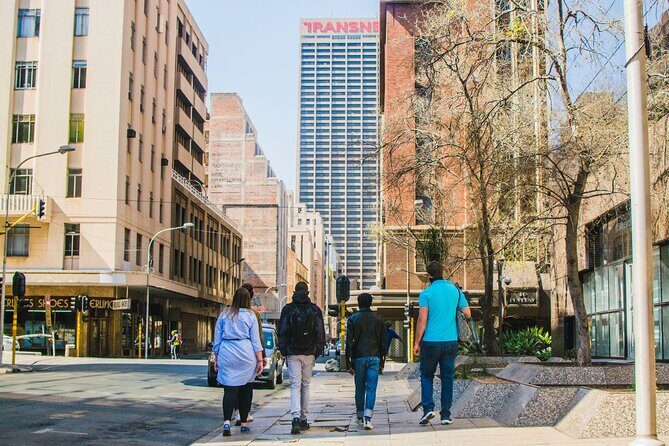
Next up is the iconic Nelson Mandela Bridge. You’ll get scenic views and a dedicated photo stop, plus some sightseeing time while you approach. This is where the tour cashes in visually: you see the CBD connected across space, and it’s easier to understand why people cross here, work here, and gather here.
Then you finish near Sha’p Braai – Shisanyama, right at the start of the food-and-social atmosphere that makes Johannesburg feel like a real city rather than a checklist.
The final leg also points you toward Braamfontein, described as an artistic hub with youthful energy. Even if you don’t add extra plans that evening, the way the tour ends nudges you to keep exploring on your own—especially if you like walking, people-watching, and finding where locals actually eat.
Price and time: does $40 feel fair for 3 hours?
At $40 per person for about 3 hours, this tour can feel like good value because you’re not just paying for walking. You’re paying for interpretation—local guidance that turns scattered sites into an actual story.
You also get:
- Entrance fees covered
- Bottled water included
- A live English guide
- A skip-the-ticket-line style advantage (where tickets apply)
Lunch isn’t included, so plan for that. But you finish at a braai spot area, which often makes it easy to keep the day going without rushing.
One more timing note: the 3-hour duration is the target, but some bookings have run a bit longer when the guide gives extra time to cover everything fully. That usually means you’re not being rushed out the door at each stop.
Who this tour suits best (and who should think twice)
This is a great fit if you want:
- A CBD walking tour that connects mining origins to Mandela-era justice
- Clear context around politics, law, and labour history
- A guide who handles safety and pacing so you can focus on learning
It may be less suitable if:
- You’re pregnant (the activity notes say not suitable)
- You use a wheelchair (the activity notes also say not suitable for wheelchair users, even though it’s described as wheelchair accessible in the general activity details)
If you fall into the “mobility needs” category, I’d treat the accessibility info as something to confirm directly with the operator before you book.
Should you book this Johannesburg CBD walking tour?
Yes, if you want a guided walk that turns Johannesburg’s CBD from scary-on-paper into understandable on-the-ground. The strongest reasons to book are the way the tour links places like Ferreirasdorp and Chancellor House to the bigger Mandela story, and the consistent emphasis on feeling safe while learning.
If your goal is only photos and a few famous landmarks, you might find it a bit too story-heavy. But if you like history that explains why the city looks and feels the way it does—especially around courts, labour, and culture—this one is a smart use of a half-day.
FAQ
Where do I meet the guide?
Meet your guide outside Nando’s at Gandhi Square, in the Metropolitan Building area.
How long is the tour?
The tour is listed as 3 hours.
What’s the price, and what’s included?
The price is $40 per person. It includes entrance fees, bottled water, and a walking tour with a live English guide. It also notes that you can skip the ticket line.
What isn’t included?
Lunch isn’t included, and there’s no hotel pickup and drop-off.
Where does the tour end?
The tour finishes at Sha’p Braai – Shisanyama.
Is it wheelchair accessible?
The activity info says it is wheelchair accessible, but it also specifically says it is not suitable for wheelchair users. If you use a wheelchair, you should confirm suitability with the provider before booking.