REVIEW · JOHANNESBURG
Johannesburg City Centre Walking Tour
Book on Viator →Operated by One Day Africa · Bookable on Viator
Joburg can feel intense at first. This 3-hour CBD walk makes it manageable, with Mandela-era stops plus city views and a laid-back lunch. I love how the route is short but varied, mixing Main Street architecture with the Workers Museum and Chancellor House. The other win is the pacing: guides keep you moving through the right areas and time your stops for photos and context. One thing to consider: it is a walking tour in a real city, so wear good shoes and expect uneven sidewalks.
If you want a first “sense check” on Johannesburg—what matters, where to look, and how to move safely—this is a solid way to get your bearings. The group stays small (up to 10), and you even get water. Still, it’s not a sit-and-watch tour; it’s best if you enjoy asking questions and paying attention to street-level details.
In This Review
- Key Highlights You Should Actually Care About
- Why a Tight Johannesburg CBD Walk Works
- Meeting at Nando’s Gandhi Square, Then Getting Oriented Fast
- Main Street: Old Johannesburg Architecture in Human Scale
- Workers Museum: The Former Compound That Changes How You See the City
- Chancellor House and the Mandela–Tambo Office Legacy
- Mary Fitzgerald Square: Civic Space and the Flow of Meetings
- Top of Africa Views: A Real Vertical Perspective
- Maboneng Precinct Braai Lunch: Food That Feels Like Part of the Story
- Finishing Near Constitution Hill: Where the Day’s Meaning Lands
- Price and Value: What You’re Paying For
- Who Should Book This Johannesburg City Centre Tour
- Practical Tips Before You Go
- Should You Book This Johannesburg City Centre Walk?
- FAQ
- Where is the meeting point for the Johannesburg city centre walking tour?
- How long does the walking tour last?
- What does the tour include?
- What are the main places you’ll visit during the tour?
- How big is the group?
- What is the cancellation policy?
Key Highlights You Should Actually Care About

- Mandela and Tambo’s legal legacy at Chancellor House, a standout stop tied to early Black-owned legal work
- Workers Museum at a former compound, giving context beyond postcard Johannesburg
- Top of Africa city views, a quick visual reset after street-level walking
- Maboneng Precinct braai lunch with plant-based options on the menu
- Small group size (max 10) for a calmer pace and easier questions
Why a Tight Johannesburg CBD Walk Works
Johannesburg isn’t a city you should rush through. It’s big, layered, and sometimes you can’t tell what’s safe or important just by looking at a map. This tour solves that by pairing short walks with guided stops you’d otherwise have to research heavily.
What I like most is the balance. You get “this is what the buildings are” history, but you also get “this is what life looked like here” context—especially around the Workers Museum and the former-compound setting. Then you get a payoff moment: the view from the Top of Africa skyscraper. It’s the kind of height that makes the city’s layout suddenly make sense.
You can also read our reviews of more walking tours in Johannesburg



Meeting at Nando’s Gandhi Square, Then Getting Oriented Fast
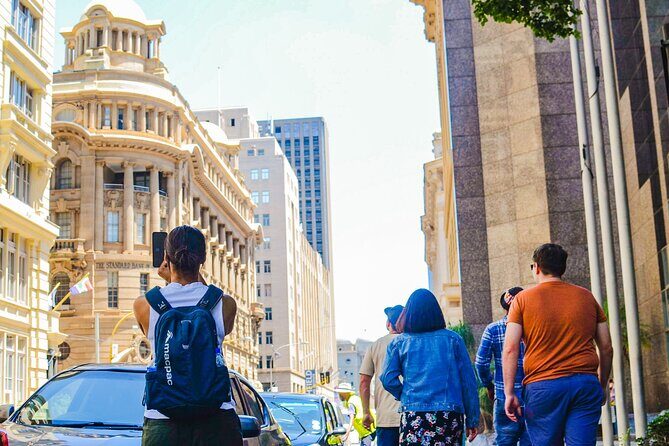
You meet at Nando’s at Gandhi Square (Shop 180, Cnr Fox & Gandhi Square, Metropolitan Building, Rissik St, Marshalltown). The meeting point matters because it puts you in a known, easy-to-find zone near public transportation.
From there, you’re not thrown into endless streets. The tour is designed like a guided circuit: stop, brief context, move again, and repeat. That matters in Johannesburg’s CBD, where the “shortest path” isn’t always the best path on foot. The tour format helps you see the city without feeling like you’re guessing.
Also note the time target: about 3 hours. That’s long enough to feel like you did something meaningful, but not so long you’re stuck hauling energy through the toughest parts of downtown.
Main Street: Old Johannesburg Architecture in Human Scale
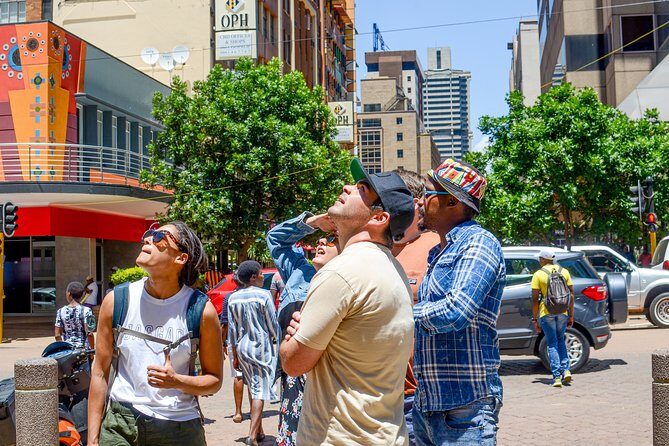
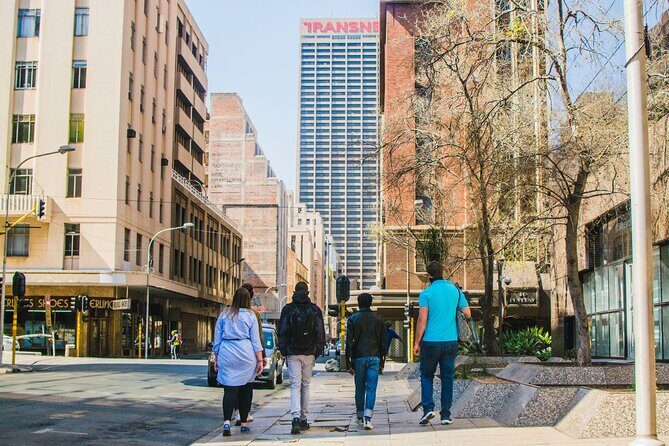
One of your first stops is Main Street, right in the thick of the CBD. The point here isn’t to marathon it. It’s to stand in the middle of the street and notice what you usually miss: heritage buildings, street corners that shape how people move, and the mix of old and new that defines central Joburg.
Main Street is also a good “photo and orientation” stop. If you’re the kind of person who likes to connect what you see in photos to real geometry on the ground, this is where it starts to click. Even if you’re not a “history person,” the architecture is concrete. You can point, look up, and understand why people built this way.
Potential drawback: because this is a walking city center experience, you’ll feel the heat and foot traffic more than you would on a driving tour. That’s not a fault of the guide—it’s Johannesburg. Plan water breaks and keep your pace comfortable.
Workers Museum: The Former Compound That Changes How You See the City
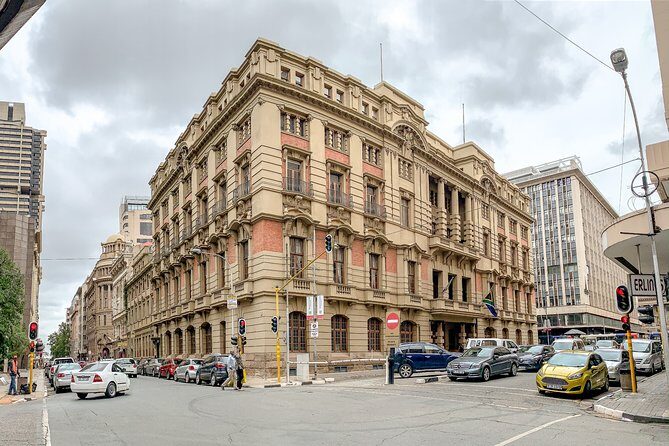
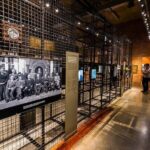
Next up is the Workers Museum. This stop is described as a former compound, and that detail is the whole reason it hits harder than a typical museum visit. You’re not just learning dates. You’re looking at a space shaped by how people lived, worked, and were controlled.
The time here is short (around 20 minutes), so you won’t get everything at museum depth. But you do get the emotional and historical grounding that makes later stops make sense. For me, this kind of stop is the difference between visiting Johannesburg as scenery versus understanding it as a place with consequences.
If you like history told through spaces—not just text—this is a strong choice. And if you’re not sure you can handle “heavy” content, don’t worry: the guide can shape the level of detail and keep you moving.
Chancellor House and the Mandela–Tambo Office Legacy
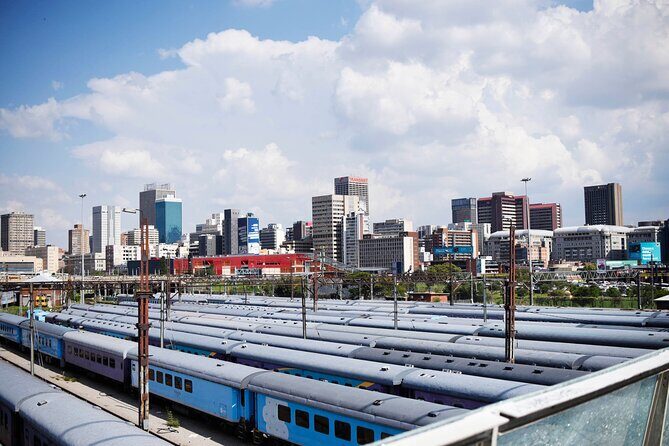
Then you hit Chancellor House, tied to Nelson Mandela and Olive Tambo, where South Africa’s first Black-owned law firm was founded. This is one of the most meaningful stops on the route, because it links major names to a real building and a specific mission: legal access and organizing through law.
This kind of stop tends to stick with you. Not because it’s dramatic on the street, but because it shows that big historical movements had offices, paperwork, meetings, and people doing everyday work.
Time here is brief (around 15 minutes), so you’ll likely get a clear guided overview rather than a long lecture. The upside is you won’t get tired. The challenge is you might want more afterward—which is a good sign, not a problem.
You can also read our reviews of more city tours in Johannesburg




Mary Fitzgerald Square: Civic Space and the Flow of Meetings
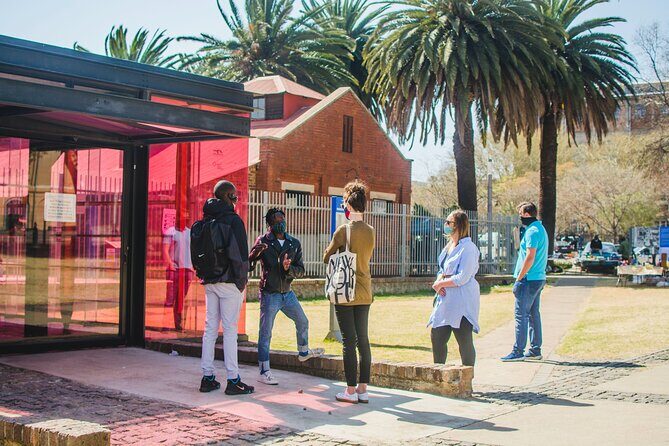
You’ll also spend time at Mary Fitzgerald Square, a place often used for meetings. This stop works because it’s not just a monument. It’s a functional space—one that helps you picture how the city organized itself socially and politically.
I like this stop because it’s easy to understand. Squares feel different from museums and office buildings. You can read the space like a stage: where people gather, how they wait, and how the city rhythm changes when crowds form.
If you’re traveling with kids or you just want breaks from intense history, this is a good “reset” stop—still meaningful, but lighter on the emotional weight.
Top of Africa Views: A Real Vertical Perspective
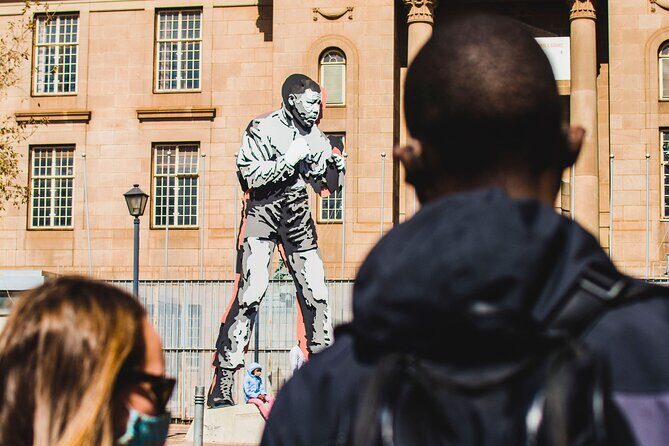
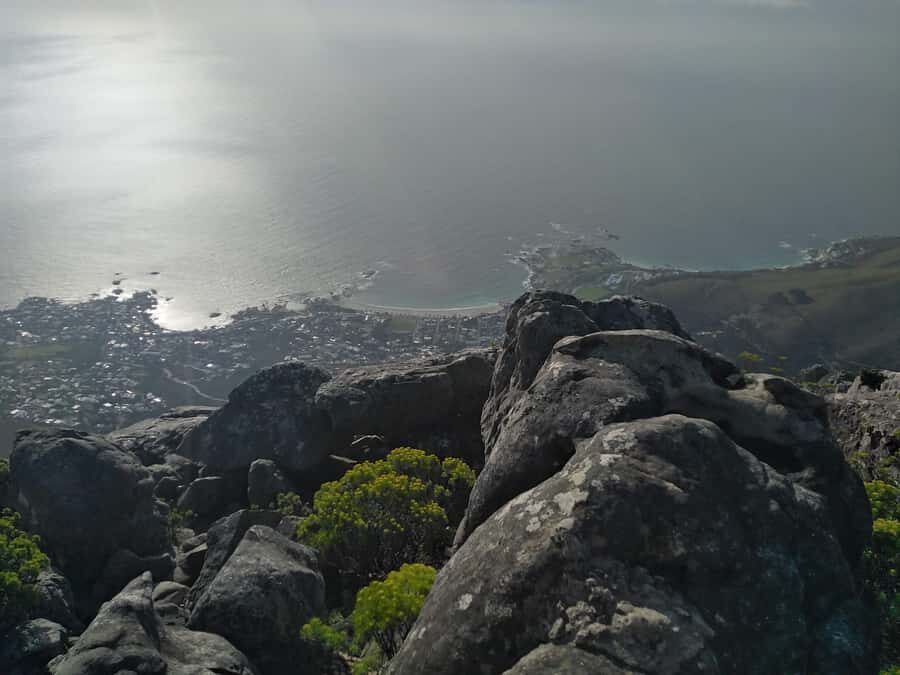
The tour also includes epic city views from the Top of Africa skyscraper. This is your “see the whole map” moment. Walking Johannesburg CBD teaches your eyes to notice details, but heights give you context—roads, density, and the way different areas relate.
Think of it as spatial storytelling. After street-level heritage stops, the view makes the city feel less chaotic. You start to understand why certain streets and buildings mattered.
Practical note: skyline stops often mean you’ll spend part of the time standing and looking up. If you wear glasses or have camera needs, bring them. This is also where good photos become possible without chasing angles for ages.
Maboneng Precinct Braai Lunch: Food That Feels Like Part of the Story
After the downtown sights, you head to Maboneng Precinct for a braai (BBQ) lunch, with plant-based options available. This is the part people talk about for a reason: it’s not a token snack. It’s an actual meal with local flavor.
The braai setup also gives the tour a human rhythm. You’re walking, listening, then you sit down and share food like normal life. That shift helps the history land differently.
From the guides’ style shown in the experience (stopping when it matters, giving context when you ask, then stepping back), the lunch usually feels relaxed, not forced. You’ll also be in a more artsy, street-level part of town—exactly the kind of contrast that keeps the whole day from feeling like one long classroom.
One consideration: braai meals can be meat-heavy by default. The good news is plant-based options are part of the plan, but it’s still smart to mention dietary needs when you arrive so your order matches what you want.
Finishing Near Constitution Hill: Where the Day’s Meaning Lands
The tour ends at Constitution Hill Human Rights Precinct (11 Kotze St, Braamfontein, Johannesburg). Even if you don’t go inside for extra exhibits, ending here gives the day a clear theme: Johannesburg isn’t just about buildings and streets—it’s about rights, struggle, and long change.
If you’re the type who likes to follow up right away, you’ll likely want to spend more time at Constitution Hill after the tour finishes. The walking guide format usually gives enough context to make that extra time feel worth it.
If you’re tired (it happens), the ending location still helps. You’re placed in an area tied to the story you just heard, not dropped randomly somewhere far from your next plan.
Price and Value: What You’re Paying For
The price is $45.19 per person for about 3 hours, and the experience includes water. That sounds simple, but what makes it good value is what’s bundled into the timeframe: multiple major stops (Main Street, Workers Museum, Chancellor House, key squares), plus a major viewpoint at Top of Africa and time for a real lunch in Maboneng.
Also, the tour is designed for a small group, with a maximum of 10 travelers. Small group tours usually cost more, and here you get that benefit without the tour turning into a crowded scramble.
If you’re trying to decide, think of it like this: you’re not just buying a guide to walk next to you. You’re buying context in the right places, plus help navigating the CBD in a way that keeps your time efficient.
Who Should Book This Johannesburg City Centre Tour
This tour is a great fit if you:
- want an organized way to see central Johannesburg without overthinking safety
- like walking tours where the guide explains what you’re seeing at each stop
- appreciate Mandela-related sites connected to real buildings, not just names on a timeline
- enjoy mixing history with a proper braai lunch and time in Maboneng
It may be less ideal if you:
- dislike walking in hot or busy urban areas
- want a full deep museum day (this is time-limited, by design)
- need a completely low-step or fully seated experience (it is still a walking tour)
Based on how guides run the route—one guide even helped with Uber planning on the way back for some people—this experience also works well for first-timers in Johannesburg who want a steady hand.
Practical Tips Before You Go
- Bring a camera and expect multiple photo chances, especially on the Main Street section and at Top of Africa.
- Wear shoes you trust on uneven sidewalks.
- Bring a light layer if you get cold in buildings or indoor spaces.
- If you’re plant-based, flag your needs clearly at the lunch stop so ordering is smooth.
- Ask your guide questions early. A good guide can adjust the detail level, and the tone here tends to be relaxed, not lecturing.
Should You Book This Johannesburg City Centre Walk?
Yes, I’d book it—especially as your first Johannesburg CBD experience. The route is compact, the stops are well-chosen, and you get both meaning and payoff: Mandela-linked sites, the Workers Museum’s former-compound setting, and a true city view from Top of Africa, followed by a braai lunch in Maboneng Precinct with plant-based options.
Book it if you want to feel oriented fast and leave with more than a few photos. Skip it only if you’re looking for a purely casual, no-thinking stroll or you want a full-day museum deep dive. Otherwise, this is a smart, efficient introduction to Jozi that doesn’t treat the city like a theme park.
FAQ
Where is the meeting point for the Johannesburg city centre walking tour?
You meet outside Nando’s at Gandhi Square (Shop 180, Cnr Fox & Gandhi Square, Metropolitan Building, Rissik St, Marshalltown, Johannesburg).
How long does the walking tour last?
The duration is about 3 hours.
What does the tour include?
The tour includes water. The schedule also ends with lunch, and a braai-style meal with plant-based options is part of the experience.
What are the main places you’ll visit during the tour?
You’ll see several key CBD and nearby areas, including Main Street, the Workers Museum, Chancellor House, and Mary Fitzgerald Square, plus Top of Africa for city views. The tour ends near Constitution Hill Human Rights Precinct.
How big is the group?
The tour has a maximum of 10 people.
What is the cancellation policy?
You can cancel for a full refund if you do it up to 24 hours before the experience starts. If you cancel less than 24 hours before, the amount paid is not refunded.