REVIEW · JOHANNESBURG
Innercity Walking Tour
Book on Viator →Operated by Curiocity Backpackers · Bookable on Viator
Johannesburg changes fast when you walk it. This inner-city walking tour trades glassy bus views for street-level glimpses, with a guide explaining how neighborhoods shifted over time. You’ll spend the day moving through places most visitors skip, from the creative blocks of Maboneng to landmarks tied to Johannesburg’s biggest turning points.
I really like two things. First, the on-the-ground commentary links what you see—signs, buildings, markets—to the city’s real story. Second, you get skip-the-line access and included entry for major stops, so your time stays focused on the experience instead of queues.
One thing to consider: you’ll be on your feet for much of the day, and it’s paired with short stretches between neighborhoods. Bring comfortable shoes and be ready for moderate walking rather than an all-sitting tour.
In This Review
- Key highlights you’ll actually feel
- Johannesburg’s side streets, not the postcard route
- Is it worth about $50? Yes, if you value included entry
- Start at Jeppestown Fox Street, then follow the story west
- Stop 1: Maboneng Precinct and the Place of Light shift
- Stop 2: Kwa Mai Mai Traditional Market for real browsing and buying
- Stop 3: Collectors Treasury, 8 floors of secondhand treasures
- Stop 4: Carlton Centre—panoramic views plus the timeline behind them
- Stop 5: Gandhi Square and the lawyer who left a name
- Stop 6: Chancellor House and Mandela/Tambo Attorneys history
- How the walking + transport pairing works in real life
- Best fit: who will love this tour most
- Should you book this Innercity Walking Tour?
- FAQ
- How long is the Johannesburg Innercity Walking Tour?
- Where does the tour start and where does it end?
- What is the price per person?
- Is lunch or refreshments included?
- Do I need to print anything, or do I use a mobile ticket?
- How big is the group?
- Is there free cancellation?
Key highlights you’ll actually feel
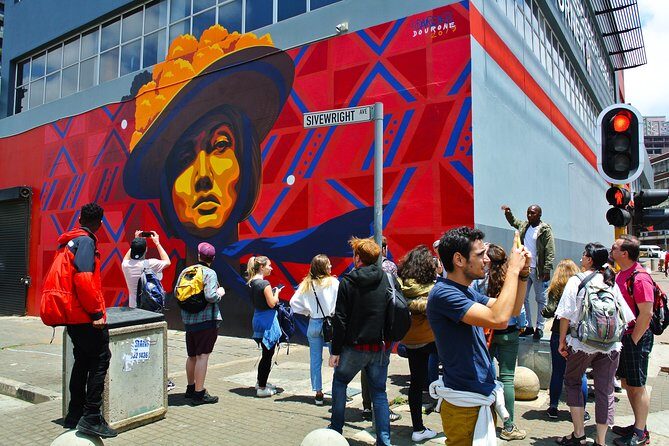
- Maboneng Precinct (Place of Light): see how art-driven revitalization reshaped a once-stigmatized area
- Kwa Mai Mai Traditional Market: visit a market housed in a former horse stable with 176+ stalls
- Collectors Treasury bookstore: an 8-storey secondhand book world plus LPs, maps, porcelain, and postcards
- Carlton Centre viewpoints with guided storytelling: panoramic views tied to the gold rush, decline, and rebirth
- Gandhi Square and the law-firm link: a named landmark connected to Mahatma Gandhi in Johannesburg
- Chancellor House and Mandela/Tambo Attorneys history: plus the Shadow Boxing sculpture nearby
Johannesburg’s side streets, not the postcard route
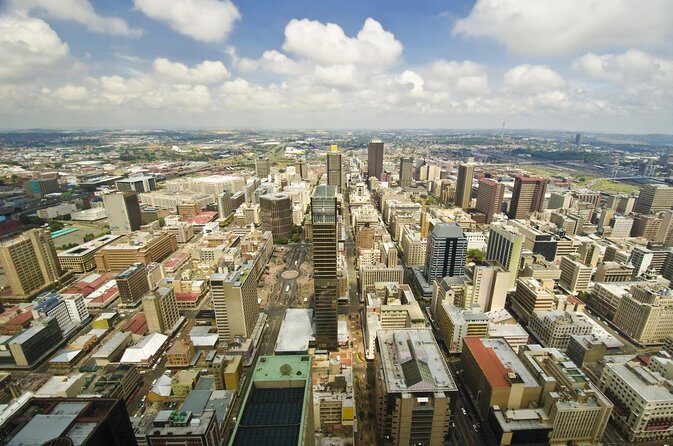
There’s a particular kind of city knowledge you only get when you’re moving at walking pace. From the sidewalk, you notice the small things: how people flow through intersections, where informal trading happens, and how everyday life shapes the look of a place. This tour leans hard into that. You’re out in the open, not stuck watching neighborhoods from behind glass.
The guide’s job isn’t just to point at buildings. It’s to help you connect them to cause and effect—what drew people in, what broke things apart later, and what’s changing now. That makes the day feel less like sightseeing and more like understanding a city’s momentum.
And because it’s a small group (up to 20 people), you’re not lost in a crowd. You can ask practical questions, and the guide can steer the pace in a way that keeps you engaged.
You can also read our reviews of more walking tours in Johannesburg



Is it worth about $50? Yes, if you value included entry
At about $50.04 per person for roughly 4 hours, the price works best if you care about what you’re walking into. The tour includes admission for the scheduled stops and adds guidance plus transport support via an air-conditioned vehicle when needed.
That matters in Johannesburg, where time adds up fast. The tour’s skip-the-line access also helps you keep moving toward the good parts: the views at Carlton Centre, the market stalls at Kwa Mai Mai, and the stacked-book spectacle inside Collectors Treasury.
Food isn’t included—no lunch or refreshments—so you’ll want to plan for that. But if you show up ready to spend the afternoon out in the city, the overall value is strong for the amount of ground covered and the number of entry stops included.
Start at Jeppestown Fox Street, then follow the story west
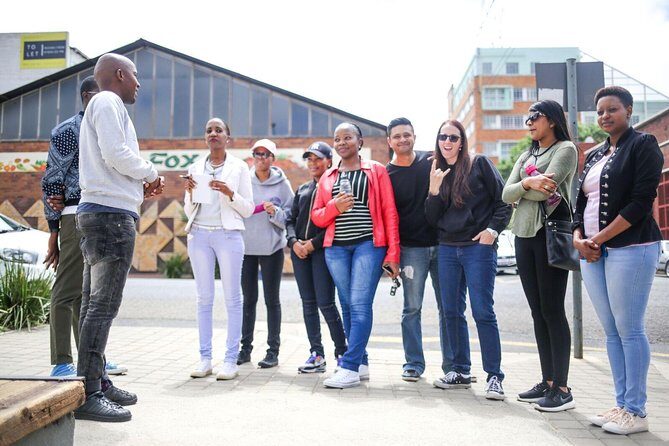
Your day begins at 302 Fox St, Jeppestown, with the tour ending back at the same spot. The start time is 10:00 am, which I like because you get daylight for the skyline moments later.
The tour format is simple: you walk, you get guided commentary, and you also use the air-conditioned vehicle when it makes sense to cover ground or take brief breaks. One past participant even joked that part of it felt like a walk plus minibuses—so expect a mix, not a single pace for four hours straight.
You’ll also get a mobile ticket, which is convenient. And since the meeting area is described as near public transport, it’s easier to reach without needing to figure out a complicated route every time you travel in the city.
Stop 1: Maboneng Precinct and the Place of Light shift
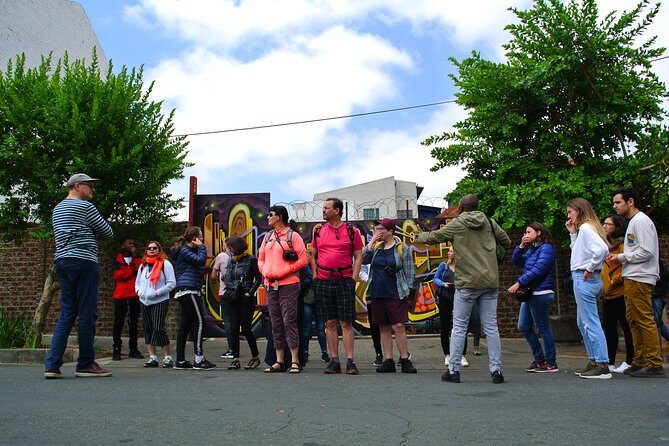
Maboneng means Place of Light, and the name isn’t just marketing. You’re walking into a district that has become a hub for urban artists, designers, and entrepreneurs. Not long ago, it was widely viewed as a “no-go” zone due to urban decay. Now, creative projects and redevelopment have pulled new energy into the streets.
That transformation is why this stop matters. It gives you a first “lens” for the rest of the day. You start noticing how art isn’t only decoration—it can be part of how neighborhoods earn back attention, investment, and safety through visibility.
Practical tip: give yourself permission to slow down here. Street art, building fronts, and small storefront details are part of what you came for. If you rush, you miss the point.
Stop 2: Kwa Mai Mai Traditional Market for real browsing and buying
Then you head to Kwa Mai Mai Traditional Market, described as one of the oldest markets in Johannesburg. It used to be an old horse stable, and today it holds 176+ stalls.
This is where you get a different pace than Maboneng. Here the focus is shopping and local culture—things like:
- traditional medicines
- African attires
- beaded items and craft works
- artefacts and walking sticks
The best use of your time is simple: browse first, then decide. Markets like this reward patience. If you rush straight into purchases, you often overpay—or you buy something you didn’t really think through.
Also, keep expectations grounded. You’re not looking for museum-level displays. You’re walking through a working market scene where bargaining and negotiation may feel part of the rhythm. If that’s not your style, still enjoy the browsing and treat it like a cultural stop first.





Stop 3: Collectors Treasury, 8 floors of secondhand treasures
Next is Collectors Treasury, a secondhand bookstore highlighted as the largest in the Southern Hemisphere. What makes this place fun is the scale: books stacked everywhere in an 8-storey building, plus extra categories that go beyond typical bookstore browsing.
You may also see LPs, maps, porcelain, and postcards. That combination turns the stop into more than book shopping. It becomes a scavenger hunt for themes—travel maps for planning, old prints for collecting, or paper artifacts that capture Johannesburg and South Africa in older formats.
One thing I’d watch for: the stop is shorter than the others, so it’s smart to enter with a goal. For example, decide whether you’re looking for travel maps, local photography books, or small gifts you can fit in luggage. It keeps you from wandering into “I’ll look at everything” chaos.
Stop 4: Carlton Centre—panoramic views plus the timeline behind them
Carlton Centre is a big moment in the day for a reason. It’s a major skyscraper, built between 1969 and 1976 by the American architectural firm Skidmore, Owings and Merrill. You go up for panoramic city views, and the guide narrates how Johannesburg got shaped by major eras.
The key thread: you’ll hear the story from the gold rush starting in 1886, through later urban decline in the late 1980s and 1990s, and into the current period of city centre rebirth.
That narrated timeline makes the view feel more meaningful. Otherwise, a skyline can stay just a photo moment. With the commentary, you’re seeing geography as a record of policy, economics, and migration patterns—still human-scale, just on a wider canvas.
Practical tip: bring your phone camera, but also take a few minutes with no camera. Scan the city first. Then look again with the guide’s framing in your head.
Stop 5: Gandhi Square and the lawyer who left a name
At Gandhi Square, the guide connects the location to Mahatma Gandhi. The square is named for Gandhi, who spent 21 years in South Africa, including time working with a law firm in downtown Johannesburg.
This kind of stop is useful because it shows you that landmarks aren’t only about buildings. They’re about people and ideas—especially when those ideas shaped civil rights movements and public debate far beyond one city.
You’ll likely get some context about how Johannesburg fit into that larger story, which helps you connect the day’s earlier themes: movement, legal systems, urban change, and community transformation.
Stop 6: Chancellor House and Mandela/Tambo Attorneys history
The final named historical stop is Chancellor House. You walk through the main street mining district toward it, and the context centers on Mandela and Tambo Attorneys—South Africa’s first black-owned law firm.
Chancellor House is described as a humble three-storey building that, in the 1950s, housed the attorneys. Across the street you’ll see the Shadow Boxing Sculpture, designed by artist Marcos Cianfanelli based on a famous image of young Mandela boxing.
This is one of the stops where the guide’s pacing really matters. You’re moving from street setting to symbolic meaning. If you rush, the sculpture becomes just a photo target. If you slow down, it turns into a visual shortcut for resilience, discipline, and identity during a hard era.
And because you’re in the downtown mining district area, it also reinforces how Johannesburg’s industrial past intersects with political and legal struggle.
How the walking + transport pairing works in real life
The whole point of a walking tour is to stay connected to the ground. Here, you still get movement on foot, but there’s a practical safety and comfort layer thanks to the air-conditioned vehicle included in the experience.
That means you’re not stuck doing constant long distances in heat or cold without breaks. It also makes it easier to move between neighborhoods efficiently while keeping the day structured.
Still, the tour is marked as moderate physical fitness. If you’re dealing with mobility limitations, you’ll want to think carefully about steady walking segments and uneven sidewalks.
What I’d bring:
- comfortable walking shoes
- a light layer (cars can feel colder than streets)
- a small plan for hydration since lunch and refreshments aren’t included
Best fit: who will love this tour most
This tour is for you if you like cities with layers and you want explanations that connect everyday details to bigger shifts. You’ll probably enjoy it if you’re the type who looks at a market and wonders who sells, who buys, and why the building exists.
It also suits people who prefer authentic street-level culture over big-ticket museum stops. Stops like Kwa Mai Mai Market and Collectors Treasury feel local in a way that many standard routes don’t.
If you want a mostly seated, short-stroll experience, this likely won’t feel right. The day is built around being out in the city, walking, and listening.
Should you book this Innercity Walking Tour?
I think it’s a smart booking when you want more than a checklist of Johannesburg sights. The strongest reason to choose it is the way the route connects multiple layers—creative reinvention in Maboneng, daily life at Kwa Mai Mai, and major city history at Carlton Centre and Chancellor House.
Also, the human factor seems to matter a lot. The guide experience comes through: people highlight friendly flexibility and in-depth explanations that make the city feel personal instead of distant. If you value a guide who talks clearly and adjusts to the group, this kind of tour can be a highlight of your trip.
Skip it only if you dislike walking, don’t want to shop at markets or bookstores, or you’re looking for a purely photo-focused outing with minimal context. For everyone else, this is a practical, well-paced way to get your bearings in Johannesburg and understand why the city looks the way it does.
FAQ
How long is the Johannesburg Innercity Walking Tour?
It runs for about 4 hours.
Where does the tour start and where does it end?
The tour starts at 302 Fox St, Jeppestown, Johannesburg, and it ends back at the same meeting point.
What is the price per person?
The price is $50.04 per person.
Is lunch or refreshments included?
No. Lunch and refreshments are not included.
Do I need to print anything, or do I use a mobile ticket?
It uses a mobile ticket.
How big is the group?
The maximum group size is 20 travelers.
Is there free cancellation?
Yes, free cancellation is available up to 24 hours in advance for a full refund.