REVIEW · JEFFREYS BAY
Jeffreys Bay: Learn to Surf Group Lesson
Book on GetYourGuide →Operated by E Venter · Bookable on GetYourGuide
Your first wave starts on the sand. In Jeffreys Bay, this beginner lesson from a surf school founded in 2000 uses a clear five-step path to help you paddle, catch, stand, and ride back toward shore, with a coach staying close. I love the qualified coach guidance, and I love the small groups that keep your progress personal instead of rushed. The only drawback is the ocean decides the schedule: if conditions are extreme, lessons may be rescheduled or canceled.
After a quick gear setup, you’ll move through beach practice first, then get in waist-deep water to try the steps in real conditions. It’s designed for people of all ages, and you’ll get the instruction in English, which makes the learning curve much friendlier.
In This Review
- Key takeaways before you book
- Jeffreys Bay’s oldest surf school: why this start matters
- What’s included (and what that saves you on the trip)
- The meeting point: simple, walkable, and no hotel shuffle
- The five-step program: from sand cues to first rides
- In the water: why waist-deep practice helps beginners
- Coaching that feels personal: instructors who get praised
- Price and value: how $28 makes sense here
- How long will it take, and what you’ll do during that time
- Who should take this surf lesson in Jeffreys Bay
- Practical considerations: when you might struggle (and what helps)
- Should you book this Jeffreys Bay learn-to-surf lesson?
- FAQ
- Is the board and wetsuit included?
- Where do I meet for the lesson?
- What should I bring?
- What happens during the surf lesson?
- Is this lesson suitable for kids and beginners?
- What if the weather or ocean conditions are bad?
- What if I need to change my plans?
Key takeaways before you book
- Founded in 2000: one of Jeffreys Bay’s oldest surf schools, so they run these lessons day after day
- Five-step progression: sand drills first, then ocean practice in waist-deep water
- Small groups for real feedback: you’re not stuck watching from the shore
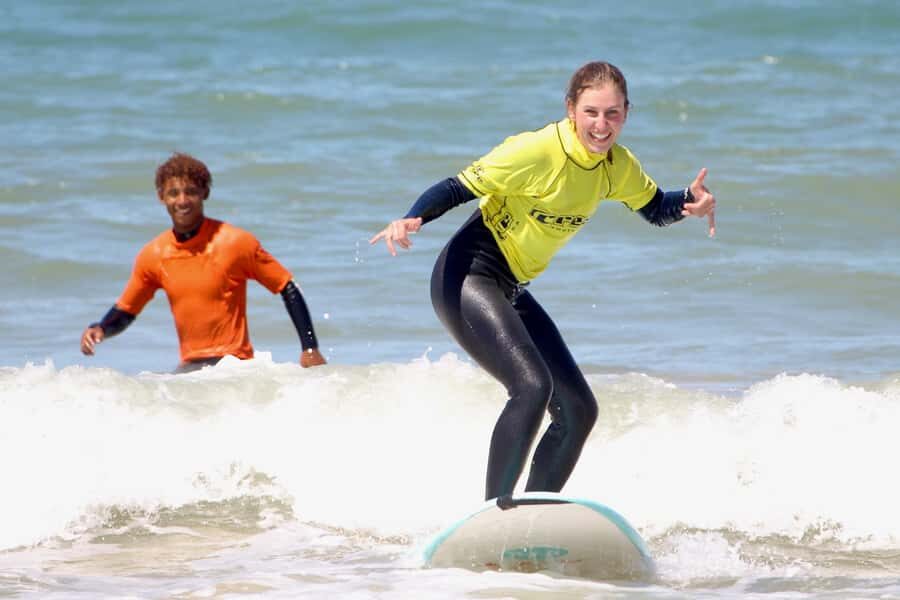
- Goal-focused coaching: paddle → catch → stand → ride your wave toward the beach
- Easy logistics on foot: it’s within walking distance of local surf stores for any last-minute needs
Jeffreys Bay’s oldest surf school: why this start matters

Jeffreys Bay is famous for its surf culture, but learning to surf is still a very personal thing. You need the right mix of courage, technique, and timing—and you need it fast enough that you don’t lose the rhythm in a long group session.
This lesson is run by a surf school established in 2000, which matters more than it sounds. When an operation has been teaching since 2000, it tends to mean they’ve refined the basics: what to explain on the sand, what to practice in the water, and what to fix when your timing goes off. You’ll feel that structure in the way the lesson is built around a five-step plan, rather than a vague “try and see” approach.
You’ll also notice how focused it is on the basics you actually need right now. The aim isn’t to impress anyone with big turns. It’s to get you comfortable enough to paddle out, catch a wave, stand up, and ride it toward the beach. That’s a clear goal you can work toward without guessing.
Finally, the small-group format is a big deal in surf lessons. One person getting their pop-up corrected can take the whole learning curve from frustrating to doable. In small groups, the coach can watch what you’re doing and adjust quickly.
A few more Jeffreys Bay tours and experiences worth a look


What’s included (and what that saves you on the trip)
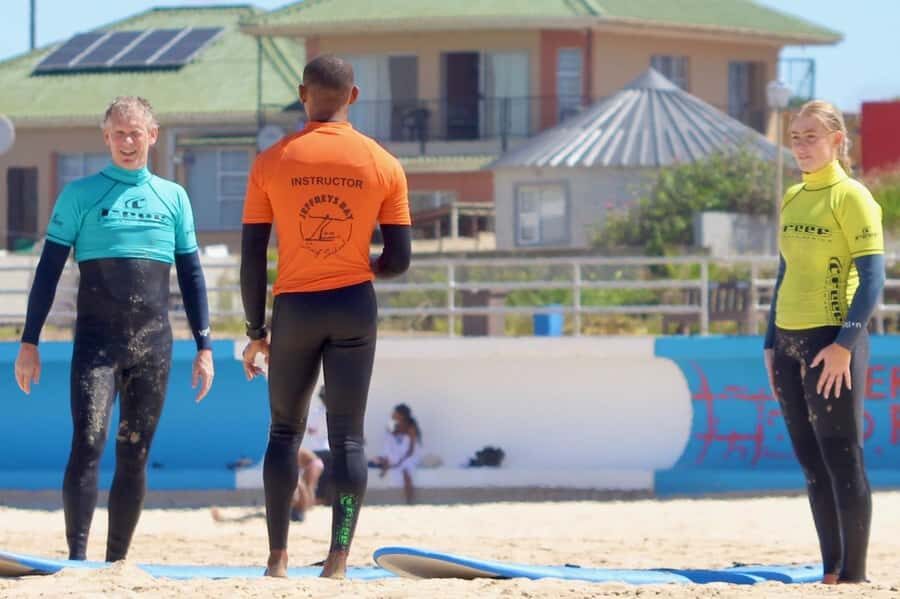
For $28 per person, the lesson includes the items that usually add up fast once you’re on the ground. You get the board and wetsuit, plus access to changing rooms and storage for belongings. Card facilities are available too, so you’re not forced into a cash scramble.
That included gear is more than convenience. A beginner surfboard helps you find stability sooner, and a wetsuit helps you stay out longer without feeling like you’re being punished by cold water. If you’re visiting Jeffreys Bay as part of a bigger trip, it’s one less thing to pack or rent.
Here’s what you should bring yourself:
- Swimwear
- Towel
- Sunscreen
And one small note: you’re not told to bring a bathing costume specifically, but swimwear is the correct plan. If you show up wearing everyday clothes, you’ll waste time changing instead of getting into the lesson.
The meeting point: simple, walkable, and no hotel shuffle
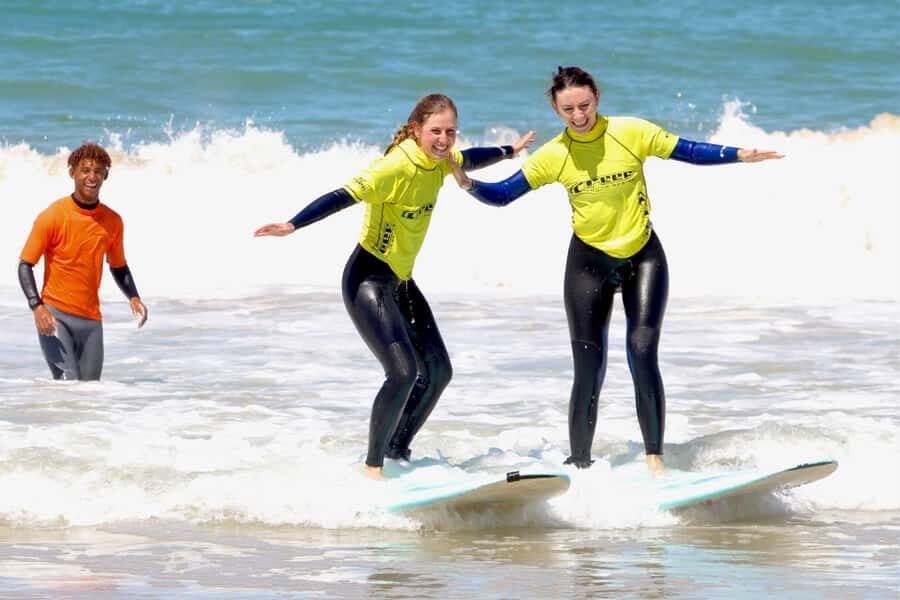
You’ll start by looking for Jeffrey’s Bay Surf School, and the activity ends back at the meeting point. There’s no hotel pickup or drop-off, so build your travel time with that in mind. If you’re staying nearby, it’s a nice setup because you can keep your morning flexible.
This “meet at the school” style also means you can control your own timing. If you need a quick sunscreen top-up or a bathroom stop, you can handle it before you’re herded into a vehicle and delayed.
If you’re thinking about what to do after your lesson: since the surf school is within walking distance of surf stores, it’s easy to pick up anything you forgot without turning the rest of your day into a hunt.
The five-step program: from sand cues to first rides
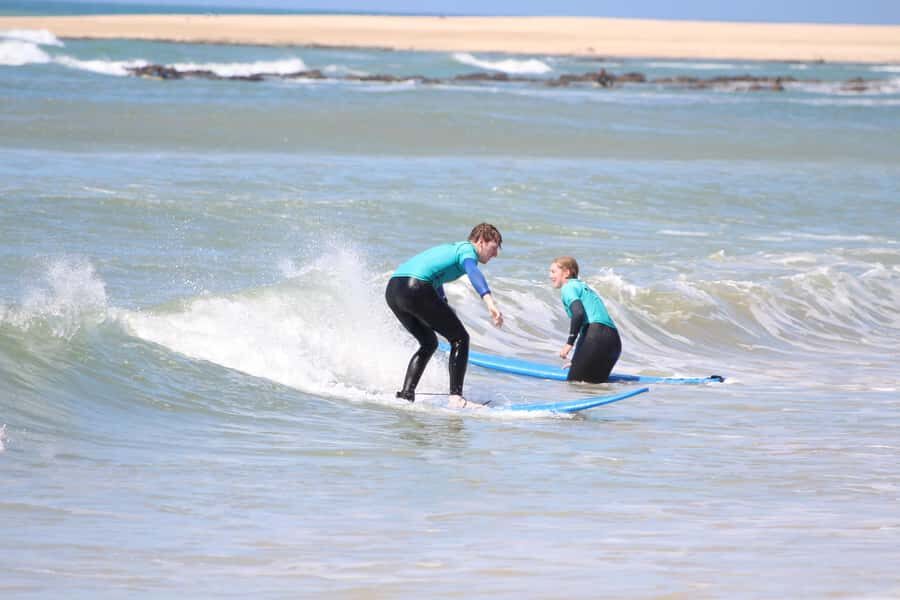
The lesson runs on a repeatable progression. You follow a five-step program, and each step is meant to move you closer to the final goal: stand up and ride the wave toward the beach.
Steps 1–3 happen first on the beach. You’ll be shown what to do and why it works, then you practice it in the ocean in waist-deep water. This is a smart beginner approach. You learn movements where you can still feel the ground, then you carry those movements into the water with less fear and less chaos.
Once you’ve practiced steps 1–3 successfully, you return to the beach for the final guidance steps. Then it’s back into the ocean again to practice the last two steps in order, building toward that moment where everything clicks at once: you paddle, the wave comes, you catch it, you stand, and you keep riding back to shore.
What you’ll feel during the lesson is the difference between knowing a motion and being able to repeat it. The beach explanations reduce the guesswork, and the waist-deep practice reduces the panic factor. By the time you’re going for the full sequence, you’re not totally starting from zero.
In the water: why waist-deep practice helps beginners
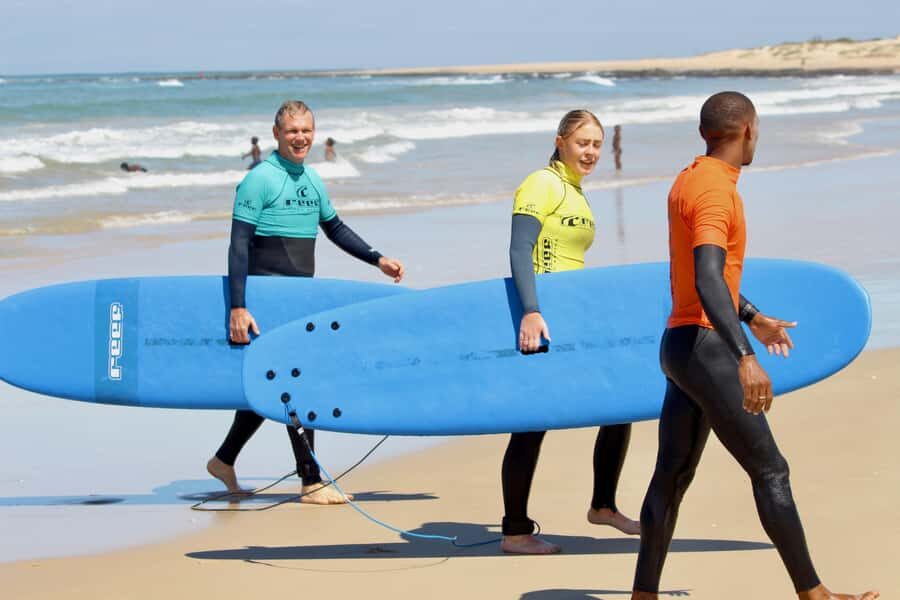
Surf lessons can go sideways when beginners jump straight into deeper water before the key motions make sense. Here, you train in waist-deep water after steps 1–3 are explained and demonstrated.
That depth matters. You can still reposition yourself without being immediately overwhelmed by waves and current. You can focus on learning the rhythm: paddle timing, where to look, how to shift your weight, and how to recover when it doesn’t work the first time.
In your first ocean session, you’ll likely spend much of the time figuring out how waves move through the water around you. The upside is that coach feedback can land while you’re still close enough to correct quickly. In small groups, this becomes much more effective because the instructor isn’t stretched thin.
And once your early practice starts working, you move into the final steps and aim for the full sequence: catch, stand, ride.



Coaching that feels personal: instructors who get praised
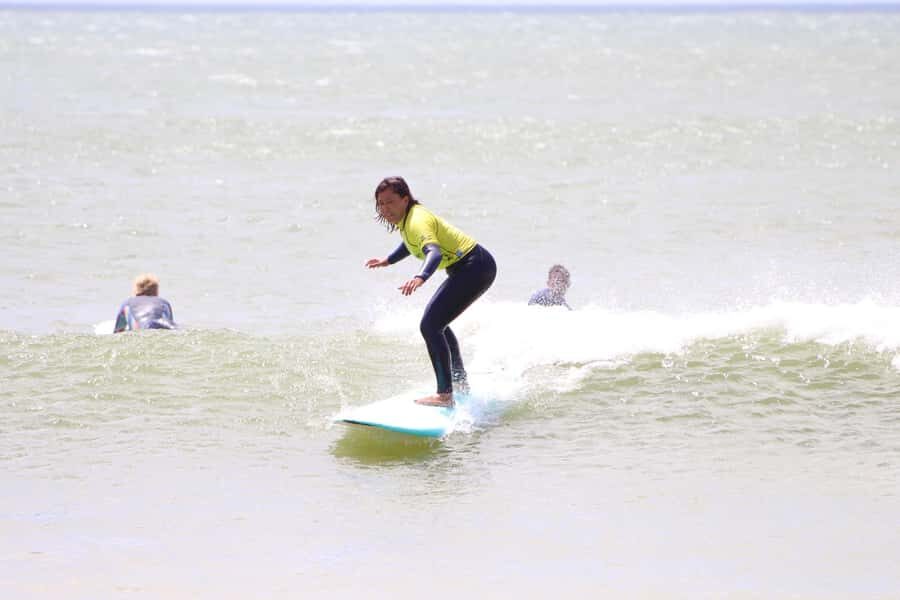
What stands out in the instruction quality is attention. People consistently mention coaches who explain clearly, stay friendly, and give direct guidance as you try.
You might meet instructors such as Lorenzo or Angelo, who are named in firsthand accounts. The common thread isn’t just that they’re nice—it’s that they stay focused on what each learner needs at the moment.
That focus can show up in small ways:
- You get reminders at the exact moment you need them
- You’re not left guessing between attempts
- You get help that keeps kids and adults engaged
One account highlights that a learner could stand on the board after about an hour. That doesn’t mean you’ll instantly do it too, but it does tell you the lesson structure is built to help beginners reach that milestone quickly when things line up.
If you’re new to surfing, the best advice I can give you is to use the coach’s feedback immediately. Don’t wait until you’re back on the beach to ask a question. In surf learning, the ocean moves faster than your memory.
Price and value: how $28 makes sense here
At $28 per person, you’re not paying for a long tour bus experience or a lot of extras. You’re paying for instruction that gets you into the water with a board and wetsuit, in a structured format, with small-group coaching.
The value comes from three places:
First, the lesson is all-inclusive for the essentials: board and wetsuit are included. That’s a real savings if you’d otherwise need to rent gear on top of a lesson.
Second, it’s coached in a way that’s meant to produce measurable progress. The goal is explicitly defined: paddle, catch, stand, and ride. You’re not just paying to be near the beach—you’re paying to learn a sequence.
Third, you get beach explanations, then ocean practice, then a final coaching run to push the last two steps. That repeated structure is what helps beginners actually improve during one session.
If you’re visiting Jeffreys Bay and want the first-time experience without overthinking gear and logistics, this is a good-priced way to do it.
How long will it take, and what you’ll do during that time
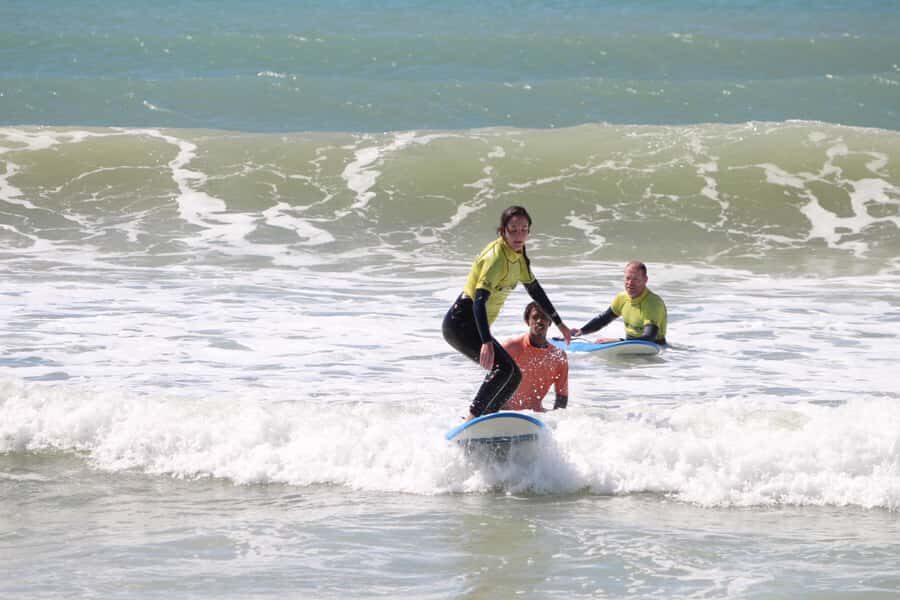
The program details are clear, but the exact duration can vary based on the lesson slot you choose. Some experiences are described as lasting around one hour, while others are around two hours.
No matter the timing, the flow stays the same:
- Gear and prep
- Beach teaching and demonstration for steps 1–3
- Waist-deep practice in the ocean
- Back to the beach for steps 4–5 coaching
- Back into the ocean to aim for standing and riding
If you’re short on time, the shorter session can still be a great start because the lesson is structured to compress the learning into a small number of key steps. If you have a bit more time, a longer session gives you more opportunities to repeat the sequence and make the movement feel more automatic.
Who should take this surf lesson in Jeffreys Bay
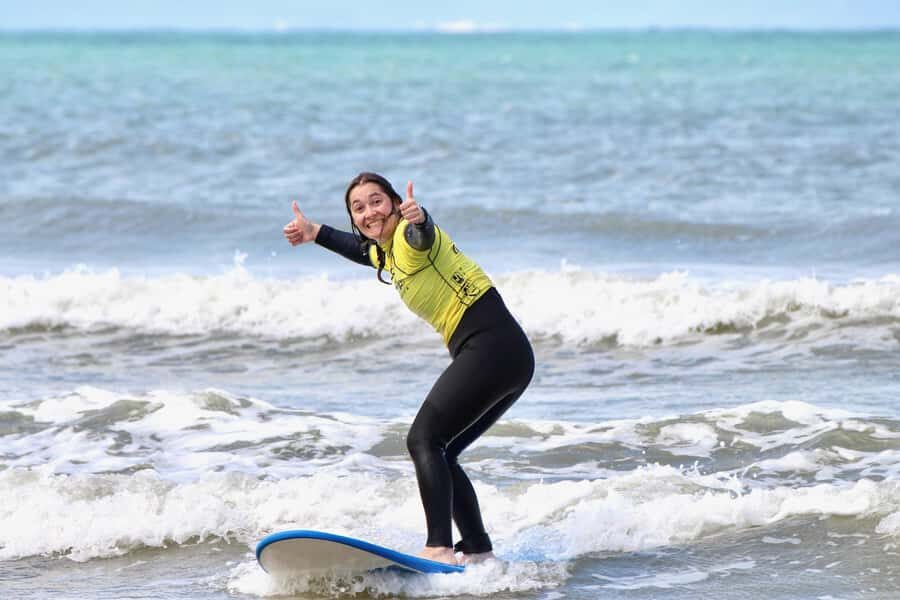
This lesson is set up for beginners and is suitable for all ages, so it fits a wide range of trip styles.
You’ll likely enjoy it most if:
- You’re trying surfing for the first time
- You want a coach watching your movements instead of just renting a board
- You’re traveling as a family or with mixed experience levels
- You want a clear progression instead of random practice
It also works well if you like hands-on learning. The lesson isn’t only talk. You’ll practice in the ocean, and you’ll go back and forth between the beach and water until you’re ready for that stand-and-ride attempt.
Practical considerations: when you might struggle (and what helps)
Surf has a way of humbling everyone, even people who swim regularly. A few things can affect your experience.
1) Ocean conditions
The biggest factor is the water itself. Weather and ocean conditions control whether the session runs as planned. If the water is too extreme, lessons can be rescheduled or canceled.
2) Learning speed varies
The lesson is designed for beginners, but standing and riding depends on your comfort level, balance, and timing. Some people stand earlier than others, and the coach will help you adjust what you’re doing.
3) You need to come prepared
Bring swimwear, a towel, and sunscreen. If you forget sunscreen, you’ll spend the lesson worrying about sunburn instead of learning. If you forget a towel, you’ll feel cold and slow right after the water.
Should you book this Jeffreys Bay learn-to-surf lesson?
I’d book it if you want your first surf session to be structured, coach-led, and focused on progress rather than just renting a board and hoping for the best. The small-group setup, the five-step progression, and the fact that board and wetsuit are included make it a strong value.
Skip it—or plan to be flexible—if you’re visiting during a period when you suspect storms or very rough seas. The ocean decides, and reschedules can happen.
If you’re in Jeffreys Bay and your goal is simple: paddle out, catch a wave, stand, and ride back toward shore—this lesson gives you the best shot at achieving that without turning it into a complicated project.
FAQ
Is the board and wetsuit included?
Yes. The lesson price includes the board and wetsuit.
Where do I meet for the lesson?
Start by looking for Jeffrey’s Bay Surf School. The activity ends back at the same meeting point.
What should I bring?
Bring swimwear, a towel, and sunscreen.
What happens during the surf lesson?
You follow a five-step plan. Steps 1 to 3 are explained and demonstrated on the beach, then practiced in waist-deep water. After that, you return to the beach for steps 4 and 5, then go back into the ocean to practice the final steps with the goal of standing and riding toward shore.
Is this lesson suitable for kids and beginners?
Yes. The program is designed for all ages and is suitable for beginner surfers.
What if the weather or ocean conditions are bad?
Surfing lessons are weather and ocean-dependent. If conditions are extreme, the lesson can be rescheduled or canceled.
What if I need to change my plans?
You can cancel up to 24 hours in advance for a full refund, and you can book with a pay-later option to keep plans flexible.