REVIEW · CAPE TOWN
Shark Cage Diving and Viewing with transport from Cape Town
Book on Viator →Operated by Marine Dynamics Shark Tours · Bookable on Viator
Sharks at arm’s length are hard to forget. This full-day Cape Town to Gansbaai trip takes you out past Dyer Island with a marine-biologist onboard, then gets you into the cage for a close look at sharks in their own waters. You start with breakfast at the Great White House, then spend the rest of the day geared up, warm-up, and watching what nature does next.
I really like how the day is built around learning, not just spectacle. You’ll get guided explanations of species you may see (like bronze whaler and seven-gill sharks) and you’ll get clear safety and gear guidance before you ever step in. One drawback to plan for: it’s a long, early day and the water can be cold, so bring your patience—and think seriously about motion-sickness help.
In This Review
- Key things that make this shark cage experience worth your time
- Cape Town to Gansbaai: the early start that shapes the whole day
- Breakfast at the Great White House and gear fitting that actually matters
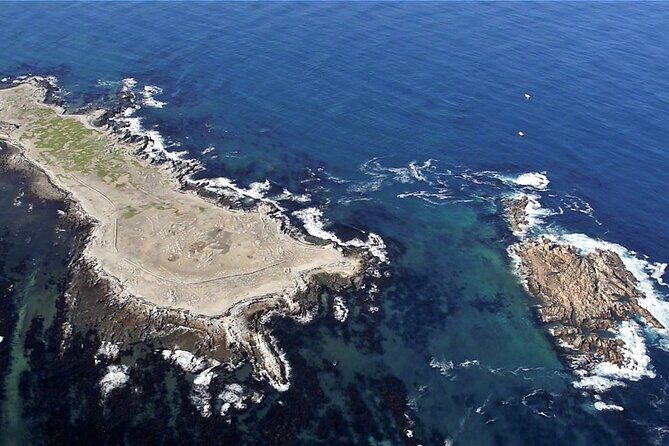
- The boat ride out to Dyer Island and how the cage is set up
- Time in the cage: what your view is like in murky South Atlantic water
- Marine science briefing: what you’ll learn before you see the first shark
- Warmth, snacks, and sea-sickness prep for a 10-hour ocean day
- Chance of seeing great whites: how wild sightings change the outcome
- Price and value: what $251.05 buys you in real terms
- Who should book this Cape Town shark cage experience
- Should you book this shark cage encounter from Cape Town?
- FAQ
- How long is the tour and how much time will I spend in the cage area?
- What time do they pick you up in Cape Town?
- What meals and snacks are included?
- Should I wear a swimsuit before I leave?
- What happens if no sharks are spotted?
- Can I buy a video of the experience?
Key things that make this shark cage experience worth your time
- Great White House breakfast: Eat first, then you’re fitted and ready without rushing the morning.
- A marine-biologist guide on the boat: You’ll know what you’re looking at, not just hope something swims by.
- Time anchored near Dyer Island: The boat stays in the same spot for roughly two hours, depending on shark activity.
- A cage positioned below the surface: You can still get out easily at any point, since it sits a few feet below the surface.
- Warmth and comfort after being in the water: Hot drinks and extras like blankets/hot water bottles can make a big difference.
- Great whites are possible, not guaranteed: If there’s no shark activity, you may be offered a voucher instead of a guaranteed sighting.
Cape Town to Gansbaai: the early start that shapes the whole day
This is one of those tours where the timing is part of the experience. The typical departure is around 9am, but in real life you should expect an early start from central Cape Town. One rider reported pickup at about 4:50am, which tells you the day can begin way before you’d like.
The upside is that you’re not just commuting—you’re getting daylight and time at the best part of the day for ocean activity. The ride to Gansbaai is also a chance to reset after Cape Town traffic and then get focused on the main event: the ocean outside the fishing village.
Either way, plan your morning around confirmation from the provider. You’ll need to contact them to confirm your exact pickup time, and weather can shift the schedule (including an afternoon departure if conditions are bad in the morning).
You can also read our reviews of more scuba diving tours in Cape Town
Breakfast at the Great White House and gear fitting that actually matters
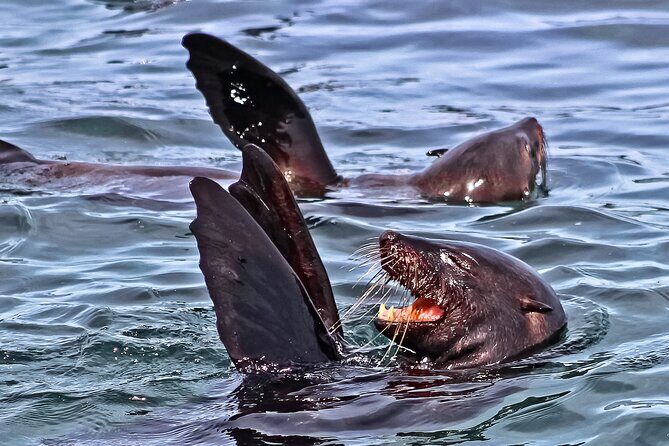
Your morning starts at the Great White House in Gansbaai, where breakfast is included. It’s a smart setup: you eat before you head out, then you’re not hunting for food with salty air and nervous energy running through your body.
After breakfast, you’ll be fitted with the right diving gear and get towels provided. The tour recommends wearing your swimsuit under your clothes. That one tip sounds small, but it saves you time later—especially if you’re trying to wrangle a wetsuit and a windbreaker while the clock keeps moving.
Once you’re sorted, you board the boat that carries the cage setup. The trip to the shark spot is about 20 minutes into the ocean, so you’re not stuck on a long ride before you even begin the in-water part.
The boat ride out to Dyer Island and how the cage is set up
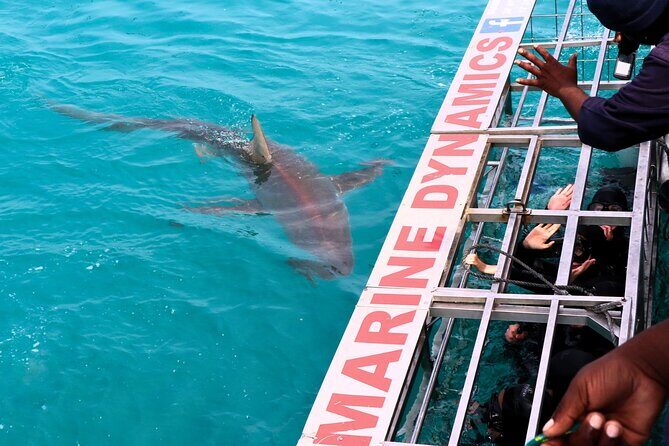
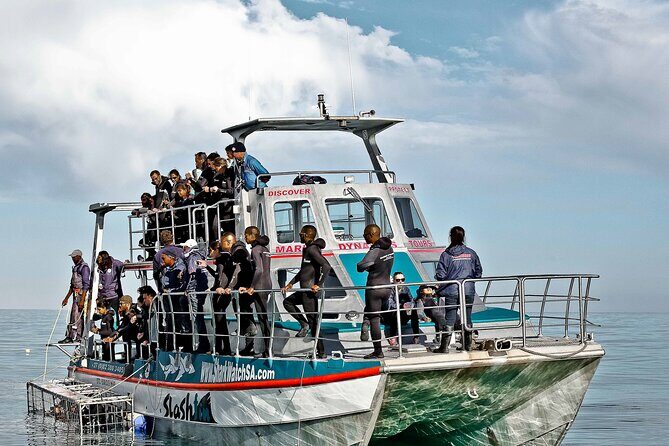
The boat heads for Dyer Island and the crew chooses the place to stop based on conditions and shark activity. While you’re on board, you’ll have drinks and snacks available during the anchored portion of the day.
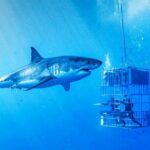
Here’s a cage detail that you’ll be glad to understand upfront: the cage is secured to the side of the boat and sits a few feet below the surface. That means you get a proper view without constantly climbing up and down. It also means you can get out of the water at any point if you need a breather, warm up, or just adjust your comfort.
When you arrive at the site, the boat stays anchored for roughly two hours depending on what the sharks are doing. In practice, your time inside the water depends on activity and safety flow, and some people report at least around 45 minutes in the cage.
Time in the cage: what your view is like in murky South Atlantic water
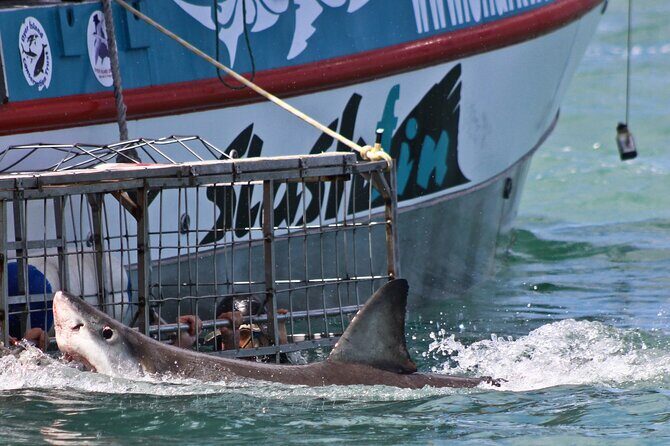
Once you’re in the cage, your job is simple: stay calm, look around, and let the ocean bring the show. The water off Gansbaai can be murky, and that affects how clear the sharks look when they’re below you. You’ll usually have the best view when your head is above the waterline, watching silhouettes and movement pass by the cage.
What I like about this setup is that it’s not just one long, forced stare. Because the cage sits a few feet below the surface and you can exit the water when you want, you control the pacing more than you might expect.
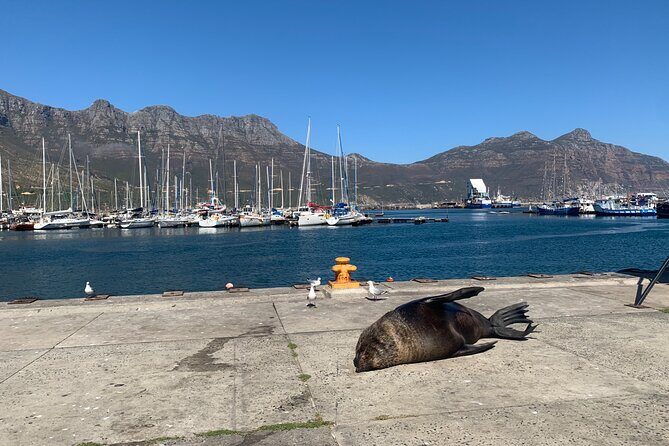
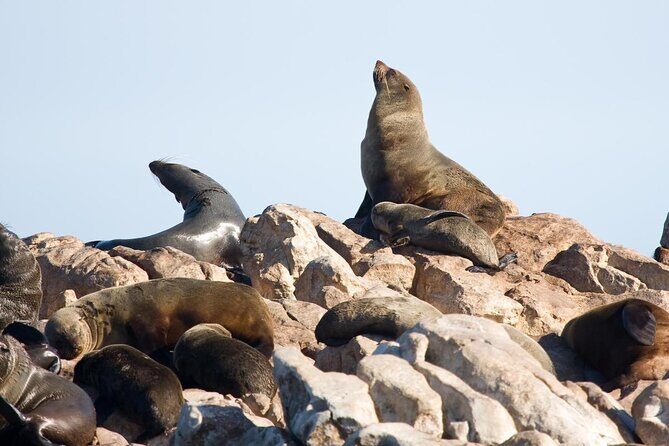
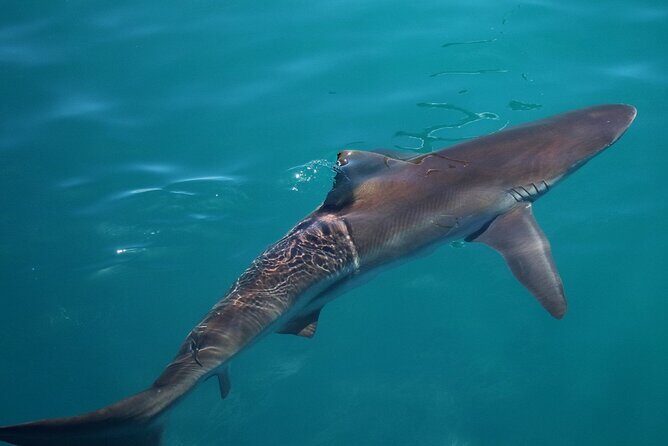
Species you may see include bronze whaler sharks and seven-gill sharks, and great white sharks are part of the expectation set. A few people specifically noted not seeing great whites on their day and still seeing plenty of other sharks, plus stingrays and Cape seals. That tells you the trip can still feel full and rewarding even when the headline shark doesn’t show up.
Also, expect that the day can feel physically intense in a quiet way. Getting into and out of the wetsuit can be a hassle, and the cold and wind can hit once you’re done. If you’re prone to motion sickness, plan for that before you even go out.
Marine science briefing: what you’ll learn before you see the first shark
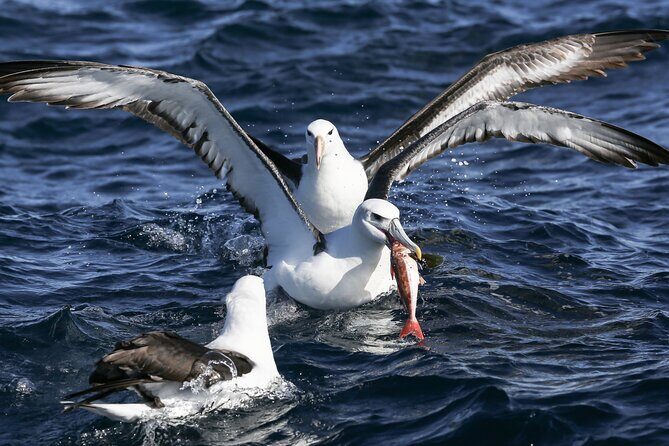
One of the most praised parts of this experience is the teaching. You’re not just handed a life vest and a hope-and-pray moment. You get onboard guidance from a marine-biologist who helps you understand the sharks, the behavior, and the overall ecosystem.
In one account, the guide Suzie stood out for being both kind and very clear, and you can tell when a guide really cares about animals and people staying safe. This matters because it turns the cage time into something you can actually understand in the moment.
You’ll learn about the species that may show up, so when you spot a shape, you’re not guessing. Instead, you can match what you see—bronze whaler versus other types, for example—to what you just heard.
This is also why the cage is more than a thrill. You get a real sense of how wild shark watching works: sharks do what they do, and your education helps you notice more.




Warmth, snacks, and sea-sickness prep for a 10-hour ocean day
This tour is listed at about 10 hours. That long day is why the comfort details matter. You’ll have breakfast plus snacks and light refreshments, and hot drinks are available during the anchored part of the trip.
After you’re back at the Great White House, the experience doesn’t end at “thanks and goodbye.” People specifically mentioned hot showers and extra warmth like blankets and hot water bottles when they got cold. That kind of attention is more than a nice gesture—it helps you feel human again after the wetsuit experience.
For sea sickness, take it seriously. One rider strongly recommended having motion-sickness medicine because it can make or break the trip. The crew also seems ready to help if you do get sick, with people reporting extra care and support during rough moments.
My practical advice:
- Bring motion-sickness medication if you’re even mildly sensitive.
- Wear your swimsuit under your clothes as advised, so you spend less time dealing with changes once you’re cold and tired.
- Plan for the emotional rhythm: exciting, waiting, cold, then waiting again. The warmth and snacks help you ride that wave.
Chance of seeing great whites: how wild sightings change the outcome
Here’s the honest truth baked into this tour: shark presence isn’t guaranteed. The supplier works with wildlife and nature, and your sightings depend on what shows up that day.
If a shark is spotted from the boat, the trip is considered successful. And if there’s no shark activity during the tour, you may be offered a voucher. That voucher is not transferable, and it records your name and passport number. The transfer fee is non-refundable.
You should also know that if you’re chasing great white sharks specifically, this tour offers a realistic shot, but not a promise. Some days focus on other species like bronze whalers and seven-gills, and some days include great white sightings.
In other words: you’re booking an experience with strong odds and serious effort, not a guaranteed wildlife checklist.
Price and value: what $251.05 buys you in real terms
At $251.05 per person, this isn’t a cheap outing. But it’s a full-day operation with a lot included: pickup and drop-off from your hotel, breakfast, light refreshments, a professional guide, all gear and towels, and the boat time out to the shark area.
The value angle is that you’re paying for coordination, safety flow, education, and equipment you can’t easily replicate on your own. If you’ve ever tried to piece together transport plus ocean time plus a cage setup, you quickly realize how much “work behind the scenes” you’re buying here.
Two also-fair points on cost:
- The experience can vary day to day based on shark activity, so the value is in the whole day (learning + boat + cage time), not only in seeing one specific animal.
- There’s a compulsory conservation fee mentioned in the tour info. It’s part of how these activities stay connected to wildlife protection.
If you keep expectations grounded—open to multiple shark species—you’re more likely to feel the price was fair even if great whites aren’t there that morning.
Who should book this Cape Town shark cage experience
This tour is a good match if you:
- Want a guided, science-led shark encounter rather than a purely thrill-based day.
- Are comfortable with early starts and spending hours outdoors on the boat.
- Want a real chance to see great whites, but you’re okay if the day brings other sharks and marine life instead.
It’s also a nice fit if you like structured pacing: breakfast first, gear then, boat then, cage time then warm food and shower afterward.
If you’re the kind of person who hates being cold for long periods, you’ll need to plan hard. The water can be cold, the wetsuit adds friction to getting in and out, and the wind on an ocean boat is real.
Should you book this shark cage encounter from Cape Town?
I’d book it if you want the full package: transport from Cape Town, breakfast and snacks, a marine-biologist guide, proper cage setup, and a crew that seems focused on both safety and comfort. The best part is that your day isn’t just about one moment—it’s about understanding what you’re seeing and getting a real shot at wildlife that can’t be staged.
I wouldn’t book it if you need perfect predictability. Sharks are wild. Some days you see great whites; some days you see other sharks, stingrays, and seals; and on rare low-activity days you may receive a voucher instead of a guaranteed sighting.
If you show up prepared—swimsuit under your clothes, motion-sickness medicine if you need it, and a flexible mindset—you’re likely to come away with a story that’s equal parts education and awe.
FAQ
How long is the tour and how much time will I spend in the cage area?
The tour runs for about 10 hours. The boat stays anchored at the shark spot for roughly two hours, and time in the cage depends on shark activity. Some participants report at least around 45 minutes in the water.
What time do they pick you up in Cape Town?
Pickup starts from central Cape Town, but the typical departure is around 9am. Weather can shift the schedule to an afternoon start, and you must contact the provider to confirm your exact pickup time.
What meals and snacks are included?
Breakfast is included at the Great White House. You’ll also have drinks and snacks on the boat and light refreshments back at the center after the trip.
Should I wear a swimsuit before I leave?
Yes. The tour recommends that you wear a swimsuit underneath your clothes to save time when you get fitted and when it’s time to get in the water.
What happens if no sharks are spotted?
Sharks are wild and sightings can’t be guaranteed. If there is no shark activity while you’re on the tour, the supplier offers a voucher. The voucher is not transferable and includes your name and passport number. The transfer fee is non-refundable.
Can I buy a video of the experience?
Yes. A professional video can be purchased for your own expense. You can choose whether to buy it.