REVIEW · CAPE TOWN
Cape Town: Guided Bike Tour
Book on GetYourGuide →Operated by AWOL Tours · Bookable on GetYourGuide
Cape Town clicks into focus when you move by bike. This AWOL Tours ride ties together iconic sights and everyday street life, with guides like Lucas sharing the “how and why” behind neighborhoods you’ll actually recognize. You’ll cruise past places such as the Company Gardens and Green Point Stadium, then get the story behind what you’re seeing.
What I like most is how the tour mixes landmark photos with real context. Guides such as Bradley and Gareth keep the pace relaxed, and stops like Bo-Kaap bring in Cape Town’s color, culture, and local food moments (even though food and drinks aren’t broadly included). One thing to factor in: parts of the route can mean traffic and hills, so if you’re not comfortable on a bike, plan to take it slower and ask your guide how the ride feels for first-timers.
In This Review
- Key highlights to know before you pedal
- Why this Cape Town guided bike tour is a smart first-plan
- Starting at AWOL Tours: bikes, helmets, and the safety briefing
- The first stretch: waterfront energy to inner-city rhythm
- Company Gardens and St. George’s Mall: where Cape Town slows down
- Castle of Good Hope and Adderley Street: history you can point to
- Bo-Kaap: colorful houses and the Cape Town story behind them
- Green Point Stadium, the eco-park, and the old working lighthouse
- How long, how hard: hills, pace, and group dynamics in 3 hours
- Value check: is $100 for a guided bike tour worth it?
- Who should book this Cape Town ride (and who should skip it)
- Should you book the Cape Town guided bike tour with AWOL Tours?
- FAQ
- How long is the Cape Town guided bike tour?
- How much does the tour cost?
- Where do I meet for the tour?
- What’s included in the price?
- Can I choose a shared group or a private tour?
- What languages do the guides speak?
- Is the tour suitable for beginners or different fitness levels?
- What should I bring and what should I wear?
- What’s not allowed during the tour?
- Is there free cancellation and a pay-later option?
Key highlights to know before you pedal

- Fast, friendly orientation in 3 hours: a tight route that covers a lot without feeling rushed
- Story-led guiding (Lucas, Bradley, Gareth, Eric, Shaun, Bradley): lots of history tied to what’s still happening today
- Bo-Kaap photo stops with local texture: colorful houses and a clearer sense of the area’s past
- Big-city landmarks on two wheels: Castle of Good Hope, Adderley Street, Company Gardens, St. George’s Mall
- Green Point World Cup venue: Green Point Stadium, plus the Green Point eco-park area
- Practical cycling setup: bike and helmet included, plus a safety briefing to get you rolling confidently
Why this Cape Town guided bike tour is a smart first-plan
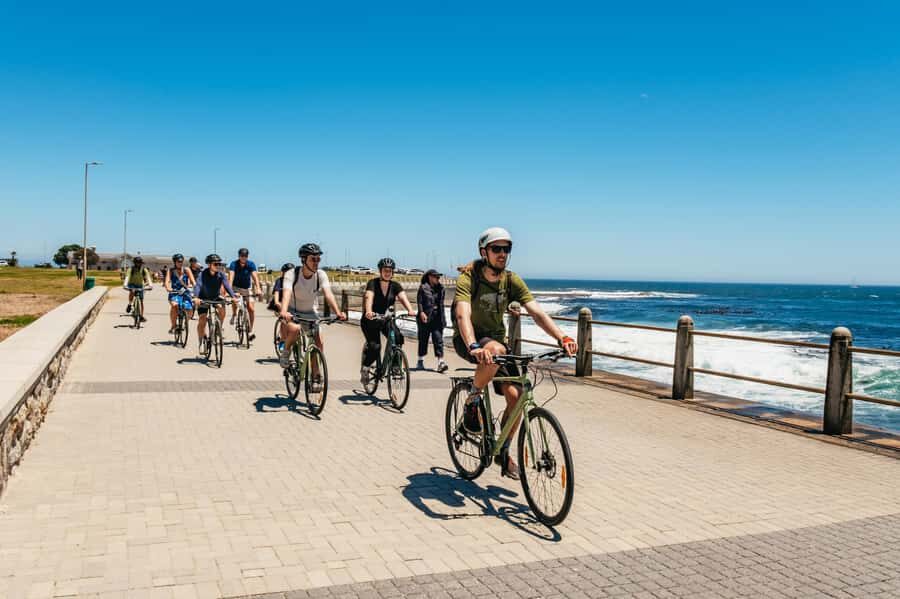
If you only have a day or two and want to get your bearings fast, a guided bike tour is one of the best tools in your kit. You cover key central districts—waterfront area up through the inner city and over toward Green Point—without the stop-and-go frustration of a car.
This one stands out because it doesn’t treat Cape Town like a checklist. The ride is built around what you can see plus the background that helps it click: why buildings and streets look the way they do, and how people live in and around them now. That’s the difference between seeing Cape Town and understanding how it works.
And yes, the route has real “wow” factor. Bo-Kaap’s colorful houses are the obvious hit, but I also like that you cycle by civic and historic anchors like the Castle of Good Hope and Adderley Street. It gives your photos context, which makes your whole trip feel more coherent.
You can also read our reviews of more cycling tours in Cape Town



Starting at AWOL Tours: bikes, helmets, and the safety briefing
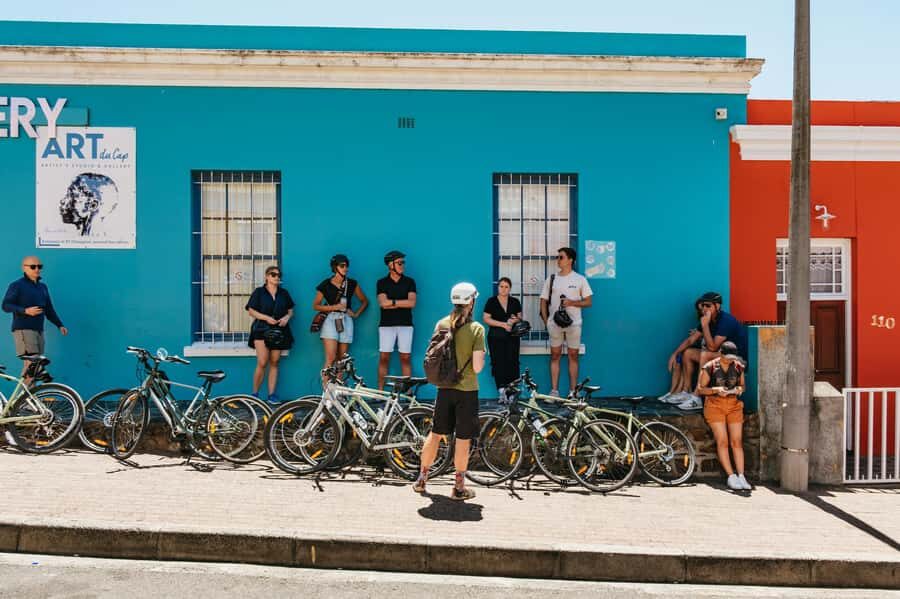
You meet at the activity provider’s office—AWOL Tours—and the tour typically begins with a safety briefing. Expect the basics: how to ride in a group, where to position yourself, and reminders that help you feel in control before you leave the start area.
The tour includes your bike and helmet, which is a big value piece. You’re not spending extra time figuring out equipment, and your guide can fit the day’s ride to the group you’re with.
From the reviews, it’s clear guides pay attention to keeping small groups together and watching the road. Lucas is specifically mentioned for handling a 5-person group well—eyes on traffic, eyes on the group. That matters in Cape Town, where you’ll be mixing bikes, pedestrians, and vehicles in a few zones.
Practical tip: wear comfortable shoes and cycling clothing. You’ll be glad you did when you’re making turns, stopping for photos, and handling a few climbs.
The first stretch: waterfront energy to inner-city rhythm
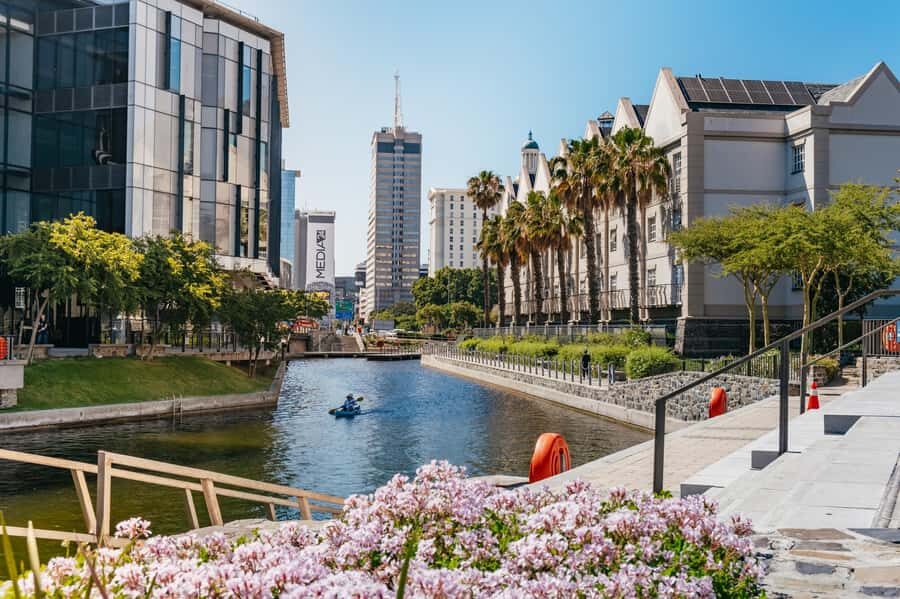
The tour’s flow is designed to take you from the Victoria & Alfred Waterfront area toward the inner city. That’s a great choice because it lets you start with a place most visitors already recognize, then expand outward into older streets and major public spaces.
During this part of the ride, you can expect photo stops and guided narration as you get your bearings. You’ll also see a mix of modern and historic buildings, which helps you understand why Cape Town feels like it has layers rather than one single “style.”
One reason this segment works: it’s not only about views. It’s also about timing. Riding early in your visit means the rest of the city makes more sense afterward—street names, neighborhood boundaries, and landmark locations feel less confusing once you’ve cycled them once.
Company Gardens and St. George’s Mall: where Cape Town slows down
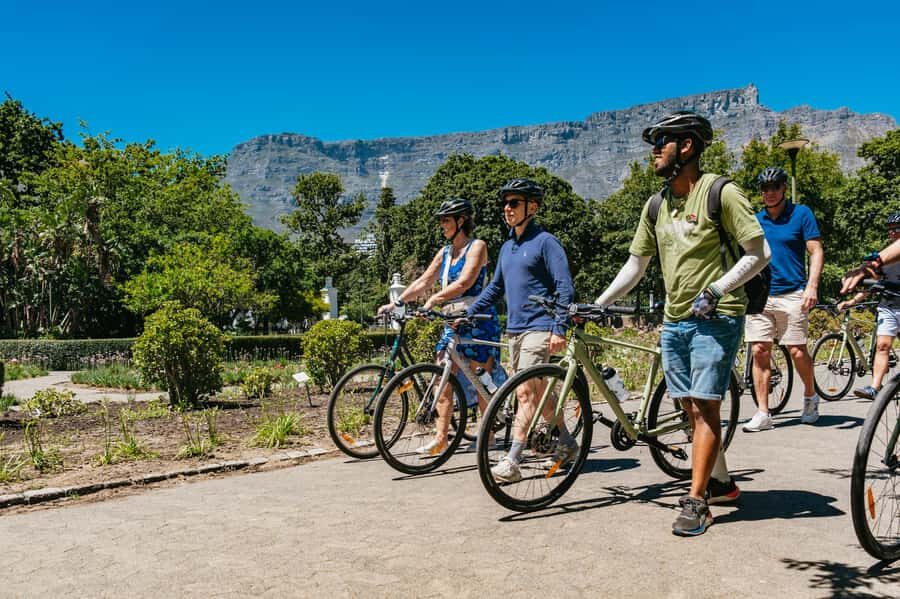
Company Gardens is one of those places that looks simple at first glance, then grows on you as you notice the details. This tour cycles past Company Gardens and through areas around St. George’s Mall, so you get the feel of Cape Town’s public life without spending your day inside one museum.
Why this stop matters: it breaks up the “big landmark” moments with a slice of everyday city space. You’re moving through the center of Cape Town, seeing how people pass through open areas, shop, meet, and connect. Even if you’re only there for a photo moment, the setting helps you picture the city beyond its monuments.
Also, Company Gardens is an ideal visual warm-up before you head toward the more historic and iconic sites. The ride feels progressive instead of chaotic.
Castle of Good Hope and Adderley Street: history you can point to
The Castle of Good Hope is one of the clearest historic anchors in the central city. On this tour, you get to visit the fort area and connect it with the surrounding streets—especially as you ride down Adderley Street.
Adderley Street is a key artery in Cape Town’s urban story, and biking it is easier than doing it by foot because it keeps you moving while your guide explains what you’re seeing. You get a street-level sense of scale: where major buildings line up, how the city funnels movement, and where older structures sit inside newer development patterns.
The Castle stop also gives your narrative a “center of gravity.” When you pair it with the street ride, you’re not just learning dates—you’re learning geography. That’s where the tour can be more valuable than a single-site visit.
If you’re photo-focused: plan to pause for the fort and key street angles. The group tends to roll, so being ready with your camera position makes the experience smoother.
You can also read our reviews of more guided tours in Cape Town





Bo-Kaap: colorful houses and the Cape Town story behind them

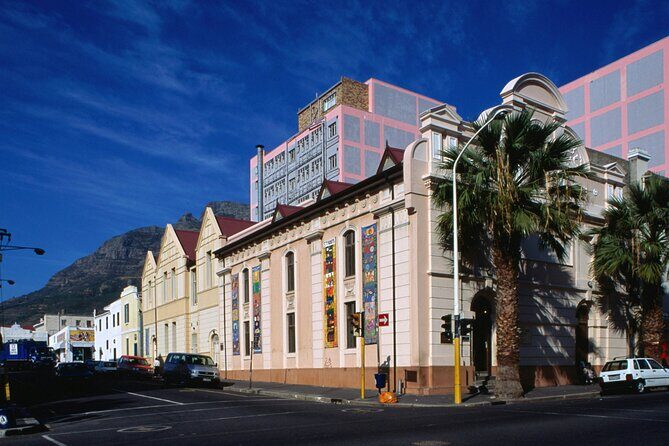
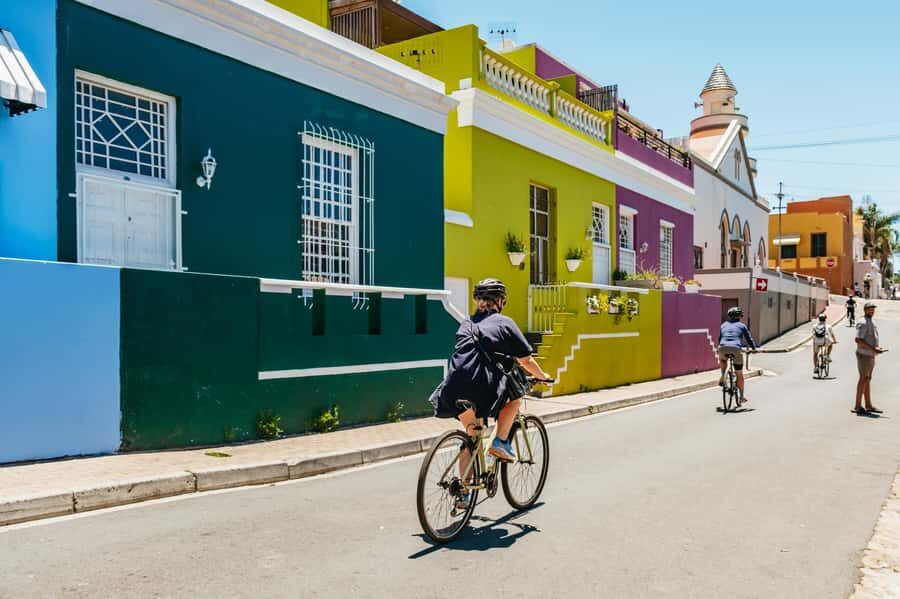
Bo-Kaap is one of the top reasons people want to bike Cape Town, and this tour treats it like more than a backdrop. You explore the former township of Bo-Kaap, and your guide’s explanations add weight to what your eyes catch first: bright facades, tight streets, and a distinct neighborhood identity.
The best part is that it’s not only pretty. It’s meaningful. Your guide connects Bo-Kaap to Cape Town’s wider heritage and contemporary life, helping you understand why the area looks and feels different from other central districts.
This is also where snack moments can happen. Several reviews mention stops connected to Cape Malay food and tastings, including places like Faeeza’s Tea Garden or Faeeza’s kitchen in Bo-Kaap, plus homemade goodies referenced at a local home stop. Food and drinks aren’t listed as included across the board, so think of these as optional purchases or snack opportunities rather than a guaranteed meal.
One smart way to handle this: treat snacks as a chance to slow down and learn. If your guide offers a tasting or shows you what’s popular locally, ask a quick question. You’ll get better stories that way than just eating and moving on.
Green Point Stadium, the eco-park, and the old working lighthouse
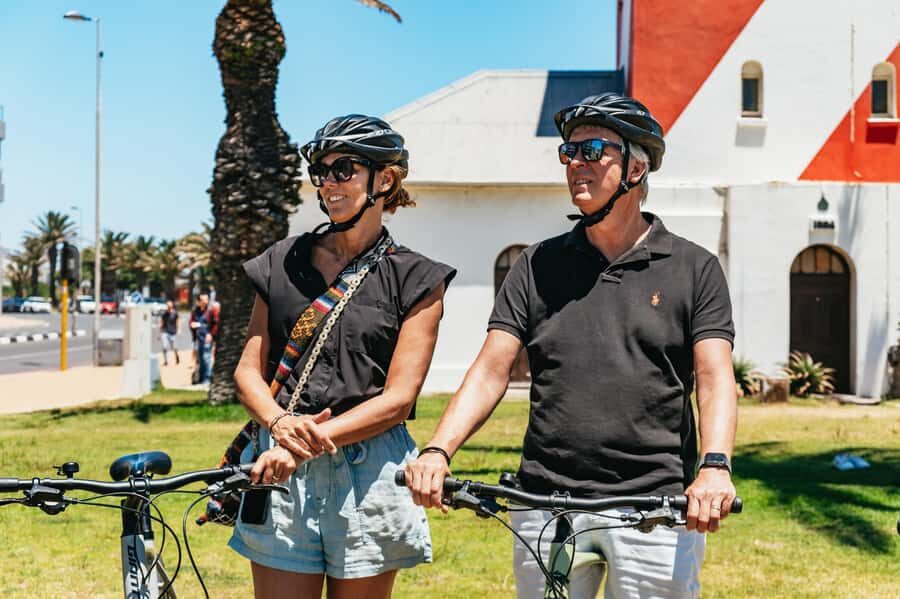
Green Point brings a different Cape Town vibe: more open urban space, big-city energy, and a push toward modern infrastructure. The tour cycles past Green Point Stadium, which hosted venues for the 2010 FIFA World Cup, and it also includes time in the Green Point eco-park area.
Even if you don’t care about sports, the stadium stop adds a useful layer. It shows how Cape Town builds for major global events and how those structures connect back into everyday city planning. You’ll also likely notice how the city balances hard infrastructure with green public areas.
Another standout in this section is the oldest working lighthouse in South Africa. It’s the kind of detail that turns a normal bike ride into a memory you’ll keep. You don’t just pass it—you get the significance explained, and it’s the sort of sight that rewards a slow look.
How long, how hard: hills, pace, and group dynamics in 3 hours
The whole tour runs about 3 hours. That length is a sweet spot: long enough to cover multiple districts, short enough that you don’t end the day wrecked.
From the reviews, cycling feels manageable for many people, including those who aren’t hardcore cyclists. Guides also seem to tailor the ride to the group and keep it safe. That said, there’s a realistic catch: you might encounter hills and road traffic.
One review notes that if you’re not confident on a bike, a few roads could be slightly challenging because of traffic and climbing. Another mentions safety communication could be better in one case. That doesn’t mean the tour is unsafe—just that conditions and guide style can vary. If you’re nervous, choose the private or small-group option if available, and tell your guide right away that you want a slower start.
What to do on the day: do the ride as a “see and learn” experience, not an endurance workout. Keep your breathing steady on climbs, and let your guide set the rhythm.
Value check: is $100 for a guided bike tour worth it?
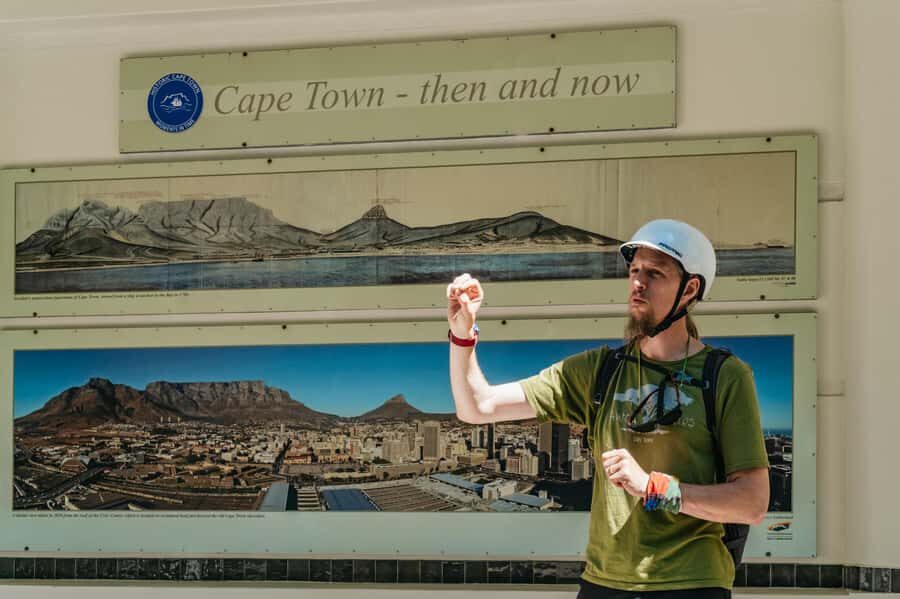
At $100 per person for a 3-hour guided ride, you’re paying for three main things: equipment, a guide, and route efficiency. The bike and helmet are included, and the guide handles navigation and storytelling, plus the safety briefing.
Is it expensive? It depends on what you’d otherwise do. If you’d be hiring a car or doing multiple paid admissions plus local transport, the math can start to favor this tour quickly. You’re getting centralized coverage of major sights like the Castle of Good Hope, Adderley Street, Company Gardens, St. George’s Mall, Bo-Kaap, and Green Point Stadium within a single session.
Also, the guide experience seems to be a key driver of satisfaction. Multiple reviews highlight guides like Lucas, Eric, Shaun, Gareth, and Bradley as funny, caring, and eager to share history relevant to what you see. That’s not just nice—good guiding turns cities into something you can navigate later.
My value advice: if you book, treat it as your orientation day. Plan another activity later that uses what you learned—walking a nearby street, going back to a viewpoint, or planning where to eat based on the neighborhoods you passed.
Who should book this Cape Town ride (and who should skip it)
This bike tour fits best if you want a high-signal overview of central Cape Town without burning hours in transit. It’s also a good match for people who like mixing photo stops with guided narrative rather than hopping from attraction to attraction.
It’s suitable for all ages and fitness levels, with the route tailored to your needs. But it’s not suitable for people with mobility impairments, so if that’s you, look for a different format.
You should also pay attention to the clothing rules:
- high-heeled shoes are not allowed
- skirts are not allowed
- loose clothing isn’t allowed
- valuables aren’t allowed
That’s not just policy—it’s practicality for safety and riding control.
If you hate surprises and want exact plans for snacks, remember food and drinks aren’t listed as included, even if snack stops may happen. Decide ahead if you’re comfortable buying something locally during the ride.
Should you book the Cape Town guided bike tour with AWOL Tours?
If you want the smart way to see Cape Town’s key districts in one go, I think this is an excellent booking. The route hits the kind of anchors you’d struggle to string together smoothly on foot, and the guide storytelling is a major reason people love it—Lucas, Bradley, Gareth, Eric, and Shaun come up again and again.
Book it if:
- you’re doing Cape Town for the first time and want orientation
- you want a blend of historic sites and contemporary street texture
- you feel comfortable riding for a few hours with short stops
Skip or reconsider if:
- you have mobility limitations
- you don’t feel confident on a bike with hills or road traffic
- you’d rather have a fully catered food experience (food and drinks aren’t listed as included)
Overall, for $100 and 3 hours, you get a lot of Cape Town, with context that makes your next day easier.
FAQ
How long is the Cape Town guided bike tour?
It runs for 3 hours.
How much does the tour cost?
The price is $100 per person.
Where do I meet for the tour?
You meet at the activity provider’s office (AWOL Tours).
What’s included in the price?
The bike and helmet are included, along with a live guide.
Can I choose a shared group or a private tour?
Yes. You can choose between a shared group or a private/small group tour.
What languages do the guides speak?
Guides are available in English, German, and French.
Is the tour suitable for beginners or different fitness levels?
It’s suitable for all ages and fitness levels, and the ride is tailored to your needs. That said, the tour isn’t suitable for people with mobility impairments.
What should I bring and what should I wear?
Bring comfortable shoes and cycling clothing.
What’s not allowed during the tour?
High-heeled shoes, skirts, valuables, and loose clothing aren’t allowed.
Is there free cancellation and a pay-later option?
Yes. You can cancel up to 24 hours in advance for a full refund, and you can reserve now and pay later.