REVIEW · CAPE TOWN
Cape Town: Stand-up Paddleboard Experience
Book on GetYourGuide →Operated by SUP Cape Town · Bookable on GetYourGuide
Stand-up paddleboards make the V&A feel new. This Cape Town experience gets you out onto the protected canals around the V&A Waterfront, where you can practice without the chaos of open water and still enjoy classic harbor views. The best part is that it is not just rental time; you start with a short lesson and then you’re gliding.
What I like most is the mix of views from the water and that friendly, patient coaching style that shows up in the reviews. Kids and first-timers seem to get it fast, and even when conditions feel tricky, the team tries to keep the experience moving smoothly.
One thing to factor in: the session can be postponed or canceled in bad weather, and if you’re prone to motion sickness, that first wobble and balance adjustment can feel a bit intense for a few minutes.
In This Review
- Key takeaways before you go
- Why SUP on the V&A Waterfront works so well
- Your hour on the water: lesson first, then real paddling
- The short lesson: what it should feel like (and what to watch for)
- Views from the board: seeing Cape Town from your own height
- When wind shows up: weather changes and how to handle it
- Equipment and included value at a glance
- Price and logistics: is $20 worth your time?
- Who this SUP session fits best
- Should you book SUP Cape Town at the V&A Waterfront?
- FAQ
- How much does the Cape Town SUP experience cost?
- How long is the experience?
- Where does the SUP take place?
- What’s included in the price?
- Do you get a lesson before paddling?
- What language are the hosts or greeters?
- What happens if the weather is bad?
Key takeaways before you go
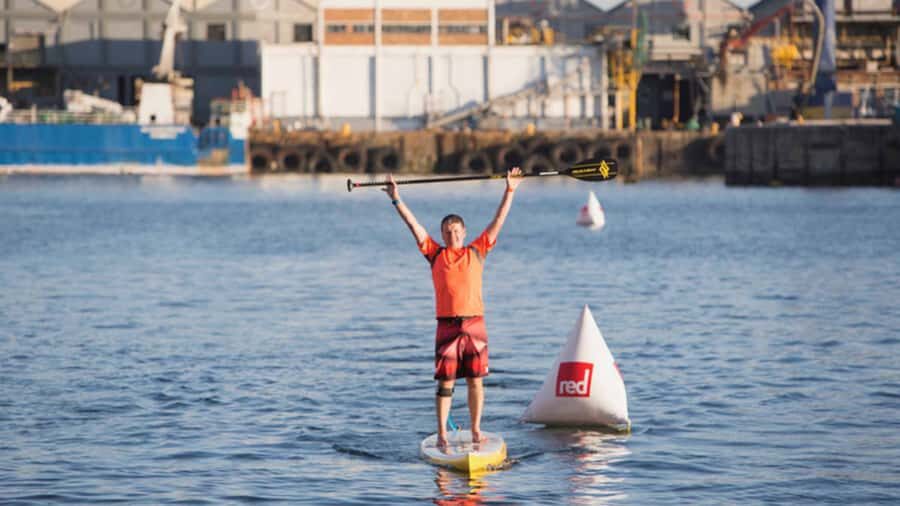
- Calm, protected canal water at the V&A is the reason this feels doable for beginners.
- A short instructor-led lesson sets you up before you paddle off on your own.
- Great waterfront views from the board, without needing a long hike or big sightseeing schedule.
- Small-group feel helps you get attention without feeling rushed.
- Flexible pacing (30 or 60 minutes of rental time) lets you choose how long to be out there.
- Weather can change plans, so build in a little wiggle room.
Why SUP on the V&A Waterfront works so well
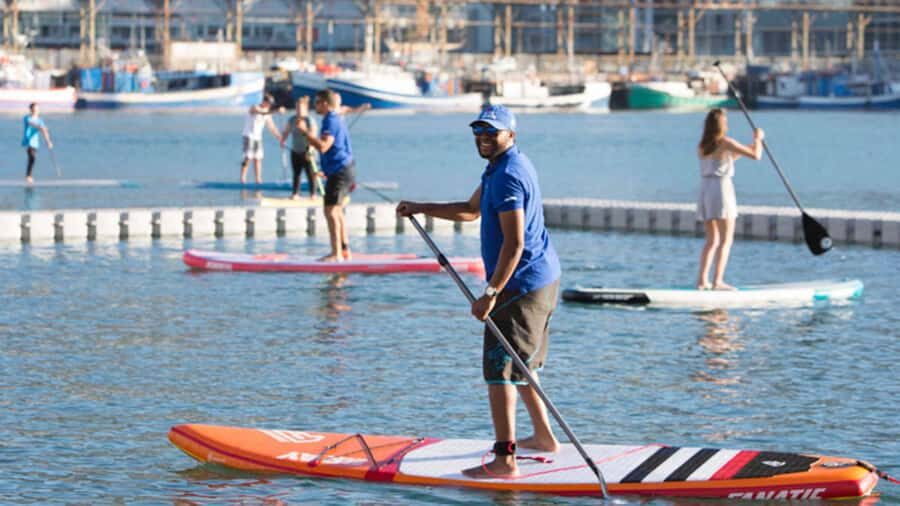
Cape Town is scenic from every angle, but the water angle has a specific advantage: it slows everything down. Here, you’re on the protected canals around the V&A Waterfront, which generally means calmer water than you’d expect at the coast. That matters because the sport is mostly balance and paddle rhythm at the start, not endurance.
You also get to “see” Cape Town in a way that stays practical. Instead of stacking tickets, routes, and transfers, you show up, gear up, get taught, and spend your time where the views happen: right in front of the waterfront. Even if you think you know the area, seeing boats, walls, and skylines from a floating platform feels different fast.
The other reason this setup works is that it’s designed to be short. A full hour on a SUP board can still be a lot when you’re learning, so the timing fits the goal: learn basics, get comfortable, then enjoy the motion rather than survive it.
You can also read our reviews of more tours and experiences in Cape Town.



Your hour on the water: lesson first, then real paddling
Expect a straightforward flow. You arrive, get the stand-up paddleboard rental and all equipment, and then you start with a short lesson from an English-speaking instructor. That order is key. The board is tippy in the beginning, so having someone show you how to paddle before you’re out there helps you get your bearings faster.
After that, you hit the water on the calm canal. This experience is built for practice time, with 30 or 60 minutes of board rental depending on what you choose and what’s available. If you’re a total beginner, I think the shorter rental option can be smart. You get the fun without turning it into a long balancing act. If you’re already steady on the board, the longer rental time gives you room to actually settle into rhythm and do more cruising.
Then comes the payoff. You’re not just standing still; you’re gliding across the water with views of the V&A Waterfront area. The best way to describe it is as “movement with scenery.” It is active, but it’s also relaxing, especially because the water is calm and the canal setting keeps things predictable.
One small detail that shows up in the reviews: the vibe tends to be inclusive. Families often bring kids who are either learning or just tagging along for the experience, and the staff seem happy to accommodate simple photo moments.
The short lesson: what it should feel like (and what to watch for)
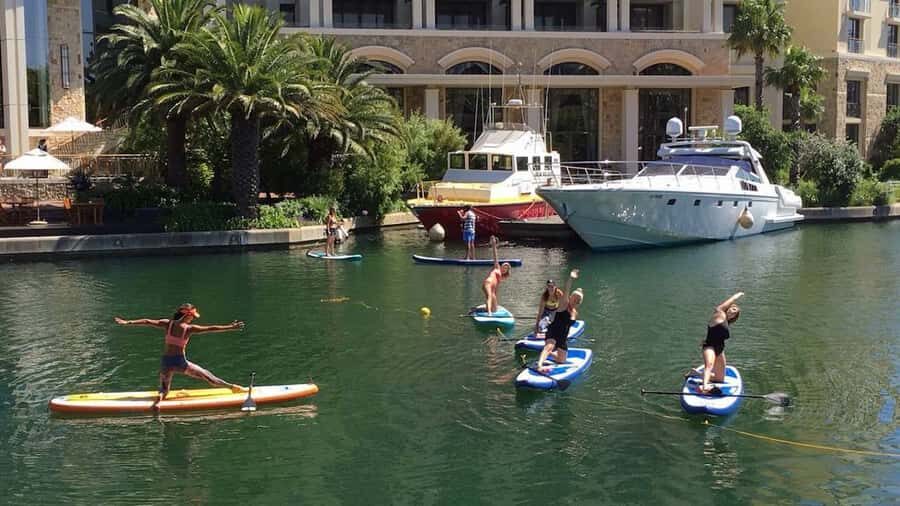
A good SUP lesson should do two things: reduce fear and prevent wasted effort. The reviews point to clear, easy-to-follow instructions and instructors who take their time with learners. Several parents mention how patient the coach was, including with children around school-age. That is exactly what you want when your goal is to finish the session feeling proud, not flustered.
You should also expect the first few minutes to be mentally loud. One rider described that it can look scary right before you step on, and that you might feel a bit nauseous at the start while you adjust your balance and your brain gets used to the board’s movement. That is not unusual for a first-time SUP session. If you know you get motion sickness easily, plan accordingly and don’t treat that feeling like failure. Often it fades once you find a steady stance and your paddle strokes start to feel automatic.
Safety here is more about coaching than fear-mongering. Reviews include comments about the activity being safe and staff staying available in case you need help. That makes sense with the setting: you’re paddling in protected waters, and the team is there to guide you.
If you’re traveling with kids, this is also the kind of lesson that can keep attention. One parent noted their child wanted to go again the next day after the coaching experience, which suggests the learning curve is manageable and the instruction sticks.
Views from the board: seeing Cape Town from your own height
From land, you experience Cape Town in layers: buildings first, water second. On a SUP board, it flips a bit. Your perspective becomes lower and more “sideways,” which changes how you read the waterfront.
Here’s what you can count on: beautiful Cape Town views from the water. You’ll see the V&A Waterfront canal environment from right near the surface, with the waterfront structures and boats framing your route. Because the water is calm, you get time to look around, not just brace yourself.
This is also a good activity if you like photos, because you’re moving slowly enough for the scenery to register. One review even mentioned staff making room for kids to sit on the board for a picture when they weren’t actively paddling. That tells me the team thinks about moments beyond just the lesson.
The main drawback on the “views” side is simple: the board is the priority. If your goal is wildlife spotting, long-distance cruising, or big postcard panoramas, this is more about the waterfront experience than a marathon journey. Still, for an hour, it’s a strong way to add variety to a Cape Town itinerary without burning a day.
When wind shows up: weather changes and how to handle it
Bad weather is the one thing you can’t control. The activity may be postponed or canceled in bad weather, and that’s the most important planning note. There’s also a real-world lesson from the reviews: one person picked what they described as the windiest day to try SUP, and the company changed the day within their timeframe.
So if you’re thinking of booking, I’d treat it like an appointment that depends on conditions, not like a guaranteed fixed-time event. If you have flexibility, you give yourself the best shot at enjoying calm water and the full lesson-and-paddle flow.
Practical advice: pack for Cape Town weather swings. Even on a bright day, you can feel different on the water than you do on the walkway. If you tend to get cold easily, bring a light layer you can keep on.
Also, don’t judge the entire activity by how you feel during that first wobble. Wind and balance are connected in your body, and early nerves can make you more sensitive to motion. If the water is calmer than you expected, you’ll likely find the ride soothing and easier than that initial step-down moment.


Equipment and included value at a glance
This experience includes stand-up paddleboard rental and all equipment, which is a big part of why it’s good value at around $20 per person for about an hour. The cost is modest, but the structure matters: you’re paying for a board plus instruction, not just gear access.
Also, because it’s timed, you’re not stuck committing to a long paddle session if you’re still learning. That matters for first-timers. A short, guided practice can feel like a real activity rather than a rental you have to figure out alone.
What you should look for when you arrive is straightforward: condition and fit. The reviews mention good equipment and helpful staff. Even without getting technical, you can tell when gear is set up properly and when an instructor has the patience to explain things more than once.
Small group format is another quiet value driver. If you’re in a group where the instructor can see everyone clearly, it’s easier to correct common mistakes early. Reviews mention inclusiveness, including families and people who needed extra attention to feel comfortable.
Price and logistics: is $20 worth your time?
At $20 per person, the value depends on what you want from the hour. If you want a quick, scenic, active experience with gear provided, this is a pretty friendly price point. You also get a lesson, which usually costs more than a rental alone in many activity markets.
The best way to think about value here is cost per experience quality. You’re not just buying movement; you’re buying a supervised first step into a new skill. That’s why reviews emphasize patient coaching and clear instructions. A good instructor turns your hour into progress, not just standing on something wobbly.
Two reasons I’d call it worth it:
- Rental plus instruction is included, so you’re not hunting for extras.
- The setting is calm, which makes it more likely you’ll enjoy the activity even if you’re not sporty.
A possible consideration is weather. If you end up rescheduled or canceled, the value shifts because your time gets rearranged. But if you can be flexible, the pricing still makes sense.
Who this SUP session fits best
This is a strong choice for beginners and families. Multiple reviews mention kids learning and feeling supported, including a parent with children ages 12 and 8 who had a super fun time. Another parent described their daughter learning well and wanting to paddle again right away. That’s a good sign that the instruction scales to different ages and comfort levels.
It’s also a good couples activity. One reviewer enjoyed it with their fiancé and focused on the laughs and the fun, which matches the idea that you’re doing something playful but not overly technical.
Solo travelers can enjoy it too, especially if you like guided experiences where someone helps you get started. The small-group setup and instructor support make it easier to jump into a new activity without feeling like you’re on your own.
Who might want to think twice? If you have strong motion sickness or you know you get anxious about balance-based activities, you might still enjoy it, but you should go in with patience for the first minutes. One rider’s note about feeling nauseous early is the clearest clue from the reviews that your body might need a minute to adjust.
Should you book SUP Cape Town at the V&A Waterfront?
I’d book it if you want a scenic, beginner-friendly way to spend about an hour in Cape Town without complicated logistics. The calm canal setting, the included equipment, and the fact that the experience starts with a lesson all line up with what most people need to feel comfortable quickly.
I’d also book it if you care about value. Around $20 with rental included is a budget-friendly way to try a new skill while still getting that Cape Town-from-the-water payoff.
I would hesitate only if your schedule is rigid and you can’t handle weather-driven changes, since the activity may be postponed or canceled in bad conditions. If you can be flexible, it becomes a low-risk, high-reward plan.
Overall, the rating sits at 4.8 from 64 reviews, and the recurring themes are confidence-building instruction, patience with first-timers and kids, and staff who keep the mood light while keeping things safe.
FAQ
How much does the Cape Town SUP experience cost?
It is priced at $20 per person.
How long is the experience?
The experience runs for about 1 hour, with the water time including options for 30 or 60 minutes of board rental.
Where does the SUP take place?
It takes place in Cape Town, at the V&A Waterfront in the Western Cape.
What’s included in the price?
Stand-up paddleboard rental and all equipment are included.
Do you get a lesson before paddling?
Yes. You start with a short lesson from an instructor before you paddle on the water.
What language are the hosts or greeters?
The host or greeter is English.
What happens if the weather is bad?
The activity may be postponed or canceled in the event of bad weather.