REVIEW · CAPE TOWN
From Cape Town: Cape Peninsula Scenic Helicopter Flight
Book on GetYourGuide →Operated by Cape Town Helicopters · Bookable on GetYourGuide
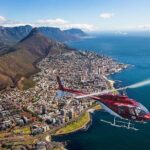
Flying over the Cape changes everything fast. This 50-minute helicopter ride is built for big views: Cape Town, the coast, and the dramatic drop toward the Cape of Good Hope.
I especially like the way the route strings together key landmarks—so you’re not just staring at coastline, you’re getting the story of the peninsula from above. Another plus: the pilot’s in-flight commentary helps the geography make sense while you’re looking for photos. One thing to consider: this is a shared, limited-cabin flight, so your sightline can depend on your seat position (and weather can shift flight paths or timing).
You’ll take off from the V&A Waterfront Helipad, get a safety briefing, then glide out along the Atlantic side and return over Table Mountain and Constantia. It’s wheelchair accessible, but it’s not a fit for claustrophobia, altitude sickness, or anyone over 350 lbs (159 kg).
In This Review
- Key Things I’d Plan Around
- Why This 50-Minute Flight Covers So Much Territory
- V&A Waterfront Helipad: Where the Cape Starts in Your Window
- Cape Town Views First: Lion’s Head, Camps Bay, Clifton, and More
- Hout Bay to the Cape Nature Reserve: Ocean, Inlets, and Terrain Shifts
- Cape of Good Hope and False Bay: Your Best Photo Window
- The Return via Table Mountain and Constantia Valley
- Price and Value: Is $619 Worth 50 Minutes?
- Cabin Reality: Small Group, Shared Flight, and Seat Expectations
- What to Bring (and What’s Not Allowed) for a Smooth Flight
- Weather, Timing, and How Flight Changes Can Affect You
- Who Should Book This Helicopter Ride (and Who Should Skip It)
- Should You Book This Cape Peninsula Scenic Helicopter Flight?
- FAQ
- Where does the flight depart from?
- Is pickup and drop-off included?
- How long is the helicopter flight?
- Is this a shared helicopter flight or private?
- What’s included during the experience?
- Is there a live guide?
- Is the activity wheelchair accessible?
- What should I bring with me?
- Are selfie sticks allowed?
- What documents do I need at check-in?
Key Things I’d Plan Around
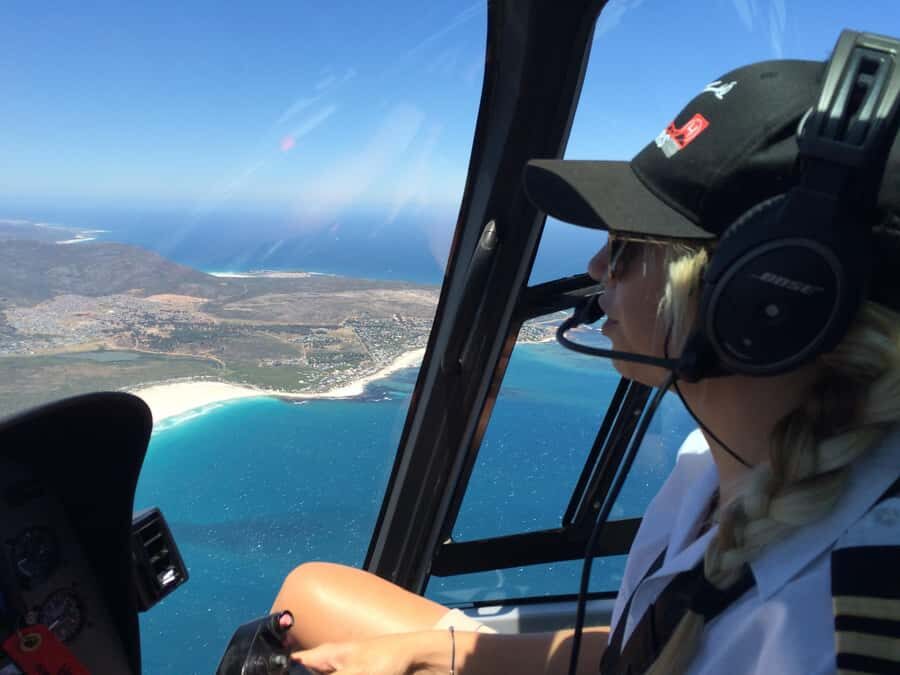
- V&A Waterfront takeoff: Easy to find, and the views of Table Mountain start immediately.
- A route packed into 50 minutes: Cape Town, Camps Bay, the Cape of Good Hope, False Bay, and Constantia all in one loop.
- Pilot commentary + English audio: You get help spotting what you’re seeing while you’re in the air.
- Photo-friendly stops, not a sightseeing marathon: Short timing means you’ll want your camera ready and focus on angles.
- Weather and weight matter: Timing is approximate, and you’ll do a discreet weigh-in before boarding.
Why This 50-Minute Flight Covers So Much Territory
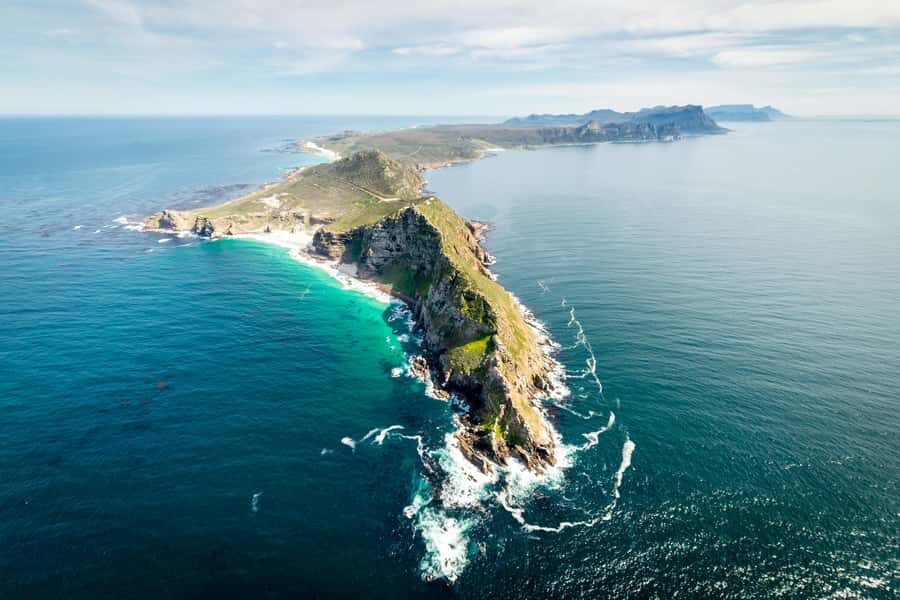
This helicopter flight is designed for one thing: seeing the Cape Peninsula as one connected piece. On the ground, it’s easy to miss how quickly the coast and terrain change. From the air, the peninsula reads like a map—coastline first, then mountains, then ocean.
The time also helps. 50 minutes is long enough to get down the coast and back with multiple “wow” moments, but short enough that you’re not stuck waiting around all day for one burst of aerial views. And because it’s a shared flight (small group up to 6), you’re getting that premium vantage point without doing a private charter.
The vibe here is practical: you’re in the air for a focused loop, and the pilot’s guidance keeps you from guessing what landmark you’re actually looking at.
A few more Cape Town tours and experiences worth a look

V&A Waterfront Helipad: Where the Cape Starts in Your Window
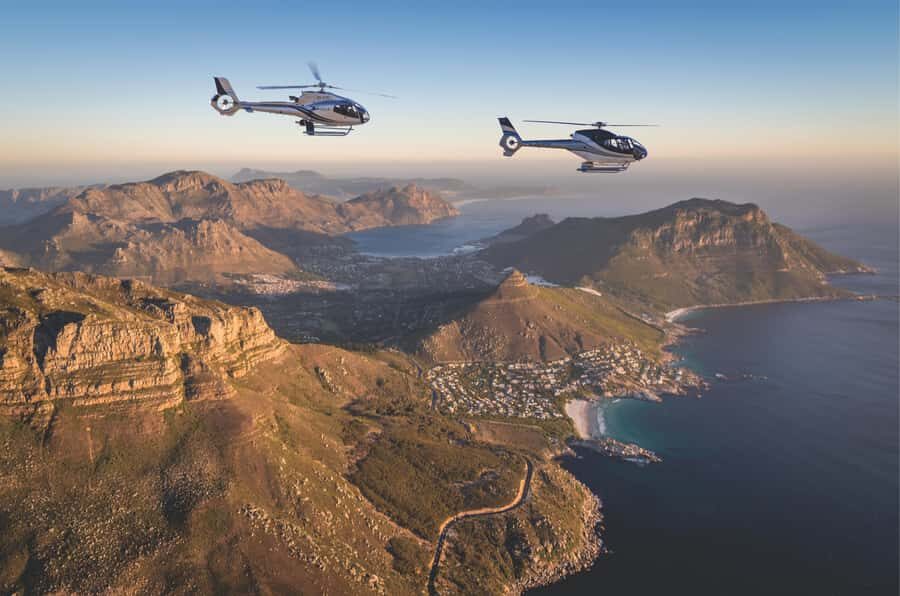
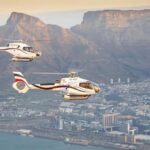
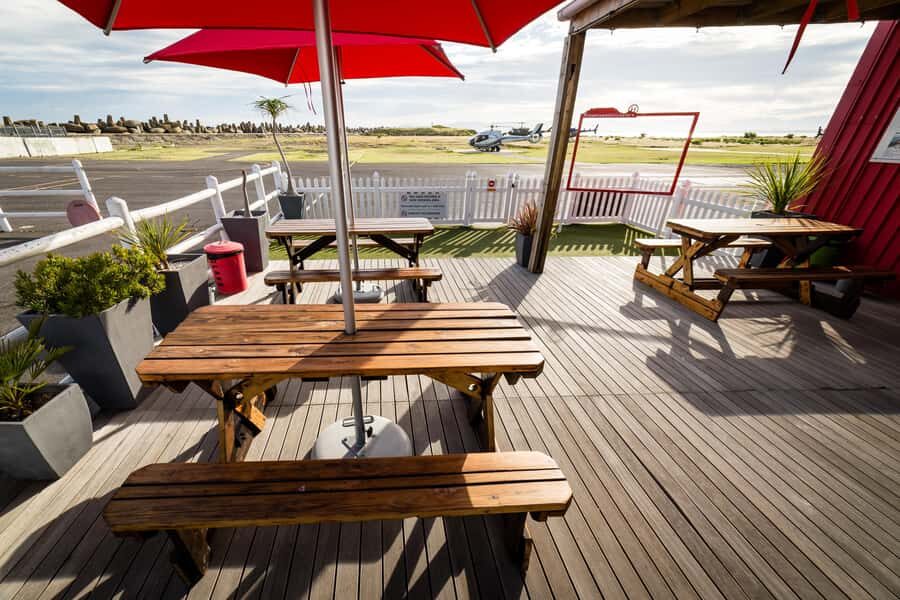
Your departure point is the V&A Waterfront Helipad, which is a smart choice. It puts you close to Cape Town’s most recognizable waterfront energy, and it makes the start straightforward: no long transfers, just check in, safety briefing, boarding pass, then up.
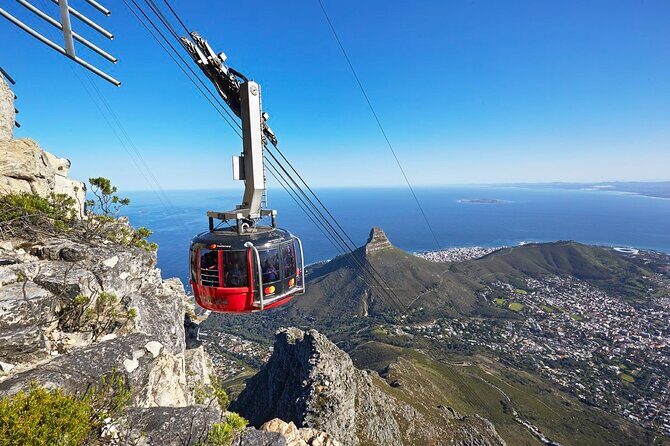
From takeoff, you’ll get early views of Cape Town and Table Mountain. That matters because Table Mountain isn’t just a background shape here—it’s part of the route’s “hinge.” Seeing it from above first helps you track how the flight later moves from one side of the peninsula to the other.
You’ll also glide over the venue associated with the 2010 World Cup. Even if you’re not there for stadium trivia, it’s a useful landmark to orient yourself before the helicopter turns toward the coastline.
Cape Town Views First: Lion’s Head, Camps Bay, Clifton, and More
After leaving the waterfront area, the route leans hard into classic Cape Town geography. You’ll pass over Lion’s Head and then head toward the Atlantic-facing coastline—this is where the “postcard from above” feeling really kicks in.
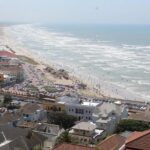
Next up: Camps Bay and the beaches of Clifton. From the air, these beaches look less like separate spots and more like a continuous curve of coastline. That changes how you take photos. Instead of aiming at one beach, you’re able to frame the coastline stretches and the mountain slopes at the same time.
Then the flight moves further inland along the mountainous backdrop, including the Karbonkelberg Mountain area. This is a great reminder that the Cape Peninsula isn’t flat coastal scenery—it’s rocky, steep, and broken up by ridges that you’d miss from street level.
Practical tip: have your camera settings ready before you hit the coast. The best shots come when you’re not fumbling with menus while the helicopter is already lining up the view.
Hout Bay to the Cape Nature Reserve: Ocean, Inlets, and Terrain Shifts
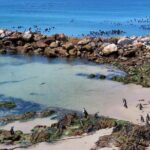
As the route continues, you’ll soar over Hout Bay toward the Cape Nature Reserve. This segment is all about texture. From above, you can see how the coastline forms inlets and how the terrain edges toward more protected, natural areas.
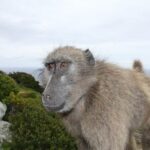
This is also the part of the flight where you start to notice the peninsula’s “personality change.” The closer you get to the Cape’s far tip, the more the coast feels exposed to open ocean. It’s not just scenery—it’s geography that affects the lighting, the colors in the water, and even where you expect to spot wildlife.
And because the pilot provides commentary in English, you’re not stuck trying to identify things blindly. The narration helps you connect names to the exact angle you’re seeing from your seat.
Cape of Good Hope and False Bay: Your Best Photo Window
This is the big moment: you’ll take photos of the Cape of Good Hope and watch the terrain shift as the helicopter approaches False Bay. This part of the flight is where the peninsula starts looking less like a tourist route and more like a dramatic edge of the map.
The coastline geometry stands out. You get the sense of how the peninsula funnels ocean movement around the tip. And when you’re looking down toward False Bay, the waters can look very different from earlier stretches—especially in how the coastline outlines the bay.
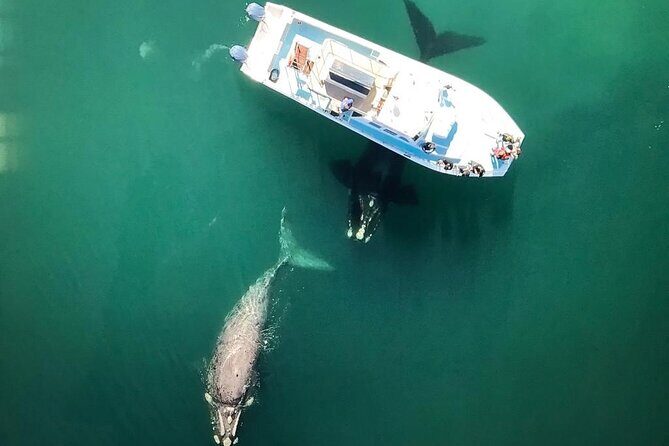
One of the most fun bits here is the chance to look for great white sharks in the ocean. Realistically, spotting wildlife from a helicopter isn’t guaranteed, but the route is set up so you can scan the water while you’re already over the most relevant area.
Photo advice that actually helps: shoot short bursts. Helicopter positions change quickly, and the angle that looks perfect for one frame won’t last long.


The Return via Table Mountain and Constantia Valley
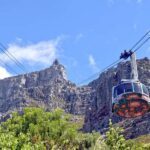
On the way back, the flight crosses the other side of Table Mountain for a different view of the terrain. This is a key reason this route works so well. You’re not repeating the same coastline—you’re changing perspective across the mountain.
Then you’ll pass above the vineyards of Constantia Valley. If you’ve only seen Constantia from road viewpoints, you might not realize how it sits tucked against the slopes. From the air, the shapes and patchwork of the valley read clearly, and the green tones contrast with the rocky coast you saw earlier.
Finally, you land back at the same place: the V&A Waterfront Helipad. That loop matters. It keeps the timing tight and means you’re always working toward the next visible landmark, rather than spending half the flight “in transit.”
Price and Value: Is $619 Worth 50 Minutes?
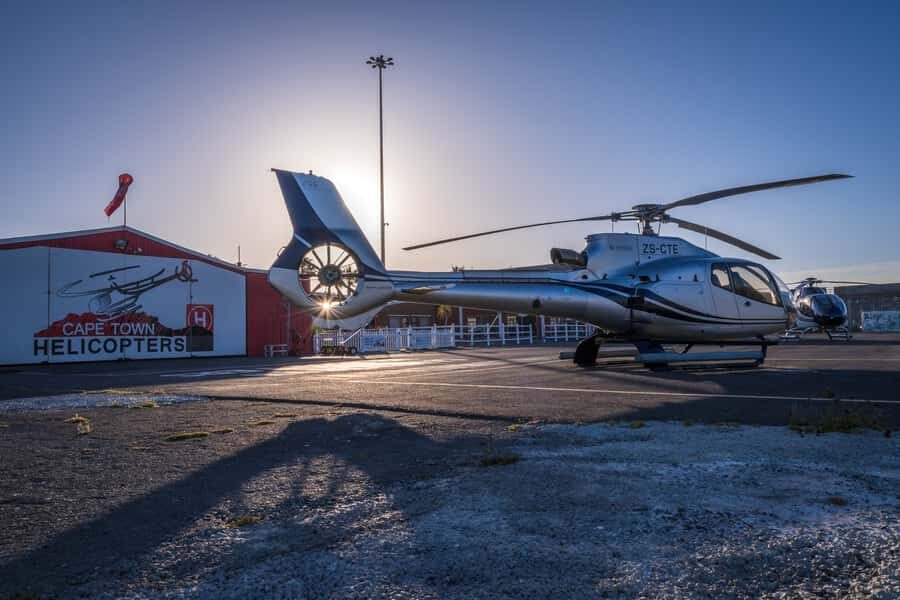
Let’s talk money honestly. At $619 per person for a 50-minute shared flight, this is not a budget activity. You’re paying for aircraft time, pilot expertise, route planning, and the privilege of seeing the Cape Peninsula in one connected sweep.
So where’s the value? For many people, it’s in compression. You’re stacking multiple “top view” zones—Cape Town, coastal beaches, the Cape of Good Hope area, False Bay, and Constantia—into one short window. If you tried to do that level of coverage by car and viewpoints alone, you’d spend far longer moving around and you’d still miss the big-picture relationships between mountains, ridges, and water.
Also, you’re not going into this totally blind. You get pilot commentary in English, and there’s an English audio guide included. That turns the flight from pure sightseeing into something more useful: you learn what you’re seeing while you’re seeing it.
That said, if you’re expecting a long, leisurely tour with lots of time on the ground, this isn’t it. It’s a flight with fast pacing. Spend your effort on photography readiness and being mentally present for the views while they’re in front of you.
Cabin Reality: Small Group, Shared Flight, and Seat Expectations
This is a small group experience, limited to 6 participants, and it’s a shared helicopter flight. That’s generally great for feeling personal without being private.
A few details to understand up front:
- You’ll all be on the helicopter at once, but if the group is larger, you may be split into two or more helicopters.
- Everyone does a discreet weigh-in. Nothing gets announced unless you ask.
- Solo travelers are welcome, but the exact takeoff time depends on availability.
There’s also the practical truth: in a small cabin, you’re sharing the view space. One downside to think about is how other passengers might affect sightlines, especially when you’re focused on getting the best shot out a window. If you care deeply about perfect angles, it’s worth being alert during check-in and lining up early for the best boarding position you can.
What to Bring (and What’s Not Allowed) for a Smooth Flight
Keep your packing simple. You’ll want:
- Sunglasses
- A camera
- A charged smartphone
You also need to be ready for the cabin rules. Selfie sticks aren’t allowed, and smoking is off the table. The same goes for alcohol and drugs.
One more item that trips people up: you must present a valid original passport upon check-in. Bring it with you even if you think you’ll never need it again.
And if you’re tempted by extra media: an in-flight HD video package is available to purchase at the base, but it isn’t included.
Weather, Timing, and How Flight Changes Can Affect You
Helicopters are weather-driven. Flight times are approximate, and they can change due to weather conditions and weight restrictions. If winds are strong, the flight may be rescheduled.
I like that the experience is structured for these realities: you’re not on some vague waiting game for an entire day with no information. Still, plan your broader day with flexibility. The flight is fast, but the weather decision can shift when it happens.
Also remember that the helicopter may operate with weight restrictions, and each passenger’s weigh-in matters. If you’re close to any limits, it’s worth knowing that the flight isn’t recommended for people over 350 lbs (159 kg).
Who Should Book This Helicopter Ride (and Who Should Skip It)
This flight makes the most sense if you want a high-impact aerial overview of the Cape Peninsula in one go. It’s a good match for couples, friends, and solo travelers who like views and don’t mind paying for the shortcut.
You should consider skipping if:
- You have claustrophobia (it’s a helicopter cabin)
- You have altitude sickness concerns
- You’re over 350 lbs (159 kg)
Wheelchair accessibility is listed, so if mobility is part of your planning, you can likely manage it. But always coordinate any special needs with the provider at check-in since the operation involves weighing in and boarding procedures.
Should You Book This Cape Peninsula Scenic Helicopter Flight?
Yes, I’d book it if your top goal is seeing the Cape Peninsula as a whole—Cape Town, the coast, the Cape of Good Hope area, False Bay, and Constantia—without spending hours driving from viewpoint to viewpoint. The pilot’s English commentary and the included audio guide make the views easier to understand, not just admire.
I’d think twice if you’re very sensitive to tight spaces or you’re chasing a budget. This is premium pricing for a short flight, and the experience depends on getting favorable conditions. If you can be flexible with timing, though, you’ll likely end up with one of the most memorable aerial hours in the region.
FAQ
Where does the flight depart from?
The flight departs from the V&A Waterfront Helipad.
Is pickup and drop-off included?
No. Pick-up and drop-off are not included, and you need to go to the designated meeting point.
How long is the helicopter flight?
The duration is 50 minutes.
Is this a shared helicopter flight or private?
It’s a shared helicopter flight with a small group.
What’s included during the experience?
Included are the shared helicopter flight, aerial views from all the points in the itinerary, and in-flight commentary from your pilot. An English audio guide is also included.
Is there a live guide?
Yes. A live tour guide in English is listed.
Is the activity wheelchair accessible?
Yes, wheelchair accessibility is noted.
What should I bring with me?
Bring sunglasses, a camera, and a charged smartphone.
Are selfie sticks allowed?
No, selfie sticks are not allowed.
What documents do I need at check-in?
You need to present a valid original passport upon check-in for all travellers.