REVIEW · UNDERBERG
From Underberg: Sani Pass Birding Tour with Birding Guide
Book on GetYourGuide →Operated by Roof of Africa Tours Underberg · Bookable on GetYourGuide
Sani Pass is one of South Africa’s best birding routes. The reason is simple: it’s the only easy access globally to the Drakensberg Rockjumper and Drakensberg Siskin in a practical day trip format. I love that this tour focuses on real, targeted bird-finding across several habitats, not just a scenic drive. One thing to consider is that birds can be seasonal and weather can change the odds, so you’re best planning for a great search day, not a guaranteed checklist miracle.
I also like the small-group feel: limited to 15 participants, with pickup in Himeville and an English-speaking guide. You’ll use comfortable 4×4 transport to get higher and farther than you could on your own, then spend real time where the birds live—montane grasslands, alpine scrubland, and wetlands. The route reaches Lesotho, which adds a sense of “crossing into the zone” rather than just peeking from the road.
The best part is the guide-led approach. In guides who lead this tour—like Mlondi and Aldo, praised for finding the targets and sharing extra field notes—you don’t just scan and hope; you get strategy. Still, because this is birding, it helps if you’re okay with a bit of standing still, walking when needed, and staying patient while the mountain decides what it will show you.
In This Review
- Key highlights to know before you go
- Why Sani Pass is a birder’s shortcut to Drakensberg endemics
- Getting There: 4×4 Pickup from Himeville to Lesotho
- The Target Birds: Rockjumper, Drakensberg Siskin, Mountain Pipit
- Walking the Habitats: Montane grasslands, alpine scrubland, and wetlands
- Seasonal extras like Barratt’s Warbler, Fan-tailed Grassbird, and Bush Blackcap
- Cranes and the special birds: Blue, Wattled, Grey Crowned, plus more
- When you reach the pass: picnic lunch, refreshments, and a high stop
- Price and Value at $77: what’s included and what you must bring
- Guide quality makes the difference when birds won’t cooperate
- Who this Sani Pass birding tour fits best
- Should you book this Sani Pass birding tour?
Key highlights to know before you go
- Three endemics have a reputation for being easiest here: Drakensberg Rockjumper, Drakensberg Siskin, and Mountain Pipit
- You bird multiple habitat types in one day: montane grasslands, alpine scrubland, and wetlands
- Cranes are a big theme with chances for Grey Crowned, Wattled, and Blue cranes
- Seasonal “bonus” species can show up depending on timing and conditions
- The 4×4 ride is part of the bird plan, not just transport
- Small-group size keeps it focused while you scan, listen, and move when it makes sense
Why Sani Pass is a birder’s shortcut to Drakensberg endemics
If you care about birds, you end up hearing the same names for good reason. This is a tour built around the Sani Pass area because it provides easy access to some of the Drakensberg’s most wanted species—especially the Drakensberg Rockjumper and Drakensberg Siskin, plus the Mountain Pipit.
What makes that valuable for you is not just the list. It’s that the birds you’re targeting are tied to specific altitude and habitat. A mountain-bird checklist works better when you can reach the right elevation without spending days planning complicated routes. That’s exactly what this format does: it uses the Sani Pass route as the connector between you and the right conditions.
This is also where the “listen first” side of birding matters. Some of the endemics are easier to spot when you know what you’re looking (and listening) for in the right zone. A guide-led search helps you avoid the common trap of staring at the same slope for too long without moving with purpose.
You can also read our reviews of more tours and experiences in Underberg.

Getting There: 4×4 Pickup from Himeville to Lesotho
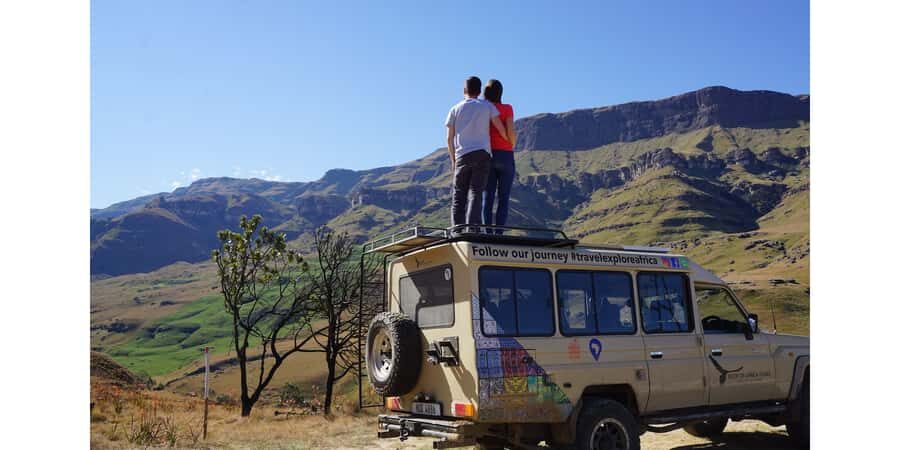
You start in Himeville, and pickup is included from your accommodation. That matters because it removes the hassle of getting yourself to the trailheads and viewpoints on time. From there, the tour uses comfortable 4×4 transport, which is practical for getting into the pass area.
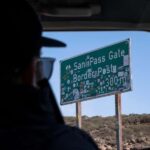
The day is built around an 8-hour outing, so you’re not just “in the area” for a quick look. You’re actually spending time where the action is likely to be. You’ll also cross into Lesotho, which gives the whole trip a different feel than staying entirely on one side of a border.
The only real consideration here is what you bring and how you handle altitude and weather. The itinerary is short enough that you’ll feel every hour you spend without proper layers. Pack warm clothing, and don’t rely on one comfortable outfit.
The Target Birds: Rockjumper, Drakensberg Siskin, Mountain Pipit
This tour earns its reputation by centering your search on three birds that are widely associated with this region:
- Drakensberg Rockjumper
- Drakensberg Siskin
- Mountain Pipit
These are the “anchor” species. When you book a day like this, you’re usually paying for access to the right habitat at the right time, with someone who knows how to work the terrain for sightings. That’s what this tour aims for.
You’ll also learn how to look for them in a way that’s more useful than simply scanning. The guide experience here is practical: where to focus, what patterns in habitat matter, and how to adjust when birds don’t show themselves immediately. This kind of field guidance is exactly what guests highlighted in standout ways, including praise for finding all target birds and sharing Sani Pass–related insights along the way.
If you’re a serious birder, you’ll appreciate that this tour doesn’t treat the targets as a lottery ticket. It treats them as a plan.
Walking the Habitats: Montane grasslands, alpine scrubland, and wetlands
The Sani Pass area is a mix of habitat types, and that’s what keeps the bird list from feeling repetitive. You’ll explore montane grasslands, alpine scrubland, and wetlands, which each bring different species and different behavior.
Why this matters for you: each habitat changes the bird’s routine. In grasslands, you often get ground-leaning birds and birds that move through cover in a distinctive way. In alpine scrubland, you’re more likely dealing with smaller, active songbirds and birds that react quickly to movement. Wetlands shift the game toward birds that use edges, reed lines, and damp ground conditions.
In a normal self-guided trip, it’s easy to stick to one “pretty viewpoint” and miss what you need for other birds. Here, the habitat approach helps you cover the full range of what the area offers. It’s also how you end up with a better mix of sightings rather than only the most obvious ones.
Seasonal extras like Barratt’s Warbler, Fan-tailed Grassbird, and Bush Blackcap
One reason people talk about Sani Pass birding is that it can deliver difficult-to-find species when conditions line up. Depending on the season, you might have a shot at birds like Barratt’s Warbler, Fan-tailed Grassbird, and Bush Blackcap.
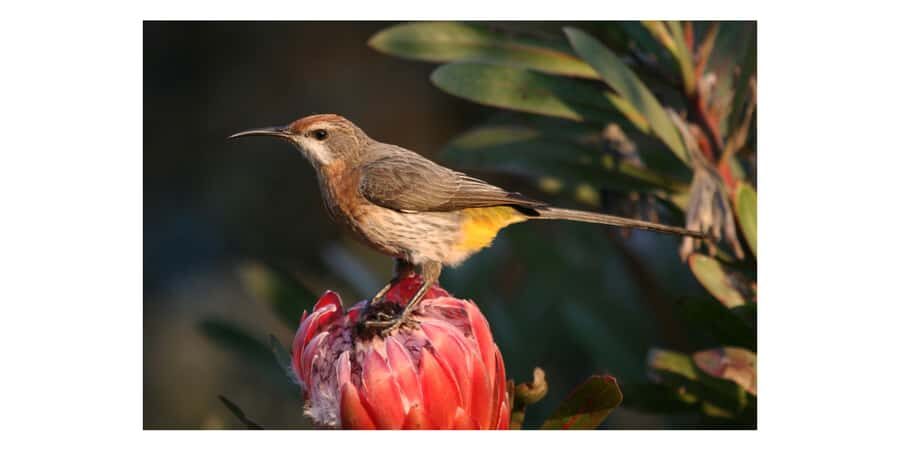
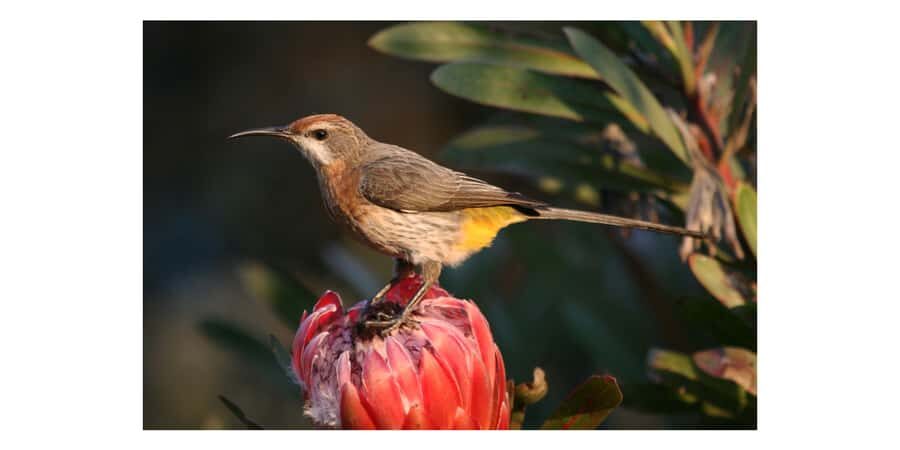
You also could encounter more narrowly distributed endemics, including Gurney’s Sugarbird and Buff-streaked Chat. These names matter because they aren’t “everywhere birds.” They’re connected to habitat and altitude in this region, which loops back to why using the Sani Pass route as the access point is such a smart move.
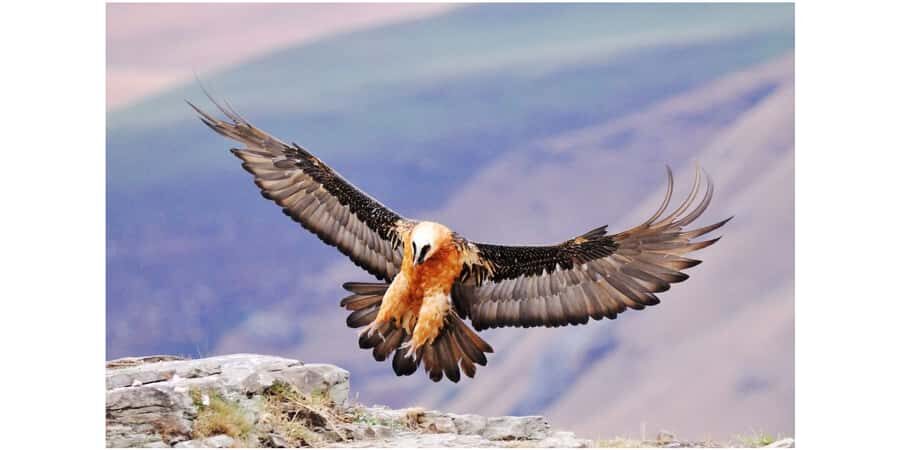
There’s also a west-leaning component in the alpine zone. If timing and conditions cooperate, you may find species such as Grey Tit, Sickle-winged Chat, Layard’s Warbler, and Fairy Flycatcher. Add to that the chance to search for the highly endangered Bearded Vulture—not something you can treat as a certainty, but a major reason this area attracts conservation-minded birders.
My practical advice: treat the targets as your core goal, and the seasonals as real bonuses. That mindset makes the day more enjoyable even when the wind picks up.


Cranes and the special birds: Blue, Wattled, Grey Crowned, plus more
The tour’s other big theme is cranes. This area is home to all three of the southern African crane species: Grey Crowned Crane, Wattled Crane, and Blue Crane.
If cranes are on your list, this is a strong match because it’s not a vague “maybe somewhere in the region.” It’s a route built around the kind of habitats cranes use, and it’s structured so you’re not only looking from one spot.
The tour data also points to some intriguing, less common possibilities: Short-tailed Pipit and Black-rumped Buttonquail are described as seldom-recorded here. Those aren’t the kind of birds you should expect every single day, but having a route that specifically considers them tells you the guide’s search approach isn’t just about easy wins.
And yes, this is also where the day can feel like a real quest. When the target birds are more specialized and the cranes are the standout group, you end up scanning with more intention—less wandering, more birding.
When you reach the pass: picnic lunch, refreshments, and a high stop
You’ll get a picnic lunch and refreshments, which is a key value point on an 8-hour day. Birding days can turn slow and tiring if you have to manage food logistics on your own, especially in cold mountain conditions. Having the meal included means you can stay focused on the field work.
There’s also mention of a drink stop at the highest pub of Africa. Even if you’re not making it a “must-do,” it’s a memorable way to mark the day once you’ve worked your way up into the top-of-pass zone. It’s the kind of moment that makes the trip feel like more than just a checklist drive.
Pack your camera. You’ll be getting views and sky-scapes as much as you’re chasing birds, and having that chance to step back and frame the mountain moment is part of what makes Sani Pass so compelling.
Price and Value at $77: what’s included and what you must bring
At $77 per person for an 8-hour tour, the value comes from the combination of access + guidance + included time-saving comforts.
You get:
- A personal birding guide
- Comfortable 4×4 transport
- Picnic lunch and refreshments
- Small group size (limited to 15 participants)
- English live guide
- Pickup included from Himeville
That’s the practical part. What you still need to manage are the basics: you’ll want your gear ready before you meet the group.
Bring:
- Passport (and for children, passport or ID card)
- Warm clothing
- Camera
- Binoculars
- Cash
- Visa, if required
Here’s the takeaway for your decision: if you tried to replicate this on your own, you’d spend time figuring out routes, transport, and the birdfinding strategy. The $77 covers the structure so you can spend your energy on spotting and learning.
Guide quality makes the difference when birds won’t cooperate
In a birding day, the sky can refuse your plan. What saves the outing is a guide who reads the terrain, changes tactics, and keeps you in the right places long enough to get a payoff.
That’s why this tour’s standout feedback matters. Guests praised guides—like Mlondi for being keen, knowledgeable in the field sense, and for going the extra mile, and Aldo for being an enthusiastic walking encyclopedia type who still kept the day easygoing. The common theme in that kind of praise is action: finding the target birds and turning the hours into more than just waiting.
You’ll feel that in how the search works. It’s not only “where to stand.” It’s also what to notice while you’re scanning—behavior, habitat cues, and which zones are worth your time when the obvious spots don’t deliver.
If you want a guided birding experience that feels like real field support, this is where you’ll likely notice it most.
Who this Sani Pass birding tour fits best
This tour is a great fit if:
- You want Drakensberg endemics without turning it into a multi-day expedition
- You enjoy guided birding and appreciate someone who can explain what you’re seeing
- You’re interested in cranes and a chance at other special species (including less common, seldom-recorded birds)
- You like an outing that mixes scanning with walking through different habitat types
It’s less ideal if you hate cold mornings, don’t want to stand and wait for birds to show, or only want guaranteed sightings. Birding on mountains is weather-dependent, and the guide can’t control what the birds do.
Still, the structured focus on specific species is exactly why birders keep picking this route.
Should you book this Sani Pass birding tour?
Book it if you’re serious about the Drakensberg birds—especially Rockjumper, Siskin, and Mountain Pipit—and you want an 8-hour day that uses the pass for practical access. The value is strong because your guide, transport, and picnic are handled, and the tour is designed to work across multiple habitats rather than one quick stop.
Skip it only if you’re looking for a purely “relaxed sightseeing” outing. This trip is built around finding birds, with the mountains as the backdrop, not the other way around.
If you’re packing warm layers, bringing binoculars, and showing up ready to scan, this is one of the most focused ways to experience the Sani Pass area for birdlife.