REVIEW · STELLENBOSCH
Stellenbosch: Countryside Banhoek valley E-Bike Wine Tour
Book on GetYourGuide →Operated by Scootours Cape Town · Bookable on GetYourGuide
Banhoek Valley is a lot more fun on two wheels. This assisted e-bike tour takes you along farm roads with the Drakenstein Mountains looming in the background, then pairs the ride with two wine stops you can reach without arriving wiped out. The guided setup is smooth too, with a proper bike briefing and safety gear before you head out.
My favorite part is how the effort feels optional. You still pedal, but the assist keeps climbs from turning into a cardio punishment, which makes the whole outing relaxed and scenic. The main catch to plan for is that wine tastings aren’t included, so you’ll want cash for whatever you decide to buy at the farms.
In This Review
- Key highlights you’ll feel fast
- Getting started at Banhoek Chilli Oil Company
- Assisted pedaling: the secret to a stress-free wine day
- Banhoek Valley by e-bike: mountain views and safe roads
- Your first wine farm stop: what you’ll actually do there
- Which farms might you visit?
- The second farm stop: tasting choices and buying wine
- What the guide brings (and why it affects your day)
- How long is 210 minutes, and how it feels on the clock
- Price and value: why $85 can make sense
- What to bring (so you don’t regret it later)
- Weather and reschedules: the practical reality
- Who should book this e-bike wine tour?
- Should you book? My straight answer
- FAQ
- How long is the Stellenbosch Banhoek Valley e-bike wine tour?
- Where do we meet for the tour?
- Is there a guide on the tour, and what language do they speak?
- Are wine tastings included in the price?
- How many wine farms do you visit?
- What’s included in the tour price?
- Is food or drinks included?
- How big is the group?
- What should I bring, and is cash recommended?
- What happens if the weather is bad?
Key highlights you’ll feel fast
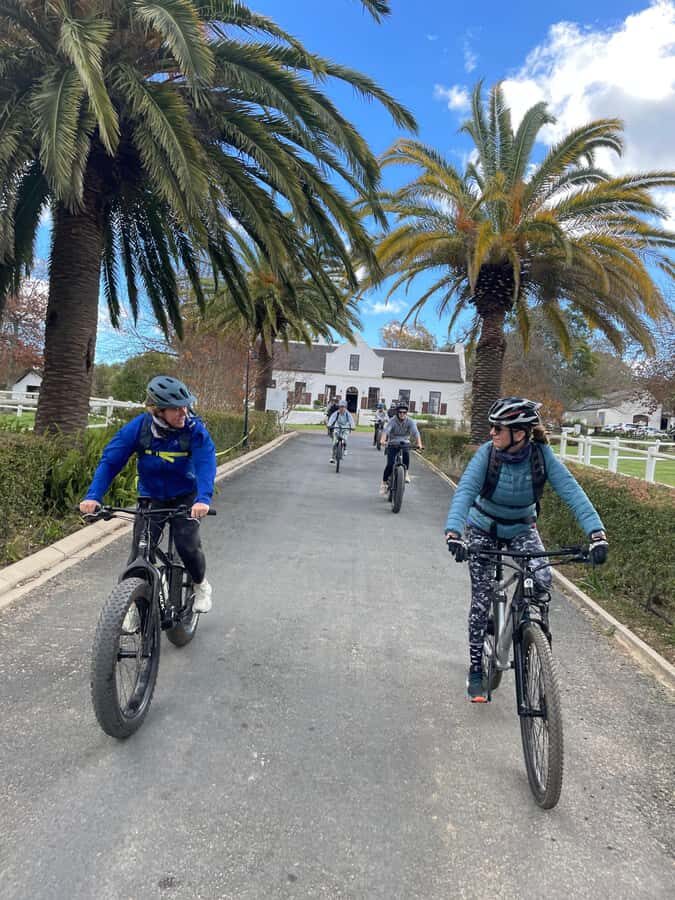
- Assisted pedaling means you can keep a steady pace without burning your legs
- Small groups (up to 10) make the guide’s attention feel close-up, not rushed
- Banhoek Valley farm roads are designed for a safe, scenic ride
- Two wine farm stops (often Rainbow’s End plus a second farm) break up the trip nicely
- English live guide helps you understand the area while you ride
- Protective gear included so you start confidently
Getting started at Banhoek Chilli Oil Company
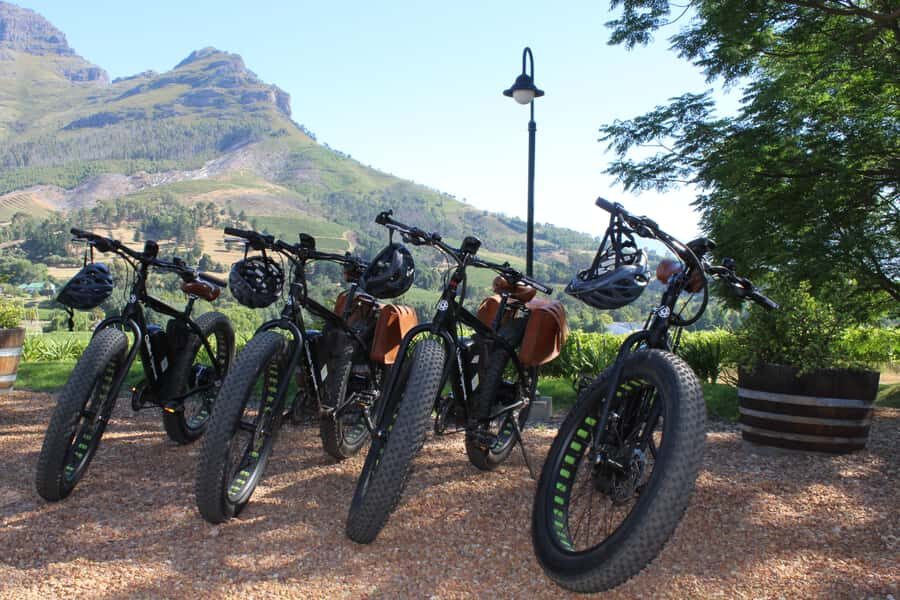
You meet at Banhoek Chilli Oil Company, where you’ll spot the tour flags and a trail centre entrance. It’s a practical setup: show up, find your group, and get ready for a short orientation before you ride.
Before you start rolling, your guide helps you get comfortable on the e-bike. Expect seat adjustments, a quick explanation of how the bike works, and a safety briefing. Then you put on your helmet and head off as a group. It’s the kind of beginning that matters—especially if you don’t ride often.
You can also read our reviews of more cycling tours in Stellenbosch
Assisted pedaling: the secret to a stress-free wine day
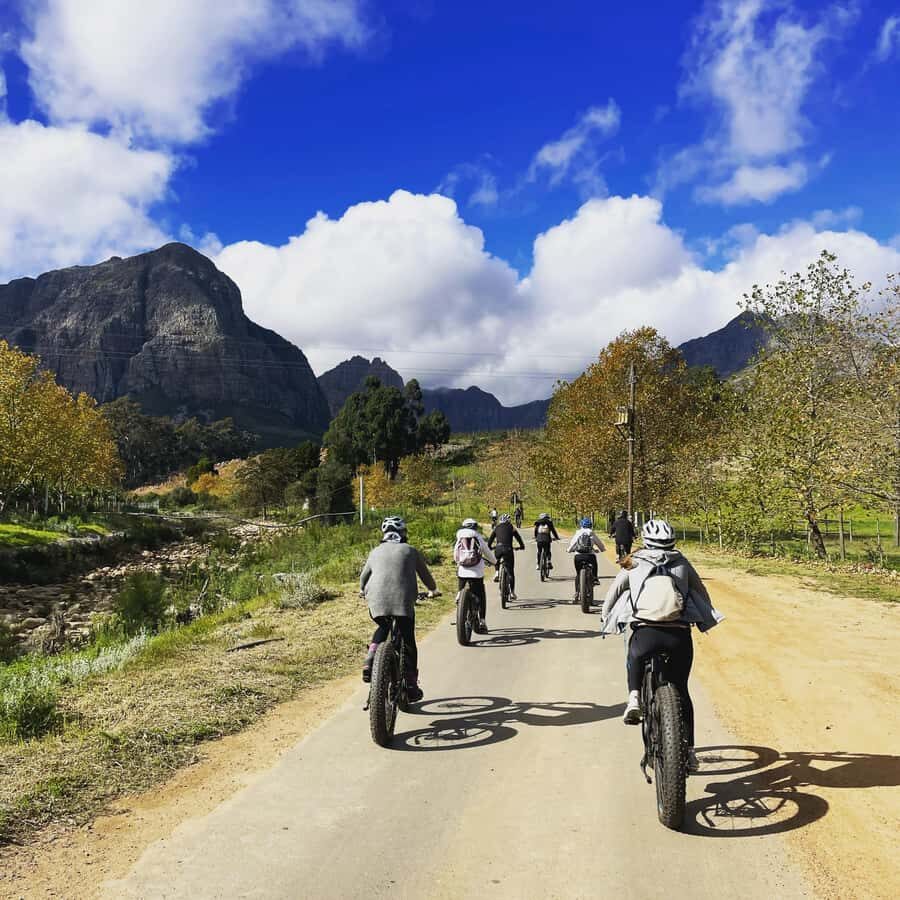
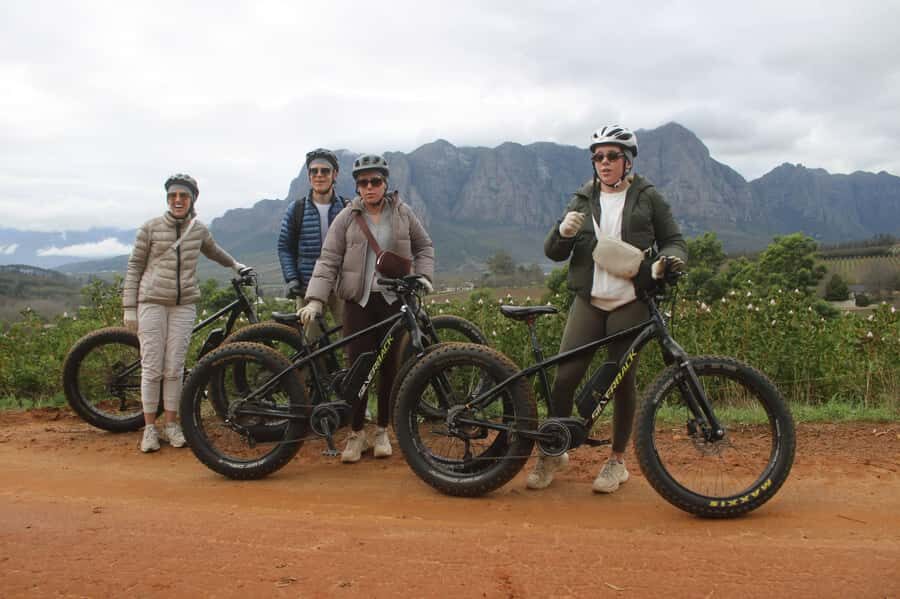
This tour is built around assisted pedaling, so you can choose how much effort you want to spend. If you’re the type who likes scenery more than sweating, you’ll appreciate that the e-bike helps you maintain momentum when the road tilts upward.
You’ll still pedal, but the assist smooths out the hardest moments. That translates to less fatigue when you reach wine farms and want to actually enjoy the views and tastings rather than just collapsing on a bench.
Also, the pace is designed so you can go at your own speed. With a guide keeping the flow of the group, it’s not a race day. It’s a ride day with plenty of chances to slow down and look around.
Banhoek Valley by e-bike: mountain views and safe roads

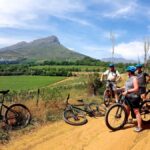
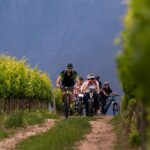
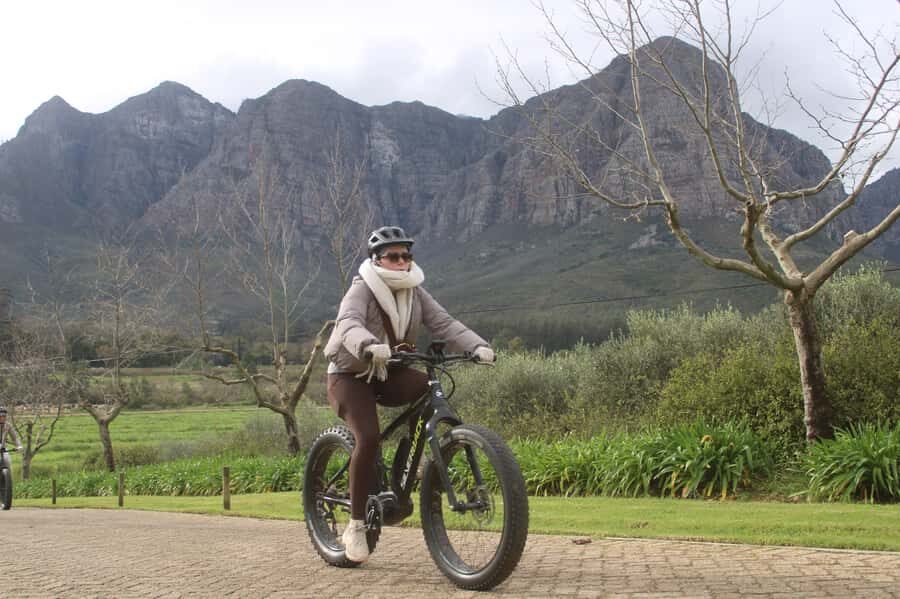
Once you depart, you cycle through Banhoek Valley with the Drakenstein Mountains in the background. The route follows farm roads, and that detail matters. You’re not dealing with chaotic traffic or trying to negotiate complicated streets while also staying relaxed for wine stops.
The ride is scenic in a straightforward way: open valley views, gentle curves, and stretches where you can settle into a rhythm. It’s also the kind of cycling that fits different fitness levels, because the bike assist reduces the penalty of a slower pace.
This is a good option if you want “winelands time” without turning it into a full-day expedition. In about three and a half hours, you get motion, viewpoints, and two farm visits—without the long car transfers you often see on bigger tour formats.
Your first wine farm stop: what you’ll actually do there
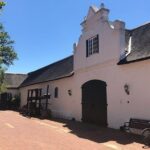
At your first winery, you’ll arrive at a farm tucked away at the end of the valley. That’s part of the appeal: the ride brings you somewhere that feels separate from the main road, with space to enjoy the setting.
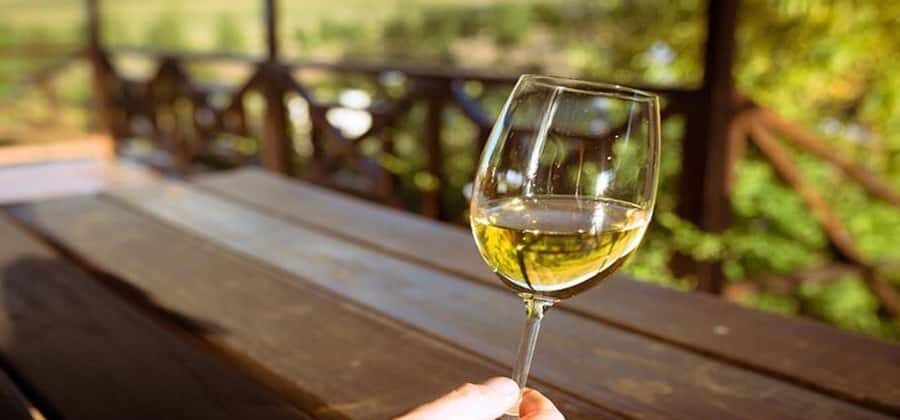
You’ll have time for a tasting experience at this stop. The tour description also mentions the possibility of wine tasting with canapés, though the important practical point is that wine tastings aren’t included in the tour price. So you’re not locked into buying anything, but you should expect to pay if you want the full tasting.
Even if you skip the tasting, this is still a worthwhile pause. The value here is that the farm stop feels like part of the ride, not a rushed add-on. You’ll also get a chance to look around and soak up what the Stellenbosch wine scene feels like when you’re standing there—not just reading about it.
Which farms might you visit?
Your included stops can vary. Depending on the schedule, your second farm stop may be one of these: Thelema, Zorgvliet, Tokara, or Rainbow’s End. Rainbow’s End is specifically listed in the tour experience flow, and Tokara is also commonly referenced in guide-go-round experiences.
Either way, you’re working within a set of well-known Stellenbosch wine names, so you’re not left wondering if the stop will be worthwhile.
You can also read our reviews of more wine tours in Stellenbosch

The second farm stop: tasting choices and buying wine
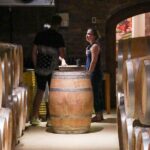
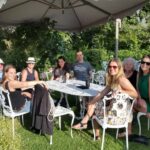
After the first visit, you ride back and continue on to the second wine farm stop. This part is what turns the outing into a proper “wine tour,” because you’re comparing two different places rather than doing one single tasting and calling it a day.
At the second farm, you’ll typically have another tasting opportunity and time to enjoy the surroundings. The tour schedule gives about an hour at a winery area for wine tasting and cycling back, which usually feels like enough time to do something meaningful without dragging on too long.
There’s also time for buying wine. Bring cash if you want an easy checkout at the farm shops, and keep in mind that the tour price covers the ride and farm visits—not the wines themselves.
What the guide brings (and why it affects your day)
A strong guide makes the difference between a nice ride and a memorable one. In this kind of Banhoek Valley outing, that’s especially true because you’re learning as you move—history, farming, and wine context can turn roadside scenery into a story you understand.
You might ride with guides such as Ash, Luva, Louven, Charles and G, or Prince and Jason, based on reported experiences. One common thread is enthusiasm and clear explanations, so you’re not just watching scenery go by—you’re getting a sense of why it looks and tastes the way it does.
Since the group is limited to 10, questions stay easy. If you want to know about the valley, how the farms work, or what you’re tasting, you’re more likely to get a direct answer instead of being waved onward.
How long is 210 minutes, and how it feels on the clock
The tour runs for about 210 minutes (roughly 3.5 hours). That’s a sweet spot for the Winelands, where it’s easy to burn a whole day on transport alone.
You’re not spending the entire time riding at full attention. You get orientation at the start, then a guided ride with scenic breaks, plus time at two wine farms. If you’re traveling with people who don’t want an all-day activity, this timing tends to work well.
It also helps that you’re not stuck with a strict “pedal nonstop” approach. Assisted pedaling lets you stay comfortable, so the day doesn’t turn into a long endurance test.
Price and value: why $85 can make sense
At $85 per person, you’re paying for more than a bike rental. Your price covers the guide, the e-bike, protective gear, and entry to two wine farm stops. You’re also getting the structure that turns random cycling into a smooth, timed experience with the right pacing.
Wine tastings and food and drinks are not included, so you should expect additional spending if you want to taste and buy bottles. Still, that approach gives you flexibility. You can taste as much (or as little) as you feel like, and you’re not trapped into a set menu or package.
One realistic note: if you’re the type who expects brand-new gear and top-tier bike feel, you might notice small gaps. Most bikes are set up for comfortable riding, but the comfort level can vary. The guide and the route planning do a lot to protect the experience either way.
What to bring (so you don’t regret it later)
Pack like you’re doing a short countryside outing plus a winery stop. Comfortable shoes matter because you’ll get on and off the bike and walk a bit around the farm areas.
Bring:
- Water
- A jacket (weather can shift in the valley)
- Comfortable clothes
- Cash (for wine purchases and any tasting costs)
If you run cold easily, consider a light layer even in warmer months. And don’t show up in anything that will pinch your feet during a bike ride.
Weather and reschedules: the practical reality
This is an outdoor cycling activity, so weather can affect the plan. If conditions are poor, the tour may be rescheduled or refunded. That flexibility helps, because you’re not stuck with a bad weather write-off.
If it’s looking like rain, you can plan your day around that possibility. Keep your schedule loose if you can, and you’ll get a smoother trip.
Who should book this e-bike wine tour?
This tour fits people who want countryside scenery and wine-farm stops without needing serious cycling fitness. It’s family-friendly and designed around safe, picturesque farm roads, so it’s a good pick for mixed groups.
It’s also great if you want a guided taste of Stellenbosch that’s not just sitting in a vehicle. Assisted pedaling makes it workable even when someone in your group doesn’t consider themselves a cyclist.
The one clear mismatch: it’s not suitable for pregnant women, as stated in the tour details.
Should you book? My straight answer
If you want a relaxed Stellenbosch day with mountain views, easy riding, and two meaningful wine farm stops, I’d book it. The price feels reasonable when you factor in the guide, the e-bike, safety gear, and the farm visits—especially compared with piecing together transport and bike time on your own.
Skip it if you only care about a formal, tasting-included wine package with no extra spending. Here, tastings are a choice you’ll pay for at the farms, so budget for that upfront.
If you like structure but still want to move at your own pace, Banhoek Valley on an e-bike is a solid use of a half-day in the Winelands.
FAQ
How long is the Stellenbosch Banhoek Valley e-bike wine tour?
The tour lasts about 210 minutes (around 3.5 hours).
Where do we meet for the tour?
You meet at Banhoek Chilli Oil Company. Look for the flags and the trail centre entrance at the site.
Is there a guide on the tour, and what language do they speak?
Yes, there is a live guide. The tour is offered in English.
Are wine tastings included in the price?
No. Wine tastings are not included, though you’ll have time at the wine farms to taste if you choose.
How many wine farms do you visit?
You visit 2 wine farms as part of the experience, with the plan described as visiting 2 to 3 wine farms depending on the flow of the day.
What’s included in the tour price?
Included items are the guide, the e-bike, protective gear, and 2 wine farm stops (options listed include Thelema, Zorgvliet, Tokara, and Rainbow’s End).
Is food or drinks included?
No. Food and drinks are not included in the tour price.
How big is the group?
The group is limited to 10 participants.
What should I bring, and is cash recommended?
Bring comfortable shoes, water, a jacket, comfortable clothes, and cash.
What happens if the weather is bad?
If weather is poor, the tour may be rescheduled or refunded.