REVIEW · CAPE TOWN
2-Hour Surf Lesson in Cape Town
Book on Viator →Operated by Atlantic Surf School · Bookable on Viator
First waves are harder than they look. A 2-hour surf lesson in Cape Town turns the ocean into a training ground, with coaching that adapts to your level and keeps things both safe and fun. I like that you get the board and wetsuit, so you don’t waste time hunting gear. I also like the small-group setup (up to 12) because it means more instructor attention. The one drawback to plan around: the session depends on good weather and ocean conditions, so timing can shift.
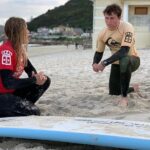
If you’ve never surfed, you’ll start with the basics: how to catch your first wave, the technique, the timing, and the right mindset for learning something new. If you already surf, the focus moves toward reading waves and improving how and when you position yourself to get better wave quality. And you’ll spend real time in the water, not just listening from shore.
You meet at 2 Coral Rd, Table View, and the activity ends back at the same spot. It’s built for most people, and service animals are allowed, too—handy if you’re traveling with a companion.
In This Review
- Key Things I’d Watch For Before You Go
- Why Table View Surf Instruction Beats Trying to Figure It Out
- What You’re Paying For: Real Time in the Water, Not Just “A Look”
- Where You Start at 2 Coral Rd (and How the Lesson Runs)
- Beginners: How You Catch Your First Wave (Without Guessing)
- Intermediate and Advanced: Better Positioning, More Waves
- The Safety Piece You’ll Feel, Not Just Hear
- Coaches Matter: Jesse and Jarrod as Real Signals
- Scheduling Smart: Booking in Advance and Working With Weather
- Practical Value Check: Who This Lesson Works Best For
- Quick Tips to Get the Most Out of Your 2 Hours
- Should You Book This Cape Town Surf Lesson?
- FAQ
- How long is the surf lesson in Cape Town?
- Where do we meet for the surf lesson?
- What equipment is provided?
- Is this surf lesson for beginners?
- What about intermediate or advanced surfers?
- How big is the group?
- Do I need to bring anything?
- What happens if the weather is bad?
- What’s the booking and cancellation flexibility?
Key Things I’d Watch For Before You Go

- Equipment is included, so pack light and show up ready to ride
- Small-group lesson (max 12) for better feedback in the water
- Beginner coaching targets timing, technique, and catching that first wave
- Intermediate/advanced focus on wave reading, positioning, and getting more waves
- Weather-dependent session, so keep your schedule flexible
Why Table View Surf Instruction Beats Trying to Figure It Out
Cape Town is made for ocean time, but surfing isn’t like walking down a trail. The ocean has its own rules—waves form a pattern, wind changes the surface, and timing matters more than strength. That’s exactly why I like this kind of instructor-led surf lesson: you’re not guessing.
This is a learning-first experience. The approach is built around understanding the ocean (how waves work), then applying that knowledge with coaching. You’ll hear it put simply: you’re in the water to progress, not to “perform.” That matters when you’re tense, wobbling, or worried you’re doing it wrong.
There’s also a very practical tone to the whole lesson: first you learn how to move safely with the conditions, then you work on standing up and catching waves. It’s not a huge, impersonal system where you get one quick check and then get left behind.
A few more Cape Town tours and experiences worth a look



What You’re Paying For: Real Time in the Water, Not Just “A Look”
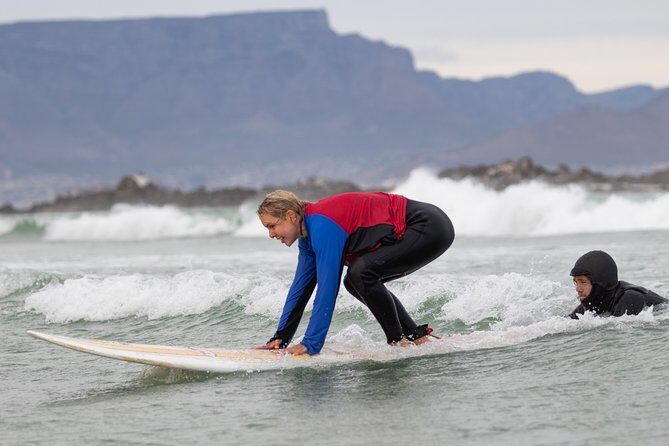
The price is $56.90 per person for about 2 hours (often in the 1h30–2h range depending on ocean and weather). At this rate, the value comes from three things that are explicitly included:
- A coach with you during the lesson
- Surf equipment rental (board and wetsuit)
- A group size kept small enough that feedback is possible
If you’ve ever priced surf lessons elsewhere, you know equipment can easily become an extra cost and hassle. Here, you travel light because the wetsuit and surfboard are provided—which is especially useful in Cape Town, where you might be doing a full day of sightseeing.
And the lesson is designed for different ability levels. That means you’re not paying for a “one-size” class that assumes everyone already knows what they’re doing. The instruction is meant to either help you catch your first wave or help you catch more of the right ones.
One more upside: there are group discounts available, which can make this a very reasonable plan if you’re going with friends.
Where You Start at 2 Coral Rd (and How the Lesson Runs)
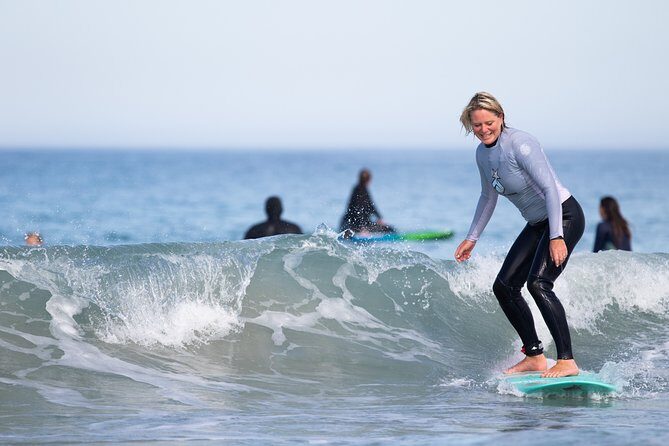
Your meeting point is 2 Coral Rd, Table View, Cape Town (7439), and the session ends back there. That “same place start and finish” matters more than people think—especially when you’re mixing this into a sightseeing day.
The lesson time is flexible within the constraints of the ocean. It runs at a time that suits ocean and weather conditions permitting, which is a smart reality check for surf coaching. Surf schools that ignore conditions can turn lessons into a slog; this one ties your session to what’s actually rideable.
In the water, the lesson flow is built around learning steps you can actually use:
- getting set up with the right gear
- going over safety and how to behave in the water
- practicing in a way that matches your level
- repeating the key skills until they start to click
You’re not just shown how once and thrown out. The instruction is tailored, and you’ll work on ocean basics as part of improving your surfing.
Beginners: How You Catch Your First Wave (Without Guessing)
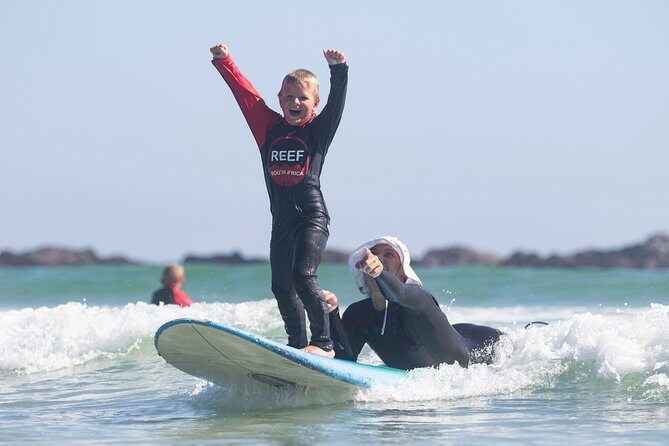
If you’re brand-new, you’ll spend the session focusing on the stuff that makes surfing possible in the first place. The lesson targets technique, timing, and attitude—and that last part is more important than it sounds.
When you’re learning, frustration is normal. But if you panic, you tend to lose timing and body position. A good beginner lesson doesn’t just teach actions; it teaches how to stay calm enough to repeat them.
Expect coaching that helps you understand:
- the timing for catching a wave (when to go, not just how to stand)
- the basic technique for getting stable enough to try
- how mindset affects learning fast (trying again without spiraling)
The lesson also focuses on ocean awareness, not just board skills. You’ll learn more about waves and how to read what the ocean is doing. That reduces the feeling of randomness you get when you’re out there for the first time.
A detail I really appreciate in the way this is described: you’re told early that this is about having fun and staying safe. That framing helps first-timers relax enough to learn.
Intermediate and Advanced: Better Positioning, More Waves
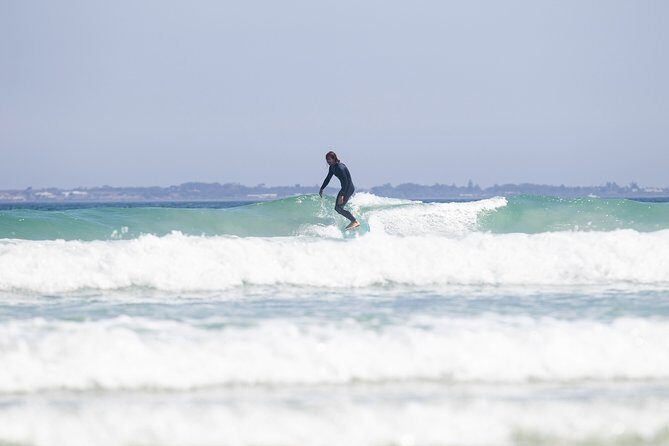
If you already surf at least sometimes, you’ll get a different set of priorities. The lesson coaching is geared toward improving how you catch waves by understanding them better.
The big themes here are timing and positioning in the line up. That’s where many surfers plateau. You might know how to ride once you’re up, but if you’re paddling at the wrong moment or sitting in the wrong spot, you end up watching better sets go by.
The coaching approach aims to improve:
- how you read waves so you choose better moments
- where you position yourself so you’re ready when sets come
- timing so you can get more quality wave attempts
This kind of instruction is valuable because it shifts you from muscle memory toward decision-making. In other words: you spend less time “trying” and more time catching.
If you’ve been stuck thinking, I can do the ride, I just don’t get enough waves, this is the sort of focus that usually helps.
A few more Cape Town tours and experiences worth a look

The Safety Piece You’ll Feel, Not Just Hear

Surfing has risk. The ocean doesn’t care how confident you feel on land. That’s why I’m glad this lesson is explicitly built around safety and a coach in the water with you.
The group format also supports safety. With a maximum of 12 people, you’re less likely to feel like a number, and the instructor can manage the session more effectively. It also means you’re more likely to get corrections early, before small mistakes become unsafe habits.
You’ll also learn that surfing is more than standing on the board. The lesson frames surf as a combination of:
- understanding wave behavior
- reading conditions
- working your mindset for progress
That’s a practical way to reduce risk. When you understand what you’re dealing with, you’re less likely to get surprised by the ocean.
Coaches Matter: Jesse and Jarrod as Real Signals
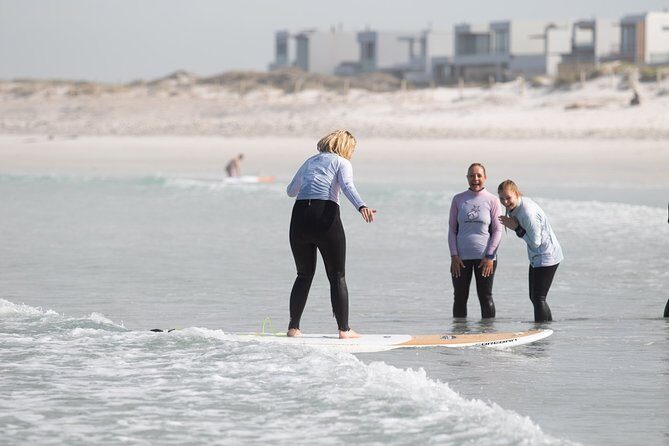
The reviews give you a strong clue about what the instruction feels like. I’m especially interested in names, because it hints at consistent teaching.
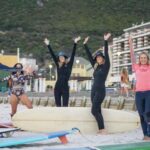
One review highlights Jesse from Atlantic Surf Collective as supportive and clear during first attempts. Another mentions Jarrod as a fantastic teacher, with children especially enjoying the time with him.
Even with different instructors, the consistent thread is patience and safety-first guidance. That’s exactly what you want if you’re nervous, learning fast, or traveling with family.
Of course, not every experience runs smoothly. One low review complains about a booking issue at arrival—saying the booking confirmation wasn’t found and payment wasn’t received. You can’t ignore that. My practical take: keep your booking confirmation and proof of payment handy, and if anything looks off, ask to verify directly as soon as you arrive. That one small step can save a lot of stress.
Scheduling Smart: Booking in Advance and Working With Weather
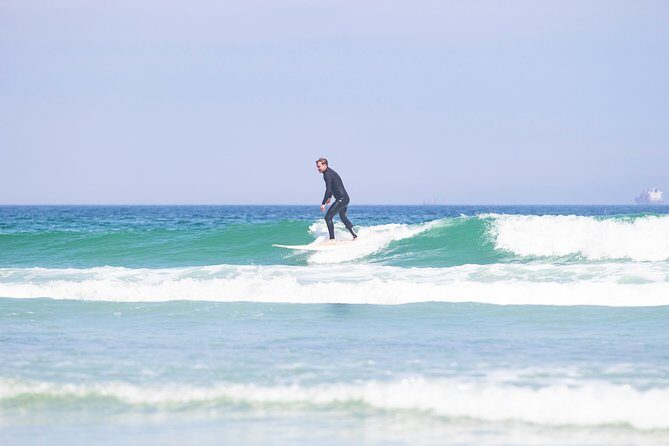
On average, this experience gets booked about 8 days in advance, so if you’re there during peak season or a busy week, lock it in earlier rather than later.
The other reality is weather. The lesson requires good weather, and if it’s canceled due to poor conditions, you’ll be offered a different date or a full refund. That’s a fair setup for a surf activity, where the “wrong” conditions can turn the lesson into frustration.
So here’s how I’d handle it on a trip:
- Keep at least one flexible block in your schedule around your lesson day
- Avoid stacking it right between time-sensitive plans
- If you’re planning other ocean activities, consider doing them on different days
If you’re hoping to squeeze surfing into a tight itinerary, you may feel the squeeze when conditions change.
Practical Value Check: Who This Lesson Works Best For
This lesson is a solid match if you want:
- a beginner-friendly surf start with real coaching
- an intermediate refresher focused on timing and positioning
- a small-group format that doesn’t feel like a factory line
- equipment included so you can travel light
You’d especially enjoy it if you like learning skills you can apply right away—surfing in this case—but also learning what the ocean is doing so you’re not repeating random trial-and-error.
It’s also a good option if you’re traveling with family (one review specifically calls out that children loved the instructor Jarrod). And because service animals are allowed, it can be easier for some travelers to plan their day with the whole group.
Quick Tips to Get the Most Out of Your 2 Hours
You’ll feel the payoff fastest if you do a few simple things before you get into the water:
- Arrive ready for wetsuit time (and listen closely to the safety instructions)
- Keep your goals simple: one or two skills, not everything at once
- If you’re a beginner, focus on timing and calm effort, not rushing to stand
- If you’re intermediate, pay attention to where you sit in the line up and when you paddle
Also, because the lesson adapts to your confidence level, don’t compare your progress to anyone else. The whole point is instruction matched to you.
Should You Book This Cape Town Surf Lesson?
Yes—if you want a structured surf start with equipment provided and a coach who stays focused on safety and progression. The small-group cap (12) and the tailored approach for beginners vs. intermediates are real advantages, not marketing fluff.
I’d book with confidence if you’re okay with one potential variable: the ocean. Surf depends on weather and conditions, and this lesson is honest about that. The experience is built to work with reality, which usually means you get a better lesson when conditions are right.
One last decision check: if you’re someone who hates booking uncertainty, be extra careful with confirmations. Keep your proof, and verify directly at the meeting point if anything seems mismatched—especially given the one arrival-related complaint in the review set.
FAQ
How long is the surf lesson in Cape Town?
The lesson is about 2 hours. It can run between 1h30 and 2h depending on ocean and weather conditions.
Where do we meet for the surf lesson?
You meet at 2 Coral Rd, Table View, Cape Town, 7439, South Africa. The activity ends back at the meeting point.
What equipment is provided?
A surfboard and wetsuit are provided as part of the experience.
Is this surf lesson for beginners?
Yes. Beginners can focus on the basics of catching your first wave, including technique, timing, and attitude.
What about intermediate or advanced surfers?
Intermediates/advanced surfers work on catching more waves by improving timing and positioning in the line up, plus understanding waves better.
How big is the group?
The maximum group size is 12 travelers.
Do I need to bring anything?
Based on the experience description, you can travel light because equipment rental is included. You should still plan to show up ready for the ocean activity.
What happens if the weather is bad?
The lesson requires good weather. If it’s canceled due to poor weather, you’ll be offered a different date or a full refund.
What’s the booking and cancellation flexibility?
Cancellation is free up to 24 hours in advance for a full refund, and weather cancellations also include a full refund or alternate date.