REVIEW · CAPE TOWN
Cape Town Private City Tour
Book on Viator →Operated by Good Times In Cape Town · Bookable on Viator
Cape Town’s past is right on the street. This private city tour strings together late-1400s roots through today, using real places to explain how Cape Town became the city it is. I like the private pacing and the way the guide can tailor the day without turning it into a rushed checklist.
Two things I’d call out right away: you start with landmark architecture at the Castle of Good Hope, and you finish with a hands-on shopping stop at Afrogem that includes a behind-the-scenes manufacturing visit. One consideration: the District Six Museum admission isn’t included, and most other stops are short walks, so comfortable shoes help.
In This Review
- Key highlights you’ll actually care about
- A Route That Feels Like a Timeline (and stays on schedule)
- Castle of Good Hope: the fort that sets the tone
- Cape Town City Hall and the Nelson Mandela statue story
- District Six Museum: time well spent, and why it matters
- District Six streets: the named district that changed lives
- Parliament of South Africa: a quick civic thread
- Company’s Gardens and Greenmarket Square: break time with real texture
- Bo-Kaap: color, identity, and the Malay Quarter story
- Noon Day Gun: the day’s rhythm in one landmark
- Afrogem: behind-the-scenes jewelry making and a pendant to take home
- Price and logistics: what $202.01 per group really buys
- Who this Cape Town Private City Tour fits best
- Should you book? My practical take
- FAQ
- What does the Cape Town Private City Tour cost?
- How long is the tour?
- Is pickup included?
- Are tickets included?
- How many people can join?
- What time does the tour start?
- Can I cancel for a refund?
Key highlights you’ll actually care about
- Private guide with flexibility: you get a real conversation, not just a script
- Mostly free entries: many major stops have free admission tickets listed
- District Six focus: you spend meaningful time on segregation and the District Six story
- Bo-Kaap plus gardens: color and character, balanced with calmer city strolls
- Afrogem included visit: welcome drinks, a factory tour, a showroom, and a complimentary Africa pendant
A Route That Feels Like a Timeline (and stays on schedule)
This tour is built for people who want to understand Cape Town fast, without skipping the places that shape the story. In about four hours, you move through colonial-era fortifications, civic buildings tied to major names, the District Six narrative, and then into neighborhoods and landmarks that show what everyday city life looks like.
The best part is how the stops work together. The day isn’t only about pretty facades. It connects power, policy, and community—then offsets it with gardens, markets, and colorful streets. You’ll get a steady rhythm: short photo-friendly breaks, then a longer stop where the message needs time.
You’ll also start early at 9:00 am, and pickup is offered (with an air-conditioned vehicle and bottled water included). That matters in Cape Town, because timing and comfort keep the day pleasant rather than exhausting.
You can also read our reviews of more city tours in Cape Town



Castle of Good Hope: the fort that sets the tone
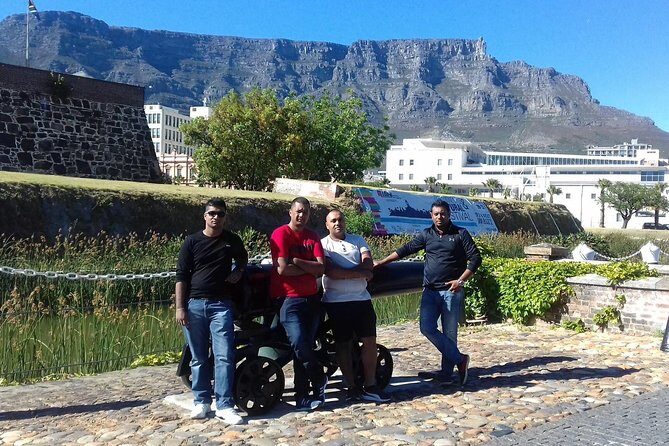
The Cape Town day opens at the Castle of Good Hope, built between 1666 and 1679. This isn’t a quick glance from the sidewalk. You walk through the oldest colonial building in South Africa, and the guide’s job is to help you read the place—what it was built for, and why it became an early anchor point for the city’s European-era control.
Your time here is about 15 minutes, with admission listed as free. That makes it a good first stop: you get a strong historical grounding before the rest of the city starts adding detail.
One practical note: fort interiors and courtyards can involve a bit of uneven ground. If you’re wearing dressy shoes, I’d switch to something you can handle for a short walk.
Cape Town City Hall and the Nelson Mandela statue story
Next up is Cape Town City Hall, an Edwardian building established in 1905. It also ties together two historical threads: the presence of Nelson Mandela in a major public way (a Mandela statue erected in 2018) and a connection to King Edward VII.
This stop lasts around 15 minutes, again with free admission listed. Even if you’re not a museum person, a civic building like this helps you understand how power shows up in architecture—then how later history re-writes the public meaning of that space.
If you like learning through contrasts, this is a smart pivot. You’ve been looking at a fort. Now you’re looking at a city’s public face, and the story shifts from military control to civic identity.
District Six Museum: time well spent, and why it matters
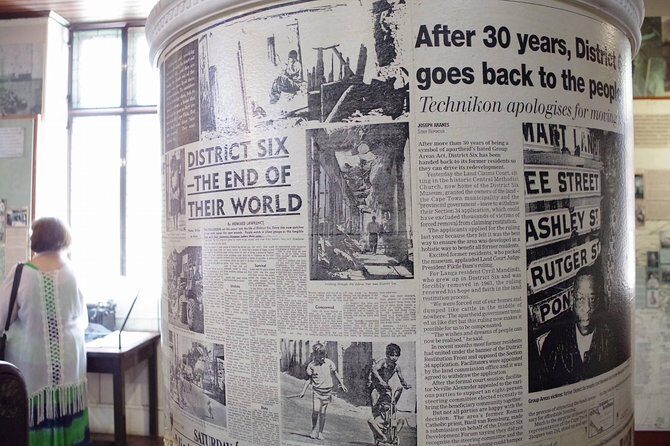
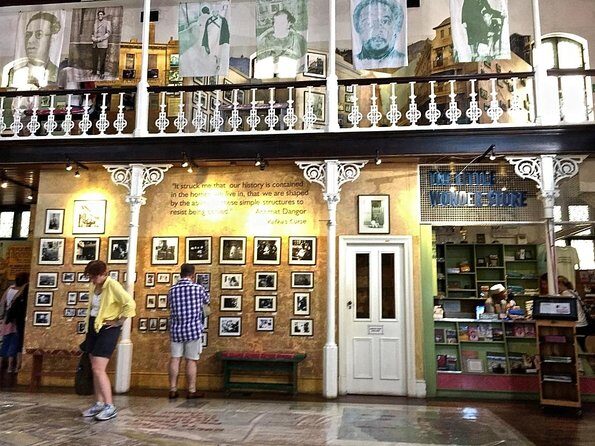
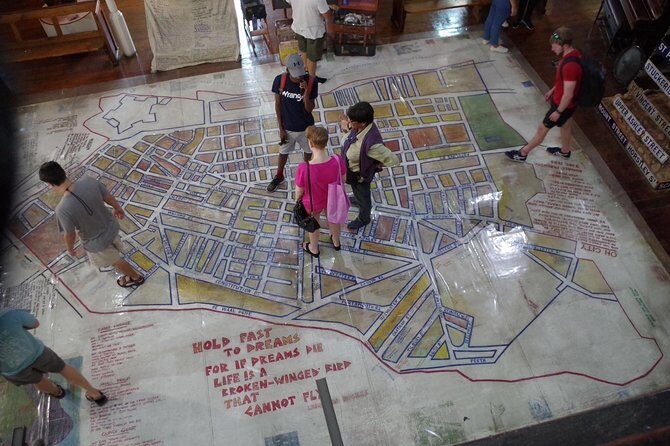
Then you hit the stop that most people remember most: the District Six Museum. You’ll spend about one hour here, focused on the story of segregation as it played out in the District Six area through reading materials and pictures.
This is the longer part of the route because the subject needs breathing space. The tour format keeps you moving, but the museum gives you the time to sit with the message instead of being pulled along by the clock.
Admission is not included for the museum. Budget a little extra for this one item, plus any other fees and taxes that may apply. The upside is that the museum stop anchors the whole tour—without it, the rest of the sightseeing would feel more like scenery than understanding.
District Six streets: the named district that changed lives
After the museum, you continue with the District Six area itself. This stop is about 30 minutes, and it includes storytelling about how the area was named District Six (the Sixth Municipality District of Cape Town) in 1867.
This is where the history becomes geographic. The guide helps you connect what you learned in the museum to the shape of the neighborhood. You’re not just memorizing dates; you’re seeing how names, boundaries, and policy can reshape real streets and real lives.
Because the time here is moderate, it works well even if you don’t love standing around. You still get the sense of place, without turning the day into a long walking ordeal.
You can also read our reviews of more private tours in Cape Town




Parliament of South Africa: a quick civic thread
There’s also a stop centered on the History of Parliament of South Africa. The schedule doesn’t frame it as a long museum-style pause, so treat it as a guided context moment—another way the tour builds a line from colonial power to later governance.
If you’re the type who loves political history, ask your guide how this connects to the District Six story you just heard. The tour is private, so you can guide the conversation toward what you care about.
Company’s Gardens and Greenmarket Square: break time with real texture
After the more serious District Six sections, the tour turns toward the city’s everyday pulse.
You’ll walk through Company’s Gardens, described as the oldest garden in South Africa, established in 1652 by the DEIC (Dutch East Indian Company). Your visit is about 20 minutes, with free admission listed. This is a great contrast stop. It gives you a calmer pace and a “reset” before the next change of scene.
Then you move to Greenmarket Square, with about 10 minutes here. This stop is about history plus browsing for African curios and souvenirs. If you want to pick up something small and meaningful without spending hours shopping, this is a practical spot to do it.
My advice: decide on a souvenir budget early. With time limits, it’s easy to get swept up, especially when you see lots of crafted items right in front of you.
Bo-Kaap: color, identity, and the Malay Quarter story
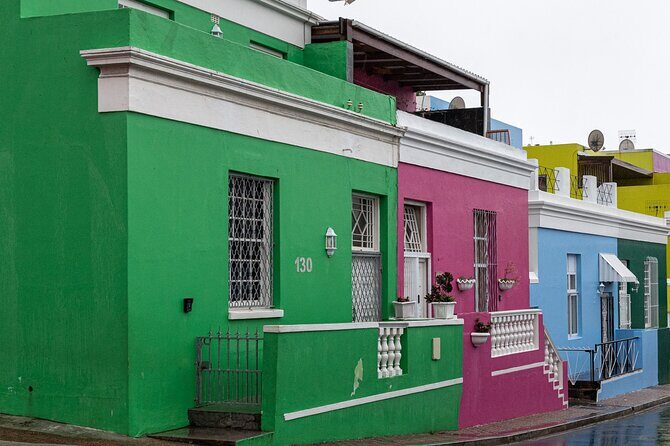
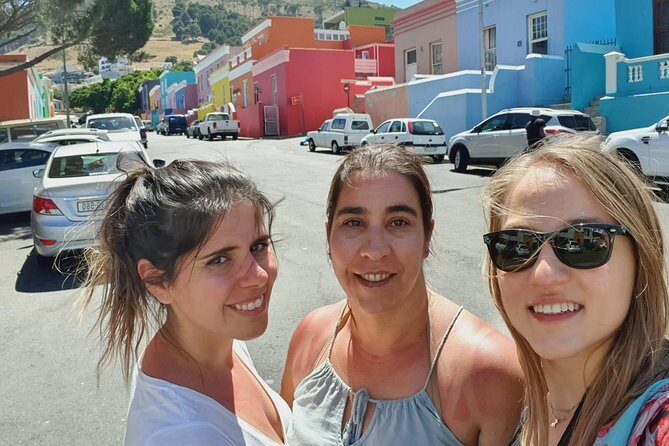
Next comes Bo-Kaap, with about 30 minutes. You’ll see the colorful houses and hear the story of the Malay Quarter—an identity chapter that’s very tied to Cape Town’s cultural mix.
This stop is free admission listed, and the pacing works because the tour gives you time to look, ask questions, and take photos without feeling like you’re being herded. Bo-Kaap is the kind of place where your guide’s context matters. Without it, it can turn into only a photo stop. With it, you start noticing what the neighborhood represents.
If you’re sensitive to sun and heat, this is a good area to slow down and plan short breaks. Take your time with the streets, not just the front-facing views.
Noon Day Gun: the day’s rhythm in one landmark
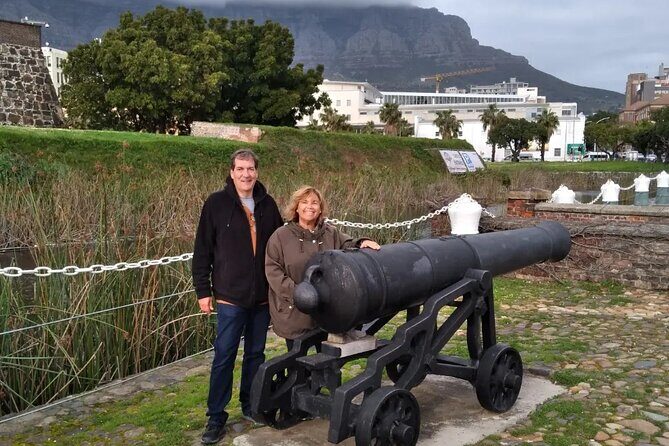
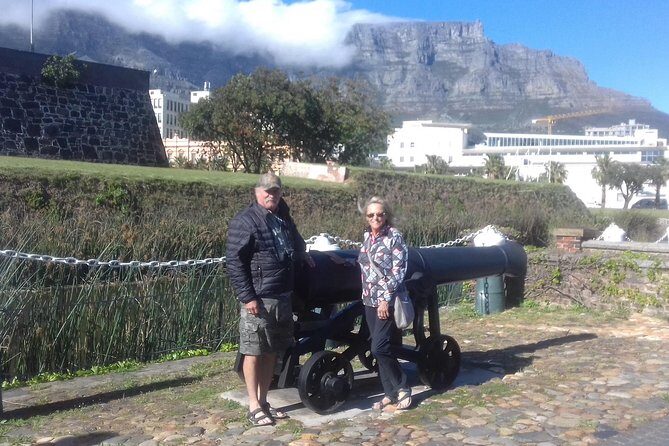
You then reach the Noon Day Gun, with a 30-minute focus on the history of the British cannons from 1806.
This stop is short, clear, and easy to understand. It’s one of those landmarks that helps you picture Cape Town as a working city with daily signals tied to military and civic timekeeping.
Even if you don’t care about cannon history, the guide can connect it back to the city’s wider story—how control and routine shaped the city’s physical layout.
Afrogem: behind-the-scenes jewelry making and a pendant to take home
The final stop is at Afrogem, and it’s one of the most interactive parts of the whole day. Your time is about 20 minutes, and admission is listed as free.
Here’s what the experience includes: you’re welcomed with drinks, then you get an educational session about African stones, followed by a behind-the-scenes factory tour. The visit ends in the showroom, where you can view gemstones, jewelry, and handcrafted South African curios. You’re also given a complimentary Africa pendant as a thank-you.
This is a strong value-add for people who want a shopping component that feels connected to craft, not just sales. It’s also a good last stop because it gives you something tangible at the end—something you can bring home without needing to hunt for stores.
Practical tip: if you’re not interested in buying jewelry, you can still enjoy the tour for the manufacturing and the educational part, then stop at the showroom only for browsing.
Price and logistics: what $202.01 per group really buys
The price is $202.01 per group for up to 4 people, for about 4 hours. That’s the key value equation: you’re paying for a private guide and vehicle time, not per person.
What you get as included: bottled water and an air-conditioned vehicle. You also have a mobile ticket, and pickup is offered. Many of the stops listed come with free admission tickets, so your sightseeing costs don’t balloon.
What’s not included: all fees and taxes, plus the one clearly called out item—District Six Museum admission. That means you should plan for that museum cost even if everything else looks free on paper.
In real terms, this tour is best when your group wants history plus structure, but you don’t want to spend your day figuring out logistics or juggling multiple tickets. It’s also a great choice if you’re short on time and want your questions answered in context.
One more thing I appreciate from the guide approach: this tour is designed to be flexible. Guides like Stuart are described as tailoring the day to what you want, even when that means swapping in a museum request. Another guide, Anesu, is praised for a mix of learning and humor—meaning the tone stays friendly even when the topic is heavy.
Who this Cape Town Private City Tour fits best
This one fits best if you want a guided orientation with real city stories and you like the idea of a private conversation. It’s also a solid pick for small groups—up to four—because the value is strongest when you share the cost.
It’s especially good for:
- First-timers who want the city’s key places in one morning
- People who appreciate history presented through actual buildings and neighborhoods
- Groups that want flexibility, not a fixed bus-tour pace
- Anyone who wants District Six to be more than a passing mention
The pace is manageable for most people, since it’s short stops with some walking. Still, you’ll be on your feet, so wear comfortable shoes and keep water handy.
Should you book? My practical take
Book this tour if you want a well-paced, private way to understand Cape Town’s long story without spending your day planning. The big win is the balance: fortress beginnings, civic symbolism, a meaningful District Six focus, then colorful neighborhood life and an interactive ending at Afrogem.
I’d skip (or consider another option) if you hate any walking at all, or if you specifically want a museum-heavy day where admission costs and longer stays are your priority. This tour is thoughtful, but it’s still a four-hour route with short stops.
If you’re aiming to get your bearings fast and learn why each place matters, this is a strong choice.
FAQ
What does the Cape Town Private City Tour cost?
It costs $202.01 per group, for up to 4 people.
How long is the tour?
The tour is about 4 hours.
Is pickup included?
Yes, pickup is offered.
Are tickets included?
Admission tickets are listed as free for many stops, but District Six Museum admission is not included. The experience also notes that all fees and taxes are not included.
How many people can join?
This is a private tour/activity. Only your group participates, with up to 4 people per group.
What time does the tour start?
The start time is 9:00 am.
Can I cancel for a refund?
Yes. You can cancel up to 24 hours in advance for a full refund. If you cancel less than 24 hours before the start time, the amount paid is not refunded.