REVIEW · MPUMALANGA
Full Day Safari Shared Tour at Kruger National Park
Book on Viator →Operated by Africa Spear Kruger Park Safaris · Bookable on Viator
Kruger starts early, and this tour is built for action. You’re on modified open safari vehicles in the morning light, with guides who know where wildlife is likely to show up, and who can call in sightings through radio contact.
What I like most is the guides living in the Kruger region and running safaris there for years. You also get the practical advantage of VHF radios on the vehicles, so your group isn’t just waiting and hoping.
The only real drawback to plan for is the long day, starting at 5:30 am, plus the extra KNP conservation fee that is not included in the tour price.
In This Review
- Key things to know before you go
- Entering Kruger National Park: What a Shared Safari Gets You
- The 5:30 am Start: Why It Matters in Kruger
- Open Safari Vehicles and VHF Radios: How You Improve Your Odds
- The Main Stop: Kruger National Park, Guided by Real Locals
- Big Five Chances in a Shared Day: What to Expect Realistically
- Price and Value: $132.75 Plus the KNP Conservation Fee
- What Happens During the Day: A Simple Flow You Can Plan Around
- Who This Safari Fits Best (And Who Might Prefer Something Else)
- Small Practical Tips That Make a Safari Day Easier
- Should You Book This Shared Kruger Safari?
- FAQ
- What time does the safari start?
- How long is the full-day safari?
- Is pickup included?
- How many people are on the tour at most?
- Is bottled water included?
- What is not included in the tour price?
- Is there a ticket included for admission?
- Do I get a mobile ticket?
- Is the tour refundable if I cancel?
Key things to know before you go
- 5:30 am start keeps you in the game-search window when animals are most active
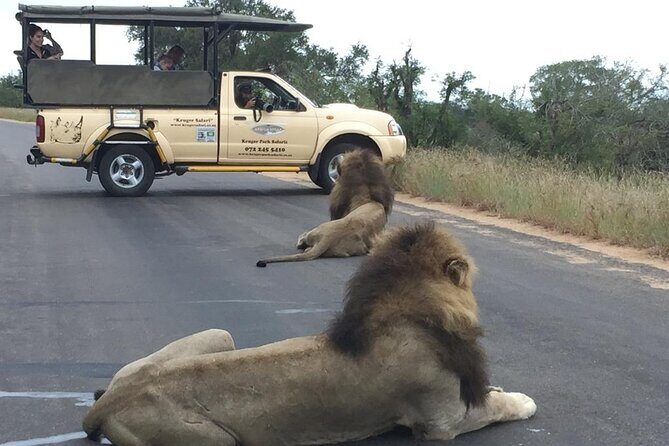
- Open safari vehicles are designed for strong viewing and photos
- VHF radio contact helps guides reach sightings faster
- Max 20 travelers keeps the group manageable for spotting and questions
- Bottled water included, but the KNP conservation fee is extra
- English-speaking, local guides with serious passion for the park
Entering Kruger National Park: What a Shared Safari Gets You
A full-day shared safari is a smart fit if you want the Kruger experience without overpaying for private transport and one-on-one guiding. The sweet spot here is the combination of a small group (up to 20) and professional local guides who spend their lives in the area.
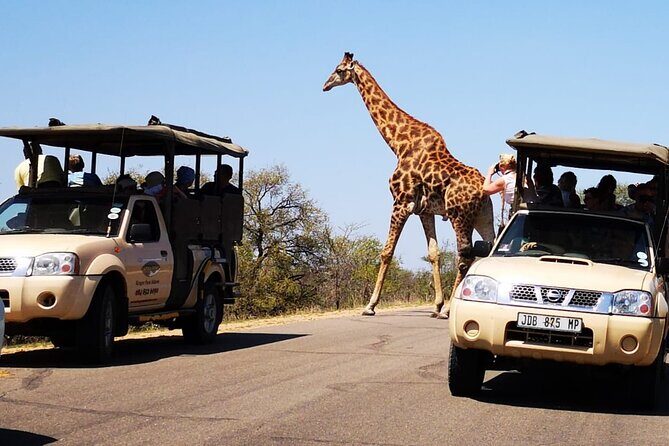
You also get a format that’s built for wildlife. This isn’t a slow “drive and see what happens” day. The vehicles are outfitted for game viewing, and the guides use real-time radio contact with other safari vehicles. That means you’re more likely to have a packed route of sightings rather than a long stretch of staring at empty bush.
A few more Mpumalanga tours and experiences worth a look
The 5:30 am Start: Why It Matters in Kruger
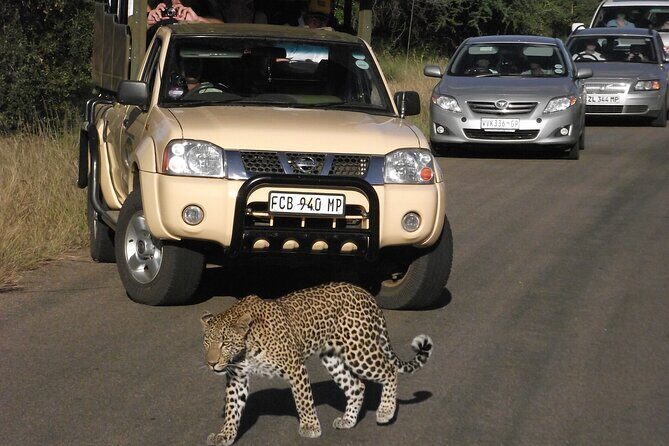
This tour begins at 5:30 am and runs about 10 hours total. That timing isn’t random. In Kruger, mornings often bring more movement: animals feed, cross paths, and settle into their day. Starting early also helps you get your first good sightings before the heat and crowds shift the rhythm.
It’s also worth noting that pickup is offered, and the meeting setup is near public transportation. Translation: you can usually coordinate easily depending on where you’re staying.
The trade-off is simple: you’ll want to be ready for an early wake-up. If you hate mornings, this tour won’t suddenly turn into a leisurely brunch outing.
Open Safari Vehicles and VHF Radios: How You Improve Your Odds
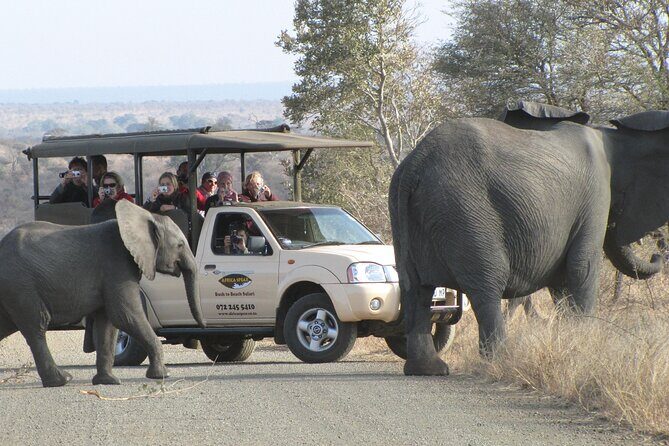
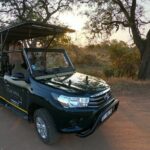
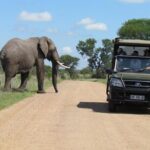
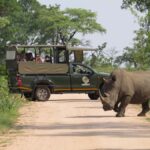
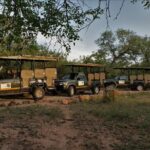
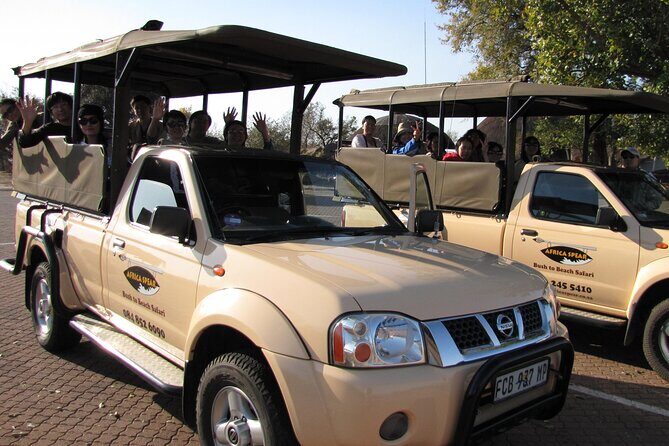
Your ride is an open safari vehicle, modified for comfort and for exceptional game viewing and photography. Open sides matter because you don’t lose sightlines to glass. It also makes it easier to raise a camera quickly when your guide spots motion.
Then there’s the gear that really changes how the day feels: VHF radios. Your guide is in constant radio contact with other open vehicles in the park. In practical terms, this is how the safari shifts from a generic circuit to a responsive hunt for the next sighting.
In the guide-style notes from past guests, it’s clear this “radio-and-reroute” approach can move a group fast. One guide was described as getting thrilled when lion chatter went out over the radios, and another used radio information to navigate a tough situation when a pride was nearby. That’s the kind of small operational advantage that adds up over 10 hours.
The Main Stop: Kruger National Park, Guided by Real Locals
This is a one-stop day—Kruger National Park—so the time is concentrated where it counts. And the guiding focus is broad: wildlife, birds, trees, and plants. The best part isn’t just seeing animals; it’s understanding what you’re looking at and why it matters in Kruger’s ecosystem.
The guides are described as qualified nature guides, fluent in English, neatly dressed, and living in the Kruger region. That local base matters. It’s one thing to have a good spotting eye. It’s another to know the park well enough to interpret behavior—where prey tends to move, how birds react, and what the vegetation is signaling about habitat.
Past guide examples highlight different strengths:
- Dave stood out for helping a group see multiple Big Five animals within a few hours and share what to look for along the way.
- Cole was noted for excitement when wildlife appeared suddenly and for turning around quickly to follow lion radio chatter.
- Lisa Schweppes was praised for careful, close viewing while handling a larger group near lions.
- Brandon earned credit for both excitement and deep animal detail tied to habits and patterns.
- Abrie Coetzer was singled out for answering questions patiently and even taking photos when a guest’s camera wasn’t cooperating.
- Johan and Irvine came up in notes for strong animal knowledge and smooth guiding over a multi-day rhythm.
- Million and Derrick were mentioned for reaching key animals and giving solid explanations without turning the day into a lecture.
You don’t need to memorize the names above. The takeaway for you is that the guiding standard here is consistently framed around finding wildlife and explaining it in a way that makes the park click.
Big Five Chances in a Shared Day: What to Expect Realistically
The experience is clearly marketed around a Big Five–style day, and multiple guide stories reference seeing Big Five animals within the day (or at least making big progress quickly). But Kruger wildlife is never a guaranteed checklist. If it was easy to control, everyone would do the same route and everyone would get the same animals.
What you can count on is the system: open vehicles, radios, and a guide who works the park actively rather than passively. A shared tour like this is also built to keep everyone productive at once. When a sighting hits, your group usually moves together, and your guide coordinates the viewing so you all get the chance to see what he’s found.
That’s also why the small cap of 20 travelers matters. With too many people, the viewing bottlenecks. With a manageable group, your guide can adjust position, answer questions, and still keep the vehicle moving efficiently.
A few more Mpumalanga tours and experiences worth a look
Price and Value: $132.75 Plus the KNP Conservation Fee
At $132.75 per person, this tour sits in a category that can be good value when you want a guided full-day safari without the cost of private guiding. You’re also getting bottled water included, which is one of those small but useful inclusions on a long morning.
However, you should plan for the KNP conservation fee (Kruger Park Entrance Fees) of R 486.00 (ZAR) per person, which is explicitly not included.
One detail that can be confusing: the experience notes an admission ticket as free, but still lists the conservation fee as extra. For your planning, treat the R 486 conservation fee as the additional amount you’ll need to budget for at the park level. The tour price alone may not be the full total you pay on the day.
If you’re comparing options, don’t just compare base price. Compare:
- What kind of vehicle you ride in (open vs enclosed)
- Whether your guide is actively managing sightings (radio contact is a big clue)
- Group size (because it affects how much you actually see)
- What’s included vs extra at the park
Also, the average booking window is about 5 days in advance, so if you want a specific date, don’t leave it to the last minute.
What Happens During the Day: A Simple Flow You Can Plan Around
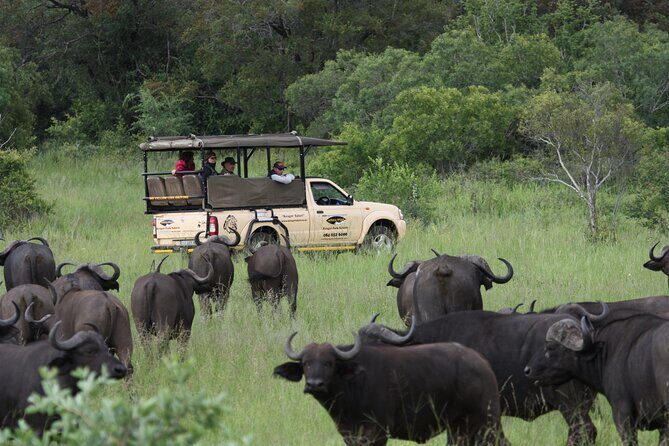
Since it’s a full-day safari with one main stop, the rhythm is straightforward. You leave in the early morning, spend the day game viewing in Kruger from the open vehicle, and then return to the meeting point at the end.
Your day also benefits from the operating details that are mentioned clearly:
- Pickup is offered
- You get a mobile ticket
- You receive confirmation at booking
- The vehicles are equipped for communication via VHF radios
- There’s a maximum of 20 travelers
In other words, you’re not guessing how things work. The structure is consistent: early start, guided wildlife search, and back to where you started.
Who This Safari Fits Best (And Who Might Prefer Something Else)
This tour fits best if you:
- Want a single full-day taste of Kruger without planning multiple days
- Prefer a guided day where the route responds to what the park is giving that morning
- Like the idea of English-speaking local guides focused on wildlife and habitat, not just driving
- Are comfortable with a shared group setting
It may feel less ideal if you want total control over the pace or you strongly dislike early mornings. Also, if you need a quieter, private experience with no group coordination, a shared tour can feel more structured than you’d like.
Small Practical Tips That Make a Safari Day Easier
You don’t need a safari wardrobe to enjoy this day, but you do need to be ready for real time outside for around 10 hours. I’d plan your day around comfort and quick access—especially because the vehicles are open and sightings can happen fast.
A few practical ideas:
- Wear layers you can adjust before the heat rises, since you start at 5:30 am
- Keep your mobile ticket handy since it’s part of your check-in
- Bring water refills beyond what’s provided if your habits run heavy (the tour includes bottled water, but you might be extra thirsty on a long day)
- Have camera settings ready in advance so you can move fast when the guide calls a sighting
Should You Book This Shared Kruger Safari?
If you’re deciding between doing Kruger on one day versus spending more time, I think this tour is a strong option. The biggest reasons are practical: open vehicle viewing, VHF radio guidance, and professional local guides who focus on animals, birds, and habitat, not random driving.
Book it if:
- You want your time optimized for wildlife sightings
- You’re okay with a shared group up to 20
- You can handle an early start
Don’t book it if:
- You need a late start or a slower pace
- You’re only interested in guaranteed animal checklists
- You’d rather pay for a private format where you control every minute
Bottom line: this is a well-structured day safari that prioritizes visibility, communication, and guiding quality. Add the extra KNP conservation fee to your budget, get yourself ready for a long morning, and you’ll be set up for a memorable Kruger day.
FAQ
What time does the safari start?
The tour start time is 5:30 am.
How long is the full-day safari?
It runs for about 10 hours.
Is pickup included?
Yes, pickup is offered.
How many people are on the tour at most?
The group size has a maximum of 20 travelers.
Is bottled water included?
Yes, bottled water is included.
What is not included in the tour price?
The KNP conservation fee (Kruger Park Entrance Fees) of R 486.00 (ZAR) per person is not included.
Is there a ticket included for admission?
The experience information lists an Admission Ticket as free, but the KNP conservation fee is still listed as not included.
Do I get a mobile ticket?
Yes, you’ll receive a mobile ticket.
Is the tour refundable if I cancel?
No. The experience is non-refundable and cannot be changed for any reason.