REVIEW · CAPE TOWN
Half-Day Rock-Climbing on Table Mountain
Book on Viator →Operated by Climb Table Mountain · Bookable on Viator
Table Mountain climbs feel like cheating gravity. This half-day trad route takes you above Cape Town’s streets or the Atlantic, usually after a cable car ride, then you rappel back down while the views stay front and center. I love the traditional climbing part, where the route has no bolts in the rock, and I love that your guide stays focused on calm, clear safety—something guides like Kai are known for with first-timers.
One possible drawback: this is physical. You’ll get the most out of it if you’re in strong physical shape and already comfortable with basic climbing movement (the tour does advise basic experience, even though many people have never done multi-pitch before).
In This Review
- Table Mountain Half-Day Climbing: The Key Things to Know
- Why This Half-Day Trad Climb on Table Mountain Feels So Big
- Start at the Table Mountain Aerial Cableway and Get Ready for a Short, Focused Day
- Cable Car Up: The Way They Set the Views Before You Ever Climb
- The Main Event: 3–4 Traditional Pitches on the Table Mountain Cliffs
- How the difficulty is handled
- What makes the rock time special
- Rappel Down: The Descent That Keeps the Day Thrilling
- Weather Can Change the Route Plan (And That’s Not a Failure)
- Gear and What You’ll Need to Bring (or Rent)
- Guide Quality Is the Difference Between Brave and Safe
- Who This Tour Is Best For (and Who Should Skip)
- Price and Value: What $173.16 Buys on a Half-Day Cliff
- Timing, Group Size, and How to Think About the Views
- Should You Book Half-Day Rock Climbing on Table Mountain?
- FAQ
- Where does this tour start and end?
- How long is the experience?
- How much does it cost?
- What climbing style is this?
- What will I climb (how many pitches and how tall)?
- Do I need previous climbing experience?
- Is there equipment provided?
- What personal gear is not included?
- What happens if the weather is bad?
Table Mountain Half-Day Climbing: The Key Things to Know
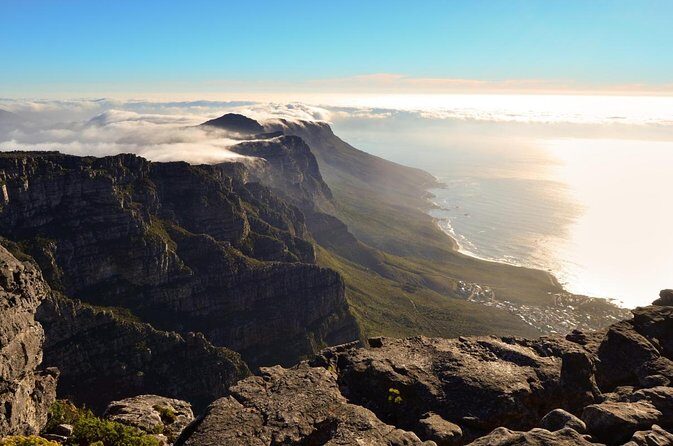
- Cable car up, rappel down: the day is paced for big scenery and real climbing time.
- Traditional (no bolts) pitches: you’ll place protection rather than clip into fixed hardware.
- 3–4 pitches, about 100m (300ft): long enough to feel like a real outing, not just a short taster.
- Grades adjusted to your level: you won’t get shoved into a route that doesn’t fit you.
- Ocean or city views depending on time of day: Camps Bay side or Cape Town center, both are mind-blowing.
- Usually private to your group: you won’t be mixing with random strangers during the climbing.
Why This Half-Day Trad Climb on Table Mountain Feels So Big
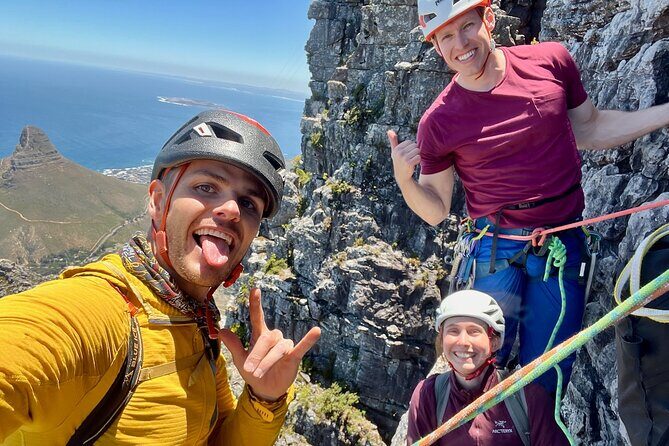
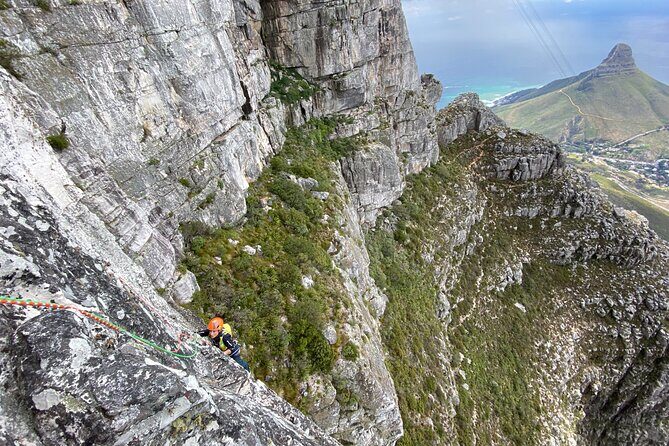
If you picture Table Mountain as a quick viewpoint, this tour flips the script. You’re not just looking at the mountain—you’re moving through it, pitch by pitch, with real rope systems and real exposure. That’s the whole magic: the cliffs make you pay attention, but you’re doing it with a professional guide who sets the pace and keeps you in safe hands.
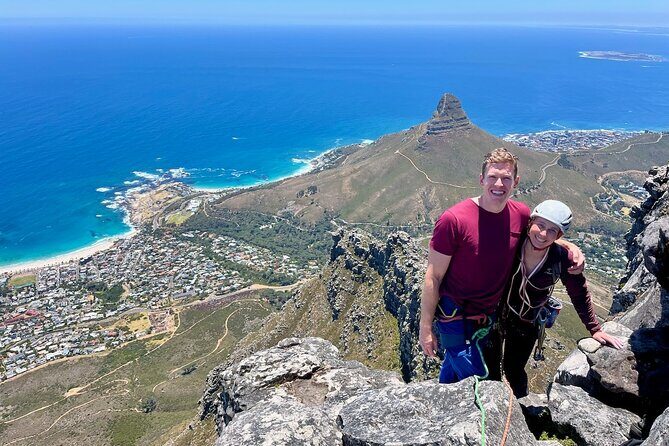
Two parts of the experience really stick with me from how it’s described. First, the setting: you can be climbing above the Atlantic Ocean near Camps Bay or above Cape Town city, depending on timing. Either way, you’re high enough that the city turns into patterns and the coastline turns into something you can feel. Second, the teaching style: guides such as Kai and Alex come through in the way they keep things steady when weather or route plans shift—and that matters a lot on a cliff.
A few more Cape Town tours and experiences worth a look



Start at the Table Mountain Aerial Cableway and Get Ready for a Short, Focused Day
Your meeting point is the Table Mountain Aerial Cableway area (5821 Tafelberg Rd, Table Mountain Nature Reserve). This is practical because it puts you right where the mountain day begins—no long taxi shuffle, no searching around a vague “hotel pickup” maze.
The tour runs about 5 hours, and the opening window listed is 7:30 AM to 2:00 PM. That short time block affects the whole plan. You won’t be strolling for hours; you’ll be suiting up, getting briefed, climbing, and then descending via abseil/rappel. If you like adventure that respects your schedule (and gets you back down while the day is still young), this is a good fit.
One more useful detail: the experience is set up for groups where you’ll participate with only your group. If you’re traveling with friends or want a more personal vibe, that’s a real advantage compared with bigger, mixed groups.
Cable Car Up: The Way They Set the Views Before You Ever Climb
Most days start with the cable car ride up. I like this approach because it instantly changes the day from hike-and-wait into something more streamlined. You get to the vertical world quickly, and you still have a chance to absorb where you are before you put your hands on the rock.
Even if the weather looks ordinary at the start, the climb can turn into a standout when you’re already above the city or ocean. The plan is designed so that the attractions below are in clear view while you’re climbing—so you get that full “I’m up here” feeling without having to stop and hunt for viewpoints.
Practical note: the “how” of the cable car cost isn’t spelled out in the included items list. The tour description says you’ll usually take it, so when you book, check what’s covered in your package versus what you pay separately.
The Main Event: 3–4 Traditional Pitches on the Table Mountain Cliffs
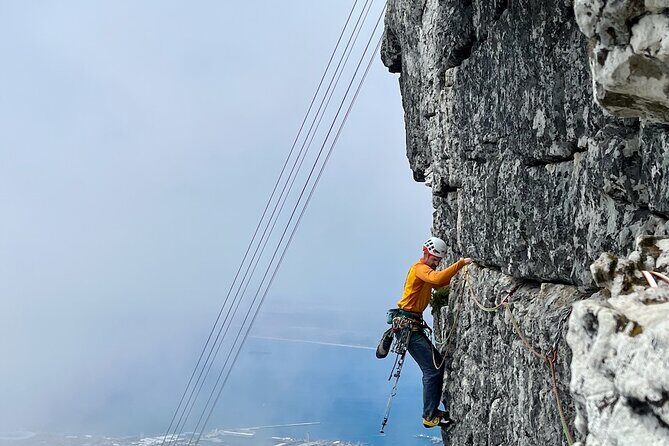
This is traditional climbing, meaning there are no bolts in the rock. Instead, you’re relying on protection placed as part of the climb. For first-time trad climbers, that can sound intimidating—but it also explains why the guide matters so much. You’re not just handed a rope and told to figure it out.
Expect 3–4 pitches, totaling about 100m / 300ft. That pitch count is a sweet spot. It’s long enough for variety—multiple climbing segments and real rope management—without turning into an all-day commitment.
How the difficulty is handled
The tour advises a basic level of rock-climbing experience, mainly so you don’t feel overwhelmed by the movement and rope basics. That said, many clients have never done a multi-pitch before, and grades are adjusted for each client.
What that means for you: you should plan to learn, not to perform. Your guide should match the route options to your comfort, then teach you the systems you’ll need as you go.



What makes the rock time special
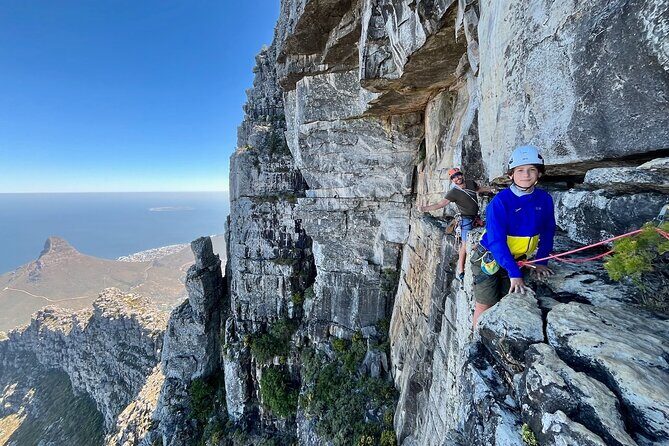
Climbing on Table Mountain is about more than the vertical meters. It’s the exposure. You’re out on the cliff with the city below or the ocean beside you, and that changes your brain. You focus on your next move, your next handhold, your breathing—and you also understand why people talk about this mountain as an iconic place to climb.
If you’re looking for a climbing day with both technical moments and huge emotional payoff, this is it.
Rappel Down: The Descent That Keeps the Day Thrilling
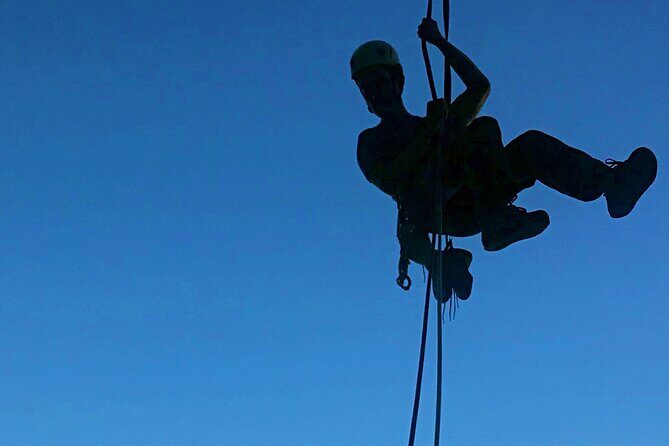
After the last pitch, the plan typically turns to abseil/rappel down the cliff. This is one of those parts where the tour’s design shines: instead of hiking down or spending hours transitioning, you’re descending in a way that keeps you connected to the adventure.
From a safety-and-comfort standpoint, rappel also gives you a clear structure. Your guide handles the system and you follow their instructions. The experience is built around professional supervision, and that shows up in how guides like Kai stayed calm and patient when plans needed adjusting.
The other reason rappel is such a good match for a half-day: it lets you finish strong. You don’t just run out of energy after climbing—you keep moving, still in the dramatic setting.
Weather Can Change the Route Plan (And That’s Not a Failure)
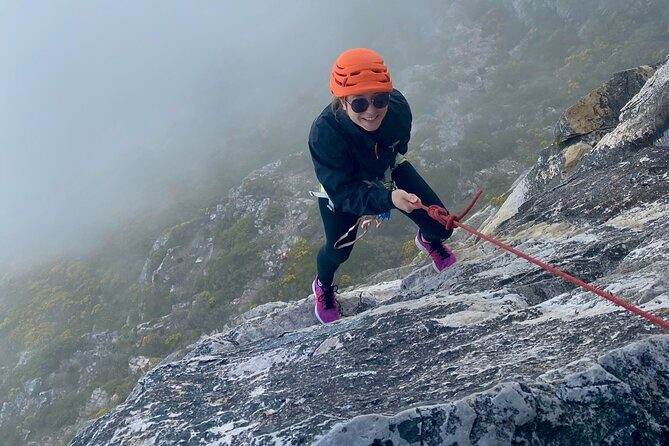
Table Mountain is famous for changing conditions. This activity is listed as requiring good weather, and if it’s canceled due to poor weather, you’ll be offered a different date or a full refund.
What I like about that approach is the fairness. You’re not paying for a sketchy day where conditions are too rough for safe climbing. And if plans shift because conditions aren’t ideal, that’s not a letdown—it’s part of operating responsibly.
In fact, one review detail that matters for your planning: Kai was willing to reschedule last minute when weather was bad so the group could get better climbing conditions. That tells you the guide isn’t just following a script. They’re protecting the value of your time.
Gear and What You’ll Need to Bring (or Rent)
Here’s the clean split:
Included: general climbing and safety equipment like ropes, rack, helmets, and similar gear.
Not included: personal climbing gear—specifically rock shoes, harness, and a belay device—which are rentable.
This is a big deal for your planning, because rock shoes and a harness are not optional for comfort or safety. If you forget them, you’ll rely on rental, which may affect how smoothly the morning starts. I’d treat this as one of the main “don’t mess around” checklist items before you arrive.
Also, because this is traditional climbing, proper gear fit matters more than usual. You’ll want your harness and shoe fit to feel secure and predictable when you’re focused on climbing and not re-adjusting straps.
Guide Quality Is the Difference Between Brave and Safe
You’ll be climbing with your own professional guide for the climb. That one sentence is doing a lot of work.
The reviews paint a clear pattern: guides like Kai and Alex were patient, calm, and instructional. When things didn’t go perfectly, the tone stayed steady. That’s exactly what you want when you’re learning multi-pitch systems or adapting to a changing plan.
For first-timers, what stands out is not just knowledge—it’s the way instruction is paced. If you’re newer to trad climbing, you need the guide to explain decisions and keep you from spiraling. A calm guide makes it easier to trust the rope system and actually enjoy the climb instead of thinking about what could go wrong.
Who This Tour Is Best For (and Who Should Skip)
This tour is a great fit if:
- you’re reasonably fit and comfortable with physical effort
- you have at least basic rock-climbing experience (even if multi-pitch is new)
- you want real climbing time in a stunning setting, not a sightseeing day with a quick demo
- you like being taught on the job and adjusting difficulty to your level
You might want to think twice if:
- you’re not confident with climbing movement or you expect a totally casual activity
- you’re uncomfortable with heights and exposure, since the views are part of the point here
- you’re traveling with tight timing constraints and weather doesn’t look promising
Because Table Mountain is weather dependent, it’s also wise to treat the schedule as flexible rather than guaranteed.
Price and Value: What $173.16 Buys on a Half-Day Cliff
At $173.16 per person for about 5 hours, you’re paying for more than a view. You’re paying for:
- a guided multi-pitch climbing experience on a real cliff
- safety systems and equipment like ropes and helmets provided by the tour
- access to a plan that usually includes cable car up and rappel down
- routes graded to your level, with instruction that supports beginners doing multi-pitch for the first time
What isn’t included helps you calculate your true total. Lunch, bottled water, and snacks are not included, and you’ll either bring or rent personal gear (rock shoes, harness, belay device).
So I see the value as high when you show up ready to climb. If you’re traveling light and need rentals anyway, you’ll want to budget time and money for that. If you already have climbing shoes and a harness (or have easy rental lined up), the package looks even stronger because most of the critical climbing kit is already handled.
Timing, Group Size, and How to Think About the Views
The tour has a tight day shape. Because it runs during the cableway’s listed opening times, your start time matters for what you see. Depending on the time of day, you’ll be climbing above Camps Bay/Atlantic Ocean or above Cape Town city center.
That’s a rare perk for an activity like this: the scenery isn’t just “there,” it changes with the plan. If you have a strong preference—ocean drama versus city drama—timing is the lever to pay attention to.
Also, because it’s set up as private to your group only, it should feel less hectic. You’re not competing for attention between strangers, and that tends to make instruction smoother.
Should You Book Half-Day Rock Climbing on Table Mountain?
I’d book it if you want a half-day adventure that feels like a real climbing outing, not a watered-down experience. The mix of traditional climbing with instruction, the rappel descent, and the huge ocean or city views makes this stand out as a serious way to experience Table Mountain.
I’d skip or rethink it if you’re short on physical confidence, you’re uncomfortable with heights, or you’re hoping for a purely relaxed tour. It’s still a guided activity, but it’s not passive.
If you do book, come ready: strong fitness, bring or arrange the personal gear you’ll need, and be flexible on the weather. When the conditions line up, this is exactly the kind of Cape Town day that makes your trip feel more memorable than another photo stop.
FAQ
Where does this tour start and end?
It starts at the Table Mountain Aerial Cableway (5821 Tafelberg Rd, Table Mountain, Nature Reserve, Cape Town) and ends back at the same meeting point.
How long is the experience?
It runs for about 5 hours.
How much does it cost?
The price listed is $173.16 per person.
What climbing style is this?
It’s traditional rock climbing, with no bolts in the rock.
What will I climb (how many pitches and how tall)?
You’ll climb about 3–4 pitches, totaling roughly 100m (300ft).
Do I need previous climbing experience?
A basic level of rock-climbing experience is advised. Many clients have never done multi-pitch before, and grades are adjusted for each client.
Is there equipment provided?
Yes. General climbing and safety equipment like ropes, rack, helmets, and similar gear are included.
What personal gear is not included?
You’ll need rock shoes, a harness, and a belay device. These can be rented.
What happens if the weather is bad?
The activity requires good weather. If it’s canceled due to poor weather, you’ll be offered a different date or a full refund.