REVIEW · JOHANNESBURG
5 Day Katekani Lodge Kruger National Park Safari
Book on Viator →Operated by Viva Safaris · Bookable on Viator
Five days can feel long on paper.
In real life, this Kruger-area safari moves fast: you’ll do open-vehicle game drives, guided bush walks, and night spotlighting, then unwind at Katekani Lodge. I like that the day is structured for wildlife time, not “sit and wait” time. I also like the lodge set-up and meal energy—especially the boma evenings.
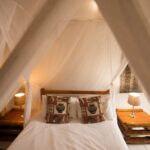
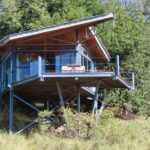
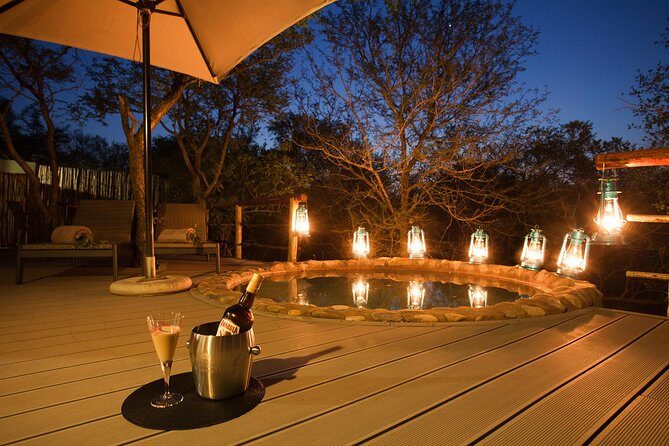
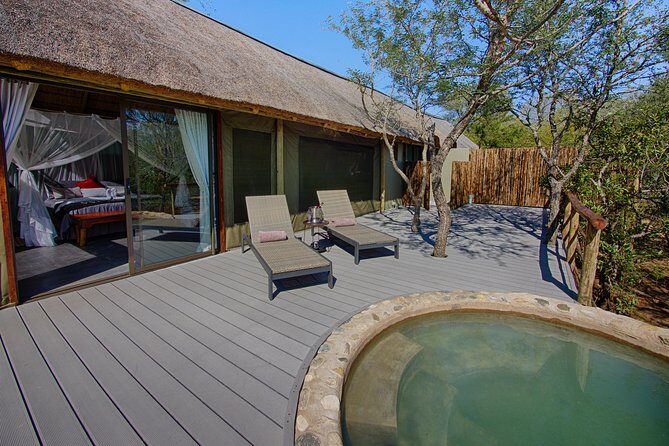
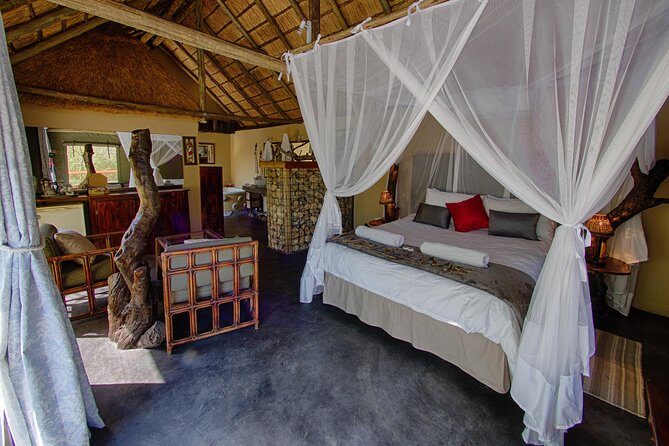
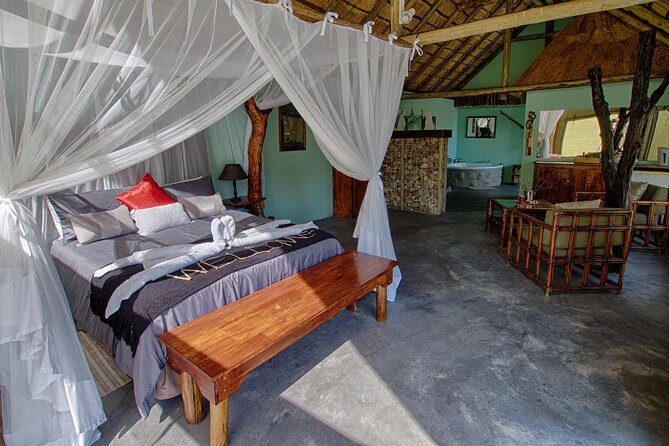
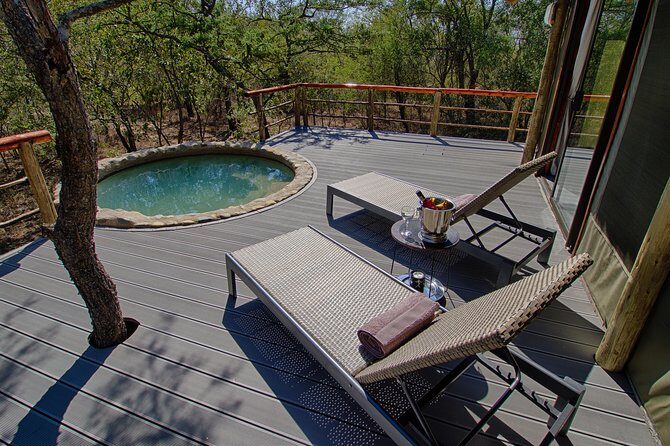
The other big win is the Katekani Lodge experience. The tented units are described as spacious and well put together, with perks like private outdoor features, plus a fire at the boma where you can relax after safari. The staff also earn strong praise, with names like Sean and Tiger showing up repeatedly for being welcoming and good at feeding people.
One possible drawback: don’t ignore the mixed lodge reviews. There are reports of run-down conditions, power cuts, and water that some guests said wasn’t safe to drink (with bottled water sold on top of that). Also, expect limited connectivity at camp, based on past feedback.
In This Review
- Key points to know before you go
- Kruger Safari With Tented-Lodge Comfort and Guided Wildlife Time
- Days 1–2 in Balule: Sunset Drive, Bush Walk, and a Real Safari Pace
- Day 1: Sunset drive, nocturnal spotlighting, and a bush BBQ
- Day 2: Sunrise bush walk by the Olifants River and a full afternoon drive
- Days 3–4 Inside Kruger: Orpen Gate, Long Game-Viewing Days, and Birding Time
- Day 3: From Orpen Gate to a full wildlife day
- Day 4: A second full day for better odds
- Katekani Lodge: Where the Staff and Meals Land Big (and Where Reviews Warn You)
- What’s strongly praised
- What to watch for
- Day 5: Balule Ranger Walk, Blyde River Canyon, and the Rondawels Stop
- Price and Inclusions: What Your Money Covers, and What It Might Not
- Small Group Size: Why Max 9 Matters for Your Safari Day
- Who This Safari Fits Best (and Who Might Want a Different Style)
- Should You Book the 5-Day Katekani Lodge Kruger Safari?
- FAQ
- How long is the safari?
- Where does the tour start and what’s the start time?
- What parks and reserves are included?
- Are park fees included in the price?
- What meals are included?
- Is lunch included every day?
- Do you get airport transfers?
- What about dietary needs like vegetarian meals?
- How big is the group?
- Is cancellation free?
Key points to know before you go
- Open-vehicle game drives and spotlighting help you spot animals at the times they’re most active
- Bush walks with armed rangers give a different view of the habitat, not just the animals
- Katekani Lodge tented comfort is a highlight, with strong praise for staff and meals
- Your day rhythm is wildlife-first, with two full days inside Kruger
- Drinks, lunches in Kruger, and water may cost extra depending on where/when you stop
- Connectivity can be limited, so treat this as a unplug plan
Kruger Safari With Tented-Lodge Comfort and Guided Wildlife Time
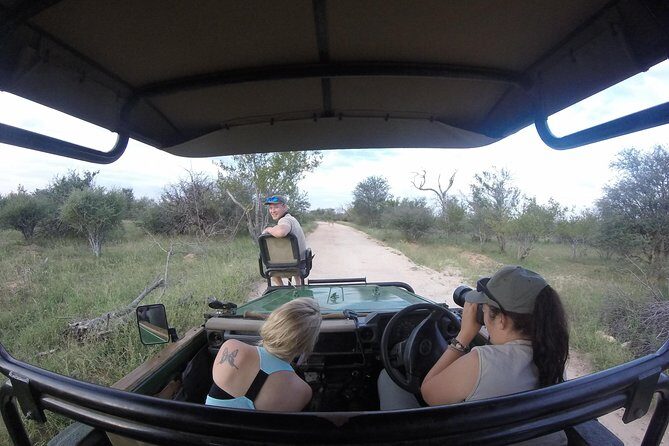
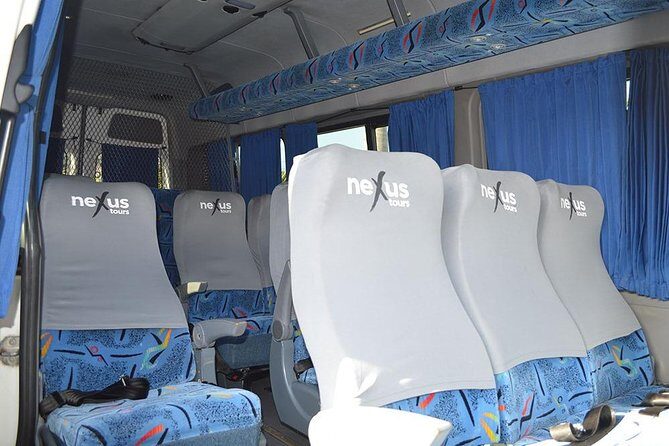
This kind of safari works when the logistics are handled for you. Here, you’re picked up in Johannesburg (or at O.R. Tambo) and transported by vehicle between parks, with park fees and activities folded into the price. That matters because Kruger-region driving eats hours, and you don’t want to spend them hunting for directions.
I also like that the wildlife program isn’t one-note. You get day game viewing, a sunrise bush walk on the Olifants River area, and at least one “after dark” push with spotlighting. Those are different skills: spotting at a drive is one thing, but walking forces you to read tracks, movement, and small signs.
That said, this is not a luxury “stay in one place” trip. It’s a guided route with transfers, early starts, and long park days. If you’re the type who gets cranky about early morning, you’ll need to mentally reset in advance.
A few more Johannesburg tours and experiences worth a look
Days 1–2 in Balule: Sunset Drive, Bush Walk, and a Real Safari Pace
Your safari kicks off by heading from the Johannesburg area toward the Kruger region. The first stop is Balule Game Reserve, a common choice for building early wildlife time without waiting for sunrise inside the big park.
Day 1: Sunset drive, nocturnal spotlighting, and a bush BBQ
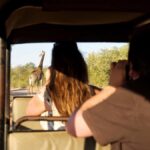
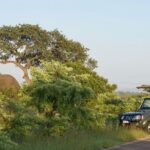
You’ll board an open Landcruiser for a 4-hour sunset drive. Open-vehicle time is where the safari magic often happens fast—your view lines are better, and the guide can point out behavior and clues you’d miss from a closed bus.
After dark, the plan shifts to spotlighting to look for nocturnal animals. Then you’ll have dinner at Marula Tree Boma, described as a bush BBQ, followed by more night-drive time.
Practical tip: dress for cold when it hits after sunset. Even in warm months, the Kruger area can chill quickly once the sun drops and you’re sitting still in an open vehicle.
Day 2: Sunrise bush walk by the Olifants River and a full afternoon drive
Day 2 starts early with a sunrise drive to the Olifants River area for a 4-hour bush walk. The walk is led by rangers, and the safari-style safety detail is clear: you’re with armed rangers. This matters because bush walking changes the risk picture, and the focus is on responsible guidance.
You’ll do brunch at Tremisana afterward, then you’ll switch gears into an afternoon game drive—still in Balule—before transferring to Katekani Lodge late evening.
What I like about the structure: you’re not just going from “hotel to lodge to Kruger.” You get multiple habitat perspectives in a short time window, which is where first-timers often feel like they’re seeing more variety.
Possible downside: if you’re sensitive to fatigue, day 1 and 2 are packed. You can’t treat this like a slow vacation.
Days 3–4 Inside Kruger: Orpen Gate, Long Game-Viewing Days, and Birding Time
The safari’s “big show” is the two full days in Kruger National Park.
A few more Johannesburg tours and experiences worth a look
Day 3: From Orpen Gate to a full wildlife day
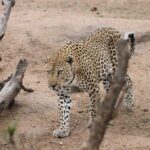
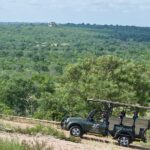
After breakfast, you’ll drive on an open game viewer to the ORPEN gate area and spend about 7 hours game viewing and bird watching. This is the part of the program that rewards patience. Kruger sightings often come in bursts: ten minutes of action, then a quiet stretch where your best move is to let the guide’s scanning work and keep your eyes relaxed.
Because your vehicle is open, you’ll also hear more—horns, calls, and movement that you might miss through glass. If birding matters to you, this day is set up for that because bird watching is explicitly part of the plan.
Day 4: A second full day for better odds
Day 4 repeats the same kind of full day inside Kruger: another 7 hours with game viewing from the park. The value of a second day is simple—you get a second chance at the same species and a better shot at the animals that only show up when conditions line up.
One small consideration: the itinerary doesn’t promise specific animals. In Kruger, the day’s sightings are weather-and-behavior dependent. Your best strategy is to bring a flexible mindset and pay attention when your guide slows down.
Katekani Lodge: Where the Staff and Meals Land Big (and Where Reviews Warn You)
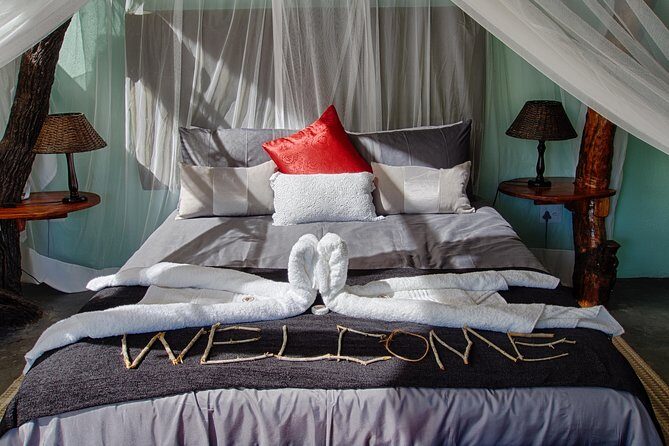
Your base for the middle and end of the safari is Katekani Lodge. This is the part you’ll return to after long days, so it affects your whole trip experience.
What’s strongly praised
Katekani’s tented lodges get consistently positive notes for being spacious and nicely furnished. There are also mentions of a boma fire as a relaxing evening stop after safari, and strong praise for food—specifically named as impressive by a guest who credits Tiger with meals. If you care about that “we did the hard part outside, now we get treated well inside” feeling, this lodge is set up for it.
There’s also feedback about staff being professional and accommodating. Sean and Tiger are the names that come up in reviews, and the overall theme is that the team tries hard to make the days run on time.
What to watch for
Not every review is rosy. One major negative report says the facility felt run down, with power off for a couple hours each night and water described as undrinkable, plus bottled water being charged. Another mentions lack of Wi‑Fi and limited phone communication with staff.
How to use this information wisely: don’t plan on constant charging, a reliable internet connection, or treating camp water as automatically safe. If you want a comfort buffer, bring a small stash of bottled water or water-purification tablets for personal use. Also, pack a headlamp or small torch for moving around at night, just in case.
Bottom line: if you’re mainly there for safari time and lodge comfort that supports rest, you’ll likely appreciate Katekani. If you need stable electricity and clean, guaranteed drinkable water on demand, consider reading the negative notes carefully and plan accordingly.
Day 5: Balule Ranger Walk, Blyde River Canyon, and the Rondawels Stop
Your last morning returns to Balule Nature Reserve for a short walk with an armed ranger. It’s about 1 hour, which is a nice way to end on foot without exhausting you before the drive back.
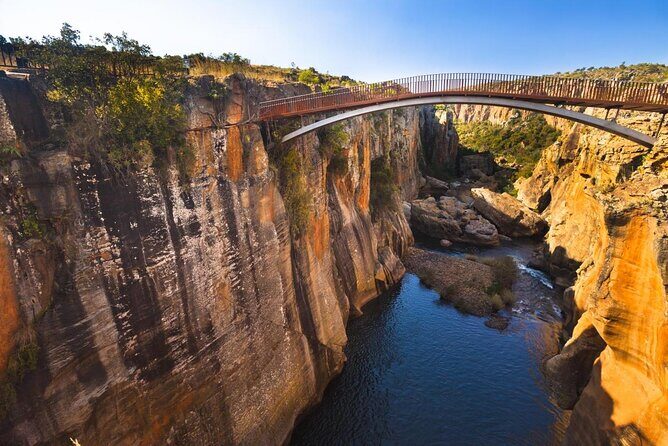
Then you shift from wildlife into scenery: you travel to the Blyde River Canyon Nature Reserve with a stop at the Three Rondawels. After breakfast and this road trip block, you’ll return to Johannesburg and surrounds around 17:00, with airport drop-off by arrangement.
This day has a different feel. You’re trading animal time for views. That can be a relief if you’re ready to swap binoculars for photo stops.
Practical tip: pack sunscreen and a light layer. Canyon weather changes fast, and you’ll likely be standing and walking at viewpoints.
Price and Inclusions: What Your Money Covers, and What It Might Not
At around $1,500.39 per person for the 5-day experience, the main value is that many of the expensive line items are bundled:
- 4 nights of accommodation
- All transportation to/from the airport and within parks
- National park fees and entrance fees
- Meals and activities matched to the itinerary
What often trips people up is the extras layer. Drinks aren’t included. Also, lunch isn’t included on transfer days and on Kruger days—you’ll stop at places where lunch can be purchased. Plan for that in your budget.
And water: because one review specifically describes issues, I’d treat this as a “don’t assume” situation. Even if your water experience is fine, it’s smart to carry a reusable bottle and buy water when advised.
So is it good value? For a guided, small-group safari (max 9 travelers) with two full Kruger days plus walking and night driving, the inclusions help justify the price. You’re paying for time in the field and someone handling the route and gates.
Small Group Size: Why Max 9 Matters for Your Safari Day
A group limit of 9 travelers is one of those details that quietly changes the experience. Fewer people means:
- easier vehicle positioning during sightings
- better communication with your guide
- less waiting while everyone reorganizes
It’s not just comfort. In wildlife terms, every minute counts. If the group is large, you spend more time on logistics than on the action.
Who This Safari Fits Best (and Who Might Want a Different Style)
This tour is a strong fit if you:
- want a guided first-timer Kruger plan with clear pacing
- like a mix of driving and walking, including armed-ranger bush walks
- prefer a small group over crowded big buses
- care about lodge comfort and good meals after long park days
It might be less ideal if you:
- need reliable Wi‑Fi and constant power at the lodge
- are strict about being able to drink camp water without question
- hate early mornings and long drive days
If your goal is pure downtime, this route won’t feel like that. If your goal is wildlife time plus solid rest, it can be a great match.
Should You Book the 5-Day Katekani Lodge Kruger Safari?
My take: I’d book it if you’re prioritizing guided wildlife time and you’re okay treating Katekani Lodge as a place to rest well between park days. The positive lodge feedback—spacious tented units, strong staff, and standout meals—supports that.
But I would book with eyes open. The negative report about power interruptions and water safety is serious enough that you should plan around it. If those issues would ruin your comfort level, consider another lodge option in the Kruger region.
If you want one simple rule: assume you’re paying for game drives, bush walks, and two full Kruger days. Confirm what you need for drinks, lunches in Kruger, and water handling at camp before you go.
FAQ
How long is the safari?
It’s a 5-day safari experience.
Where does the tour start and what’s the start time?
Start time is 9:30 am, with pickup offered from Johannesburg locations or O.R. Tambo Airport.
What parks and reserves are included?
You’ll spend time in Balule Game Reserve, Kruger National Park, and Balule Nature Reserve, plus a sightseeing stop at Blyde River Canyon with the Three Rondawels.
Are park fees included in the price?
Yes. National park fees and entrance fees are included.
What meals are included?
Breakfast and dinner are included each day noted in the itinerary, and lunch is included on the days specified as lunch included. Drinks are not included.
Is lunch included every day?
Lunch is not included on transfer days and days in Kruger. You’ll stop at places where lunch can be purchased.
Do you get airport transfers?
Yes. Hotel and/or airport pickup and drop-off are included, with airport drop-off by arrangement on the final day.
What about dietary needs like vegetarian meals?
A vegetarian option is available if you advise at booking.
How big is the group?
The maximum group size is 9 travelers.
Is cancellation free?
Yes. You can cancel for a full refund up to 24 hours before the experience’s start time.