REVIEW · KRUGER NATIONAL PARK
90-minute Elephant Watching Experience in Hoedspruit
Book on Viator →Operated by Elephant Moments · Bookable on Viator
Elephants greet you before breakfast. This 90-minute Elephant Moments experience in Hoedspruit gives you a close, human-scale way to understand the Jabulani Herd and how dedicated carers help rescued elephants thrive in a semi-wild setting. I like that it stays respectful by building in real distance and controlled introductions, while still letting you experience the herd’s personalities up close.
What I also like is the practical education you get during the visit, not just a quick look. You start with coffee and tea plus biscuits, then you spend the morning watching bulls behind a low partition as carers explain what you’re seeing and why it matters. One thing to plan for: you’ll need solid transport to and from the Jabulani stables because this is not right inside the main game-drive flow.
In This Review
- Key things I’d prioritize before you go
- Entering the day at 6:30 a.m. in Kapama
- Jabulani Herd and HERD: rescue stories with a living mission
- The 90 minutes at the Jabulani stables: what happens in order
- Feeding and close contact—how the low partition changes the vibe
- The education isn’t abstract: you learn what you’re seeing
- Carers, coffee, and the small comforts that make it feel humane
- Souvenirs and giving back via the HERD Trust
- Price and value: is $76.19 a good use of your time?
- Getting there from Hoedspruit: plan for the distance and the early start
- Who this experience suits best
- Should you book Elephant Moments in Kapama?
- FAQ
- What time does the Elephant Moments experience start?
- How long is the experience?
- Where does the experience take place?
- How many people are in a group?
- Is there food included?
- Will I meet elephants during the tour?
- What do I need to bring?
- What is the cancellation policy?
Key things I’d prioritize before you go
- A small group (up to 20): more time to ask questions and watch calmly, not crowd-walk.
- Early 6:30 a.m. timing: cooler temps and that quiet morning energy.
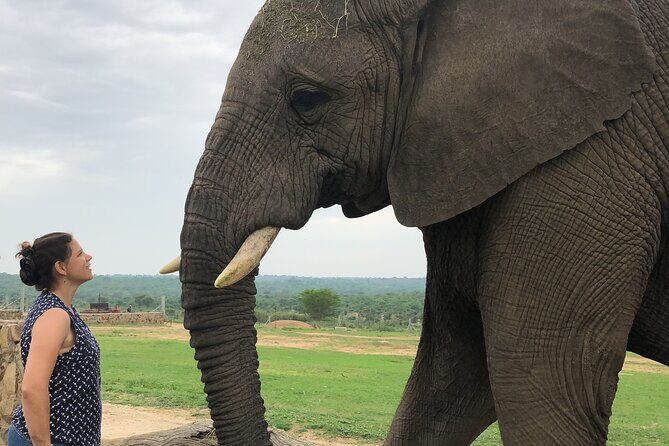
- Semi-wild HERD setup: the herd can browse, swim, and play in the bush rather than performing.
- Low partition introductions: bulls stay in view while keeping a respectful buffer from visitors.
- You get education plus interaction: it’s not only seeing; it’s learning as you meet.
- Your money supports the HERD Trust: souvenir purchases also help.
Entering the day at 6:30 a.m. in Kapama
Elephant watching is always better when the day is still young. The 6:30 a.m. start at Elephant Moments means you’re there while the reserve feels calm and the herd is already active enough to show genuine behaviors. You’re also less likely to feel rushed, because the experience is scheduled as a focused 90-minute block at the Jabulani stables.
Kapama Private Game Reserve sits in the Greater Kruger ecosystem, and the whole point of doing this at the stables is to trade long, unpredictable drives for something structured and personal. You’re not waiting around in a vehicle hoping the herd appears. Instead, you come when the carers are ready and the Jabulani elephants are set for introductions.
You can also read our reviews of more tours and experiences in Kruger National Park.
Jabulani Herd and HERD: rescue stories with a living mission
This experience centers on the Jabulani Herd, a tight-knit group shaped by rescue and survival. The background matters because it changes how you see the elephants once you’re standing nearby. These elephants have been brought into a safe place through Hoedspruit Elephant Rehabilitation and Development (HERD), which supports their wellbeing in a semi-wild environment.
What makes the Jabulani story especially meaningful is the herd’s history of accepting orphaned calves. The experience notes that this kind of unconditional acceptance is rarely seen in wild herds. That’s a big deal, because it turns the usual elephant narrative on its head. Instead of only focusing on conflict and tragedy, you’re also witnessing care, stability, and family behavior that carers have helped make possible.
And HERD isn’t only about keeping elephants alive. It’s about letting them live with enough freedom to browse, swim, and play in the bush of the Kapama Reserve. When you understand that the goal is wellbeing in a semi-natural setting, the whole visit feels more grounded than a simple attraction.
The 90 minutes at the Jabulani stables: what happens in order
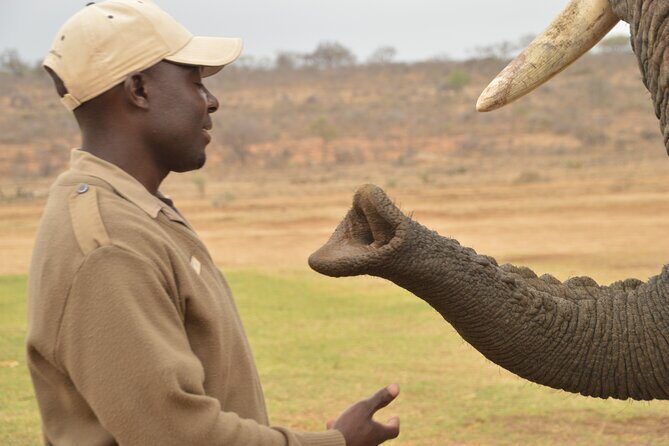
The experience takes place at the Jabulani herd stables, and it runs for about 1 hour 30 minutes. The pacing is designed so you’re not dropped into a chaotic scene. You arrive, settle in, and get your first moments with coffee, tea, and biscuits. Those little touches matter because early starts can make people cranky, and the snack gives you time to slow down and pay attention.
Next comes the introductions. The elephants you meet are part of the Jabulani herd and represent the wider group. You’ll meet the herd subset at the stables, and then the herd continues with foraging during their day in the Kapama Private Reserve after your experience.
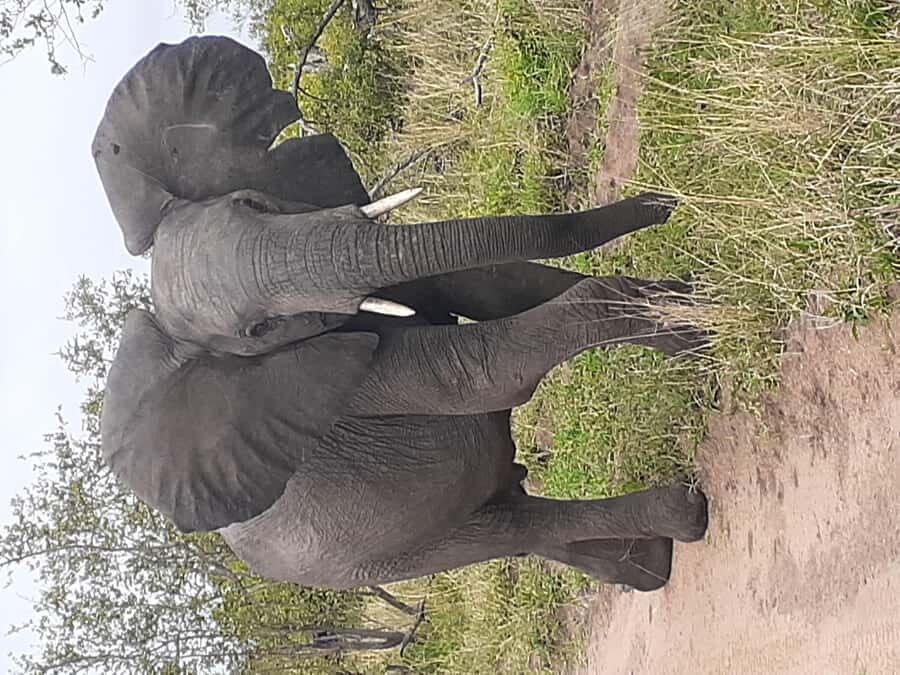
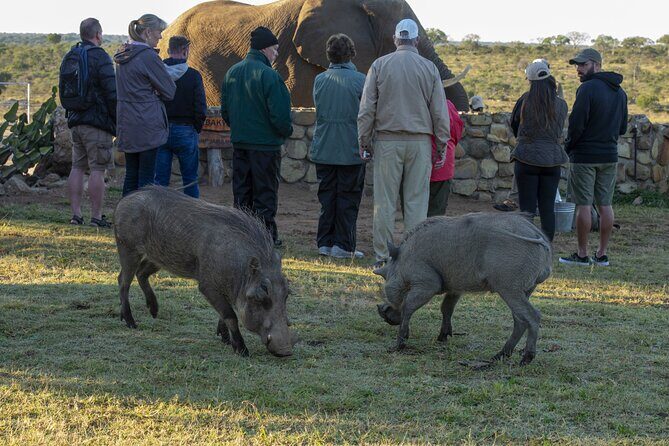
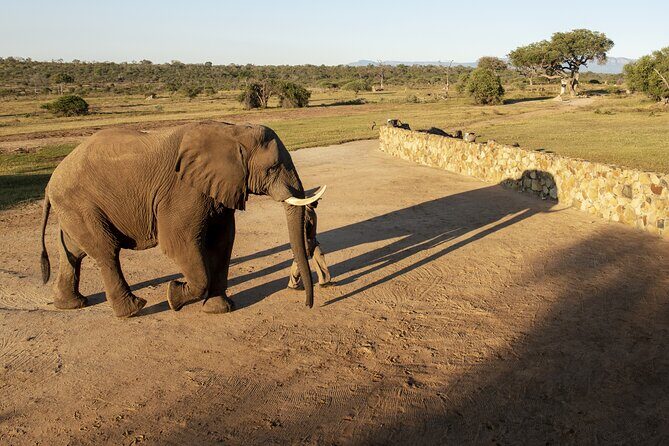
A key detail: there will be between two to three elephant bulls introduced during your visit. They stay behind a low partition, which keeps the interaction controlled and respectful. This is not a free-for-all “everyone rush the fence” setup. You’re meant to watch and learn, not to test boundaries.
Finally, the visit ends back at the meeting point. If you want to extend the feeling, there’s also a gift shop after the experience where you can purchase a souvenir, and proceeds go to the HERD Trust.
Feeding and close contact—how the low partition changes the vibe
Close elephant experiences can go two ways: either they feel respectful and controlled, or they feel like a risky performance. This setup leans strongly toward the respectful side.
During your visit, the bulls remain behind a low partition to create a respectful distance between visitors and the elephants. That single design choice helps your brain relax. You can focus on reading the elephants’ body language rather than worrying about crowding or unpredictable movement.
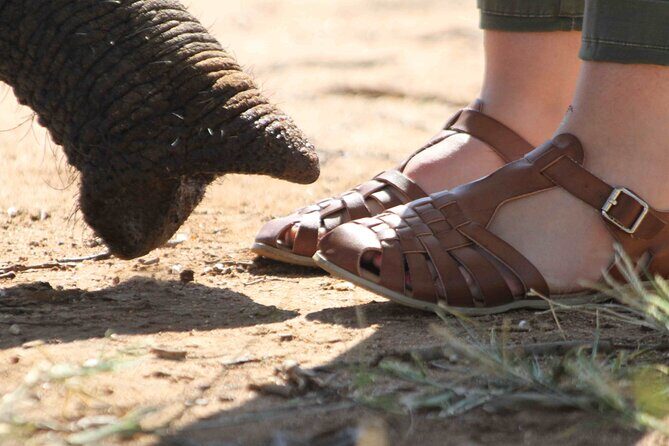
You also get the chance to feed and interact as part of the experience. The idea isn’t to treat elephants like pets. Carers guide the interaction so you’re engaging in a way that fits the herd’s routine and safety needs. When feeding is done calmly and with clear supervision, it becomes educational in a real way. You start noticing how elephants approach food, how they use their trunks, and how their attention shifts between carers and visitors.
One practical note: even with a partition, this is still an animal encounter in the bush. Keep your energy low-key, follow instructions, and avoid sudden gestures. The goal is to let the elephants stay comfortable, because that’s when their personalities show.
The education isn’t abstract: you learn what you’re seeing
The experience is built around learning about elephants and their importance as a keystone species in the ecosystem. That matters because elephants aren’t only big and impressive. They help shape their environments in ways that ripple outward, from vegetation patterns to habitat structure.
You’ll also learn about the human-elephant conflict that continues to threaten elephants as a species. In a place like Kruger and its neighboring reserves, that conflict isn’t just a headline. Understanding it gives context to why protected environments and rehabilitation programs like HERD exist.
The Jabulani herd’s behavior is part of the teaching too. Since they’re a tight-knit herd and accept orphaned calves, you’re not only learning biology—you’re seeing how social bonds work in a semi-wild environment. Watching the herd browse and play helps you understand that these are not static animals in a pen. They have daily rhythms, preferences, and social dynamics.
Carers, coffee, and the small comforts that make it feel humane
The itinerary includes complimentary coffee and tea with biscuits upon arrival, and you can enjoy them until the end of the experience. That’s not just a nice perk. It signals that the visit is paced for people to settle in and actually take in information.
Another subtle benefit of a capped group size (maximum 20 travelers) is that carers can manage the experience without turning it into a conveyor belt. You’re more likely to get your questions answered and to notice details like how introductions are handled and how the partition keeps the environment calm.
I also like that the experience focuses on carers and the herd’s wellbeing. When carers explain what you’re seeing, you’re more likely to leave with specific takeaways you can remember later, like the herd’s social structure and why semi-wild conditions matter.
Souvenirs and giving back via the HERD Trust
After your Elephant Moments experience, you can visit the gift shop to purchase a souvenir. The proceeds go toward the HERD Trust, which is part of what makes this feel less like a one-time ticket and more like support for ongoing rescue and rehabilitation work.
If you’re trying to decide what to buy, I’d treat it like a contribution you can point to later. You’re putting money back into the mission that made the experience possible, rather than spending only on the memory.
Price and value: is $76.19 a good use of your time?
At $76.19 per person, this is not a bargain-basement activity. But it also isn’t priced like a high-end safari add-on that tries to justify itself with big-name branding.
Here’s where the value comes from. You’re paying for:
- A focused 90-minute encounter rather than an all-morning vehicle search
- A small group experience that stays manageable (up to 20)
- A structured introduction that includes respectful close interaction and feeding
- Coffee, tea, and biscuits
- Education tied to rescue, rehabilitation, and elephant ecology
- Direct support through the HERD Trust (including souvenir proceeds)
If you only have a short window in the Hoedspruit area, this kind of scheduled experience can actually be better value than a “maybe we see something” plan. You trade some spontaneity for certainty and a strong educational framework.
If your budget is tight, weigh this against other animal experiences in the region. But if you want elephants with context, not only spectacle, the price starts to feel reasonable.
Getting there from Hoedspruit: plan for the distance and the early start
The biggest “day-of” consideration here is getting to Elephant Moments Jabulani, Kapama Private Game Reserve. The start time is 6:30 a.m., so you’ll want transportation that’s ready before sunrise routines get messy.
One review-style reality check you should take seriously: the location can be distant from the main gate, so don’t assume you can wing it at the last minute. If you’re staying in Hoedspruit, arrange a ride ahead of time with a schedule you can trust. If you’re staying on a nearby wildlife estate, confirm the pickup plan with your hosts so you’re not hunting for the right route at dawn.
Also, remember this is a mobile ticket experience. Bring your phone (charged) and access to the ticket on arrival.
Who this experience suits best
I’d recommend this for you if:
- You want a close elephant encounter with supervision and respectful boundaries
- You care about rescue and rehabilitation work, not just animal viewing
- You like structured experiences with real education in the middle
- You’re traveling with limited time and want a morning activity that delivers
It’s also a great fit if you don’t want to spend all your energy on long drives waiting for elephants to appear. The stables experience is designed to bring you to the elephants, rather than forcing you to gamble on sightings.
Should you book Elephant Moments in Kapama?
Book it if you want early-morning elephants with context, calm pacing, and a real mission behind the visit. The mix of respectful close interaction, guided learning, and a semi-wild rehabilitation setting makes this feel meaningful, not just exciting.
Skip or reconsider if you already have your heart set on traditional open-vehicle game drives and don’t want early starts or scheduled timetables. Also think hard about transport. If getting to the meeting point is going to be stressful, that stress can drain the experience before it even begins.
If you can handle dawn timing and you care about elephants beyond the wow factor, this is one of the clearer “worth it” elephant experiences in the Hoedspruit/Kapama orbit.
FAQ
What time does the Elephant Moments experience start?
It starts at 6:30 a.m.
How long is the experience?
The duration is about 1 hour 30 minutes.
Where does the experience take place?
It takes place at the Jabulani herd stables in Kapama Private Game Reserve, near Hoedspruit.
How many people are in a group?
The experience has a maximum of 20 travelers.
Is there food included?
Coffee and tea with biscuits are provided upon arrival and are available until the end of the experience.
Will I meet elephants during the tour?
Yes. You’ll be introduced to a few elephants from the Jabulani herd, with between two to three elephant bulls introduced behind a low partition.
What do I need to bring?
You’ll receive a mobile ticket. Bring your phone and make sure you can access the ticket at the meeting point.
What is the cancellation policy?
You can cancel for free up to 24 hours in advance for a full refund. If it’s canceled due to poor weather, you’ll be offered a different date or a full refund.