REVIEW · CAPE TOWN
Cape Town: 2-Day Wildlife Tour with Safaris and Luxury Stay
Book on GetYourGuide →Operated by Hotspots2c Tours · Bookable on GetYourGuide
Early starts turn into big-game surprises. This 2-day safari blends 4×4 wildlife drives with a luxury tented lodge night, all while you rack up serious road miles through the Western Cape. I like that it’s built around two different safari-style experiences: one in Botlierskop, then a bush drive from Buffelsdrift, so you’re not repeating the same drive twice.
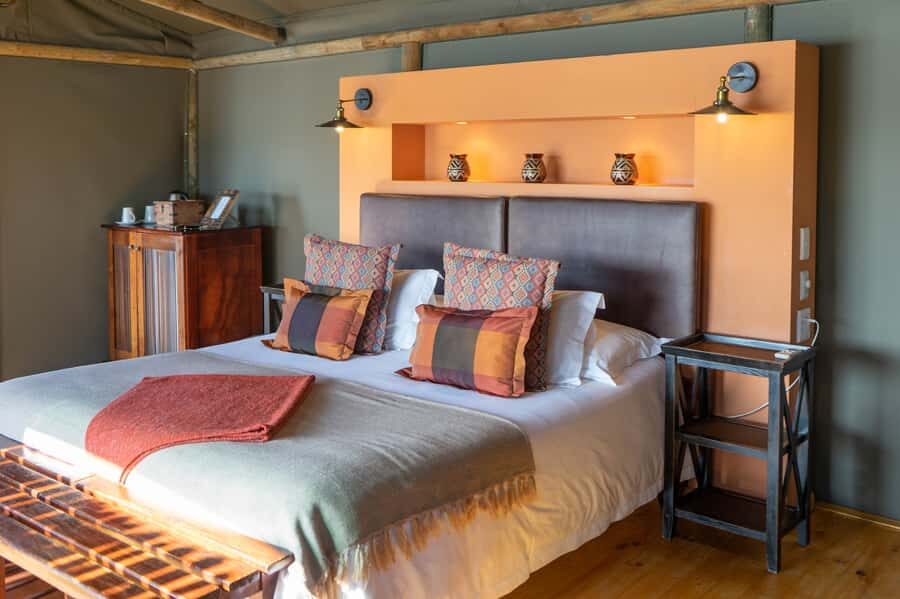
Two things I really liked: first, the chance to scan for several Big Five animals from open vehicles with a ranger’s help, and second, the sleeping setup at Buffelsdrift—canvas luxury with real comforts like a claw-footed bath and an outdoor shower.
One consideration: it’s fast-paced. You’ll do long driving days (roughly 4–6 hours to Oudtshoorn on Day 1 and about 6 hours back on Day 2, not counting safari time), and wildlife sightings aren’t guaranteed—leopards especially are unlikely because they’re nocturnal and not easily seen in these conditions.
In This Review
- Key highlights to know before you go
- Cape Town to Botlierskop: your morning drive into malaria-free game reserve country
- Botlierskop 4×4 safari: what Big Five searching really feels like
- Buffelsdrift luxury night near Oudtshoorn (and what you actually sleep in)
- Buffelsdrift Day 2 bush drive: look longer, spot more, learn more
- Optional elephant observation in the Cango Valley: extra cost, close-up moments
- Route 62 back to Cape Town: scenic driving with time for quirky stops
- Price and logistics: is $534 per person good value?
- Who this tour suits (and who should skip it)
- Practical tips to make the most of your two safari days
- Should you book this Cape Town wildlife safari with a luxury stay?
- FAQ
- What time does the tour usually start on Day 1?
- How long are the drives between Cape Town/Stellenbosch and Oudtshoorn?
- What wildlife safari activities are included?
- Is elephant observation included?
- What type of accommodation is included for the night?
- What are the minimum age rules?
- Can you cancel for a refund?
Key highlights to know before you go
- Small group size (max 13) keeps the experience more personal on the drives.
- Botlierskop game drive happens in a malaria-free, wildlife-rich private reserve with lots of bird life.
- Luxury canvas tents at Buffelsdrift mean you’re not sacrificing comfort between safaris.
- Two different 4×4 experiences: a coastal reserve drive plus a Klein Karoo bush drive for different sightings.
- Optional elephant observation in the Cango Valley is extra, but it can be very close-up.
- Route 62 road-trip return gives you scenic mountain and Karoo-plains driving time with quirky stops.
Cape Town to Botlierskop: your morning drive into malaria-free game reserve country
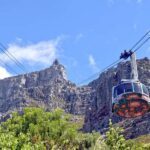
Your day starts early, typically with pickup in Cape Town or Stellenbosch between 6am and 7am. You’ll trade the Table Mountain skyline for the lush Garden Route region as you head toward Oudtshoorn. The drive is about 450 km, usually 4 to 6 hours, and it matters because it sets the tone: this isn’t a slow, stay-put nature weekend. It’s a focused wildlife sprint.
Once you reach Botlierskop private game reserve (about 3,500 hectares), you’re in a malaria-free area, which is part of why this style of trip works smoothly for many visitors. You’ll also feel the change in terrain right away. Botlierskop covers the coastal Renosterveldt region, a habitat that supports a lot more than the big animals—think smaller wildlife, plants, and insects that a good ranger can point out while you scan the bush.
There’s also a very practical rhythm here: drive, safari, then settle in for the night. If you want wildlife plus a real night’s sleep with comfort, this itinerary is designed for that.
A few more Cape Town tours and experiences worth a look

Botlierskop 4×4 safari: what Big Five searching really feels like
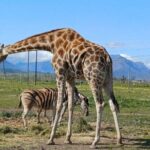
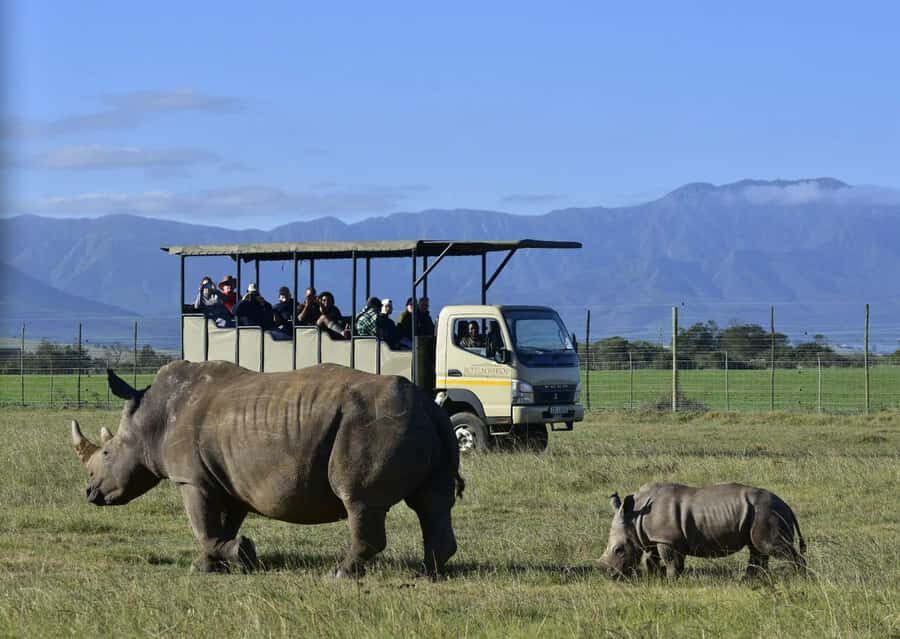
You’ll take a shared 4×4 game drive from Botlierskop, running about two hours. The reserve is described as home to four of the Big Five, plus animals like giraffes and zebras, wildebeest, and more than 200 bird species. That bird number sounds like a detail, but it actually hints at what your ranger will do for you: in reserves like this, you’re not just driving for a single species—you’re learning how the ecosystem works.
I like the open-vehicle setup for scanning. You’ll be in an open-top style 4×4, and that gives you better sightlines when animals pop into view from the grass or along waterholes. You’ll also get ranger guidance in the Renosterveldt, which is a nice counterbalance to the big-animal pressure. It turns the drive into something you can learn from, not just something you rush through.
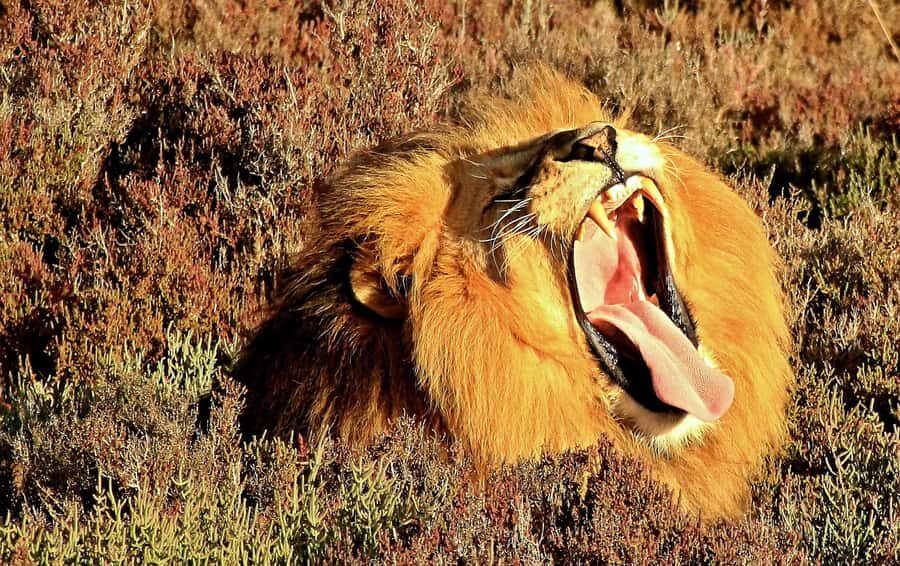
Now, the real truth about wildlife: you can’t demand a specific sighting. Even within a Big Five plan, different groups get different luck. One review I read noted that lions weren’t seen in either reserve, which is a good reminder not to plan your whole trip around one jackpot moment.
Also, don’t count on leopards. In this kind of setup, they’re nocturnal and elusive, and they’re described as not being contained by fences. So if you’re traveling with a leopard-or-bust mindset, you’ll likely feel let down.
Buffelsdrift luxury night near Oudtshoorn (and what you actually sleep in)
After the Day 1 drive and safari, you’ll reach your overnight base near Oudtshoorn. Your accommodation choice affects the vibe more than you might expect—because Oudtshoorn is where you recharge before Day 2.
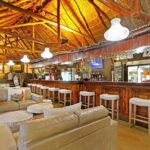
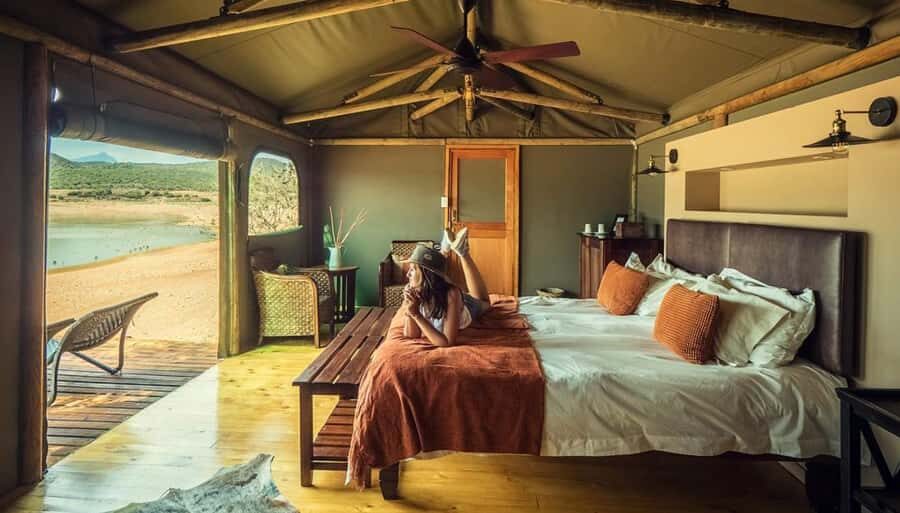
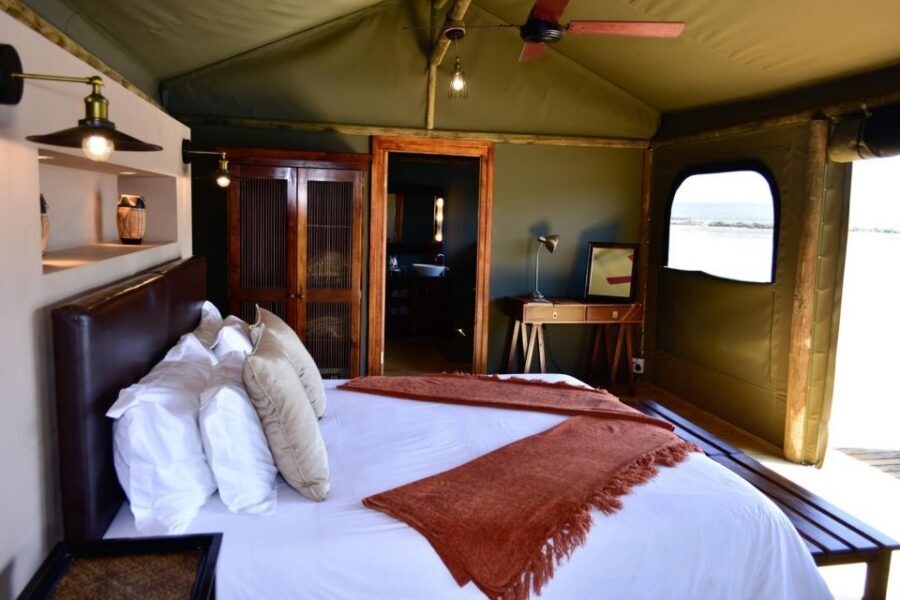
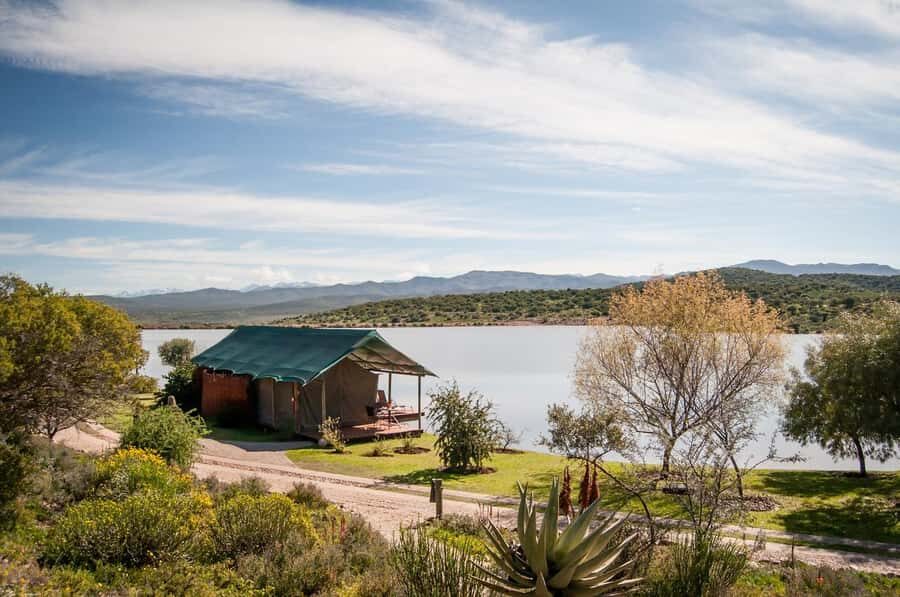
If you pick Buffelsdrift Game Lodge (4-star), you’ll stay in luxury canvas tents about 4 km from Oudtshoorn in the Klein Karoo. The tent setup is specific and very comfortable: a claw-footed bath, a rustic outdoor shower, and views over the bush or a waterhole dam. That last part is quietly important. When you wake up and look out at the landscape, you’re not starting from scratch—you’re already in the rhythm of animal country.
Some people prefer staying closer to town, so there are alternatives. There’s a working ostrich farm option at Mooi Plaas outside the town border, and there’s also a comfort guesthouse centrally located inside Oudtshoorn (depending on availability and what you booked).
One lodge detail I picked up from reviews: the setting feels like a real break from the drive. Even when Day 2 is intense, that night sleep can make the whole weekend feel worth it.
Buffelsdrift Day 2 bush drive: look longer, spot more, learn more
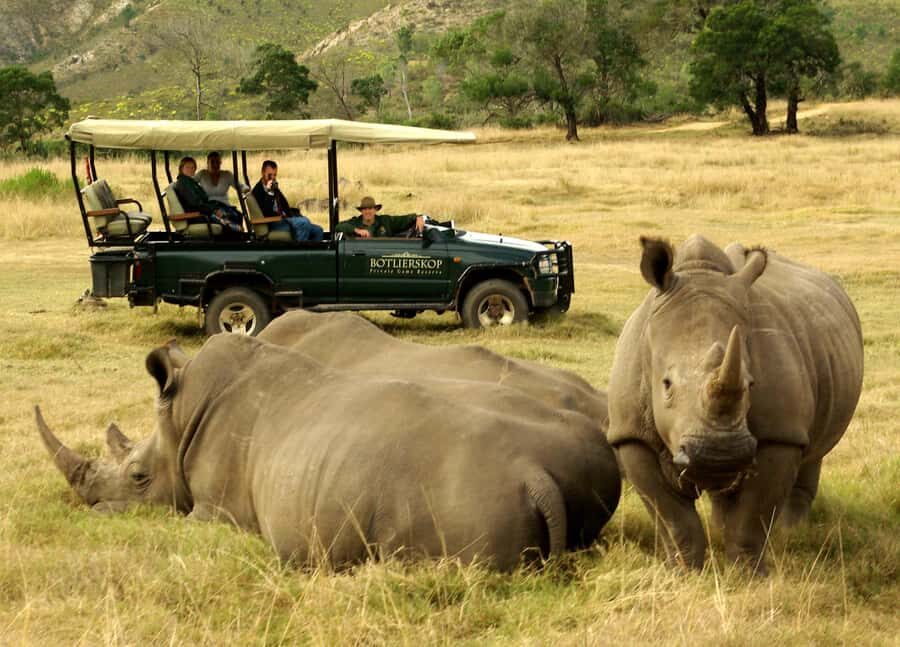
Day 2 starts with breakfast, then you head into the Klein Karoo bush for a 2-hour 4×4 bush drive from Buffelsdrift. This drive shifts the focus slightly from the first reserve. Instead of just chasing the big moment, you’re scanning for a mix of animals and smaller details—plus learning from your ranger as you go.
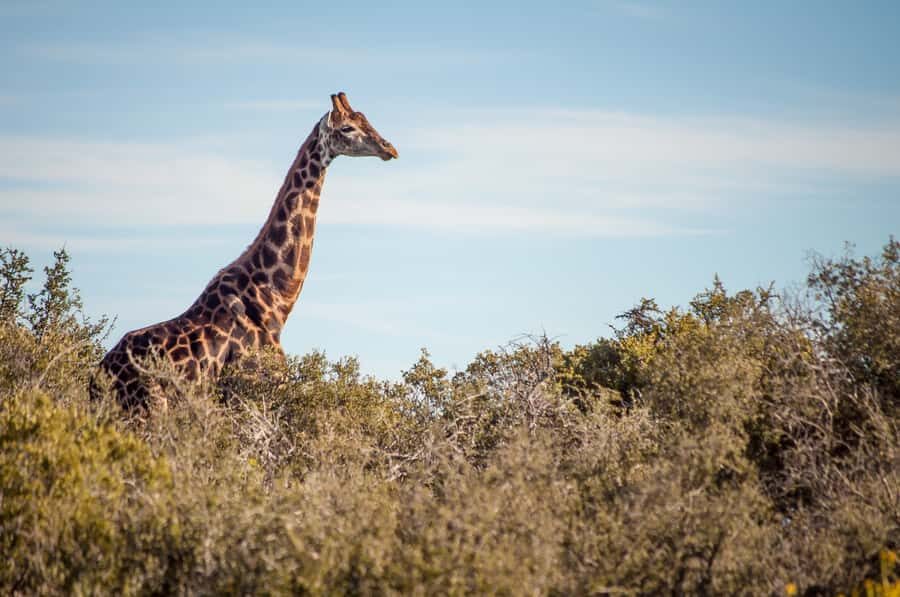
The listed possibilities include buffalo, giraffes, kudu, porcupines, and meerkats. I like this kind of species mix because it rewards patience. You don’t have to wait for one rare, lightning-fast sighting. And even if big animals stay hidden, you still have plenty to watch for—behavior, tracks, and small wildlife activity.
One review mentioned that the second safari saw a lot of animals, which matches the idea that your second day isn’t just a repeat. You’re in a different habitat experience, guided in a relaxed way, and you’re likely to notice different things than you did on Day 1.
Optional elephant observation in the Cango Valley: extra cost, close-up moments
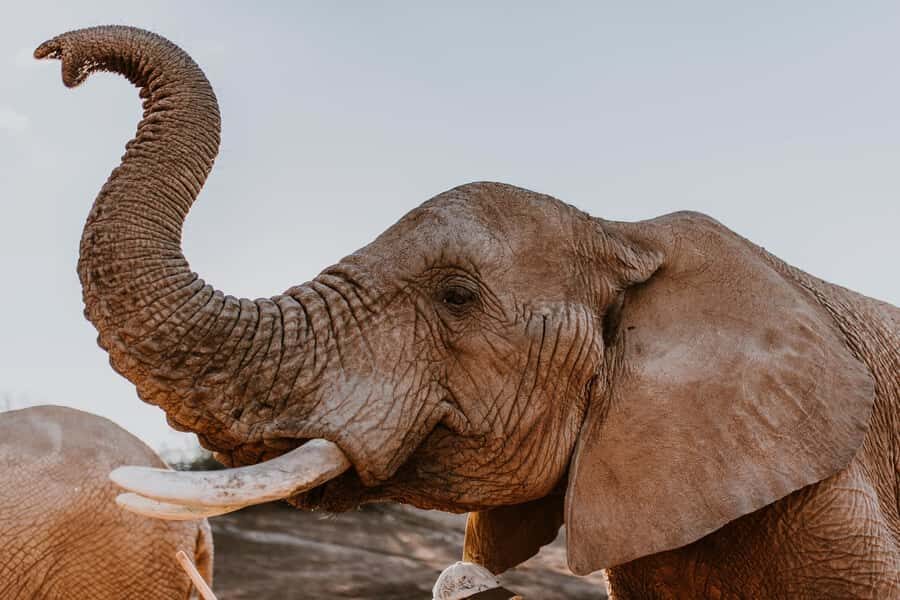
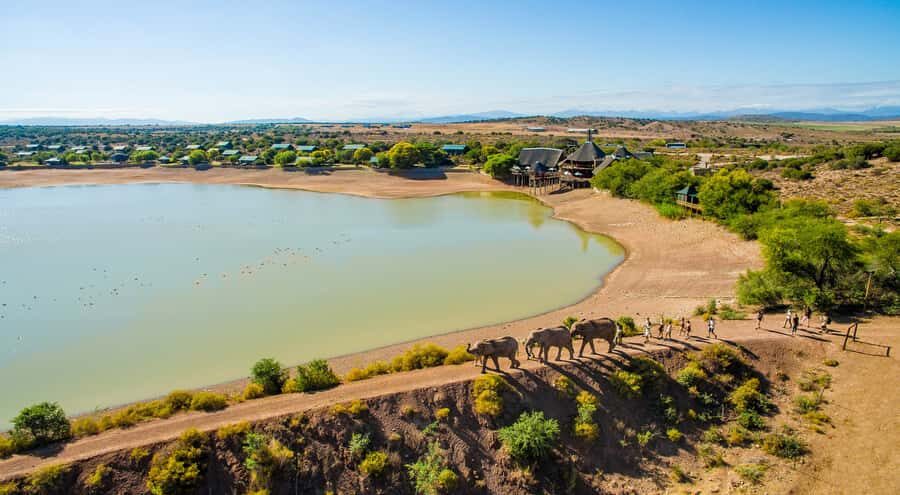
After the bush drive, there’s an optional activity: Elephant Observation in nature. It’s not included and costs about R650 (extra). The experience is set in the Cango Valley and focuses on three rescued elephants in a natural habitat overlooking a nearby waterhole.
If you choose it, go in knowing what you’re buying: time with gentle giants plus guided learning. The value is less about “ticking a box” and more about understanding the elephants’ story and behavior from people who work with them.
One caution comes from a review detail: a report described the elephants as being in an enclosure, and that the experience included very close contact, even touching. The trip info frames the elephants as roaming in a natural setting, so the safest expectation is this: it’s close-up and guided, and the setting may feel more structured than you imagine.
If elephants are a must for your trip, it’s the one optional add-on here that can genuinely change your memories of the weekend.
A few more Cape Town tours and experiences worth a look

Route 62 back to Cape Town: scenic driving with time for quirky stops
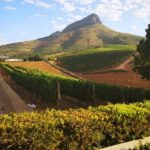
The day doesn’t end at the safari. After Day 2’s animal time, you return by Route 62, described as the longest wine route in the world. This is where you get breathing space from wildlife scanning and driving.
The return distance is again about 450 km, with roughly 6 hours of driving time not including safaris. Arrival in Cape Town or Stellenbosch is set for late evening, typically between 6pm and 9pm, depending on traffic and stops.
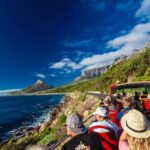
Route 62 is a strong fit for this tour because it turns the journey itself into part of the experience. You’re not just bouncing between two reserves; you’re also getting a sense of Western Cape terrain—high mountains, twisting passes, and rugged Karoo plains—plus room for those small road-trip moments that don’t feel like chores.
Price and logistics: is $534 per person good value?
The price is $534 per person for 2 days, and the structure matters: you’re paying for pickup and drop-off, a guide, air-conditioned transportation, 1 night accommodation, 1 breakfast, and two separate 4×4 wildlife drives (shared with the group).
That’s why I think the deal can feel fair—especially if you’d otherwise have to line up a reserve transfer, safari drive, and lodging separately. The included night at Buffelsdrift (or equivalent depending on your selection) is doing real work here. You’re not just paying for a morning safari and hoping for the best.
Where you’ll spend extra: meals and drinks, plus the optional elephant observation (about R650). Also, the overall schedule is packed enough that you should plan to eat well and hydrate without making it a daily stress. One review noted added toilet stops during Day 2, which is a good sign that your guide is keeping people comfortable on the long route—but you’ll still feel the length of the days.
Transport is another practical point. The itinerary uses an air-conditioned vehicle, but one review said the van wasn’t comfortable. So if you’re sensitive to cramped seating or long road time, take that seriously. This is a driving-heavy safari weekend.
Finally, group size is capped at 13 participants, which helps. Smaller groups are often easier for guides to manage on wildlife roads and photo stops.
Who this tour suits (and who should skip it)
This trip is best for the young-at-heart who want wildlife and don’t have a lot of time. The route is designed for visitors who can handle early departures and long driving days. One piece of traveler feedback praised the guide’s organization and support—important in a schedule like this, where timing affects everything.
Good fit if you:
- want two different wildlife drives rather than just one
- value a comfortable night after safari time
- like guided learning from a ranger, not just scanning for animals
- are traveling in a small group (max 13)
You should probably look elsewhere if you have:
- mobility impairments or need step-free access (not suitable)
- back problems (not suitable)
- you’re pregnant (not suitable)
- you’re coming with unaccompanied minors (not allowed)
- you want a slow travel pace
Kids: the minimum age is 8 years, and children under 18 must be with a responsible adult.
Practical tips to make the most of your two safari days
Based on how these drives are described and how the experience plays out, here’s what will help you enjoy it more.
1) Treat sightings as a bonus, not a guarantee
This tour is built for searching. Plan to see animals, but don’t plan your happiness around one species. Leopards are specifically flagged as unlikely due to nocturnal habits and visibility issues.
2) Use your ranger’s focus
The itinerary isn’t only about big-game. Rangers guide you through the ecosystem—plants, insects, smaller wildlife, and the Renosterveldt/Klein Karoo details. If you ask questions, you’ll get more out of each stop.
3) Budget the optional elephant time
R650 can feel steep, but it’s the kind of add-on that can become the highlight for many people because the elephants are rescued and guided learning is part of the experience.
4) Expect a long, structured day
You’ll start early and end late. One review praised a guide for making extra toilet stops on Day 2 when someone was unwell, which tells you the guides do adapt in the moment. Still, you should come prepared for a day that moves.
Should you book this Cape Town wildlife safari with a luxury stay?
If you want a short, high-activity safari weekend that includes real comfort at night, I’d say this is worth serious consideration. You get two guided 4×4 wildlife-style experiences, a luxury canvas tent option at Buffelsdrift with a bath and outdoor shower, and a scenic return on Route 62 instead of a dull straight drive.
Book it if:
- you’re traveling with a group size preference (max 13)
- you’re happy with wildlife searching as the main goal
- you’ll enjoy guided learning about the Renosterveldt and Klein Karoo, not only Big Five luck
- you’re okay with long driving days and early mornings
Skip it if:
- you need a guaranteed chance at specific animals like lions or leopards
- you’re dealing with mobility/back constraints (it’s not suitable)
- you want a relaxed pace more than wildlife time
FAQ
What time does the tour usually start on Day 1?
Pickup is typically between 6am and 7am from Cape Town or Stellenbosch, followed by travel to the first reserve.
How long are the drives between Cape Town/Stellenbosch and Oudtshoorn?
The road distance is about 450 km, taking roughly 4 to 6 hours on Day 1, and about 6 hours on Day 2 (excluding the safari drives).
What wildlife safari activities are included?
Included activities are the Botlierskop 4×4 game drive and the Buffelsdrift 4×4 bush drive, both shared with the group.
Is elephant observation included?
No. The elephant observation in the Cango Valley is optional and costs about R650. It’s booked and paid for on tour.
What type of accommodation is included for the night?
You’ll have 1 night accommodation included. Options include a 4-star Buffelsdrift Game Lodge with luxury canvas tents, or a farmstay at Mooi Plaas, or a comfort guesthouse inside Oudtshoorn, depending on what you select and availability.
What are the minimum age rules?
The minimum age is 8 years, and children under 18 must be accompanied by a responsible adult.
Can you cancel for a refund?
Yes. Free cancellation is available up to 2 days in advance for a full refund.