REVIEW · PRETORIA
Johannesburg and Soweto Private Guided Tour with Shebeen Lunch.
Book on Viator →Operated by Mmilo Tours · Bookable on Viator
History hits hard in Joburg. This private day tour strings together Johannesburg skyline views and Soweto’s key sites in one long, meaningful circuit. You get a guide to help you put the pieces together fast, from apartheid’s machinery to the people who resisted it, plus time for lunch on Vilakazi Street.
Two things I really liked: first, the way the day turns into a story you can recap afterward. In particular, my guide Mtsimane Mekgwe kept the facts clear and connected the timeline without turning it into a lecture. Second, the mix of stops is practical: you start with a big-picture view from the Carlton Centre, then you shift to smaller, specific places—Mandela and Desmond Tutu’s former homes, the Hector Pieterson Memorial, and the human-rights thread at Constitution Hill.
One possible drawback: the topics are heavy. Expect museum time plus memorial time, and plan to take breaks when your brain starts to feel like it’s carrying too much.
In This Review
- Key things to know before you go
- A day that mixes skyline views with real weight
- Carlton Centre perspective before the Apartheid Museum
- Apartheid Museum: the story you can recap afterward
- Soweto on Vilakazi Street: Mandela, Tutu, and the 1976 memorial
- Constitution Hill: the democracy part of the journey
- Houghton Estate and the city’s “in-between” moments
- Price and value: when $248.67 feels fair
- Who should book this private Soweto-focused tour
- Should you book it?
- FAQ
- How long is the Johannesburg and Soweto private guided tour?
- Is the tour private or will I be with strangers?
- What’s included in the price?
- Are museum and site entry tickets included?
- Where is lunch served?
- Does the tour include alcohol?
- Can I buy souvenirs during the tour?
- What about children and ages?
Key things to know before you go
- A 50th-floor payoff: Carlton Centre’s observation deck gives you 360-degree bearings before you hit the deeper sites.
- Apartheid Museum is the anchor: you’ll spend about 2 hours there, and it’s designed to leave an emotional mark while still feeling structured.
- Vilakazi Street lunch with Nobel Peace Prize context: you’ll eat in the right place and see the former homes of Nelson Mandela and Archbishop Desmond Tutu nearby.
- Hector Pieterson Memorial is short but powerful: about 30 minutes, and it’s tied directly to National Youth Day.
- Constitution Hill adds the “then what”: a former prison/fort turned living museum, including the Constitutional Court area.
- Private means you can move your own way: it’s only your group, so your guide can adjust to what you want to revisit.
A day that mixes skyline views with real weight
This is an all-day private tour, usually clocking in at 8 to 9 hours. You’ll be picked up from a centrally located hotel and transported in a comfortable private vehicle, with bottled water included. The day is built for one big goal: you shouldn’t just see places—you should understand how the city and the country got from apartheid to democracy.
I like that it doesn’t send you straight into the heavy stuff without context. You’ll start with the Carlton Centre area—high up, wide view, where you can visually grasp how Johannesburg spreads out—then head toward sites that tell the human story. That rhythm matters because it helps your brain switch gears: from geography to history, then from history to people.
Also, this tour is flexible in a useful way. It’s private, and guides can work around a short wish list (for example, if you want to spend a bit longer near a specific stop). That’s exactly the kind of control that makes private travel worth the extra cost.
You can also read our reviews of more guided tours in Pretoria


Carlton Centre perspective before the Apartheid Museum

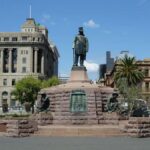
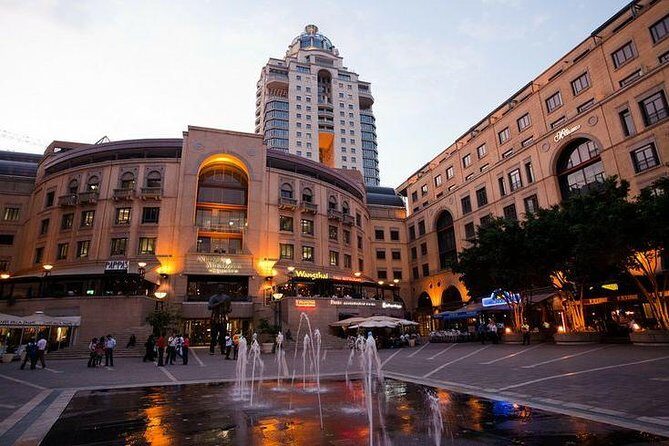
Before you absorb the darkest parts of South African history, you get a chance to orient yourself. The tour includes Gandhi Square with the Gandhi statue, and it’s built into the route on the way to the Apartheid Museum. You also visit the Carlton Centre, riding up to the 50th floor observation deck for 360-degree views.
That viewpoint is more than a photo stop. It’s where you get your bearings fast—how Johannesburg’s business district sits in relation to the surrounding neighborhoods. When you later hear names like Soweto and Houghton, you’ll have a mental map instead of just a word.
And then the tone shifts. The day heads into the museum experience, where the content is not abstract. You’ll see how apartheid was structured, enforced, and lived day-to-day. The museum uses multi-media storytelling and clear exhibit design, and it manages an emotional contradiction: you feel the sadness of injustice, but you also get the thread of resistance and the path toward a multicultural democracy.
Practical tip: if you’re the type who likes to read everything, you can easily spend longer than planned in the museum. This tour gives you about 2 hours, which is enough for a strong overview—especially with a guide to explain what you’re looking at.
Apartheid Museum: the story you can recap afterward
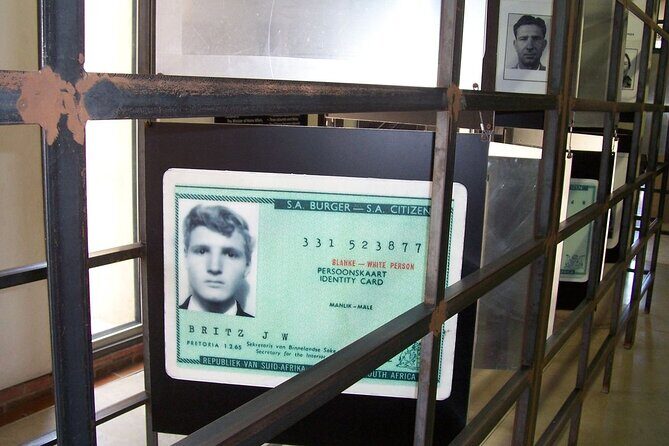
The Apartheid Museum is the heavy anchor of the day, with admission included and about 2 hours set aside. What I appreciate here is the balance between evidence and narrative. You’re not just handed dates—you’re shown what apartheid did, how it worked, and what it meant for real lives.
The exhibit design is described as a masterpiece, but the bigger takeaway is how it helps you make sense of the whole system. The storytelling is layered. You’ll likely start with emotions (anger, grief, disbelief), then move into understanding (how laws and institutions created daily inequality), and eventually land on the resilience of people who fought for change.
A museum this intense benefits a lot from a guide who can point out the main threads. That’s where the best tours pay off. In my case, the way Mtsimane Mekgwe explained connections made the information easier to hold onto. After the tour, I didn’t feel like I’d collected random facts—I felt like I had a coherent timeline I could explain to someone else.
Best use of your time: don’t try to absorb every detail. Instead, focus on the big cause-and-effect links the guide highlights—how oppression was built, how people resisted, and how democracy grew out of that struggle.
Soweto on Vilakazi Street: Mandela, Tutu, and the 1976 memorial
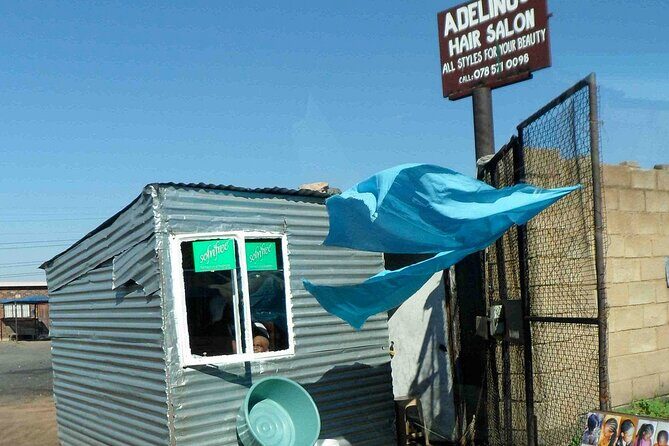
Once the museum work is done, the tour heads into Soweto, home to as many as 2 million South Africans and people from other African nationalities. This part of the day is where history becomes street-level.
The lunch stop is on Vilakazi Street. Lunch is included (and yes, it’s practical—this is where you’ll take a midday break so the rest of the sites don’t feel like a slog). Vilakazi Street is also where you can see the former homes of two Nobel Peace Prize winners: Nelson Mandela and Archbishop Desmond Tutu.
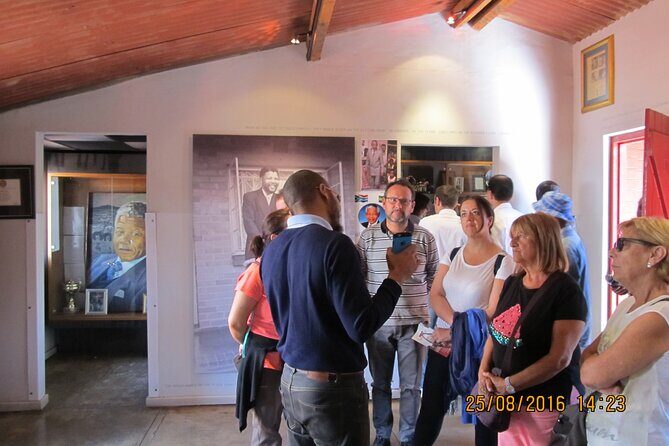
After lunch, you’ll visit Mandela House, Mandela’s Soweto home, now a museum and tribute to his life. The tour gives about 30 minutes here with admission included. It’s not a long stop, but it’s the kind of place where short time can still be meaningful if you’re paying attention to what’s preserved and what the guide connects back to the larger story.
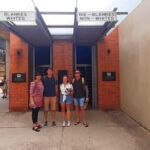
Then comes the memorial component. You’ll go to the Hector Pieterson Memorial, commemorating the killing of a 12-year-old during the 1976 student uprising. The memorial covers the broader tragedy tied to that day, which is now National Youth Day. You’ll have about 30 minutes, and it’s free to enter.
Near the memorial area, there’s also a crafts market if you want souvenirs—but souvenirs aren’t included in your tour price. If you buy, just budget for it.
Other Soweto stops in the tour route can include Regina Mundi Church, Freedom Square, and the World Cup Stadium. You may not spend long at each, but they help round out the picture of how communities organized, remembered, and showed strength.
Practical note: This is the part of the day where your emotions may spike. Don’t feel guilty if you want to pause, take a breath, or look slower for a moment. That’s normal here.
Constitution Hill: the democracy part of the journey
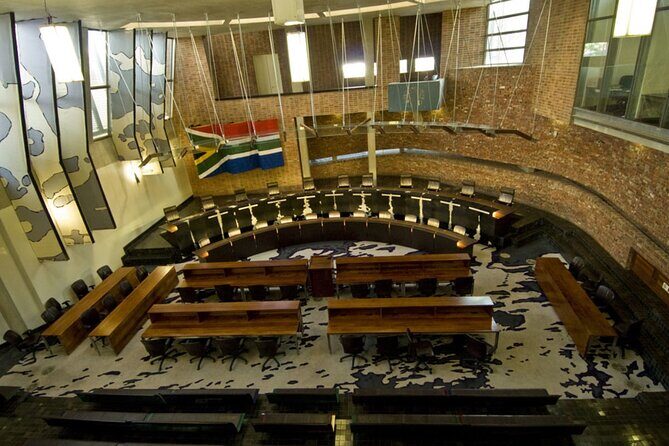
To balance the apartheid-focused stops, the tour includes Constitution Hill Human Rights Precinct. You’ll have about 1.5 hours there, and admission is included.
Constitution Hill is described as a living museum. The site is a former prison and military fort, which means you’re standing in a place tied directly to incarceration and state power—then you’re shown how South Africa’s democracy moved toward rights. The tour also includes time to see the area of the Constitutional Court, which endorses rights for citizens.
This stop can feel like a pivot point. Instead of only answering what happened, you start getting an answer to what it became. If you want a tour that helps you understand South Africa’s direction, this is one of the most valuable parts.
The pace here is also important. With 1.5 hours, you can look at key exhibits and still not feel rushed. If you’re the type who likes to ask questions, this is where you’ll have plenty of material to work with.
You can also read our reviews of more private tours in Pretoria





Houghton Estate and the city’s “in-between” moments
The day doesn’t just cover museums and memorials. You’ll also see a more “how the city is shaped” side of Johannesburg.
Your route may include a view of the high-wealth suburb of Houghton Estate and the surrounding ridge geography. The tour language points out the Witwatersrand ridge (the ridge the name is based on) and how wealthy gold barons built mansions along it. Even if you only get a brief look, it helps explain why neighborhoods feel the way they do—where wealth gathered, where communities formed, and why certain views matter.
The tour also references passing through parts of Johannesburg that changed over time—areas once reserved for white residents now filled with high-rise apartments occupied by African emigrants. This isn’t about judging neighborhoods from a car window. It’s about understanding movement and policy outcomes: the city you see today is the result of forced planning and later adaptation.
These “in-between” moments are short, but they’re useful. They give your day more than one mode of understanding.
Price and value: when $248.67 feels fair
At $248.67 per person, this isn’t a budget day tour. But it can be good value if you compare it to the cost of piecing everything together.
Here’s what you’re getting that helps justify the price:
- Private guiding for a full 8–9 hours
- Pickup and drop-off from your hotel
- Lunch included (on Vilakazi Street)
- Bottled water included
- Admission included for major stops like the Apartheid Museum, Mandela House, and Constitution Hill
- A route that strings together geography, memorials, and democracy in one coherent day
Add to that the fact it’s private only for your group. If you’re traveling with another person (or a small family), the “cost per person” starts to feel less painful. Also, there’s mention of group discounts, which can help if you’re flexible and your group size works out.
One small consideration: alcohol isn’t included. Drinks can be purchased, and the tour follows the minimum drinking age of 18. So if you like to toast your travels, plan on paying for it separately.
Who should book this private Soweto-focused tour
Book this if you want:
- A guided day that ties together apartheid, resistance, and the democracy that followed
- A manageable schedule that still hits the major sites
- Clear explanations and a guide who can keep your questions answered
- A mix of emotional stops (memorials and museums) and grounding stops (Carlton Centre views)
This also fits well if you don’t want to rely on multiple buses and taxis to connect the dots. The private vehicle keeps the day from turning into pure logistics.
If you’re looking for a light, entertainment-heavy tour, this probably won’t match your mood. This is more “understand and reflect,” even when the day includes great viewpoints and a proper lunch break.
Should you book it?
Yes, if you’re coming to Johannesburg and you want one guided day that gives you a clear, connected grasp of what happened and where it shows up on the ground. The best reason to book is the structure: you start with perspective from the Carlton Centre, then move into apartheid’s story at the Apartheid Museum, then land in Soweto for Mandela and Desmond Tutu’s places and the key 1976 memorial, and finally finish with Constitution Hill’s rights-focused view.
If you’re sensitive to intense subject matter, treat this as a day to slow down. Bring water, pace yourself in museums, and let your guide steer you toward what matters most. You’ll leave with more than photos—you’ll leave with understanding you can carry.
FAQ
How long is the Johannesburg and Soweto private guided tour?
It runs about 8 to 9 hours.
Is the tour private or will I be with strangers?
It is private, so only your group participates.
What’s included in the price?
Hotel pickup and drop-off, a professional guide, local taxes, bottled water, and lunch are included.
Are museum and site entry tickets included?
Admission tickets are included for the Apartheid Museum and Mandela House, and for the Constitution Hill Human Rights Precinct. The Hector Pieterson Memorial is free.
Where is lunch served?
Lunch is on Vilakazi Street at a popular restaurant.
Does the tour include alcohol?
Alcoholic drinks are not included, but you can purchase them separately. The minimum drinking age is 18.
Can I buy souvenirs during the tour?
Souvenirs and curios are not included, but there is a crafts market next to the Hector Pieterson Memorial where you can shop.
What about children and ages?
Children must be accompanied by an adult (or a senior or youth). The minimum drinking age is 18. Service animals are allowed.
If you tell me your travel dates and how many people are in your group, I can help you sanity-check whether this timing and price fit your style.