REVIEW · PRETORIA
Johannesburg: Downtown Walking Tour Including Ponte City building
Book on Viator →Operated by Honest Travel Experience · Bookable on Viator
You can read Johannesburg’s past right off the skyline. This downtown walking tour connects the dots with a local guide, moving from Maboneng toward Newtown while weaving in music, politics, art, and architecture.
I love the way the route doesn’t just name places. It follows a clear story line, so you understand why neighborhoods look the way they do today. I also like that the tour includes a real draw for photos and views: time at Ponte City, capped with an on-site drink.
One thing to consider: the experience depends on good weather and includes walking through areas with a complicated reputation. The guide’s presence helps, but you should still dress for comfort and be ready for a full inner-city feel.
In This Review
- Key highlights you’ll actually feel on the walk
- Why this Joburg downtown tour works for first-timers
- Getting oriented from Maboneng to Newtown (and why the route matters)
- Stop 1: DlalaNje and Ponte City’s story from opulence to urban resilience
- Stop 2: Hillbrow Tower and what apartheid-era housing looks like from street level
- Stop 3: Windybrow Tower and the housing story behind the silhouette
- The “walk between” part: street art, culture, and learning how the city breathes
- Photo moments and comfort: how to plan for 3.5 hours downtown
- Who’s this tour best for (and who might want a different plan)
- Price and value: what $52.03 gets you in a city that charges for context
- Should you book this Johannesburg downtown tour?
- FAQ
- How long is the Johannesburg downtown walking tour?
- What is the tour price?
- Does the tour include pickup?
- Is admission to Ponte City included?
- What food and drinks are included?
- Is the tour group small?
- Is mobile ticketing used?
- Does this tour require good weather?
- Are service animals allowed?
- What’s the cancellation rule?
Key highlights you’ll actually feel on the walk
- Small group (max 20) keeps the pace human and the questions flowing
- Four-suburb route from Maboneng to Newtown helps you get your bearings fast
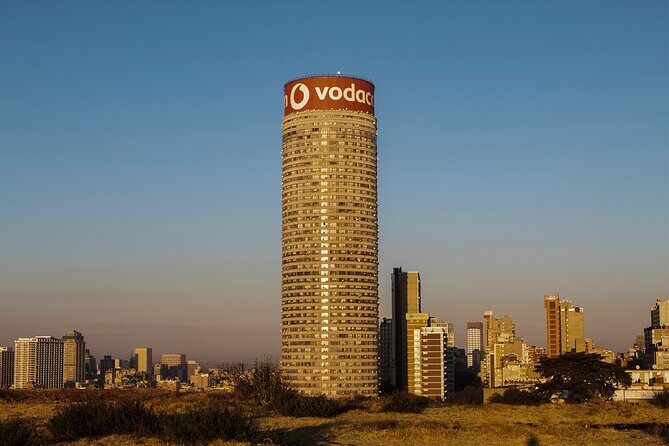
- Ponte City access with context for the building’s rise, decline, and resilient comeback
- Hillbrow Tower and Windybrow context puts apartheid-era housing into focus
- Street art and culture stops add texture beyond the big-name skyline
Why this Joburg downtown tour works for first-timers
Joburg has a habit of feeling like two cities at once. There’s the postcard version that exists in brochures, and then there’s the one you can’t fully understand from a quick drive-by. This tour is designed for that second version. You walk with a guide who tells you what to notice, not just what to see.
The result is that you come away with a mental map you can actually use. Instead of memorizing street names, you understand the logic behind the neighborhoods—how government policies, economic pressure, and culture shaped what you’re looking at now. You also get a steady rhythm: walk, stop, explain, then move on before things get stale.
Another smart choice is that it’s timed for learning without dragging. The tour runs about 3 hours 30 minutes, so it’s long enough to matter, but short enough that you still have energy afterward to explore on your own.
Finally, I appreciate that the tour focuses on context. The inner city can feel confusing. Here, the skyline becomes a kind of textbook, and the guide points out the chapters.
You can also read our reviews of more walking tours in Pretoria

Getting oriented from Maboneng to Newtown (and why the route matters)
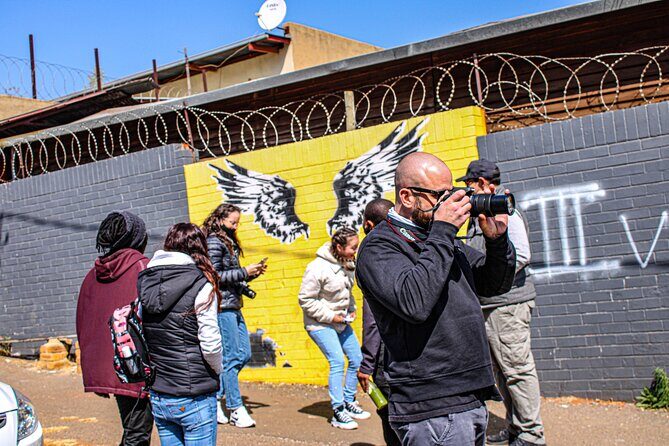
This is a “four neighborhoods in one trip” plan, starting around Maboneng and working toward Newtown. Even if you’re only in Johannesburg for a short stay, this setup helps you avoid the classic mistake: seeing just one corner of the city and assuming it represents the whole.
Along the way, you’ll get introduced to local life through stories that connect music, culture, politics, art, history, and architecture. That sounds broad, but it’s practical. When you understand why a place formed, you stop treating it like a random stop on a list.
You’ll also get more than just street-level sights. The tour is described as a chronological journey, which means the guide ties the past to the present as you move. That approach is especially helpful in Joburg, where buildings and streets carry older decisions in plain sight.
From the way the tour is talked about, street scenes and creative spaces play a big role. If you like street art and the energy of areas that mix cafés, galleries, and design, you’ll likely enjoy the walking sections around the creative stretch. One example name that comes up is Fox Street, and that’s exactly the kind of detail that makes the city feel less abstract.
There’s also a chance to experience local transport as part of the day. One guide-led itinerary style includes a local taxi ride, which is useful because it shows you how people actually move rather than relying on a sightseeing bubble.
Stop 1: DlalaNje and Ponte City’s story from opulence to urban resilience
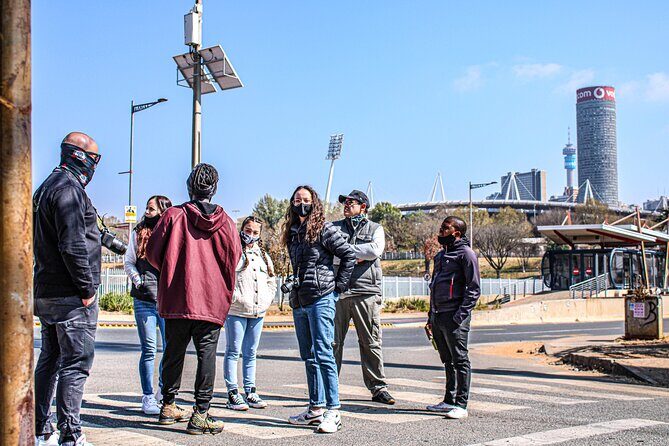
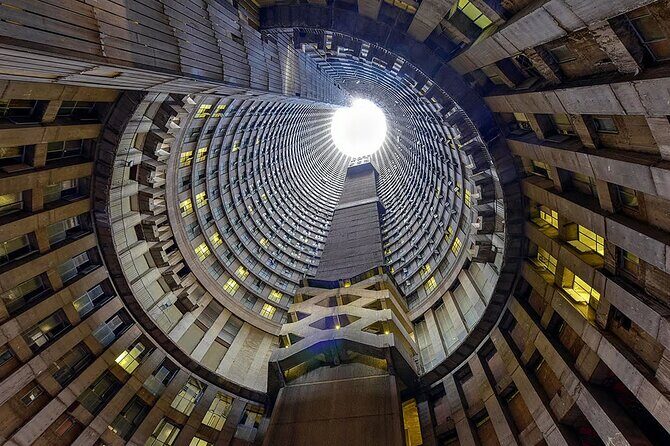
The heart of the tour is Ponte City—and it starts with context at DlalaNje, the community-centre starting point. Before you step into big views, the guide sets the tone with an opening introduction in multiple languages, including Lotjhani, Molo, Sawubona, Dumela, Avuxeni, and Ndaa. It’s a small touch, but it signals what kind of tour this is: rooted in local communication and local framing.
From there, the pacing shifts into storytelling. You’ll get a guided walk through Ponte City’s history—starting with the era of grand opulence, then moving into government red-lining and social oppression. The tour also covers the later chapters: urban decay, and how the building and the community have shown resilience through changing economic times.
Why this stop is so valuable is simple: Ponte City is easy to see, but not easy to interpret. The tower looks like a monument, but it’s also a record of policy, inequality, and survival. The guide helps you read that record without turning the day into a lecture.
There’s also a tangible “this is real” moment. You enjoy a drink on the 51st floor as part of the experience. That’s not just a perk; it changes how the building lands in your mind. You stop thinking of it as architecture and start thinking of it as a lived space—however complicated that history has been.
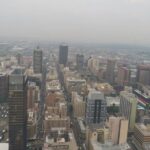
If you’re planning photos, this is also where the timing can pay off. The tour highlights Top of Africa viewing deck photo opportunities, and you’ll be in the right mindset for pictures: not just skyline bragging rights, but images with story attached.
One practical tip: bring a lens or use your phone camera with care. Heights plus city light can look great, but it can also tempt you into rapid-fire shooting that you’ll regret later if you don’t pause and look first.
Stop 2: Hillbrow Tower and what apartheid-era housing looks like from street level
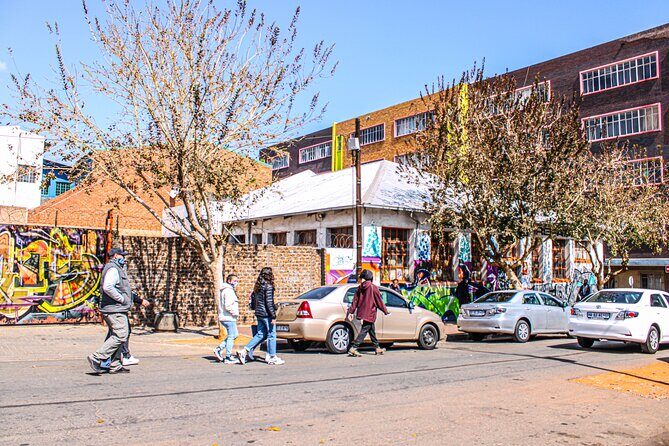
After Ponte City, the tour gives you context to the iconic Hillbrow Tower. This matters because Hillbrow is part of the inner-city skyline you’ll keep seeing once you start exploring, even if you don’t know its background.
What you’re looking for here is the relationship between housing and control—how people were shaped by systems that forced certain living conditions and separated neighborhoods by design. The guide frames Hillbrow in that apartheid-era context, which helps you notice details you might otherwise treat as mere building features.
In practical terms, this stop turns the city into a visual argument. It’s hard to forget that when a guide points out the way towers and streets connect to older policies, you stop thinking about buildings as neutral objects.
Also, Hillbrow is the kind of area where the streets can look chaotic to outsiders. Having narration gives your eyes somewhere to land. It’s the difference between walking past and actually reading.
Stop 3: Windybrow Tower and the housing story behind the silhouette
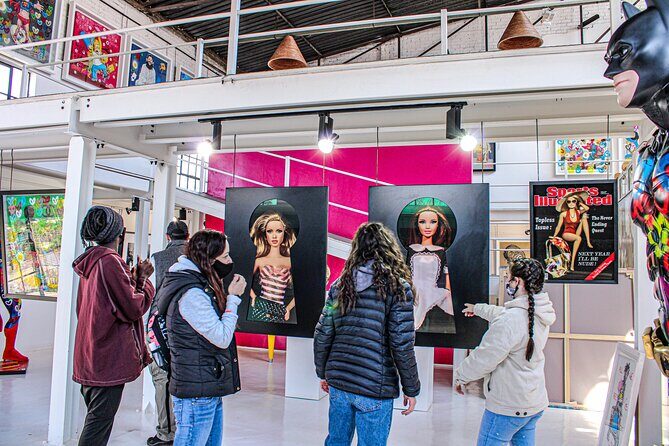
Then you get the Windybrow context. Like Hillbrow, it’s part of the skyline conversation, but it hits a slightly different emotional note because it connects to how housing played out on the ground.
The tour is clear that the guide discusses housing in the area back in the apartheid days. That line matters because it prevents the experience from becoming just a series of photo stops. The tower silhouette is only the beginning. The guide connects that silhouette to how people were housed, pressured, and separated.
If you like architecture and urban planning as themes, you’ll likely appreciate that the tour doesn’t treat apartheid history like a vague background topic. It ties it directly to where buildings stand and what those places were built for.
You can also read our reviews of more city tours in Pretoria


The “walk between” part: street art, culture, and learning how the city breathes
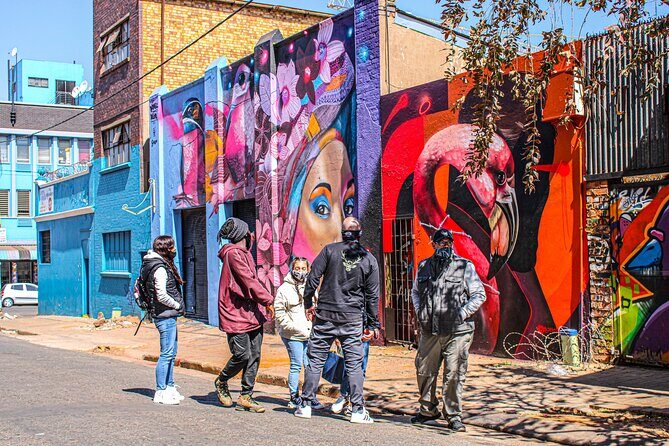
Not every city walk does the in-between well. This one does. Between big-ticket stops, you’re walking through neighborhoods that show how culture and art work alongside everyday life.
That’s where you’ll likely notice creative details: street art, design energy, and the feeling of neighborhoods that are changing while still carrying older layers. One guide-led experience described Maboneng and Jewel City as especially “vibey,” with cafés, art, and design, plus a clear sense of ongoing change. If you like places where you can stop for a coffee and still feel like you’re in the story of the city, this is that zone.
And the tour keeps your attention by mixing formats. You get narrative history, street-level observation, and then the next skyline stop. It prevents the day from becoming one long “listen mode.”
You’ll also come away with practical guidance for your own exploring. Because the guide talks about what you’re seeing and why, you’re less likely to waste time later wandering without direction.
Photo moments and comfort: how to plan for 3.5 hours downtown
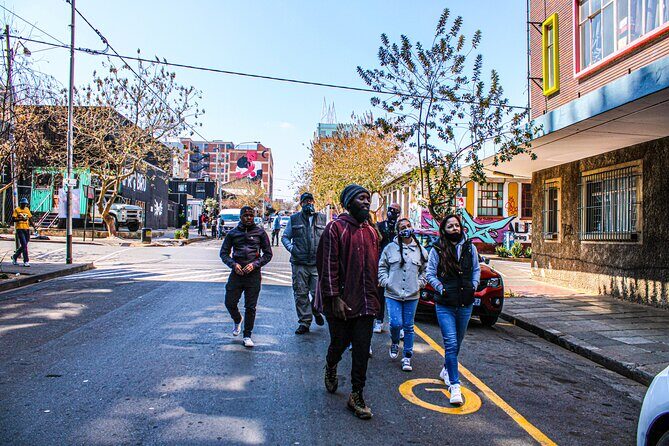
You’re going to walk. You’re also going to look up a lot. That combination can be great for photos, but it can be rough if you dress wrong.
Here’s what I’d plan for based on the tour structure and included experiences:
- Comfortable shoes matter because you’re moving between multiple inner-city areas over a 3 hours 30 minutes window.
- Bring layers if the weather changes. The experience requires good weather, and Johannesburg can shift quickly.
- If you’re a photographer, leave time to pause rather than sprinting for every shot. The best skyline photos come after you look, not while you’re rushing.
For views, Ponte City and its associated viewpoints are the big draw. For street scenes, the creative stretches (including areas associated with Fox Street) help your images feel more like city storytelling than just towers on a horizon.
Also, the tour includes lunch and bottled water, which helps you stay comfortable through the day. Alcoholic drinks aren’t included, so plan on water, lunch, and whatever you choose separately if you want something stronger.
Who’s this tour best for (and who might want a different plan)
This is a strong pick if you’re arriving in Johannesburg and want your orientation fast. It’s also good if you like tours where history isn’t separate from street life. Here, the architecture is the route’s language.
It’s especially suitable for:
- First-time visitors who want downtown bearings without a map lesson
- People who want a small-group feel (max 20) and an easy pace for questions
- Travelers interested in how culture and politics show up in real places
You might choose a different option if you:
- Hate walking in hot or variable weather
- Prefer purely leisure sightseeing with no context
- Need a tour that’s strictly indoors or short and low-energy
One more note: multiple guides leading this tour are praised for making people feel safe while showing you areas others might skip. That doesn’t mean you should ignore personal comfort. It means the day is structured with guidance, which helps you focus on learning instead of worrying.
Price and value: what $52.03 gets you in a city that charges for context
At $52.03 per person, you’re not just paying for a walk. You’re paying for:
- Guide-led interpretation across multiple neighborhoods
- Private transportation
- Lunch and bottled water
- Entrance to Ponte (including access tied to the experience on-site)
- A smaller group size, which usually means more attention and more chances to ask questions
Admission and lunch alone often push the value up compared with the cheaper “just walk around” city options. Add in the fact that the tour is building-level focused, with time at a major viewpoint, and it starts to feel like you’re buying a short course in how Joburg works.
Is it expensive? Not really, at least not when you consider what’s included. The tour is priced like a full guided experience, not a casual meetup.
Should you book this Johannesburg downtown tour?
If you want to understand Johannesburg’s inner city instead of just collecting skyline photos, this tour is a smart use of time. It links Ponte City, Hillbrow, and Windybrow into one coherent story, and it adds street-level cultural details along the way. That combination is the reason the day tends to satisfy first-timers.
I’d book it if you’re ready for walking, you care about context, and you want a guided route that helps you explore with confidence after the tour ends. Just make sure your schedule can handle a weather-dependent plan, and dress for a full inner-city morning/afternoon.
If you’d rather only sample the city without history-heavy stops, you may prefer a more casual neighborhood walk. But for orientation plus meaning, this one hits the sweet spot.
FAQ
How long is the Johannesburg downtown walking tour?
It runs about 3 hours 30 minutes (approx.).
What is the tour price?
The price is $52.03 per person.
Does the tour include pickup?
Yes, pickup is offered.
Is admission to Ponte City included?
Yes, entrance to Ponte is included, and the tour includes time on-site.
What food and drinks are included?
You get lunch and bottled water included. Alcoholic beverages are not included.
Is the tour group small?
Yes. It has a maximum of 20 travelers.
Is mobile ticketing used?
Yes, you’ll have a mobile ticket.
Does this tour require good weather?
Yes. The experience requires good weather. If it’s canceled due to poor weather, you’ll be offered a different date or a full refund.
Are service animals allowed?
Yes, service animals are allowed.
What’s the cancellation rule?
You can cancel for free up to 24 hours in advance for a full refund. If you cancel less than 24 hours before the start time, the amount paid won’t be refunded.