REVIEW · PRETORIA
Johannesburg’s Downtown Walking Tour with lunch
Book on Viator →Operated by Honest Travel Experience · Bookable on Viator
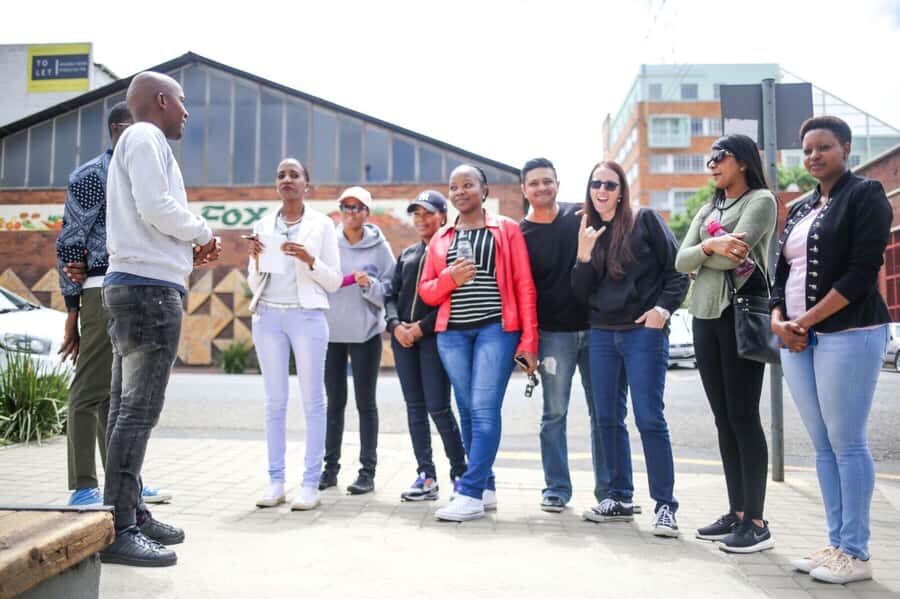
Joburg’s center has a story to explain. This downtown walk connects Constitution Hill with Newtown, and it keeps you fed with lunch included while your guide puts the city’s past and present into plain words. You’ll also get an honest take on why people say Johannesburg is dangerous, plus what actually shaped that reputation.
I really like the way this tour is built around real places (Braamfontein’s business shift, Newtown’s cultural lanes, and Gandhi Square in the CBD) instead of a checklist of views. And I appreciate the safety focus: multiple guides have a track record for pacing it well and making you feel comfortable even when the streets feel unfamiliar.
One consideration: this is still a walking tour in inner-city areas. If you’re sensitive to crowds or street noise, or you’re not comfortable in neighborhoods that look different from Sandton, you’ll want good shoes and a flexible mindset.
In This Review
- Key highlights I’d plan around
- Entering a side of Johannesburg most people skip
- Braamfontein: from business drift to a new working rhythm
- Constitution Hill precinct: where the city talks about justice
- The rail-bridge stop near Johannesburg Park Station
- Newtown: regeneration told through streets and cultural venues
- Gandhi Square in the CBD: a name that carries weight
- Lunch, water, and the kind of pace that keeps you thinking
- Price and logistics: what $77.92 buys you
- Who should book this Johannesburg downtown walk
- Should you book Honest Travel Experience’s downtown walking tour?
- FAQ
- How long is the Johannesburg downtown walking tour with lunch?
- What is the price per person?
- Does the tour include pickup?
- Is lunch included?
- Are there admission tickets included?
- What’s the maximum group size?
- What’s included in the tour besides the guide and lunch?
- What if weather is poor?
Key highlights I’d plan around
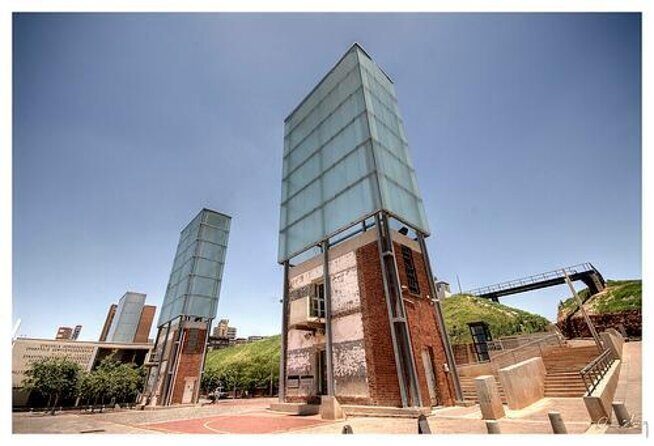
- Constitution Hill’s court precinct at 11 Kotze Street, with its museum setting the tone for the tour
- Braamfontein’s business exodus story, starting way back when the area became part of Johannesburg in 1886
- Park Station-area rail bridges, including a major one completed in 2003 for R38 million
- Newtown’s cultural regeneration, framed by the Nelson Mandela Bridge and theatre culture
- Gandhi Square in the CBD, named for Mahatma Gandhi and worth seeing in context
- Lunch plus bottled water keeps the day practical, not just sightseeing
Entering a side of Johannesburg most people skip
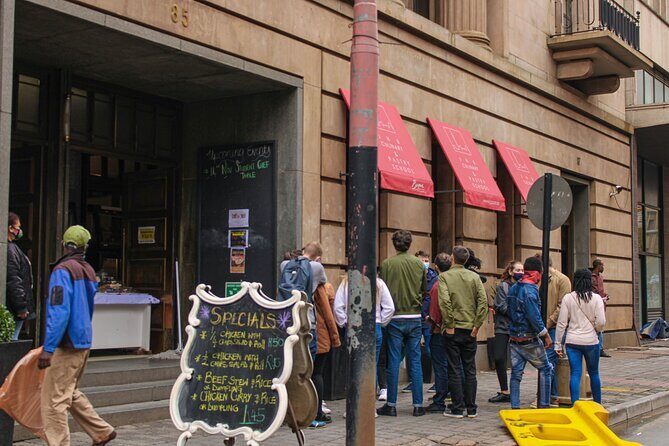
This walking tour is built to answer the big question: what happened to Johannesburg? The pitch is simple. You’re not just here for “look at this” moments. You’re here to understand why the city’s reputation gets stuck in people’s heads—and what history, politics, and economic change did to neighborhoods over time.
You’ll also notice the tone is “real life first.” The guide’s job isn’t to hand you a script. It’s to connect street corners, buildings, and public spaces to the bigger story. That’s why this kind of tour can feel more useful than jumping between museums and landmarks with no thread tying them together.
One more practical point I like: you’re not expected to do everything on foot with no support. Pickup is offered, and you’ll have access to an air-conditioned vehicle as part of the experience, which helps when the weather turns or your legs start negotiating.
You can also read our reviews of more walking tours in Pretoria

Braamfontein: from business drift to a new working rhythm
The day starts in Braamfontein, just outside the Johannesburg CBD, north of the city. This area tells a very Johannesburg kind of story: when Johannesburg’s center of gravity shifted toward places like Sandton and the northern suburbs, businesses and institutions moved out. Braamfontein didn’t fully decay the way some inner-city areas did. Instead, it became home to a more informal, local economy.
Braamfontein also has older roots than many people assume. It’s tied into Johannesburg since 1886, even though the area began its life as a farm. That matters, because it stops the conversation from being only about apartheid-era headlines. You’re seeing continuity—how places keep changing roles, even when the economy and power shift.
Timing-wise, expect around an hour here. For many visitors, that’s a good amount of time to get the “why” behind what you see, without turning the start into an endurance event.
What to watch for: you’ll likely see a mix of office-adjacent streets and everyday commerce. If you’re the type who loves street art, local signage, and small shifts in how people use public space, Braamfontein is where that curiosity gets fed.
Constitution Hill precinct: where the city talks about justice
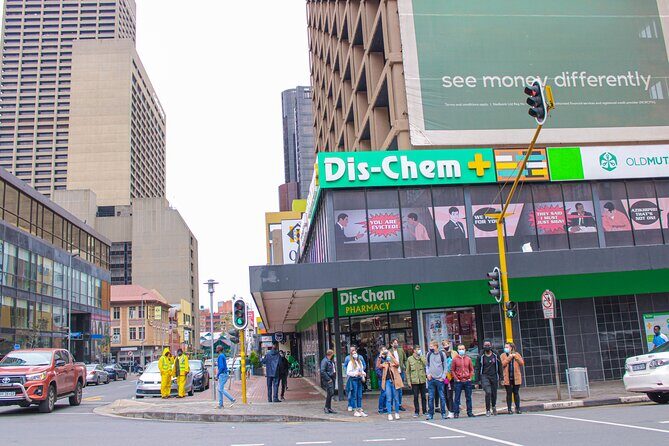
Next comes Constitution Hill, centered around 11 Kotze Street in Braamfontein, near the western end of Hillbrow. This is the seat of South Africa’s Constitutional Court, and it functions like more than a pretty landmark. It’s a place where the story of the country’s transformation is built into the site itself.
The tour also includes time at a museum focused on African artwork—described as showcasing thousands of pieces, from historic to contemporary. That’s a smart pairing with Constitution Hill. Justice and rights aren’t only legal. They show up in culture, memory, and what societies choose to preserve or display.
Here’s why I think this stop is a standout value in the tour format: you’re not reading history in a vacuum. You’re walking from the court precinct and then being guided through how art and public meaning connect to the broader South African narrative.
Practical tip: give yourself a mental reset here. This part of the day can shift from “street-level explanation” to more reflective content. Wear comfortable layers—you may spend a bit longer looking around than you expect.
The rail-bridge stop near Johannesburg Park Station
Then you’ll cross into a more “infrastructure with a story” moment. The stop described here is near Johannesburg Park Station, west of it, in an area with railway lines and sidings. The guide focuses on bridges—specifically, the fourth of five that cross those rail corridors.
One detail you’ll hear that makes this more than trivia: this bridge was completed in 2003 and cost R38 million to build. The comparison point is the Johan Rissik Bridge, described as the first one near the station. Hearing those numbers puts scale behind the design choices and how the city keeps rearranging movement for people and goods.
Why this matters on a tour like this: Johannesburg’s transformation isn’t only about politics and museums. It’s also about how the city routes travel. Rail lines, bridges, highways, and station-adjacent spaces shape what neighborhoods feel like and who can reach what.
If you like “city systems” stuff—how places connect—this stop is a welcome break from purely cultural stops. It also helps break up the day so you’re not staring at buildings for hours.
Newtown: regeneration told through streets and cultural venues
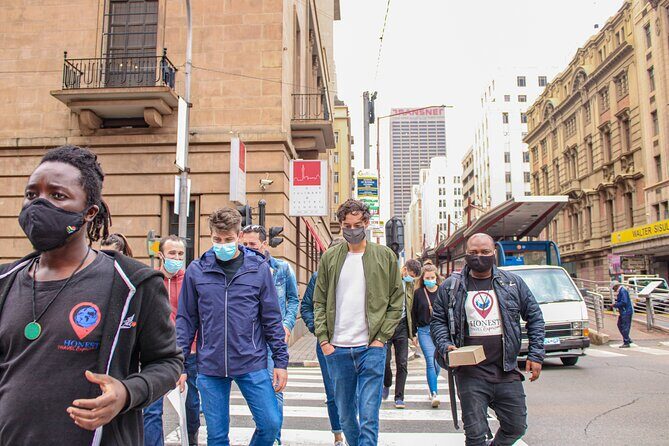
After the rail/bridge segment, you move to Newtown, in Johannesburg’s inner-city. Newtown is positioned as the heart of regeneration and reinvention, and the tour frames it as a mixed-use area with a distinct character.
Geography gets explained in a way that’s easy to picture: Newtown sits between railway lines to the north and the M2 highway to the south, while West Street and Quinn Street bound the area on the east and west. That kind of layout description helps you stop feeling lost and start understanding how the city is sectioned.
A key element is the Nelson Mandela Bridge, described as linking Braamfontein to Newtown. It’s also given a traffic capacity: it can carry about 3000 cars an hour. That single line of detail is useful because it shows Newtown’s gateway role. This isn’t a place cut off from the city. It’s a place that receives people fast.
Newtown’s cultural angle is also front and center. The tour highlights the Market Theatre as part of South Africa’s theatre story. Even if you’re not a theatre buff, it’s worth remembering that cultural institutions often act like magnets—pulling people, investment, and attention back into districts that might otherwise feel forgotten.
How long you’ll spend here is about an hour, and admission tickets are included for this part. That makes it a good stop for value—one where you’re not paying extra on the spot for entry.
One small caution: Newtown can feel different from surrounding streets, because it blends local life with institution-led spaces. If you prefer totally “everyday only” areas, you might find this part more structured than other stops. Still, it’s exactly that contrast that helps you understand how Johannesburg reinvents itself.
A few more Pretoria tours and experiences worth a look

Gandhi Square in the CBD: a name that carries weight
The final major stop is Gandhi Square, in the Central Business District. It’s named for Mahatma Gandhi, the political activist and pacifist. That name gives the square a built-in political and moral context, and the guide’s job is to link it to the reality of Johannesburg’s city center—where the symbolism and the day-to-day life sit side by side.
This is also one of the stops where admission tickets are noted as included, which helps keep the tour from feeling like a series of optional add-ons.
Why I think Gandhi Square is worth your time in this particular itinerary: it’s not simply a statue-and-photo moment. It’s placed at the end of the walk, so you’ve already built up context. By now you’ve heard about the shift in business centers, the legal and cultural transformation represented at Constitution Hill, and the city’s reinvention in Newtown. The square then lands with more meaning.
A practical note: downtown CBD spaces can be busy. If your phone battery is low, charge it before this part. You’ll probably want to capture the square and then keep notes while things are fresh.
Lunch, water, and the kind of pace that keeps you thinking
The tour includes lunch and bottled water, plus a guide and an air-conditioned vehicle. On a 3–5 hour walking day, that combination is about more than comfort. It keeps your brain engaged. Once you’re hungry, every explanation turns into background noise.
From the experience descriptions and feedback, the pace is generally easy and suited to people who want to learn without sprinting. Guides have also been praised for good communication, and for maintaining a sense of security when the route takes you through parts of the inner city that can feel a little tense at first glance.
If you get a guide like Nkosi, Sean, Tigh, Frank, Romeo, or B.K. (names that show up in guide references for this experience), you’ll likely feel that mix of facts plus street-level storytelling. People often remember the details that a guide uses to make the city make sense, not only the big attractions.
Bring a small water habit: you’ll have bottled water included, but Johannesburg days can still feel warm, and you’ll likely be stopping for explanations along the route.
Price and logistics: what $77.92 buys you
Let’s talk value. The price is listed at $77.92 per person, and the tour typically runs about 3 to 5 hours with pickup offered and a maximum group size of 30.
What you’re paying for here is not just walking. It’s the guided connection between neighborhoods, the included lunch, bottled water, and admission tickets noted for parts of the route (Braamfontein is free, and Newtown plus Gandhi Square have admission ticket inclusion).
Is it expensive? For a short half-day experience in central Johannesburg, it’s mid-range once you factor in lunch and the guide-led routing. If you were to do the same day yourself—plus add entry fees and find your way through Braamfontein, Newtown, and the CBD with useful context—you’d spend more time figuring things out than learning.
The main tradeoff: a group tour means you follow the schedule. If you’re the type who wants to wander alone for hours, you’ll have a better time with independent plans. But if you want to get oriented fast—and avoid wasting time on the wrong streets without context—this is the kind of structure that pays off.
Who should book this Johannesburg downtown walk
This experience fits you well if you want:
- a guided orientation to Johannesburg’s inner-city
- a safety-focused walk that directly addresses the city’s danger reputation
- culture plus city systems (court precinct and museum, theatre-area regeneration, and the rail-bridge story)
It’s also ideal for first-time visitors who want a meaningful first impression of central Johannesburg, not just the most photographed places.
Where you might want to choose something else: if you only want top-end sights with low street variation, or if you hate walking through places that can look rough around the edges. The guide’s job is to keep you comfortable, but the city itself is the city. You should be ready for that reality.
Should you book Honest Travel Experience’s downtown walking tour?
I’d book it if you want your Johannesburg day to feel like understanding, not just checking boxes. The mix—Braamfontein’s economic shift, Constitution Hill’s court precinct and African artwork museum focus, the rail-bridge detail near Park Station, Newtown’s theatre and regeneration story, and Gandhi Square in the CBD—gives you a full arc.
If your top priority is a safe, guided way to see central Johannesburg and learn why the city’s reputation is what it is, this is a strong bet. Just go in with good walking shoes and realistic expectations about street life, and you’ll come away with a much clearer picture of what you’re seeing.
FAQ
How long is the Johannesburg downtown walking tour with lunch?
The duration is listed as about 3 to 5 hours.
What is the price per person?
The price is $77.92 per person.
Does the tour include pickup?
Yes, pickup is offered.
Is lunch included?
Yes, lunch is included, along with bottled water.
Are there admission tickets included?
Admission tickets are listed as included for Newtown and Gandhi Square, while Braamfontein is listed as free.
What’s the maximum group size?
The tour has a maximum of 30 travelers.
What’s included in the tour besides the guide and lunch?
Included items are the guide, air-conditioned vehicle, lunch, and bottled water.
What if weather is poor?
The experience requires good weather. If it’s canceled due to poor weather, you’ll be offered a different date or a full refund.