REVIEW · PRETORIA
Johannesburg,Soweto & Apartheid museum tour
Book on Viator →Operated by MHLANGANISI TRAVEL AND TOURS · Bookable on Viator
Johannesburg can feel like a blur at first. This Johannesburg, Soweto & Apartheid Museum tour turns a tough city into a day you can actually manage, with private transportation between stops instead of wrestling with buses and parking. You’ll move through history-heavy landmarks, then end up in Soweto with the kind of contrasts you only get when you’re there in person.
What I really liked is how the day is packed with different kinds of stops, not just one museum and a quick photo. With Pastor as the guide, you get clear context as you go, and you also get time to explore the Apartheid Museum at your own pace. I also liked the included lunch break at local restaurants, where you can try a range of South African dishes without turning the day into a scavenger hunt.
The main drawback is the pace: you’re looking at about 8 hours, with many locations from Constitution Hill to Soweto memorial sites. If you want a slow, sit-and-stare day, this might feel like too much, and you’ll want comfortable shoes.
In This Review
- Key highlights worth building your day around
- Price and Logistics: what you’re actually paying for
- Private driver power: staying comfortable for a full day
- Entering the story at the Apartheid Museum and Constitution Hill
- Downtown Johannesburg, Hillbrow, and the Mandela Bridge drive-by
- Chancellors House: where Tambo and Mandela attorneys figure into the day
- Soweto first stop: informal settlement views and Orlando Towers
- Vilakazi Street: Mandela and Archbishop Tutu’s houses
- Hector Pieterson Memorial Museum and Freedom Square
- Baraqwanath Hospital stop: a reminder that history is lived today
- Lunch at local restaurants: where the day gets more human
- Guide quality: why Pastor makes the itinerary work
- Who this Johannesburg and Soweto tour suits best
- Should you book it? My decision checklist
- FAQ
- How long is the Johannesburg, Soweto & Apartheid Museum tour?
- How much does the tour cost?
- Is pickup included?
- What’s included in the price?
- Is Wi‑Fi available during the tour?
- How many people are in the group?
- What are some of the main places you’ll visit?
- Is lunch included?
- Can I cancel for a full refund?
Key highlights worth building your day around
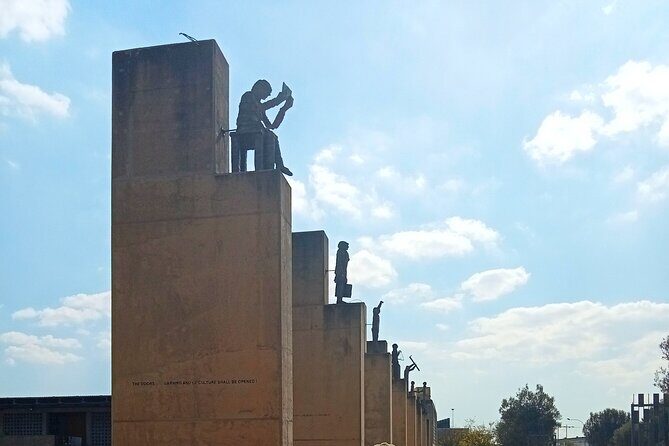
- Private vehicle + Wi‑Fi on board: less time figuring things out, more time focusing on the stops.
- Apartheid Museum access built into the route: museum entry is included, so you don’t start the day guessing.
- Constitutional Hill and Constitutional Court start strong: you begin with major institutions tied to South Africa’s turning point.
- Vilakazi Street includes Mandela and Archbishop Tutu’s homes: a very specific, high-impact stop in Soweto.
- Hector Pieterson Memorial sites plus Freedom Square: remembrance landmarks that keep the day from becoming only sightseeing.
- Small group (max 10): easier to hear your guide and stay on schedule.
Price and Logistics: what you’re actually paying for
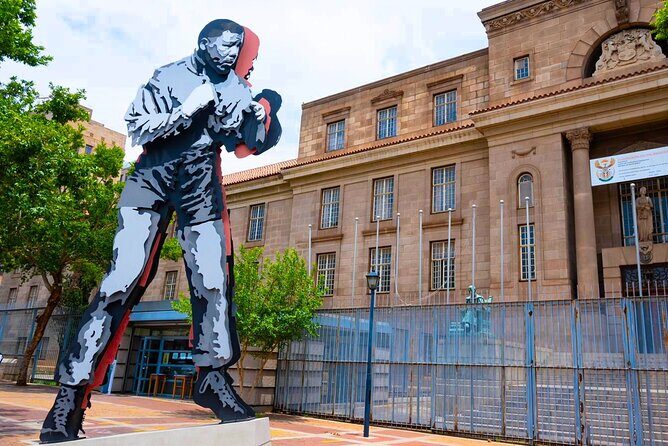
At $83.83 per person for an 8-hour guided outing, this tour is priced like a true city day: transport, guide time, and key entrance fees are handled for you. That matters in Johannesburg because distance and traffic can drain your energy fast, especially if you’re trying to arrange multiple stops on your own.
Here’s what you get that supports the value:
- bottled water
- air-conditioned vehicle
- Wi‑Fi on board
- all fees and taxes
- Apartheid Museum entrance fees included
What’s not included is equally useful to know. Soda/pop and alcoholic drinks aren’t part of the package, so you’ll want to budget for anything extra you buy during lunch.
Also, your group is capped at 10 travelers, which usually means less chaos than the bigger buses. It helps with comfort and with hearing your guide while you’re moving through crowded areas.
You can also read our reviews of more museum experiences in Pretoria

Private driver power: staying comfortable for a full day
This is one of those tours where the logistics don’t feel like an afterthought. Pickup is offered, and you’re in an air-conditioned vehicle with Wi‑Fi, which is a big help if you want to check directions later, message home, or plan what you’ll do after the tour.
Why this matters for your day:
- You save time on parking and short walks between far-apart points.
- You can keep your brain focused on what you’re seeing instead of how you’ll get there.
- You get a consistent pace across several neighborhoods.
A small practical tip: keep your phone charged. Wi‑Fi is available on board, but your battery is still your responsibility. And bring a light layer. Air-conditioning in vehicles can swing colder than you expect.
Entering the story at the Apartheid Museum and Constitution Hill
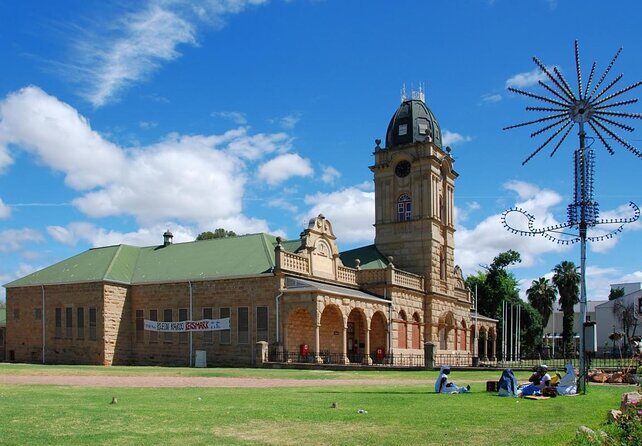
Your tour route kicks off with the Apartheid Museum and nearby institutions like Constitutional Hill and the Constitutional Court. If you’ve never visited, this combination is a strong way to begin because it shifts your attention from dates and slogans to the systems and decisions that shaped daily life.
The museum is included with entrance fees, so you don’t lose time at the start. One of the most praised parts of this experience is that you’re given time to explore the museum at your own pace. That’s a big deal. Some people want to move quickly through the main areas; others need more time to absorb what they’re reading.
The Constitutional Hill and Constitutional Court stops also help anchor the day. Even if you’re not a legal-history person, it gives you a sense of where the country’s changes were tested and formalized. The best part is that your guide can connect the dots as you go, rather than leaving you to piece everything together alone.
Possible downside: the material is heavy. Plan for moments where you’ll slow down—no rushing required.
Downtown Johannesburg, Hillbrow, and the Mandela Bridge drive-by
After the morning’s core sites, the route moves through downtown Johannesburg and includes a drive through Hillbrow, plus the Mandela Bridge. You’re not just watching buildings go by. Your guide uses these areas to explain how Johannesburg’s growth, infrastructure, and neighborhoods link back to the country’s wider story.
I like drive-through sections like this when they’re done well because they help you get bearings fast. You can look out the window and start recognizing how the city fits together. Without that, first-time visitors often feel lost even after hours of wandering.
You may also stop at Maboneng, depending on how the day flows. This is one of those places that adds a more present-day Johannesburg layer to the schedule, so you don’t leave only with museum memories.
Chancellors House: where Tambo and Mandela attorneys figure into the day
One of the stops on your route is Chancellors House, described as tied to the Tambo and Mandela attorneys. Even if you only see it briefly, it gives the day a useful angle: it’s not only about public leadership and major speeches. It’s also about the legal work, advocacy, and behind-the-scenes strategy that helped move things forward.
This is the kind of stop that works best when you’re paying attention to your guide’s narration. The value isn’t the building alone. It’s the context you get as it’s placed in the larger Johannesburg and apartheid-era story.
If you’re the type who likes a clear thread through the day, you’ll probably appreciate this stop. It connects the emotional weight of museums with the practical mechanisms of change.



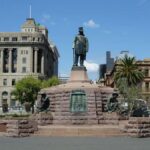


Soweto first stop: informal settlement views and Orlando Towers
Then you shift fully into Soweto. Your route includes a Soweto informal settlement view and Orlando Towers. Seeing places like these is not about collecting shock-value photos. It’s about understanding that South Africa’s story isn’t a straight line. It’s layered, lived, and uneven—right down to housing and daily infrastructure.
Orlando Towers add another angle. Towers like this help you grasp how visible landmarks can anchor communities. They also break the day up so it’s not only memorial stops back-to-back.
This part of the day is where I’d tell you to be extra respectful with photos. If your guide gives guidance, follow it. Ask before you shoot if you’re unsure.
Vilakazi Street: Mandela and Archbishop Tutu’s houses

One of the most specific, memorable parts of this tour is Vilakazi Street, including the homes of Nelson Mandela and Archbishop Desmond Tutu. That matters because this isn’t a generic “mandela-related” stop. It’s the actual street connected to both men’s legacies.
From a value standpoint, this is a high-payoff location. You can feel why it’s important: it’s personal, it’s geographic, and it’s easy to remember because the names are directly tied to the place.
This also helps balance the morning. You start with institutions and the museum. Later you’re in a neighborhood street tied to real people, where the story shifts from documents to lived legacy.
Hector Pieterson Memorial Museum and Freedom Square
Your Soweto route includes Hector Pieterson memorial sites and the Museum, plus Freedom Square. These stops keep the day focused on remembrance and on what the struggle meant for ordinary lives—especially young people.
The Hector Pieterson memorial is the kind of place where you’ll likely need a few minutes without talking. Even if you’re not a word-for-word reader, the setting and exhibits encourage reflection. Your guide can help explain what you’re looking at so you don’t miss the point.
Freedom Square adds another layer by bringing you back to the shared public space idea: commemoration isn’t only private. It shows up in community landmarks too.
Practical tip: pace yourself. If you rush through these stops, you’ll leave with fewer takeaways. If you slow down, you’ll understand more, even if you only spend a little extra time.
Baraqwanath Hospital stop: a reminder that history is lived today
Your itinerary also includes Baraqwanath hospital. Even if you don’t spend a long time inside (time isn’t specified), the inclusion of a working health facility is important for how the day feels. It places you in a living environment where people are dealing with real needs now, not only remembering events from the past.
This is one of those stops that can change how you interpret the whole day. Instead of treating apartheid-era history like a museum topic, you’re reminded that the present is shaped by the past.
If you’re sensitive to intense environments, take breaks when you can. The tour keeps moving, so use your guide’s cues and don’t push yourself past comfort.
Lunch at local restaurants: where the day gets more human
You’ll have a lunch at local restaurants stop, and one of the best-reviewed aspects is that the group had a lunch buffet that allowed a variety of local dishes. That’s genuinely useful because it keeps the day from becoming all forms and exhibits.
Two practical notes:
- Soda/pop and alcohol aren’t included, so if you want drinks beyond water, plan for that cost.
- A buffet-style meal is usually a win for mixed diets, but you still might want to ask your guide what options are available if you’re picky.
If you’re trying to keep your energy up for the later memorial and Freedom Square portion, this lunch break is part of what makes the tour feel manageable.
Guide quality: why Pastor makes the itinerary work
The standout praise from the experience is consistent: the guide, Pastor, is described as outstanding, with strong detail and strong storytelling. That matters more than many people realize.
When you have a packed day—Constitution Hill, downtown areas, Soweto street stops, memorial sites—a guide’s job isn’t only to point and identify. It’s to help you connect what you see without turning the day into a blur. Pastor seems to do that by giving context while you’re actually in the places, not after the fact.
You’ll also benefit from small-group pacing. With a maximum of 10 people, you’re more likely to get the chance to ask questions and stay oriented. And since you get time to explore the Apartheid Museum at your own pace, you’re not forced to run like you’re in a sprint.
Who this Johannesburg and Soweto tour suits best
I’d point this tour toward you if:
- it’s your first trip to Johannesburg and you want a guided plan
- you want Soweto and the Apartheid Museum in one day without figuring logistics
- you prefer a small group and a guide who explains what you’re seeing
- you like having a mix of institutional stops and neighborhood-level stops
It may be less ideal if:
- you want minimal movement and lots of free time
- you’re easily overwhelmed by serious topics
- you dislike long days with many stops
Should you book it? My decision checklist
Book this tour if you want a well-structured day where transport, entrances, and navigation are handled, and you still get time to explore the museum without being rushed. The best part is the balance: big landmark sites plus Soweto locations like Vilakazi Street, Hector Pieterson Memorial, and Freedom Square.
Skip it only if you’re hoping for a slow, museum-only experience or if the full-day schedule sounds exhausting. For most first-time visitors, though, this is a practical way to see a lot with a guide and not lose your day to transportation problems.
FAQ
How long is the Johannesburg, Soweto & Apartheid Museum tour?
It runs for about 8 hours (approx.).
How much does the tour cost?
The price is listed as $83.83 per person.
Is pickup included?
Pickup is offered.
What’s included in the price?
The tour includes bottled water, an air-conditioned vehicle, Wi‑Fi on board, all fees and taxes, and Apartheid Museum entrance fees.
Is Wi‑Fi available during the tour?
Yes, the vehicle has Wi‑Fi access.
How many people are in the group?
The tour has a maximum of 10 travelers.
What are some of the main places you’ll visit?
You’ll visit the Apartheid Museum and also stops such as Constitutional Hill/Constitutional Court, Vilakazi Street, Hector Pieterson Memorial sites and Museum, and Freedom Square, plus other Johannesburg and Soweto locations on the route.
Is lunch included?
Lunch is scheduled at local restaurants, but the list of what’s included specifically calls out the museum entrance and vehicle-related items, so check what your meal plan covers.
Can I cancel for a full refund?
Yes. You can cancel up to 24 hours in advance for a full refund.