REVIEW · JOHANNESBURG
Johannesburg: The Evolution of Maboneng (Place of Light)
Book on GetYourGuide →Operated by Curiocity Johannesburg · Bookable on GetYourGuide
Maboneng changes faster than your photos. This 2-hour walking tour in Johannesburg’s inner-city shows how a Place of Light neighborhood has been reshaped over the last couple of decades by street art, new buildings, and bold local business energy. You’ll walk the eastern side of downtown with stops that connect public art to the people and projects making it happen.
What I really like is that you get two very different kinds of culture on the same route: first, the murals and heritage buildings that make Johannesburg’s downtown feel personal, and second, the chance to visit the Kwa Mai-Mai Traditional Healers Market, where you can see traditional medicines and clothing up close. The icing on the walk is the Collectors Treasure second-hand bookstore, which turns browsing into part of the experience.
One drawback to consider: this is mainly a walking-focused tour, so if you expect a lot of seated time or frequent inside stops, you may find it a bit light. Also, it’s not recommended for people with limited mobility, and it’s not suitable for pregnant women.
In This Review
- Key moments you’ll actually remember
- Why Maboneng Feels Like a City That Writes Back
- Starting at Curiocity Backpackers: Getting Oriented Fast
- A 2-Hour Walk Through Downtown’s Past and New
- The Cosmopolitan Heritage Stop: When Buildings Hold Backstories
- Drive-lines and Upcycled Containers: Affordable Housing With a Visual Punch
- Mandela Mural and the Open-Air Art Museum Feeling
- Arts on Main and William Kentridge’s Creative Footprint
- Kwa Mai-Mai Traditional Healers Market: Culture You Can Shop
- The Collectors Treasure Second-Hand Bookstore Stop
- Rooftop Sun-Downer: The Skyline Moment If Timing Allows
- Price and Logistics: Is $42 Good Value?
- Who Should Book This Maboneng Walking Tour?
- Quick Practical Tips Before You Go
- Should You Book the Evolution of Maboneng?
- FAQ
- How long is the Johannesburg: The Evolution of Maboneng walking tour?
- Where does the tour start?
- What are the main places you visit during the walk?
- What should I bring?
- Is the tour suitable for people with limited mobility or pregnant women?
- How much does the tour cost, and what’s the cancellation timing?
Key moments you’ll actually remember
- Maboneng’s street art route: murals by local and international artists, built into the streets you walk
- The Cosmopolitan (1899 heritage): a landmark that started as a hotel and bar
- Drive-lines and upcycled containers: affordable housing using repurposed shipping containers
- Mandela mural and open-air mural areas: public art turning walls into conversation
- Arts on Main + William Kentridge’s circle: culture tied to a working foundation
- Kwa Mai-Mai Healers Market + Collectors Treasure: practical shopping meets real downtown character
Why Maboneng Feels Like a City That Writes Back
“Maboneng” is a Sesotho phrase meaning a place of light. The tour leans into that idea with the story of how this part of Johannesburg has shifted rapidly over the last two decades—less like a museum label, more like a living experiment. You’re not just looking at pretty walls. You’re watching how artists, entrepreneurs, and residents shape a neighborhood’s identity one project at a time.
I especially like that the walk frames the area as an ongoing transformation. You’ll hear about the history and heritage of Johannesburg’s first suburbs while you also see newer architecture popping up along the way. That mix matters because it keeps Maboneng from feeling like a themed attraction. It feels like a place trying to become itself, in real time.
Still, you should go in with the right mindset. This is a neighborhood walk. You’re moving through city blocks, not hopping between big-ticket indoor attractions.
You can also read our reviews of more tours and experiences in Johannesburg.



Starting at Curiocity Backpackers: Getting Oriented Fast
Your tour starts at Curiocity Backpackers, 302 Fox St, Jeppestown. This is a good setup for two reasons: you meet your guide at a known, travel-friendly spot, and you begin your walk with the guide already pointing you toward the story you’ll be seeing next.
Once you meet, you head into an insider-style explanation of what you’re about to encounter—Johannesburg’s early suburb history, how downtown developed, and why Maboneng has become a magnet for creativity and enterprise. If you’re new to Johannesburg, this orientation helps you read what’s around you without needing to pull up your phone every five minutes.
The tour is about 2 hours on foot, and you’ll want to be ready for a real walking pace. Comfortable shoes aren’t optional here. You’ll also want weather-appropriate clothing, since the route includes outdoor stretches and street art viewing.
A 2-Hour Walk Through Downtown’s Past and New
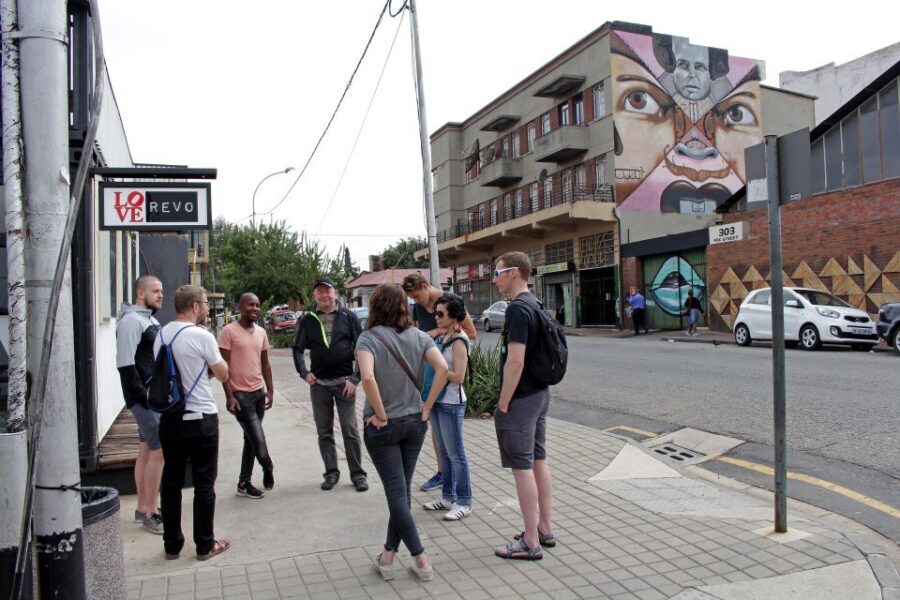
The core of the experience is the route itself: you’ll walk through parts of downtown Johannesburg’s eastern inner-city and connect points that might otherwise feel random. The guide helps you stitch together the big picture—heritage on one side, regeneration on the other.
Along the way, you’re set up to notice:
- new architectural developments you can spot as you go
- the way street art changes how people move and feel in the area
- landmark buildings that anchor the older Johannesburg story
One of the best parts is that the tour treats street-level art as more than decoration. Murals are described as part of how the neighborhood communicates—especially when public art faces barriers that might otherwise block visibility or connection.
If you’re the kind of traveler who likes to understand a place beyond a photo stop, this structure works well. If you’re mainly in it for quick Instagram moments, it may feel more like a guided storytelling walk than a checklist tour.
The Cosmopolitan Heritage Stop: When Buildings Hold Backstories
A highlight is stopping at The Cosmopolitan, one of the most elegant heritage buildings in downtown Johannesburg. The building was constructed in 1899, then opened as a hotel and bar in 1902.
This kind of stop is valuable because it forces you to think about continuity. You’re seeing a neighborhood that’s changing, but you’re also being reminded that the bones of downtown are old. That context helps the newer development scenes make more sense—you start to understand why people are investing now instead of just treating the transformation like a sudden trend.
The guide’s framing—how many stories are said to live inside those walls—also changes the way you look at heritage buildings. Instead of simply admiring the architecture, you start noticing how function changes over time: from hospitality and nightlife to today’s cultural and community relevance.
Drive-lines and Upcycled Containers: Affordable Housing With a Visual Punch
Another stop that hits differently is Drive-lines Development, a newer urban development that uses upcycled shipping containers as affordable housing.
Why this matters on a tour: it’s a very concrete example of regeneration that you can see with your own eyes. It’s not vague. It’s materials repurposed into homes. And it fits the Maboneng theme—entrepreneurship, creativity, and practical problem-solving showing up in the physical city.
You’ll walk from there toward the mural areas next. Seeing the container housing first helps you interpret the murals afterward as more than art-for-art’s-sake. In the tour’s logic, the art becomes part of how the neighborhood opens itself up—visually and socially.


Mandela Mural and the Open-Air Art Museum Feeling
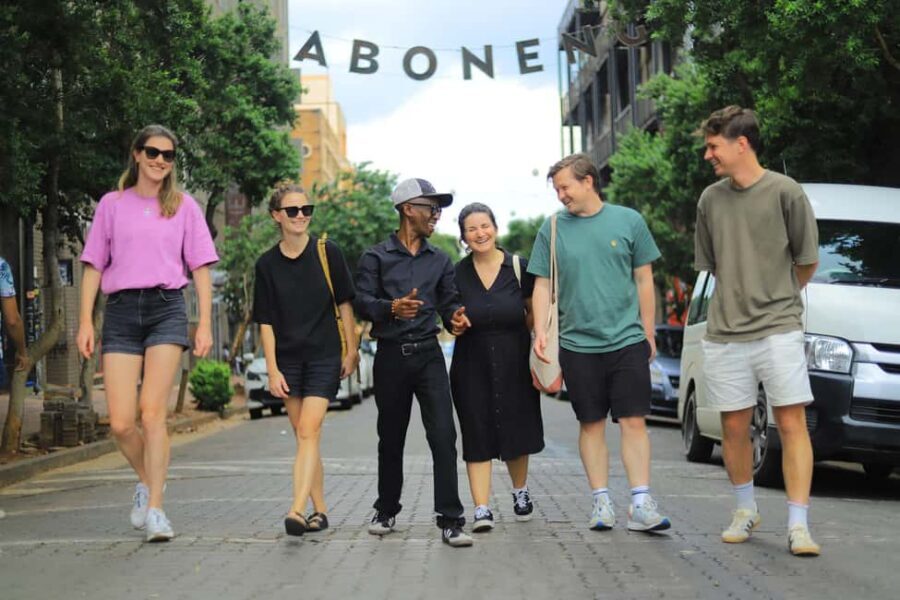
You’ll then head to the Mandela mural—a reminder of the leader and boxer remembered through that iconic imagery. From there, the tour shifts into what feels like an open-air museum approach to public art.
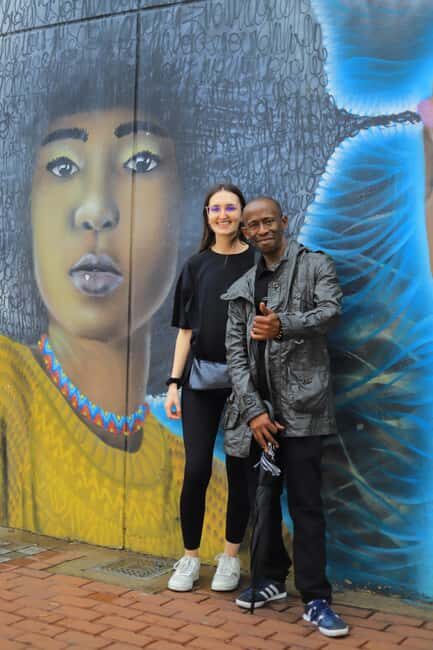
The point the guide emphasizes is that walls create barriers, and public art works as a kind of counter-message—breaking up those barriers and turning plain surfaces into something you want to walk toward. You’ll also be shown murals by Nelson Makamo, with the area described like a mural landscape you experience by walking past it.
What I like here is that the tour doesn’t treat the murals as isolated masterpieces. It presents them as part of a street system—where artwork can influence how people navigate, photograph, and connect with a neighborhood.
Arts on Main and William Kentridge’s Creative Footprint
Next up is Arts On Main, known for hosting South Africa’s celebrated artist William Kentridge. The tour also notes his foundation, the Center For The Les Good Idea, as part of what you’re seeing here.
This stop changes the pace slightly because it brings the street art conversation into a more institutional space—still grounded in creativity, but with an art world connection that’s easier to understand. If you’ve ever wondered how a neighborhood arts scene connects to bigger creative production and support systems, this is one of the clearest links on the route.
Even if you’re not a specialist in contemporary South African art, the name recognition alone helps you place the area in a broader cultural context. And if you are an art fan, this is the stop that helps you connect the murals you saw outside to larger creative work and foundations.
Kwa Mai-Mai Traditional Healers Market: Culture You Can Shop
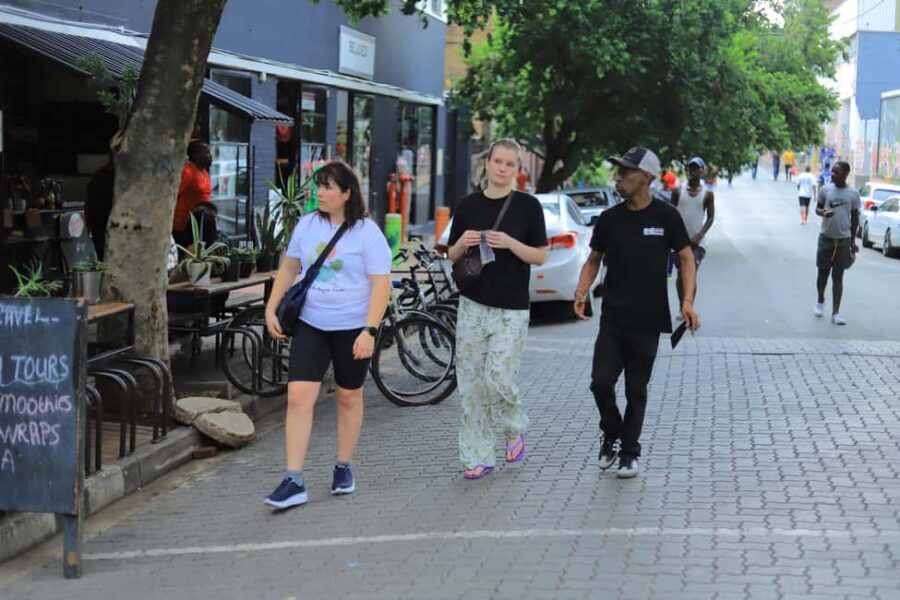
One of the most meaningful parts of the tour is a stop at the Kwa Mai-Mai Traditional Healers Market, said to be one of the oldest in Johannesburg. This is where the tour becomes more than street art and architecture—it becomes about living traditions.
Here you encounter sangomas, traditional healers, along with traditional medicines and traditional clothing. It’s a market experience, so you’ll want to be ready to slow down, look around, and think about what’s appropriate to ask before you reach for anything.
This stop is also a useful reality check. Maboneng’s creative regeneration story is one layer, but Johannesburg’s cultural roots run deeper than one neighborhood’s makeover. Visiting the market helps keep your understanding balanced.
Note: this is also one reason the tour’s description matters. If you’re specifically excited about the market stop, it’s smart to confirm your exact departure plan with the operator when you book, since this is the one element people sometimes expect more strongly than the rest.
The Collectors Treasure Second-Hand Bookstore Stop
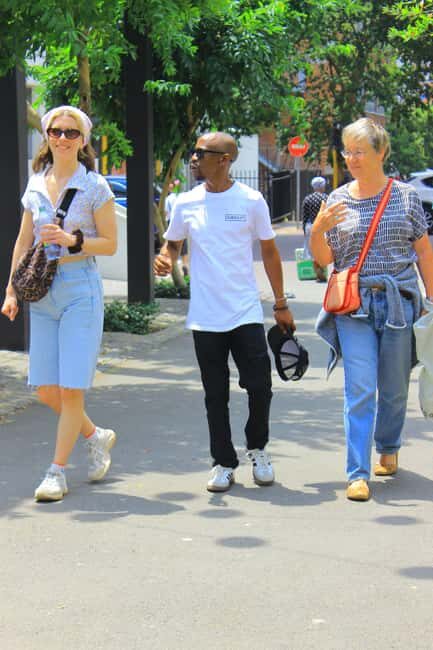
If you like browsing, this is the kind of detour you’ll enjoy. The Collectors Treasure is described as the largest second-hand bookstore in the southern hemisphere. That title is the sort of brag that usually comes with disappointment—unless you’re the type of traveler who loves wandering through shelves and finding what you didn’t know you wanted.
On a walking tour, adding a bookstore stop gives your legs a break and gives your brain a new kind of souvenir: books and ideas. It also fits Maboneng’s theme of re-use and reinvention. Second-hand doesn’t just mean cheaper. It means another person’s past life is still in the stack.
This is a good moment to slow down, pick up something affordable, and keep your energy for the final stretch of the walk.
Rooftop Sun-Downer: The Skyline Moment If Timing Allows
If there’s time, the tour may end with a sun-downer overlooking the Johannesburg skyline. This kind of ending is more than scenic—on foot tours, a skyline viewpoint helps you absorb the neighborhood’s bigger geography. You see how the streets connect to the wider city.
If you’re planning your evening, keep some flexibility here. The tour description flags that the sun-downer depends on time, so don’t build a rigid schedule right after you expect to finish.
Price and Logistics: Is $42 Good Value?
At $42 per person for a 2-hour guided walking tour, the value comes down to what you want from the experience.
You’re paying for:
- a guided route through a neighborhood transformation story
- named cultural stops, including heritage and creative institutions
- a mix of street art, markets, and shopping time
You might feel the price is high if you mainly want a long list of inside attractions or lots of time in shops and museums. The experience is described as a walk with stops, not a full day of sightseeing with transportation included. One caution from past experiences is that tour quality can depend on guide energy and engagement, so it’s worth choosing a time slot and booking approach that matches your comfort with walking and group pacing.
That said, if you like neighborhoods that have a story you can read on the street, $42 can be a fair trade for a compact, well-timed introduction.
Who Should Book This Maboneng Walking Tour?
This tour is a strong fit if you:
- want a street art + heritage combination instead of a single-theme visit
- like markets and cultural shopping, not just photo stops
- are interested in how entrepreneurship and the arts shape urban renewal
- want a guided way to understand downtown Johannesburg without getting lost
It’s not a great match if you:
- have limited mobility, since it’s not recommended for that
- are pregnant, since it’s listed as not suitable
- prefer mostly indoor time, since the tour is primarily walking and outdoor viewing
Quick Practical Tips Before You Go
- Wear comfortable shoes. This is a walking route with multiple street stops.
- Bring weather-appropriate clothing since you’ll be outside for most of the tour.
- Keep your hands free for looking and browsing—markets and the bookstore can slow you down.
- If you’re planning to buy from the market or bookstore, budget a bit for souvenirs.
- Remember littering isn’t allowed. Help keep the streets respectful while you’re enjoying the art.
Should You Book the Evolution of Maboneng?
I think you should book this tour if you want a smart, human-sized introduction to Johannesburg’s creative inner-city—one that connects murals, heritage buildings, and real traditions in the same 2-hour walk. The best part isn’t any single stop. It’s the way the route links change in architecture and housing to public art that breaks down barriers, then ends with culture you can shop and browse.
If you’re sensitive to walking pace or you’re expecting lots of inside time, consider that trade-off. Also, if you care most about the market visit, double-check your day-of plan with the operator.
For the right traveler, this is exactly the kind of trip that makes a city feel more understandable after you leave.
FAQ
How long is the Johannesburg: The Evolution of Maboneng walking tour?
It’s a 2-hour guided walking tour.
Where does the tour start?
The tour meets at Curiocity Backpackers, 302 Fox St, Jeppestown, Johannesburg, 2043.
What are the main places you visit during the walk?
You’ll walk around Maboneng’s street art areas and architectural developments, visit places such as The Cosmopolitan heritage building, Arts On Main, the Kwa Mai-Mai Traditional Healers Market, and The Collectors Treasure second-hand bookstore (plus a possible sun-downer if time allows).
What should I bring?
Bring comfortable shoes and weather-appropriate clothing.
Is the tour suitable for people with limited mobility or pregnant women?
It is not recommended for people with limited mobility, and it is not suitable for pregnant women.
How much does the tour cost, and what’s the cancellation timing?
The price is $42 per person. You can cancel up to 24 hours in advance for a full refund.



![half day wine tour & Safaris[Morning /Afternoon] - Getting from your hotel: pickup options and how to stay ahead of timing stress](https://img.southafricaescapes.com/wp-content/uploads/half-day-wine-tour-safarismorning-afternoon.jpg)