REVIEW · JOHANNESBURG
Soweto Private half day tour
Book on Viator →Operated by LBK Tours · Bookable on Viator
Soweto hits you fast—then stays with you. This half-day tour is designed to show the contrasts of Soweto: places still dealing with poverty and need, side-by-side with sections that have grown into smarter, more affluent neighborhoods after South Africa’s 1994 democratic elections. You’ll learn why Soweto became known for friendship, vibrancy, and diversity, and you’ll see how that story still plays out on the ground.
I particularly like the mix of photo-friendly landmarks and real learning stops. The Orlando Towers area gives you a clear sense of how industry shaped the area, while your guided time at the memorial connects the 1976 student uprisings to the wider struggle for democracy and equality. I also love that the guide takes time for questions and photos—Merriam, for example, is the kind of guide who explains in detail and gives you space to capture the sites.
One possible drawback: the price does not include the main museum/house entrances. You’ll want to budget separately for Mandela House and the Hector Pieterson Memorial, so your final spend ends up higher than the base rate.
In This Review
- Key things to know before you go
- Soweto in 4 hours: what this half-day route is really for
- Pickup, timing, and the pace you should expect
- Orlando Towers and Diepkloof: a landmark with an industrial backstory
- Quick practical tip for this stop
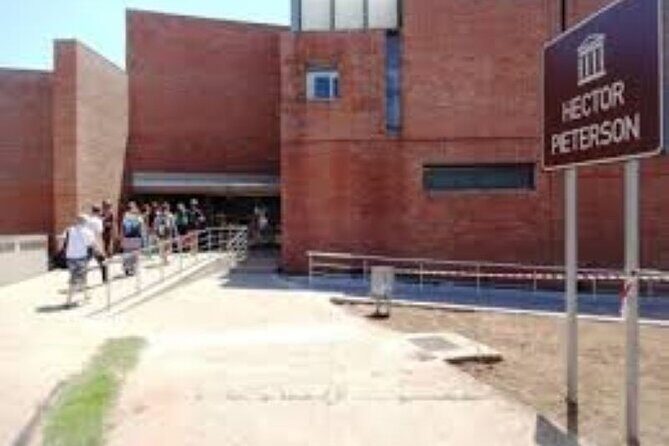
- Hector Pieterson Memorial: where the 1976 student uprisings come into focus
- Admission budgeting note
- How to get the most from your time
- Vilakazi Street: Nobel-level neighbors, plus a real street vibe
- Food option right on the same street
- Flea market browsing
- Mandela House: an efficient visit that still carries weight
- Admission budgeting note
- What to do during your 45 minutes
- Cost and value: what you’re paying for, and what to add
- Who should book this Soweto private half-day tour
- Who might want something else
- Should you book? My practical call
- FAQ
- What is the duration of the Soweto private half-day tour?
- What time does the tour start?
- Is pickup and drop-off included?
- Is this tour private?
- What is included in the tour price?
- Is lunch included?
- What are the entrance fees for Mandela House?
- What are the entrance fees for the Hector Pieterson Memorial?
- Is Orlando Towers admission included?
- Can I cancel for a full refund?
- Is it suitable for most travelers?
Key things to know before you go

- Private group format: it’s just your group, with pickup and guided touring in an air-conditioned vehicle.
- A clear route through Soweto’s changing faces: Diepkloof area viewpoints, Orlando Towers, then the memorial and Vilakazi Street.
- Two major learning stops: the Hector Pieterson Memorial and Mandela House, both with their own entrance fees.
- Time built in for browsing: you’ll have chances to look around flea markets and local stalls near the memorial and on Vilakazi Street.
- Orlando Towers context matters: it’s more than a landmark—cooling towers tied to Johannesburg’s coal power past, later repurposed.
- Plan for weather: even when it rains heavily, the day still runs with flexibility and a steady pace.
Soweto in 4 hours: what this half-day route is really for
A half-day tour can’t cover everything in Soweto. What it can do—if it’s done right—is help you understand the shape of the place. This one moves through key sites that tell two big stories: the long struggle against inequality, and the everyday reality of how communities live, work, and rebuild.
You start the day with a guided drive through Soweto’s neighborhoods, including the Diepkloof Extension area and the hostels area connected to the family units project. Then you shift to major historical anchors: the Hector Pieterson Memorial for the 1976 uprisings, and Mandela House on Vilakazi Street, tied to Nelson Mandela’s personal story.
If you want a single morning that gives you direction—so later, when you wander on your own—you know what you’re looking at—this is a good match. If you’re hoping for a slow, deep, no-rush version of everything Soweto has to offer, you may feel the time pressure. The good news is the tour structure keeps momentum without skipping the meaning.
You can also read our reviews of more private tours in Johannesburg



Pickup, timing, and the pace you should expect
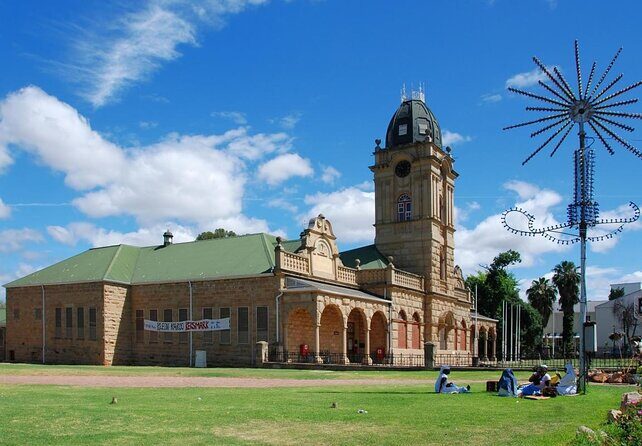
The tour runs about 4 hours starting at 10:00 am, with pickup and drop-off at your address in an air-conditioned vehicle. That matters in Johannesburg. You trade waiting times and taxi stress for a plan that stays coherent—especially on a day where multiple stops sit across different parts of Soweto.
The stop times are realistic for a half-day: around 15 minutes at Orlando Towers, about 30 minutes at the Hector Pieterson Memorial, another 30 minutes in Vilakazi Street, and roughly 45 minutes at Mandela House. This means you won’t feel trapped in one museum room for hours—but you also won’t only skim the surface.
Because the memorial and Mandela House require entrance fees and time inside, the pacing can feel tight if you’re the type who loves reading every sign. If you like to absorb slowly, I suggest going in with a simple game plan: pick a few themes you want to understand (like student protests, or Mandela’s life and imprisonment) and let the rest be guided context rather than a full course.
Orlando Towers and Diepkloof: a landmark with an industrial backstory

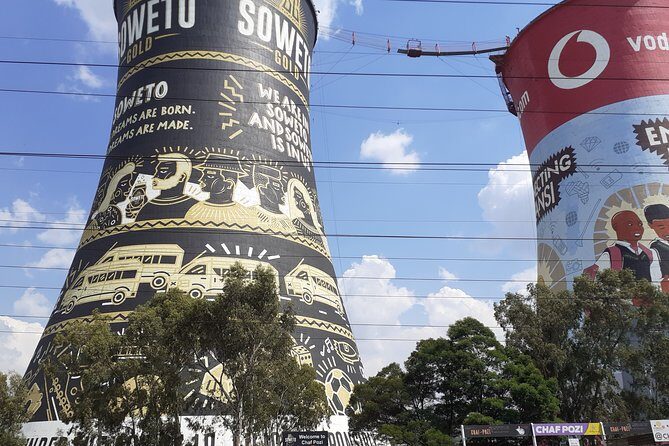
Orlando Towers is the first “wow” moment on the route, and it’s not just because it looks distinct against the neighborhood. These towers were once cooling towers for a coal-run power station that supplied electricity to Johannesburg. The power station closed in 1998, and later the area was transformed into a sporting, entertainment, and business center starting in 2008.
That industrial-to-redevelopment story is useful because it helps you read the physical city. You can look at a skyline or a landmark and think it’s purely visual—but it’s tied to jobs, power, and how cities grew. In Soweto, those forces show up in everyday life and in how areas change over time.
You’ll also move through the Diepkloof Extension area and see the hostels-related family units project mentioned during the tour. This kind of stop gives the background that makes the later memorial sites feel more grounded. It’s one thing to learn about inequality in textbooks; it’s another to watch how development, housing, and public services show up—or don’t—in the places where people live.
Quick practical tip for this stop
Orlando Towers is tied to photos. You’ll get a brief window to take pictures and the rest is commentary from your guide. If you want the best shots, keep your camera ready and don’t wander off too far during the stop.
Hector Pieterson Memorial: where the 1976 student uprisings come into focus

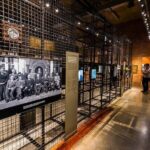
The Hector Pieterson Memorial is a central stop, and it takes the tone of the day from “interesting local sites” into something more serious. The museum covers the Soweto Students’ Uprisings of 1976 and the broader struggle for democracy and equality in South Africa.
Even if you already know the basic facts, the memorial is powerful because it focuses attention on memory and legacy—how those events are remembered and how they shaped the country’s direction. In a short half-day, this is the stop that usually sticks hardest.
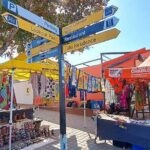
Your guided time here includes a museum viewing plus time to browse nearby stalls. You’ll have a chance to look around the flea market selling items like curios, beaded work, and African clothing linked to local vendors. It’s a practical add-on: it lets you treat the day not only as a history lesson, but also as a chance to see modern Soweto commerce up close.





Admission budgeting note
Entrance to the Hector Pieterson Memorial is not included in the tour price. The listed rate is R100 per person, and students pay R50 with proof.
How to get the most from your time
With a roughly 30-minute window, you’ll get the best experience if you don’t try to read every single panel. Instead, follow your guide’s focus—then spend a few minutes at the end revisiting one section that grabbed you.
Also, be ready for emotion. This stop deals with the hardship people faced, and it’s meant to open your eyes to what inequality can look like over time.
Vilakazi Street: Nobel-level neighbors, plus a real street vibe
Vilakazi Street is one of those places in Soweto that you can point to on a map and immediately understand why it’s famous. It’s known as a popular attraction for both locals and international visitors, and it’s also home to two Nobel Prize winners: former President Nelson Mandela and Archbishop Emeritus Tutu.
This stop is structured for quick orientation plus a chance to experience the street as a place people actually live in and move through. You’ll also pass and get time around a major landmark here: the Mandela House area later in the tour, plus the general street setting that ties it all together.
Food option right on the same street
If you want a lunch that feels like you’re still “in the story” rather than rushing back out, there’s an option on Vilakazi Street: Sakhumzi Restaurant. Lunch is optional and not included. The buffet includes items such as dumplings, rice, mealie porridge (pap), samp, and sour sorghum porridge, plus choices like beef stew, chicken, boerewors, vegetables, salads, and dessert.
In practical terms, this is helpful because your tour schedule gives you a short 30 minutes here. If you’re hungry and don’t want to hunt for food later, this can be an easy fix.
Flea market browsing
Vilakazi Street also offers browsing opportunities—African clothing, artefacts, and curios. It’s not just shopping for shopping’s sake. It’s a chance to interact with local crafts and see how culture is expressed through everyday selling and making.
Mandela House: an efficient visit that still carries weight

Mandela House is one of the most meaningful stops on the route, and it’s also the one that adds the most time. You’ll have roughly 45 minutes here, which is long enough to understand the core of the experience without turning the day into a museum marathon.
The house was the home where Mandela lived with his family before his life imprisonment. The tour inside is designed to connect his personal story to bigger themes: human rights, democracy, reconciliation, mutual respect, and tolerance within South Africa and for international visitors.
This framing is the point. You’re not just seeing rooms and objects. You’re learning how one life connects to a national shift. Even in a short time, the approach helps you leave with a clearer sense of why Mandela is remembered the way he is—without turning the visit into a passive sightseeing stop.
Admission budgeting note
Entrance to Mandela House is not included in the tour price. The listed entrance cost is R180 per person, and students or children aged 12–18 pay R70 with proof.
What to do during your 45 minutes
Because you’re not allowed to stretch the schedule, you’ll get better value if you move steadily through the house, then pause where your guide points out key elements. Don’t rush out immediately. Spend the last few minutes thinking about what you just learned and how it links back to the memorial earlier in the day.
Cost and value: what you’re paying for, and what to add
The base tour price is $76.90 per person and the tour lasts about 4 hours. That includes pickup and drop-off in an air-conditioned vehicle and a guided tour. It also lists group discounts and a mobile ticket option, which can make check-in easier than older-school paper tickets.
But the value equation changes once you factor in entrance fees:
- Orlando Towers: admission is free for the stop (about 15 minutes).
- Hector Pieterson Memorial: not included; R100 per person (students R50 with proof).
- Vilakazi Street: free to visit (about 30 minutes).
- Mandela House: not included; R180 per person (students/children 12–18: R70 with proof).
Lunch is optional at Sakhumzi Restaurant and paid separately.
So is it worth it? For most people, yes—because you’re not just hopping between stops. You’re getting commentary that helps connect the places: the industrial past behind Orlando Towers, the inequality and resistance themes at the memorial, and the life story framed through Mandela House. A guided route also reduces decision fatigue. In Soweto, that matters.
The biggest reason this tour feels good value is the private-group setup. You get the flexibility of traveling with your group only, and you’re not stuck in a crowded, rushed pace.
Who should book this Soweto private half-day tour

This tour is a strong fit if you want:
- A guided introduction to Soweto with stops that tell a coherent story
- Time-efficient learning at Hector Pieterson Memorial and Mandela House
- Pickup and drop-off so you don’t waste time organizing transport for a focused day
It’s also a good choice if you care about interpretation, not just photos. Merriam (one of the guides you may get) is specifically mentioned as professional and detail-oriented, with time for pictures and clear explanations.
Who might want something else
If you want a long, slow cultural day with lots of walking and deep conversation at multiple community stops, this schedule may feel short. The day is designed to hit key anchors within about four hours, not to cover every neighborhood or angle.
If museums and memorials aren’t your thing, you might find the emotional focus heavier than expected. This is history and real-life inequality, not only sightseeing.
Should you book? My practical call
If you’re in Johannesburg and you want a smart first taste of Soweto—with structure, guidance, and meaningful stops—this is a solid booking. The private format, the air-conditioned pickup, and the clear route through Orlando Towers, the Hector Pieterson Memorial, Vilakazi Street, and Mandela House add up to a day that feels purposeful rather than random.
Just go in ready to pay the entrance fees for the two main learning stops. Also bring the right attitude: respect matters here, and the memorial experience is meant to be felt. If you want a half-day that gives you both context and memorable moments, this tour is a strong choice.
FAQ
What is the duration of the Soweto private half-day tour?
It runs for about 4 hours.
What time does the tour start?
The start time is 10:00 am.
Is pickup and drop-off included?
Yes. Pickup and drop-off at your address are included in an air-conditioned vehicle.
Is this tour private?
Yes. It’s a private tour/activity, meaning only your group participates.
What is included in the tour price?
The price includes pickup and drop-off plus a guided tour.
Is lunch included?
No. Lunch and drinks are available on your own account. Lunch is optional at a local restaurant on Vilakazi Street.
What are the entrance fees for Mandela House?
Mandela House entrance costs R180 per person. Students and children aged 12–18 pay R70 with proof.
What are the entrance fees for the Hector Pieterson Memorial?
Hector Pieterson Memorial entrance costs R100 per person. Students pay R50 with proof.
Is Orlando Towers admission included?
Yes. The stop at Orlando Towers lists admission as free, and it’s about 15 minutes.
Can I cancel for a full refund?
Yes. You can cancel up to 24 hours in advance for a full refund.
Is it suitable for most travelers?
Most travelers can participate.