REVIEW · PLETTENBERG BAY
Short Canyoning Trip in The Crags
Book on Viator →Operated by Africanyon River Adventures · Bookable on Viator
Canyoning in just two hours? That works. This short trip in The Crags near Plettenberg Bay is built around one big loop: you gear up fast, then you abseil, hike, and swim through an ancient river canyon with freshwater pools and waterfalls, including a standout abseil at The Rush. I like that the day is fully guided by qualified, registered Canyon Adventure Guides, and I especially like the small-group feel (no more than 10 participants). A practical consideration: you’ll want to be comfortable getting wet and moving on uneven, slippery surfaces, even if you’re a beginner.
This outing is priced at $48.02 per person and includes the key stuff that usually adds up on active days—helmet, wetsuit, life vest, and harness—plus a guide and local taxes. In the vibe department, I’m drawn to how guides like Tebzzzz and Puna focus on keeping things safe while still making the adrenaline parts feel fun. Another consideration: shoes for swimming aren’t included, and the tour notes that you should arrange wet shoes or expect to rent them at the camp for an extra cost.
If you’re aiming for a first canyoning experience (or you’ve done it before and want something shorter), this is a clear target. It runs in the morning or afternoon, uses a mobile ticket, and keeps the pacing tight for a roughly 2-hour adventure. The only thing that can change your plan is the weather—this activity requires good conditions.
In This Review
- Key things that make this canyoning trip worth your time
- The big attraction: short canyoning near Plettenberg Bay
- Price and what you actually get for $48.02
- Where you meet and why arriving early matters
- Gear up: wetsuit, helmet, harness, and wet-shoe reality
- The first abseil: learning the moves in a real gorge
- Hiking and swimming through freshwater pools
- The confluence choice: jump from the cliffs or abseil into a waterfall
- The Rush waterfall: the standout 25-meter abseil moment
- Optional final cliff jump and the walk back to base camp
- Who this is best for (and who should think twice)
- Weather and timing: how good days stay good
- Realistic tips so you enjoy it more
- Should you book this short canyoning trip?
Key things that make this canyoning trip worth your time
- Small group energy with no more than 10 participants, which matters when you’re learning abseil skills and switching between activities.
- All the core gear included: wetsuit, helmet, life vest, harness—so you’re not scrambling for rental details right away.
- Real canyon moments, not just one highlight: abseils, swims, hikes, and waterfall sections that build in intensity.
- Choice points for adrenaline: at the river confluence you can jump from the cliffs or do an abseil into the waterfall below.
- The Rush waterfall abseil at 25 meters (82 feet), a major moment for a trip that stays short.
- Short drive from base camp to the action, about 5 minutes, so you spend more time moving through the canyon.
The big attraction: short canyoning near Plettenberg Bay
The Crags sits close to Plettenberg Bay in the Western Cape, and this trip uses that location for a smooth “arrive, gear up, go” format. You’ll get a safety briefing, then you’ll head to the canyon by car, spending only about five minutes getting to the start of the action. For a lot of people, that’s exactly the appeal: canyoning without turning it into an all-day logistics puzzle.
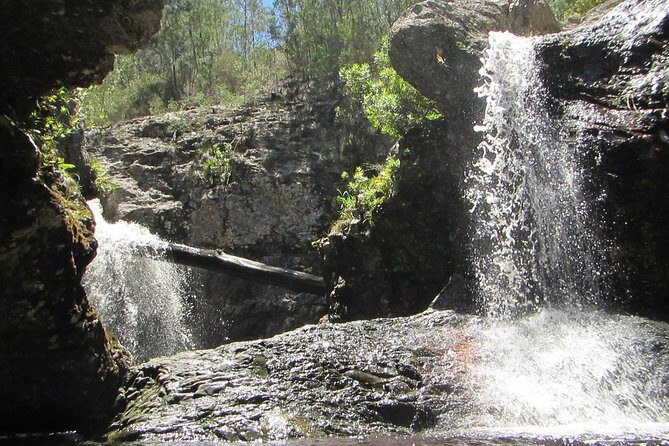
The canyon itself is described as an ancient river gorge running through indigenous forest. That matters because you’re not just doing a stunt in a random place—you’re moving along a natural water route with freshwater streams and pools. You’ll feel that rhythm as the day moves from abseil to hike to swim, back to abseil again.
Because this is a short trip (about 2 hours), it’s also easier to fit into a travel schedule. If you’re doing a few days in the area and you want one “adventure” block rather than a full expedition, this hits the sweet spot.
You can also read our reviews of more tours and experiences in Plettenberg Bay.
Price and what you actually get for $48.02
At $48.02 per person, this isn’t a “bare-bones lesson.” The price is tied to guided instruction plus the safety equipment you need to rappel and move around water. Included gear means you’re covered for the helmet, wetsuit, life vest, and harness—those are the big costs on active tours, and they’re often where travelers get surprised.
You also get professional guidance from registered Canyon Adventure Guides, and the group size stays small. For me, that’s where the value really shows up: active water days go more smoothly when you have a guide who can adjust the pace and coach the technique on the fly.
A couple of things aren’t in the price. Shoes to swim in aren’t included, and food and drinks aren’t included either. Also, there’s no transport to or from the activity—so you’ll want to plan your own ride to the meeting point.
Where you meet and why arriving early matters
You’ll start at Africanyon River Adventures, on Monkeyland Road in The Crags (near Plettenberg Bay). The activity ends back at the meeting point, so it’s a simple loop: base camp to canyon and back again.
Here’s the rule you don’t want to skip: you must arrive 1 hour before your booking time for gear up and the safety briefing. That hour matters because it sets the tone for the whole run. If you show up late, you risk slowing the group down right when you’re trying to get suited up and comfortable with the equipment.
The tour runs with a morning or afternoon departure option, so you can choose based on your day plan. If you’re the type who hates rushing, the morning slot can feel calmer. If you prefer to start later and enjoy a relaxed start, the afternoon slot can work well.
Gear up: wetsuit, helmet, harness, and wet-shoe reality
Your gear list is pretty straightforward. You’ll don a wetsuit, helmet, and harness, and you’ll also have a life vest for flotation support. The whole point is that you can focus on the canyon actions instead of sourcing safety gear.
You should bring a bathing suit and towel. The tour notes that wet shoes are ideal, and it also says shoes can be hired at the camp for an additional cost. This is an important practical point: you’ll be walking on rock and moving through shallow water, so you’ll want something that grips and protects.
Also bring towels for a hot shower after the trip. That towel part is called out for a reason. Canyoning gets you wet fast, and you’ll want to be able to dry off and get comfortable after the last swim or jump.
The tour uses a mobile ticket, so have your phone ready for check-in. You’ll also be asked for a mobile number when booking, which helps the operator coordinate with your group.
The first abseil: learning the moves in a real gorge
Once you meet your guides and your small group, you get a safety briefing. Then you drive about 5 minutes to the canyon area, described as an ancient river gorge in indigenous forest.
The trip starts with the first abseil (rappel)—a controlled descent down into the gorge. Even on a short canyoning route, this is a big moment. It sets your confidence early because you’ll feel how the system works: helmet on, harness secured, and the guide coaching your body position and movement.
For beginners, starting with an abseil is the “teach early” approach. For experienced canyoners, it’s a fast entry into the real thing without a long warm-up.
This part is also where the small group size helps. When there are fewer people, guides can keep a closer eye on each person’s readiness and confidence level before the group moves from one activity to the next.
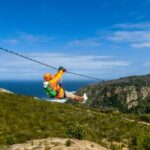
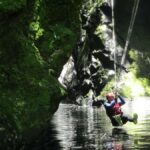

Hiking and swimming through freshwater pools
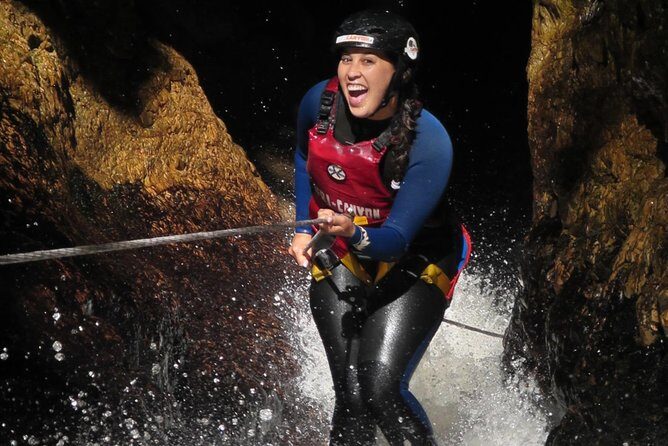
After the first descent, you shift from vertical movement to “river work.” You’ll hike and swim through the ravine’s freshwater pools and streams, which means you’ll be actively in the water for stretches rather than just touching it.
This is where you’ll notice the tempo change. The abseils are brief and intense. The hike-and-swim sections take longer, and you’ll need to stay loose and steady on your footing. The good news is that the route is guided end-to-end, so you’re not figuring out where to go or what to do next.
You’ll also be moving through a canyon setting with natural water features, including freshwater streams and pools that you swim through during the route. That’s a key difference between “water fun” and actual canyoning: the water isn’t an accessory, it’s the environment.
The confluence choice: jump from the cliffs or abseil into a waterfall
At the confluence of two rivers, the experience gives you a decision point. You can choose to make an exciting jump from the cliffs or do an abseil into the waterfall below. That flexibility is a smart design for a mixed group.
If you want pure adrenaline, the cliff jumps are the obvious target. If you’d rather control your risk and take in the motion more slowly, the waterfall abseil option can feel more manageable while still being thrilling.
This choice also helps you pace your own comfort level. You can go big at one point without feeling locked into the same intensity for every element of the trip.
The Rush waterfall: the standout 25-meter abseil moment
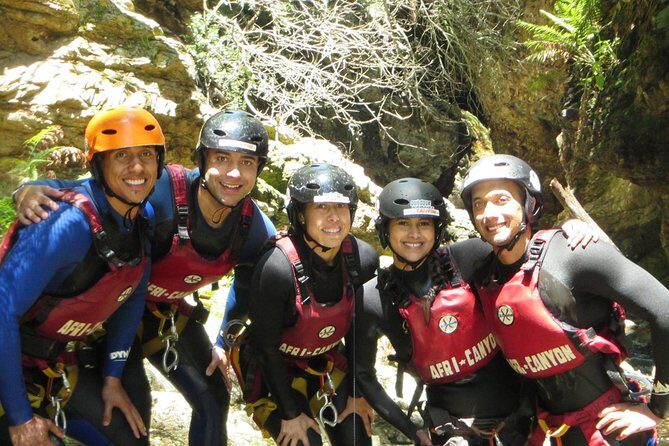
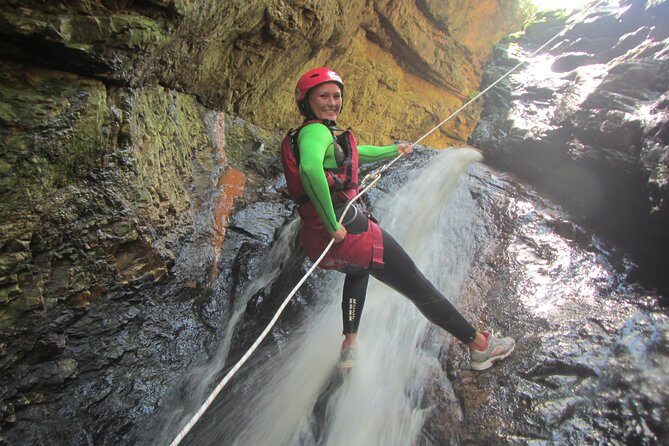
The route continues with more swimming and hiking alongside the river shallows until you reach The Rush, an 82-foot (25-meter) waterfall. This is the headline feature for a reason: you don’t just watch it, you experience it while moving through it.
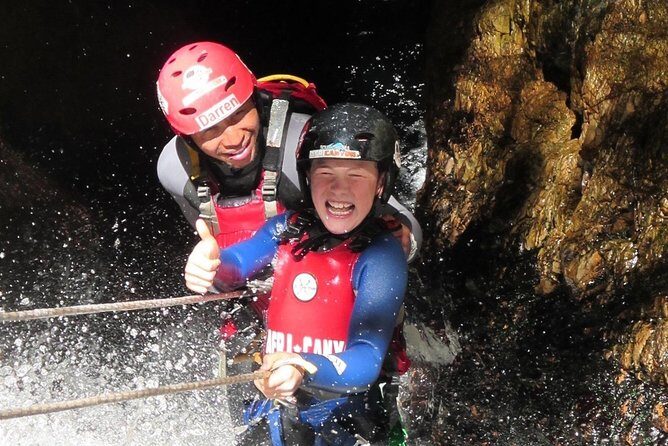
Here, you take an abseil through the cascades into the pool below. That’s a very different sensation from the first descent. The water adds sound, mist, and motion, and you’re essentially combining rappelling with being surrounded by a working waterfall.
For first-timers, this is often the moment when everything clicks: you realize you’re not just doing a hike with a few stunts. For returning canyoners, it’s the kind of “big waterfall” stop that makes a shorter trip still feel complete.
Optional final cliff jump and the walk back to base camp
After The Rush, you keep swimming through the river shallows, then you reach the last optional cliff jump into the waters below. That last jump is marked as optional, which is a good way to end on a high note without forcing anyone who’s conserving energy or managing nerves.
Once the route is done, you return to base camp. The activity ends back at the meeting point, so you can plan on wrapping the day with a hot shower and a change of clothes.
And there’s one extra “nice to have”: you’ll have the opportunity to purchase pictures taken by the guides along the way. If you’re the sort of person who wants proof you actually did the abseils and jumps (and not just vague memories), this is a practical add-on.
Who this is best for (and who should think twice)
This canyoning trip fits beginners and experienced canyoners. The structure helps beginners because you start with a guided abseil and get safety coaching early. It also works for experienced canyoners because you still get multiple technical moments, including a major waterfall abseil and optional jumps.
The minimum age is 8 years old, which suggests the operator expects families and youth groups as long as they can follow instructions and meet physical comfort needs. You’ll want to check comfort with wet gear and heights, since abseils and cliff jumps are part of the core experience.
The biggest “think twice” factor isn’t skill level—it’s comfort with water and motion on uneven ground. If you’re nervous about getting wet, sliding on rock, or moving through freshwater pools, you might find the experience stressful rather than fun.
Weather and timing: how good days stay good
This activity requires good weather. If it’s canceled due to poor weather, you’ll be offered a different date or a full refund. That’s exactly what you want for a water-and-rock sport, because canyoning isn’t something you can fake in bad conditions.
The timing is also tight by design. The whole trip is about two hours, with small-group movements and a sequence that keeps momentum. That means you’ll want to arrive early, be ready, and avoid anything that slows you down before gear-up.
Realistic tips so you enjoy it more
Here are a few practical choices that make the day smoother—things that matter because you’ll be alternating between abseils, hikes, and swims.
- Bring what the trip asks for: bathing suit and a towel for after.
- Use wet shoes if you can. If you don’t have them, rent them at the camp since shoes to swim in aren’t included.
- Plan to feel cold after the activity, even if you’re fine in the moment. A towel for the hot shower helps you bounce back fast.
- Wear a swim-ready attitude. This is not a dry adventure. You’ll be in freshwater pools and streams, and you’ll get wet throughout.
In terms of service, the guide team is a standout. Names like Tebzzzz and Puna show up in the experience vibe, and other guide names mentioned such as Sims, Warren, and Bokkie reinforce the same theme: helpful, accommodating guidance paired with safety-first coaching.
Should you book this short canyoning trip?
Book this if you want a guided canyoning hit without committing to a full day, and you like the idea of abseils plus swims plus waterfall action in one tight loop. It’s also a strong choice if you want beginner-friendly structure with optional adrenaline moments at the river confluence and again at the end.
Skip or consider another option if you know you strongly dislike wet, heights, or moving on slippery surfaces. This trip’s core design is built around those elements, and the short duration doesn’t leave much room to “warm up” socially or mentally if you’re anxious.
If you’re traveling near Plettenberg Bay and you want one memorable, hands-on adventure that runs in about two hours, this is a very good use of your time.