REVIEW · PRETORIA
Half Day Johannesurg and Soweto Guided Tour
Book on Viator →Operated by Thiya Tours and Safaris · Bookable on Viator
Joburg hits you in layers, fast. This half-day plan mixes Johannesburg’s power and pain with a focused look at everyday Soweto culture, from Constitution Hill to Vilakazi Street. You get city context first, then real context: prisons turned human-rights teaching space, Nobel-linked streets, and monuments that connect geography to South Africa’s political story.
Two things I really like here: the route is built for momentum without feeling random, and the guide support matters. In the feedback, the guide named Lucky (Nhlanhla) gets singled out for being friendly, flexible, and clearly passionate, with a driving style that makes you feel in good hands. The main drawback to keep in mind is the pace—this is a 5-hour loop with multiple short stops, and not everything has a guided presentation, plus lunch is not included.
In This Review
- Key highlights you’ll care about
- How this half-day Johannesburg and Soweto route stays worth it
- Starting in Johannesburg: Houghton, Munro Drive, and Hillbrow’s contrast
- Constitution Hill Human Rights Precinct: a prison that teaches
- From gold-rush relics to Maboneng’s comeback
- Heading into Soweto: Diepkloof, Baragwanath Hospital, and big-city scale
- Vilakazi Street and Sakhumzi Restaurant: culture you can feel
- Mandela’s House and Hector Pieterson Museum: two ways to understand 1976
- Price, inclusions, and what you’re really paying for
- Who should book this tour, and who should think twice
- Should you book Johannesburg and Soweto Half Day with this operator?
- FAQ
- How long is the Half Day Johannesburg and Soweto Guided Tour?
- How much does the tour cost?
- Where does the pickup happen?
- Is this a private tour?
- What’s included in the tour price?
- Are any entrance fees included?
- Is lunch included?
- Is the Hector Pieterson Museum guided?
- What is the cancellation policy?
Key highlights you’ll care about
- Constitution Hill Human Rights Precinct as a prison site turned teaching museum
- Guided Mandela House in Soweto, with exhibits and interpretive panels
- Vilakazi Street on foot-time around Nelson Mandela and Desmond Tutu’s legacy
- Scenic and historical stops like Munro Drive and the WWII-linked Italian prisoner monument
- Inner-city contrast via Maboneng’s revival and Hillbrow’s immigrant-mix drive-by views
How this half-day Johannesburg and Soweto route stays worth it

This tour works best if you want a strong overview without sacrificing the places that actually matter. You spend your morning or afternoon getting orientation around Johannesburg, then you shift to Soweto and slow down just enough to let the story land.
What makes it feel “worth it” at $85.06 per person is the mix of included value and transport comfort. You’re in an air-conditioned vehicle with bottled water, and you’re not stuck figuring out logistics between distant neighborhoods. On top of that, it’s a private tour, meaning it’s only your group, so you can ask questions as you go rather than waiting your turn.
The other practical win: several stops are free, and two major attractions are listed as included (Constitution Hill and Mandela’s House). That means fewer surprise costs mid-day.
Still, you should know what this format is: a half-day sampler with short timed stops. If you want slow museum time everywhere, you may feel a little rushed. But if you want a smart first pass that tells you where to go next, this is a solid use of time.
You can also read our reviews of more guided tours in Pretoria


Starting in Johannesburg: Houghton, Munro Drive, and Hillbrow’s contrast
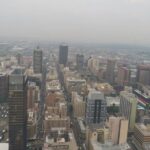
You begin with pickup at your hotel, then the guide gives you a basic orientation—what Johannesburg looks like, how neighborhoods connect, and why the city’s layout matters. This is the part that helps the later stops make sense, especially for first-time visitors.
From there, you head toward Houghton Estate, a more affluent area tied to Nelson Mandela. The tour includes a look at the neighborhood connection, including mention of the Mandela home where he lived during his presidency and where he died in December 2013. Even if you don’t go deep on details here, seeing how Johannesburg separates wealth spatially helps frame what comes next.
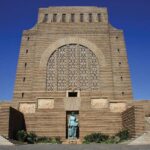
Next is Munro Drive Viewpoint, where you get a scenic overlook of the northern suburbs. The stop is also about history: the viewpoint area is described as a national monument built by Italian prisoners of war captured during the Second World War, with views toward the world’s largest man-made subtropical forest. It’s a reminder that Johannesburg’s story isn’t only apartheid-era politics—it’s also global events shaping local infrastructure.
Then the route brings you past Hillbrow, explained as an area where you can see the results of influx and where Johannesburg’s immigrant mix shows up. You’ll notice the shift as you drive through different neighborhoods, and the guide’s framing turns those observations into something meaningful rather than just scenery.
Constitution Hill Human Rights Precinct: a prison that teaches
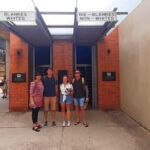
The most important stop in the Johannesburg portion is Constitution Hill Human Rights Precinct. This is one of those places where the setting isn’t a backdrop—it’s the message.
You’re taken to a century-old prison and military fort that has been turned into a center with tours and exhibitions. The guide uses it as a living museum for South Africa’s journey to democracy, and you also hear that major political figures were incarcerated there, including Nelson Mandela, Mahatma Gandhi, Winnie Madikizela-Mandela, and other political leaders.
This is the kind of visit where you’ll want your full attention. Even in the included 1-hour slot, you can get a lot out of the interpretive setup because the site itself explains the contradiction: a carceral space re-used to educate the public about rights and change.
One small consideration: you’re pairing this emotional stop with several other quick city moments in the same day. If you’re sensitive to heavy themes, give yourself a slower pace for photos and questions here. It’s worth it.
From gold-rush relics to Maboneng’s comeback
After Constitution Hill, the day continues through central Johannesburg and keeps the focus on how the city became what it is.
You drive over Nelson Mandela Bridge on the way toward the city’s New Town area, with the guide using the drive to point out historic sites and heritage buildings. You also pass the Johannesburg CBD, explained as once the epicenter of the gold rush era in the late 1800s, and the tour ties this to the highveld setting and the idea of Johannesburg as a cosmopolitan hub that also carried exclusion and segregation.
A standout detail here is the Standard Bank Ferreira Mine Stope, preserved in the basement of Standard Bank headquarters. The tour notes that a long-forgotten mine entrance was discovered during construction and that it was preserved as a small museum. This kind of stop is quick, but it makes Johannesburg’s mining legacy feel tangible rather than abstract.
Then you reach Maboneng Precinct, described as a rejuvenated area that was once abandoned. You’ll see a mix of restaurants, coffee shops, clothing boutiques, art galleries, and retail and studio spaces—less about monuments, more about how people bring life back to inner-city streets. For many visitors, this is the moment where Joburg feels like a living modern city rather than a history lesson.
Finally, you also drive past the iconic football stadium that was the largest in Africa at the time of listing, with its role in the opening ceremony, matches, and the final of the 2010 FIFA World Cup. Even as a drive-by, it’s a good visual anchor for how global events and local pride intersect here.
Heading into Soweto: Diepkloof, Baragwanath Hospital, and big-city scale
Crossing into Soweto is where the tour shifts from city overview to community focus. You don’t just move locations—you move perspective.
A stop in Diepkloof Park covers how Soweto isn’t one single story. The tour notes Diepkloof Extension as recognized as the more upmarket part of Soweto, with professionals and large owner-built homes. It also mentions the area’s higher-than-average house prices compared to other Soweto neighborhoods. This is useful because it counters the common idea that townships are only one uniform experience.
You then pass Chris Hani Baragwanath Hospital, described as a public hospital and noted as the third largest in the world by the tour’s figures, spread across about 173 acres and around 3,200 beds with roughly 6,760 staff members. Even from the road, this is a serious reality check about scale and how essential services shape daily life. It’s also a place where you can see that Soweto’s story includes systems, employment, care, and community infrastructure—not only political history.
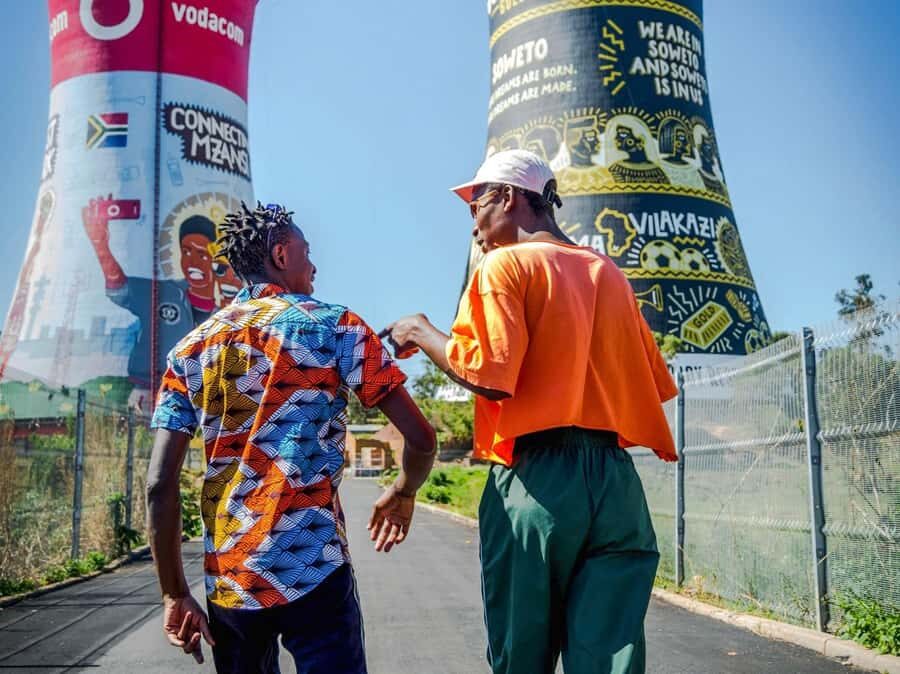
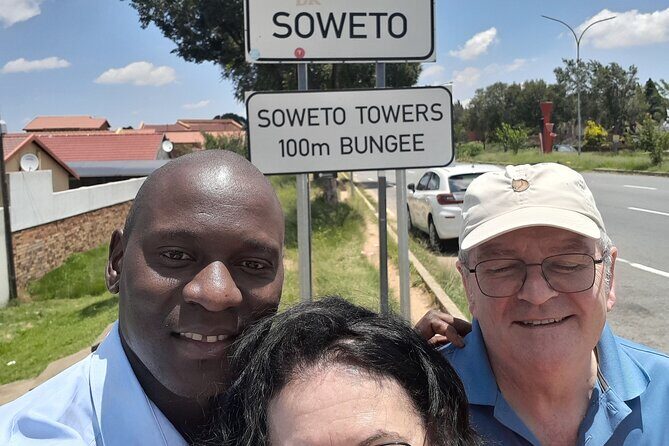
The tour also references cooling towers as a prominent landmark in Soweto, now used as an entertainment center that houses a famous bungee jump and a barbecue restaurant. That mix of industrial-era features turned into leisure helps you see Soweto as a place with its own contemporary rhythm.



Vilakazi Street and Sakhumzi Restaurant: culture you can feel
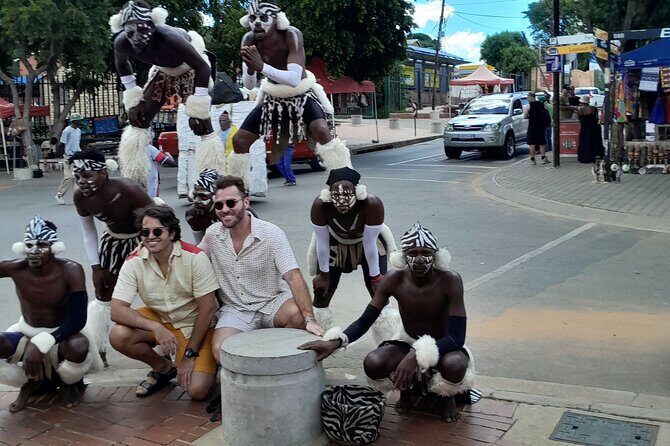
The heart of the Soweto experience centers on Vilakazi Street, described as one of South Africa’s best-known streets and the only street in the world credited with having had two Nobel laureates as residents: Nelson Mandela and Archbishop Emeritus Desmond Tutu.
This stop isn’t only about names. The tour frames Vilakazi Street’s energy through the people who live there now, with their own stories. When you walk around this area, you’re seeing a street that carries memory and still functions as everyday life.
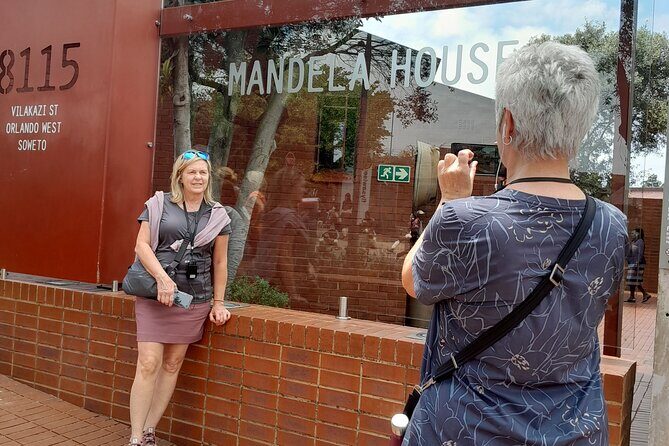
Right near the Mandela House Museum, you stop at Sakhumzi Restaurant for a Soweto-style buffet meal. The tour points to traditional dishes like umngqusho (samp and beans), mogodu (tripe), and notes additional foods in the buffet style. This is one of the best opportunities in the day to slow down and experience the culture beyond photos.
One practical note: lunch is not included in the tour price, even though there is a restaurant stop with time listed. So if you’re budgeting, plan to pay for your meal there.
Mandela’s House and Hector Pieterson Museum: two ways to understand 1976
After Vilakazi Street, the tour focuses on two of the most emotionally loaded sites connected to apartheid-era resistance.
First is Mandela’s House, where you get a guided tour (admission included). The tour describes exhibits and artefacts from a previous house of Nelson Mandela, plus sound, film, interpretive panels, and guided explanations. This is the kind of guided stop that helps you connect the man to the timeline without getting lost in facts.
Then you move to the Hector Pieterson Museum and Memorial, with a self-guided tour. It’s named after a thirteen-year-old victim connected to the 1976 Soweto student uprising. The museum is described as a symbol of resistance against the brutality of the apartheid regime. Because it’s self-guided, it’s a good moment to set your own pace—spend more time where the story grabs you and move on when you need a break.
Admission for Hector Pieterson is listed as not included. That means it’s one of the few extra costs you’ll need to plan for if you want the full museum visit.
Price, inclusions, and what you’re really paying for
At $85.06 per person for a roughly 5-hour private tour, you’re paying for three main things: transport between Johannesburg and Soweto, a guide who provides context as you drive, and entry to two key sites.
Included items are straightforward: bottled water, an air-conditioned vehicle, private transportation, and an English-speaking guide. Also, several stops have admission ticket set as free in the tour info, including many viewpoints and city locations along the route.
The admissions marked as included are Constitution Hill Human Rights Precinct and Mandela’s House. That’s meaningful value because these are central story points. Anything not included includes lunch and personal purchases, plus the Hector Pieterson Museum admission.
Also consider the tour schedule reality: stops like the Johannesburg viewpoint points and some driving segments are timed at 10–20 minutes. That means you get orientation and a guided framework, not long on-your-own exploration at every location. If that matches your travel style, this pricing makes sense.
Who should book this tour, and who should think twice
I think this tour is a great fit if you:
- have limited time and want a structured look at both Johannesburg and Soweto
- like guided context more than wandering alone
- want a strong set of starting points for future day trips after you get your bearings
It may be less ideal if you:
- want long museum hours and deep guided time at every stop
- dislike visiting places tied to political violence and imprisonment themes
- prefer tours where lunch is included in the package
One small tip from the tone of the guide praise: ask questions. The feedback highlights Lucky (Nhlanhla) as flexible and attentive, and that tends to make the shorter stops feel more valuable because you can steer the conversation toward what you care about most.
Should you book Johannesburg and Soweto Half Day with this operator?
Yes, if you want a focused, first-pass experience with strong story anchors. The combination of Constitution Hill plus Mandela’s House, along with street-level time around Vilakazi Street, gives you a clear emotional and historical arc without a full-day commitment.
Book it especially if you appreciate a guide who brings humor and responsiveness, like Lucky (Nhlanhla), and if you want comfort in a vehicle while moving across Johannesburg’s major areas. If you hate feeling rushed, or if you’re budgeting carefully for museum fees and lunch, plan your extra spending before you go.
FAQ
How long is the Half Day Johannesburg and Soweto Guided Tour?
The tour is listed as approximately 5 hours.
How much does the tour cost?
The price is $85.06 per person.
Where does the pickup happen?
Pickup is offered from your hotel in the Johannesburg area, and you’ll be dropped back at the starting point or your accommodation in Johannesburg.
Is this a private tour?
Yes. It’s described as a private tour/activity, with only your group participating.
What’s included in the tour price?
The tour includes bottled water, an air-conditioned vehicle, private transportation, and an English-speaking guide.
Are any entrance fees included?
Yes. Admission is included for Constitution Hill Human Rights Precinct and Mandela’s House. Other stops listed as free include several city viewpoints and precinct drives.
Is lunch included?
No. Lunch is not included.
Is the Hector Pieterson Museum guided?
The Hector Pieterson Museum and Memorial is described as self guided. Admission for this stop is listed as not included.
What is the cancellation policy?
You can cancel for a full refund up to 24 hours in advance of the experience start time. Free cancellation is available under that window.