Two neighborhoods, one powerful day. This Johannesburg and Soweto tour strings together Constitution Hill and the Hector Pieterson Museum with key Soweto streets, all in one efficient loop. I love the included pickup and air-conditioned transport that keeps the day from getting messy, and I love how the schedule fits a lot of major sights without making you play transit roulette.
One catch: some of the most important stops charge separately, and lunch is on your own. For example, Mandela House and the Hector Pieterson Museum admission aren’t included, so budget a bit extra if you want to go inside.
In This Review
- Key highlights that make this tour worth it
- A 6-hour game plan for Johannesburg and Soweto
- Pickup, comfort, and the small-group feel with Tsalanang Tours
- Constitution Hill Human Rights Precinct: former prison to courtrooms
- Braamfontein and Newtown from the road: city life and architecture
- FNB Stadium and the 2010 World Cup connection
- Soweto Towers and the route into Vilakazi Street
- Mandela House: seeing the place without the extra cost of entry
- Hector Pieterson Museum and Memorial: the 1976 student uprising
- Apartheid Museum timing: when it’s an add-on and how to plan
- Price and what you’re really paying for (plus what costs extra)
- Safety, pacing, and who this tour suits best
- Quick practical tips before you go
- Should you book the Johannesburg and Soweto tour with Tsalanang Tours?
- FAQ
- How long is the Johannesburg and Soweto Tour?
- Is pickup from my Johannesburg accommodation included?
- Which stops have admission included, and which are not included?
- When is the Apartheid Museum available?
- How big is the group?
- What’s the cancellation policy?
Key highlights that make this tour worth it
- Hotel pickup and bottled water keep your morning simple and comfortable
- Constitution Hill Human Rights Precinct has included entry and a former-prison setting
- City driving through Braamfontein and Newtown gives you context fast
- Vilakazi Street lets you connect the names you know to the place you’re standing
- Hector Pieterson Museum and Memorial focuses on the 1976 Soweto Student Uprising
- Apartheid Museum is Thu–Sun only, with schedule changes on other days
A 6-hour game plan for Johannesburg and Soweto
If you’ve got limited time in Johannesburg, this tour is built for one thing: making your day count. In roughly 6 hours, you cover key human-rights sites, pivotal Soweto history, and a few “look and learn” stops that help you understand what Johannesburg is like beyond the headlines.
The vibe is small-group and practical. With a maximum of 15 people and an air-conditioned vehicle, you spend more time at the points that matter and less time figuring out routes, taxis, and timing. It’s also ideal if you’re visiting for the first time and want an organized way to see the highlights without guessing.
You can also read our reviews of more tours and experiences in Pretoria.


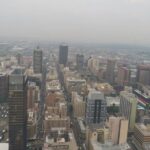
Pickup, comfort, and the small-group feel with Tsalanang Tours
You start with pickup from your Johannesburg hotel or accommodation. That matters in Johannesburg because distances can look small on a map but feel longer in real traffic, and waiting around is the easiest way to lose a half day. With pickup plus an air-conditioned vehicle, you’re already set up for a smoother day.
Tsalanang Tours also keeps the group size tight (up to 15). That typically helps your guide manage questions and timing. You’re traveling with a guide who can explain not just what you’re seeing, but why it matters to everyday life in the city.
And yes, bottled water is included. It’s not glamorous, but it’s one less thing to think about on a long, focused day.
Constitution Hill Human Rights Precinct: former prison to courtrooms
Your first big stop is Constitution Hill Human Rights Precinct, with about an hour there and admission included. This is one of the most powerful places to start because it reframes South Africa’s modern story in the same walls where people were once jailed.
You’ll see how the site transitioned from a prison into today’s court space, described as home to the Highest Court in South Africa. That shift is more than a fact on a sign. It’s a clear example of how institutions and human rights can evolve over time, which is a theme that connects all the other stops later in the day.
Practical tip: give yourself the full hour. Some people rush because they’re thinking about the next stop. Here, slowing down a bit pays off because the place is doing heavy emotional and historical work.
Braamfontein and Newtown from the road: city life and architecture
After Constitution Hill, you drive through Braamfontein and Newtown while your guide explains life in the city and points out interesting architectural buildings. This stretch is a good breather between the heavier museum time and the Soweto story.
What you get out of a driving explanation is context. Johannesburg is not just one neighborhood. It’s a set of changing areas, each shaped by jobs, migration, housing, and culture. Passing through these districts with commentary helps you avoid the common first-timer mistake: treating the city like a single “one-note” place.
You shouldn’t expect long walking time here. This is a fast-moving context stop, designed to keep momentum so you don’t end up missing the key moments in Soweto.
FNB Stadium and the 2010 World Cup connection
Next you’ll stop at FNB Stadium for about 10 minutes. There’s no admission charge for this part, since you’re mainly viewing it as part of the drive-by experience.
The reason this stop works is that it connects a modern, global-facing Johannesburg landmark to broader national identity. The stadium hosted the 2010 Soccer World Cup, and even a brief look helps you remember that South Africa’s public spaces aren’t only about the past. They’re also about events, crowds, and international visibility.
Practical tip: keep your camera ready, but don’t expect the stadium to be the emotional peak of the day. The big emotional weight comes later.
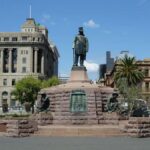


Soweto Towers and the route into Vilakazi Street
As you head toward central Soweto, you’ll pass the Soweto Towers, described as a landmark of Soweto. You’ll also be connected to the Orlando Towers area mentioned in the tour overview, which reinforces the idea that Soweto has recognizable skyline points, not just “township” as a label.
This part of the day is about orientation. It’s where the cityscape shifts and you start seeing Soweto as a place with its own geographic identity, not just an “add-on” to Johannesburg.
Then you reach Vilakazi Street, known for its famous residents and its role as a living community street where you can shop and browse. Vilakazi Street is also where Nelson Mandela once lived, and the street is linked with both Nelson Mandela and Archbishop Desmond Tutu.
Mandela House: seeing the place without the extra cost of entry
You get a stop along Vilakazi Street for about 30 minutes, including time to see Mandela House from outside. The tour notes that the entrance to Mandela House is not included, but it gives you time to enter if you choose to pay on your own.
This outside view can still be meaningful, especially because the street itself is part of the story. You’re not just looking at a museum sign. You’re standing in a place that people associate with two major leaders in South Africa’s human-rights journey.
If you want to go inside, plan for extra time and extra money. If you’re trying to stick to a strict budget, you can still get a good overview from the outside stop and focus your pay-on-entry budget on the big museum experiences later.
Hector Pieterson Museum and Memorial: the 1976 student uprising
Then comes the centerpiece for many first-timers: the Hector Pieterson Museum and Memorial, with about 30 minutes on site. The tour frames this visit as an overview of the events of the 1976 Soweto Student Uprising.
This is not a “quick photo and move on” stop if you want it to land. Even with limited time, your guide’s explanation matters here because the museum is about connecting names, dates, and choices to real people and real consequences.
One practical note: admission to the Hector Pieterson Museum is not included in the package as written. So if you’re deciding whether to prioritize it, treat this as a must-do inside visit if the 1976 uprising matters to you at all. This is also the stop where your earlier orientation through the city and Vilakazi Street starts to make emotional sense.
Apartheid Museum timing: when it’s an add-on and how to plan
The tour includes an option to visit the Apartheid Museum, but availability depends on the day. The info provided says it’s offered Thursday to Sunday only.
On days when it isn’t available, the schedule notes that the tour will be adjusted, replacing that portion with the Hector Pieterson Museum instead (as stated in the tour information). So the lesson for you is simple: don’t assume the day you book will look identical to the tour you’re previewing online.
Budget check: the tour overview says Apartheid Museum may be at your own expense, while the stop details state admission ticket included. That’s contradictory, so I’d treat it as a “confirm at booking” item. You don’t want to get to the museum expecting it to be covered only to find out it’s not.
If you can visit it, the Apartheid Museum can add another layer after Hector Pieterson. It tends to broaden the time span beyond one event so you understand the system behind the uprising.
Price and what you’re really paying for (plus what costs extra)
The price is $101.01 per person for a 6-hour small-group day. On paper, that can look like a lot until you compare what you’d otherwise pay for transportation, guide time, and timed admissions.
Here’s the value breakdown based on what’s listed:
- Included: bottled water and an air-conditioned vehicle, plus included admission at Constitution Hill
- Free drive-by: FNB Stadium
- Not included: lunch, and also admission for Mandela House and Hector Pieterson Museum
- Apartheid Museum: only Thu–Sun, and the ticket status needs a quick confirmation because the info provided conflicts
What that means for you: your real “all-in” cost will depend on whether you enter Mandela House and the Hector Pieterson Museum, plus whether Apartheid Museum admission is covered on your day. If your goal is maximum museum time, you should plan extra money for those pay-on-entry stops.
Also consider time value. The tour’s whole pitch is reducing wasted time waiting for public transport and getting to multiple sights efficiently. In Johannesburg, that time savings can be the difference between a rushed day and a genuinely informative one.
Safety, pacing, and who this tour suits best
This is the kind of tour that works best when you let the guide set the pace. Your stops have fixed time windows, so the best move is to show up ready to go: comfortable shoes, a charged phone/camera, and a calm plan for adding paid museum entries where needed.
The guidance you get can also affect comfort and confidence. Many people value having a local guide who can explain what you’re seeing and how to interpret it. In particular, local guides with strong connections to Soweto are often praised for adding personal perspective rather than only reciting dates.
This tour suits you if:
- you’re on a first trip to Johannesburg and want a structured highlights day
- you want to understand apartheid and the 1976 uprising through major sites
- you prefer guided driving and short museum stops rather than a DIY route
It might not be for you if you hate set schedules. This is not a “linger as long as you want” style experience. It’s designed to cover multiple key points in one day.
Quick practical tips before you go
A few things help the day go smoother:
- Decide early which paid entrances you want (Mandela House and Hector Pieterson Museum are listed as not included).
- Plan for lunch not being included. Eat before or plan to buy something after, depending on your timing.
- If you’re booking around the Apartheid Museum, check that day’s schedule since it’s only available Thu–Sun.
- Keep a little flexibility for good weather. The experience notes that it requires good weather, and poor-weather cancellation can lead to a different date or a refund.
Should you book the Johannesburg and Soweto tour with Tsalanang Tours?
I think this tour is a strong pick if you want a guided, efficient introduction to Johannesburg and Soweto’s most important sites. It’s well structured for limited time, it starts with a site that sets context quickly (Constitution Hill), and it ends with the emotional focal point (Hector Pieterson Museum and Memorial) that many visitors come to Johannesburg to understand.
Book it if you’re okay with some museum admissions and lunch costing extra, and if you like the idea of a small group day with driving between stops. Skip it only if you want a long, free-form experience where you can spend hours wandering without time limits.
If your goal is to leave Johannesburg with a clearer sense of history, place, and people, this is the kind of day that can genuinely do that without turning your vacation into a logistics puzzle.
FAQ
How long is the Johannesburg and Soweto Tour?
The tour runs about 6 hours.
Is pickup from my Johannesburg accommodation included?
Yes. Pickup is offered from your Johannesburg hotel or accommodations.
Which stops have admission included, and which are not included?
Constitution Hill Human Rights Precinct has admission included. FNB Stadium is a free stop. Mandela House and the Hector Pieterson Museum and Memorial admission are not included. Lunch is also not included. Apartheid Museum is listed with ticket included in the stop details, but the overview notes it may be at your own expense, so confirm when booking.
When is the Apartheid Museum available?
The Apartheid Museum is available Thursday through Sunday only. It is closed Monday and Tuesday, and the tour notes it will be replaced with the Hector Pieterson Museum.
How big is the group?
The tour has a maximum of 15 travelers.
What’s the cancellation policy?
Cancellation is free up to 24 hours in advance for a full refund. If you cancel less than 24 hours before the experience starts, there is no refund. The experience also requires good weather and may be rescheduled or refunded if canceled due to poor weather.