REVIEW · CAPE TOWN
LocalPlaces Understanding Cape Town Walking Tour
Book on Viator →Operated by LocalPlaces · Bookable on Viator
Cape Town finally makes sense on foot. This 4-hour walk is built around storytelling that ties the waterfront to the bigger South African story, with Table Mountain never far from your camera.
I love that the route is easy (about 3.5 km) and paced with good photo stops, from Battery Park to Greenmarket Square and the 14Stories rooftop. One thing to consider: the tour depends on good weather, so dress for walking and plan around a rainier day if needed.
In This Review
- Key Highlights You’ll Feel Right Away
- Why This Walking Tour Makes Cape Town Click
- Meeting at the Waterfront: GINJA Restaurant and Prince Alfred’s Harbor
- The Canal District to Battery Park: Views, Green Space, and City Energy
- The Foreshore: Reclaimed Land and Modernist Buildings
- 14Stories Rooftop Bar: Where the Bo-Kaap Photo Happens
- Heritage Square, Greenmarket Square, and St George’s Mall: Old Buildings, Everyday Streets
- Company Gardens: The Dutch East India Company to Victorian Park Story
- Price and Value: What You’re Paying For
- Who This Tour Fits Best (and Who Might Skip It)
- What to Expect on Foot: Timing, Pacing, and Practical Tips
- Should You Book the Understanding Cape Town Walking Tour?
- FAQ
- How long is the Cape Town walking tour?
- How much walking is involved?
- Where does the tour start and end?
- What time does the tour begin?
- What is included in the price?
- Are snacks or drinks included?
- Is it a private tour, and what about cancellations or bad weather?
Key Highlights You’ll Feel Right Away

- A 4-hour history narrative that jumps from the 1870s to the 20th century, without turning into a lecture
- Rooftop views from 14Stories that are ideal for photographing Bo-Kaap
- Real place-based details like the V&A Waterfront’s canal/harbor history tied to Prince Alfred
- Hands-on city texture at Greenmarket Square and St George’s Mall, where old architecture meets everyday life
- A strong ending at the Company Gardens, with the Dutch East India Company origin story and the Victorian park transformation
Why This Walking Tour Makes Cape Town Click
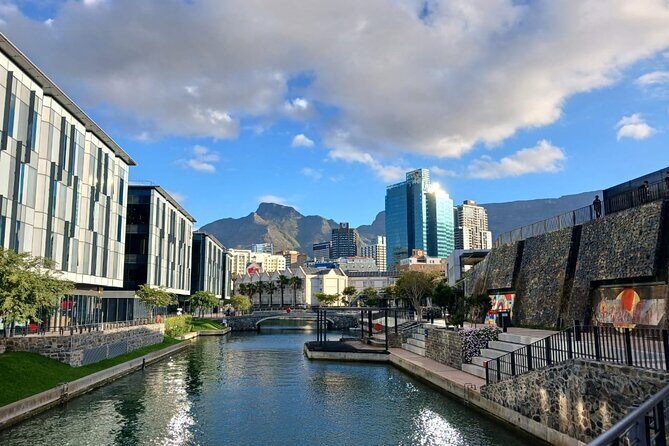
Cape Town can feel like a scrapbook: a pretty harbor here, a colorful neighborhood there, a dramatic mountain always watching. This tour connects the pieces so you don’t just see the city—you understand why it looks the way it does.
You’ll cover a short distance (about 3.5 km), but the value is in how the guide frames what you’re looking at. The story line starts with the late-1800s era (industrial shifts and the wider Scramble for Africa), then rolls back toward earlier roots, and finally moves forward into the 20th century. It’s the kind of context that makes the rest of your trip feel more personal and less like sightseeing checkboxes.
And you’ll probably notice something else: the stops are chosen for views and atmosphere, not just for “pretty buildings.” That mix is why the time flies.
You can also read our reviews of more walking tours in Cape Town



Meeting at the Waterfront: GINJA Restaurant and Prince Alfred’s Harbor
Your walk starts at GINJA Restaurant at the Victoria & Alfred (V&A) Waterfront. It’s a smart starting point because you immediately get Table Mountain and the harbor views, plus the big-picture sense of the city’s maritime side.
At the start, the guide points out the harbor story—this area traces back to the period of British expansion, including work overseen by Prince Alfred, son of Queen Victoria. You’ll stand in a spot that looks like a modern tourist hub, then hear how it fits into older patterns of power, trade, and movement.
This first stretch matters because it sets your “lens.” After this, the rest of the route stops feeling random. You start noticing how Cape Town’s coastline, land use, and architecture connect to broader historical forces.
The Canal District to Battery Park: Views, Green Space, and City Energy

From the Waterfront, you move into the canal-side walkways around the Canal District. You’re not sprinting between stops—expect short ambling sections where the guide slows you down just enough to look around.
One of my favorite practical parts here is the stop at Battery Park, where you can see how the city blends open space with modern leisure. The area has a skate park, basketball courts, and that helpful “roof” of greenery that gives you a breather in the middle of the walk.
Why does this matter for your understanding of Cape Town? Because history isn’t only about old buildings. It’s also about how people use space today. Battery Park shows a city that keeps layering new activities onto older settings—and that makes the later photo stops (especially from heights) feel more grounded.
The Foreshore: Reclaimed Land and Modernist Buildings
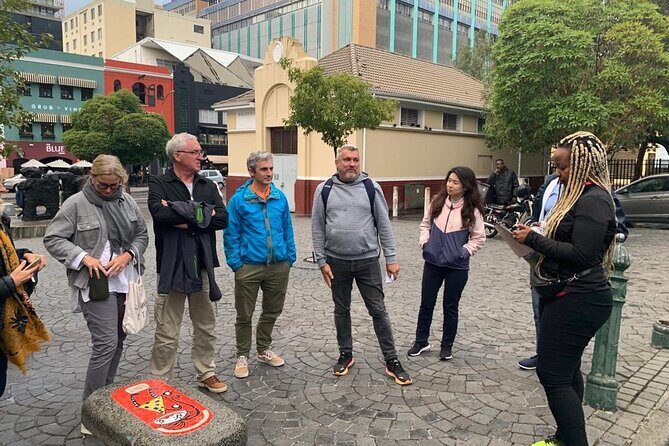
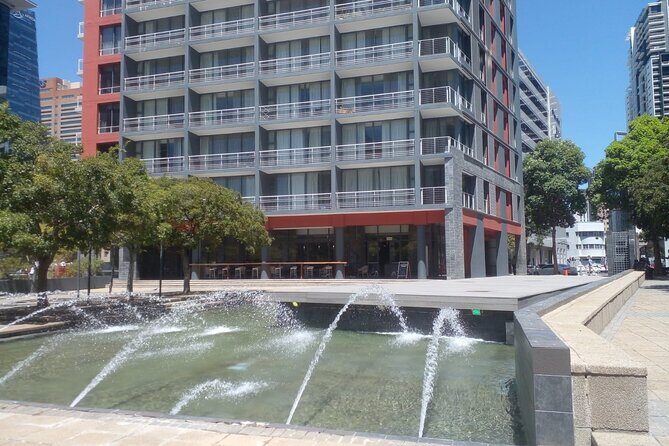
Next comes the Foreshore, built on land reclaimed from the sea—specifically, about 194 hectares. That number is the kind of detail you’ll carry with you when you look at the modern city edge and wonder why it’s shaped the way it is.
You’ll also see modernist buildings dominate this reclaimed section, then you’ll walk toward older areas. The contrast is useful: it helps you separate “Cape Town looks this way” from “Cape Town always looked this way.”
This segment is one of the best “thinking stops” on the tour. Even if you’re mostly there for photos, take a minute and actually register the coastline changes. It’s the easiest way to understand how a city can remake its shoreline as it grows.
14Stories Rooftop Bar: Where the Bo-Kaap Photo Happens

Then you reach 14Stories Rooftop Bar, and this is your big viewpoint moment. You’ll pause for drinks (buy your own) while the guide keeps the story coming.
From up here, the skyline is the lesson:
- Green Point Stadium
- the Waterfront and Table Bay
- Blouberg
- the Foreshore
- the old city centre
- and of course Table Mountain
And it’s not just a nice sky moment. The rooftop is also described as a top viewspot for photographing Bo-Kaap. If you’re hoping for a photo that shows more than one neighborhood at once, this is where you’ll want your camera ready.
Practical note: rooftop stops are great, but they can feel exposed if the wind picks up. Bring a light layer, even in good weather, and keep water handy.






Heritage Square, Greenmarket Square, and St George’s Mall: Old Buildings, Everyday Streets
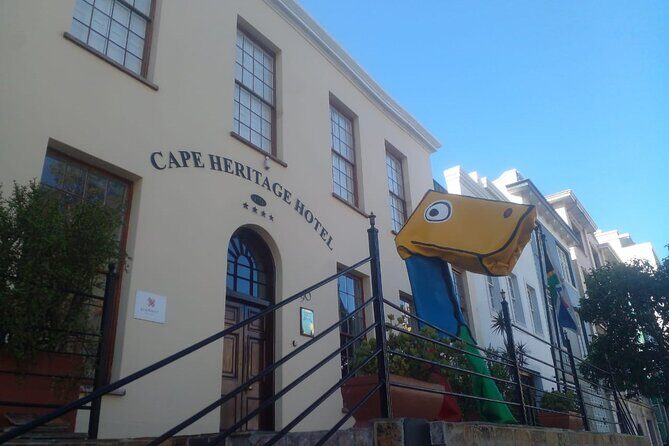
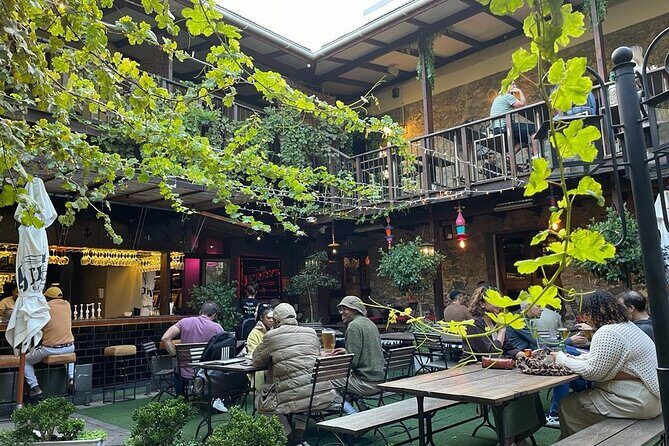
After the heights, the tour shifts into “walkable history” mode. You’ll spend time in Heritage Square, a historic complex with buildings dating back to the 1750s. It’s also home to a boutique hotel and a mix of eateries, bars, and shops, which makes it feel less like a museum and more like a living city pocket.
One specific detail worth knowing: the courtyard includes the oldest grapevine in the city. That’s the kind of fact that turns a quick stop into a memorable marker, especially if you like unusual historical connections.
Next up is Greenmarket Square, surrounded by impressive Art Deco buildings. You’ll also have time for curio market browsing. This is where you get that Cape Town street texture—colorful stalls, local goods, and the slow motion of people figuring out what they want to take home.
Then you move along St George’s Mall, a pedestrianized street with architecture that mixes history and present-day city life. It’s a comfortable “between stops” stretch—less dramatic than the rooftop, but great for soaking up the feel of the city center without having to fight traffic.
Company Gardens: The Dutch East India Company to Victorian Park Story
The tour ends at the Company Gardens area along Queen Victoria Street, at the Company Gardens restaurant. This is a strong finish because gardens are one of the easiest ways to see how colonial-era work shaped everyday urban space.
You’ll hear that the gardens began as a vegetable garden for the Dutch East India Company, then gradually became a Victorian Park. Today, it functions as a central city park, which means it’s not just about what happened in the past—it’s about how the city uses that legacy now.
This ending works well if you like tying your day together. You walk from a maritime, trade-linked start to a land-based urban core, and you finish in a place that’s meant for everyday strolling. It’s an easy way to transition from “guided history” to “my time now.”
Price and Value: What You’re Paying For
The price is $80.80 per person for an approx 4-hour guided walking experience. The fee is for guiding and storytelling—not for snacks or drinks.
That distinction matters. You’re paying for interpretation: how a guide connects multiple time periods to real streets and visible landmarks. If you’re the kind of traveler who prefers understanding over memorizing, this price can feel fair because you’re getting a narrative framework you’ll use all trip long.
At the same time, expect to pay for anything you choose to eat or drink during the tour. The stop at 14Stories includes a drinks moment, but you’re buying from the bar. If you want to try a local delicacy, treat it as an optional add-on rather than something included.
Who This Tour Fits Best (and Who Might Skip It)
This is a great pick if you:
- want a first-time Cape Town foundation
- enjoy history when it’s explained through places you can actually see
- like getting photos with a bit of context behind them
- want a guided day that’s short enough to still leave time for beaches and museums afterward
It’s less ideal if you only want a quick highlight loop with no interest in how Cape Town developed over centuries. This walk is built for understanding, not just “look at that view.”
What to Expect on Foot: Timing, Pacing, and Practical Tips
You’re looking at a walk that’s about 3.5 km, with multiple stops, including a longer rooftop pause. The pacing is generally easy for most travelers, and the tour is near public transportation. Service animals are allowed, which is useful to know.
Start time is 9:00 am, which is helpful. Morning usually means better light for photos and fewer crowds drifting into your shot line around popular areas like the Waterfront and Greenmarket Square.
Bring:
- comfortable walking shoes (you’re on pavement for long enough to care)
- water, especially if it’s warm
- a light layer for rooftop wind
- your camera (14Stories is worth it)
And if your group loves asking questions, plan for the tour to feel even more personal. The guide’s approach is designed for conversation and story-driven explanation.
Should You Book the Understanding Cape Town Walking Tour?
If you want Cape Town to feel understandable—like you’re reading a coherent story instead of collecting random stops—this tour is a strong yes. The route is short, the views are genuinely useful (not just “we stood here”), and the storytelling gives you a way to connect neighborhoods, architecture, and big historical turning points.
Book it early in your trip if you can. I’d rather you learn the “why” before you spend the rest of your days wandering with purpose.
FAQ
How long is the Cape Town walking tour?
It runs for about 4 hours.
How much walking is involved?
The walk is about 3.5 km total.
Where does the tour start and end?
It starts at GINJA Restaurant at the V&A Waterfront (Victoria & Alfred Waterfront, Cape Town) and ends at the Company Gardens restaurant area along Queen Victoria Street.
What time does the tour begin?
The start time is 9:00 am.
What is included in the price?
The price covers guiding and storytelling.
Are snacks or drinks included?
No. Any snacks or drinks during the tour are for your own account.
Is it a private tour, and what about cancellations or bad weather?
It’s a private experience for your group only. You can cancel for a full refund up to 24 hours before the start time, and the tour requires good weather—if it’s canceled due to poor weather, you’ll be offered a different date or a full refund.