REVIEW · JOHANNESBURG
Soweto Township Half Day Tour
Book on Viator →Operated by Curiocity Backpackers · Bookable on Viator
A quick trip, heavy meaning. This guided Soweto tour takes the stress out of getting there and lines up key places connected to Mandela and Tutu, along with Soccer City and the Hector Pieterson Museum. You’ll also get clear context on how Soweto grew into a major Black city around Johannesburg.
I really like the small group feel, capped at 15 people, which keeps the conversation going with your guide. I also appreciate that lunch is included, so you can spend your time looking around Vilakazi Street instead of figuring out where to eat.
One possible drawback: it’s a fast four-hour loop, so it doesn’t give you hours to linger in any single spot. Dress smart casual, and if you want souvenir photos, budget for extras since they’re not included.
In This Review
- Key things to know before you go
- Soweto Township Half Day Tour: what you’re really signing up for
- Getting to Soweto from Jeppestown: time, transport, and a smooth start
- Soccer City Stadium: why you start with a big public landmark
- Hector Pieterson Museum: learning with guide context, not guesswork
- Kliptown and the older Soweto districts: seeing the roots
- Vilakazi Street plus Mandela and Tutu houses: the most personal part of the day
- Lunch at a local restaurant: traditional kota, included
- Price and value: is $50.02 worth it?
- Who this Soweto half-day tour is best for
- Should you book this tour?
- FAQ
- How long is the Soweto Township Half Day Tour?
- How much does the Soweto Township Half Day Tour cost?
- What time does the tour start, and where do I meet?
- Is transport included?
- Is lunch included?
- Is there a vegetarian option?
- How many people are in the group?
- What’s the dress code?
- What is the cancellation policy?
- Do I need a printed ticket?
Key things to know before you go
- Small group size (max 15): more time for questions and local context
- Start point in Jeppestown: meet at 302 Fox St, with a clear 10:00 am departure
- A tight, efficient route: Soccer City Stadium, Hector Pieterson Museum, Kliptown area context, then Vilakazi Street
- Mandela and Tutu homes: you’ll see both locations on the same route
- Lunch included in a local restaurant: a traditional kota lunch is part of the tour
Soweto Township Half Day Tour: what you’re really signing up for

Soweto is close to Johannesburg on the map, but it’s not a place you should treat like a casual add-on. This half-day format is built for one thing: getting oriented fast, with a guide who can explain what you’re seeing and why it matters in everyday life.
Soweto is an urban settlement southwest of Johannesburg, with a population around 1.3 million. It became the largest Black city in South Africa, and for decades until 1976 many residents had status as temporary residents, largely as a workforce for Johannesburg. That background helps you make sense of why so many of the landmark stops feel both historic and lived-in at the same time.
The tour’s promise is simple: you’ll be shown the main sites without having to figure out logistics on your own. You’ll cover major stops connected to national memory, plus street-level places that connect that story to real people today. If you want a meaningful introduction without using half a day to plan, this is the right structure.
You can also read our reviews of more tours and experiences in Johannesburg.



Getting to Soweto from Jeppestown: time, transport, and a smooth start
The tour meets at 302 Fox St, Jeppestown in Johannesburg, starting at 10:00 am. It ends back at the same meeting point, so you don’t have to worry about arranging a ride home after you’re finished.
You ride in an air-conditioned minivan, which matters in Johannesburg’s heat. In one experience, pickup was on time at 10:00, and the drive into Soweto felt quick—about 20 minutes before you’re already there. That kind of timing is a big deal on a four-hour tour, because it gives you more time at the stops and less sitting in traffic.
Bring your mobile ticket (no printing needed), and keep an eye on confirmation at booking. Also, smart casual is the dress code, so you don’t need to overthink it. I’d treat this as a day outing: comfortable layers and shoes you can walk in.
If you’re planning ahead, note that this tour is commonly booked about 10 days in advance on average. Booking early helps you avoid last-minute availability issues, especially if you’re traveling around popular dates.
Soccer City Stadium: why you start with a big public landmark
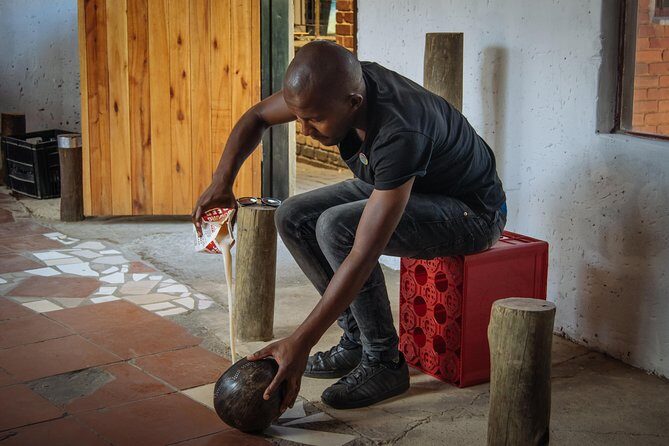
The first major stop is Soccer City Stadium. Even if you’re not a sports superfan, starting here works because it anchors the day in something everyone recognizes as a major public space.
Soweto is often discussed in terms of politics and history, and that’s all valid. But it’s also an urban area with big institutions and large-scale gathering places. A stadium is one of those places where scale matters—where you can feel the difference between a neighborhood and a city built at real density.
Your guide’s job here is to connect what you see—an iconic stadium setting—with the broader story of Soweto as a place that grew and changed under pressure, then became central to South Africa’s public life. It’s a good warm-up. You’re not jumping straight into museums without context. You’re building a mental map first.
A consideration: because the tour is only about four hours, you won’t have an all-day linger. Expect a focused visit rather than a long photo session, and keep your questions ready. If there’s a specific question you care about—how Soweto functions today, or what certain areas are like—this early stop is a smart time to ask.
Hector Pieterson Museum: learning with guide context, not guesswork
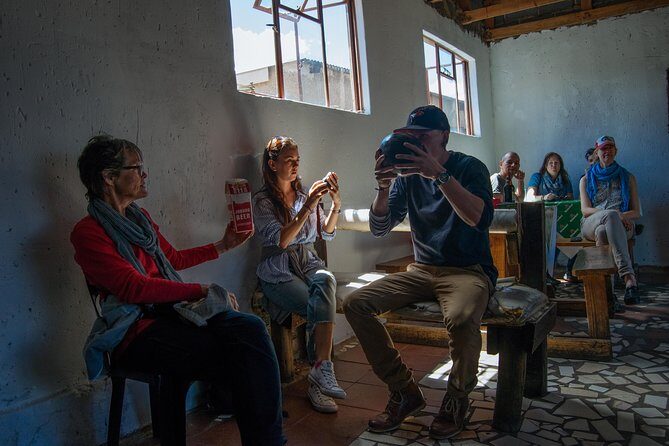
Next up is Hector Pieterson Museum, one of the most important stops on the route. The name itself signals the focus: the museum is tied to a powerful story from South Africa’s struggle era. But the real value comes from having a guide who can point out the themes you might otherwise miss if you only read labels.
Museums can be hit or miss if you walk in cold. This tour helps because you’re guided through the key takeaways. You get a sense of what shaped the community and how major events became symbols that still affect how people talk about education, rights, and justice.
The “half-day” part matters here. You won’t be doing a school-course length study, so treat the museum as an introduction. If something catches your attention, you’ll likely want to follow up later—either by reading more or by visiting other sites in Johannesburg with your new context.
Practical tip: museums often work best at a steady pace. I’d keep your phone handy for notes, not just photos. If your guide offers specific explanations about what to look for, actually listen—because in this kind of setting, the details are the whole point.
Kliptown and the older Soweto districts: seeing the roots
The tour also includes time connected to Kliptown, described as one of Soweto’s oldest districts. This is where the day shifts from landmark-to-landmark and becomes more about understanding how different areas inside Soweto developed.
Older districts can feel different even just walking around: the density, the street layout, the way people use public space. That’s why this stop works so well on a guided tour. Without context, it can be easy to only see “buildings.” With context, you can start seeing patterns—how communities formed, how they’ve endured, and how life continues despite major historical pressure.
Also, Kliptown’s inclusion helps you avoid a common mistake: thinking Soweto is a single story. It isn’t. It’s a patchwork of neighborhoods, each shaped by time, policy, and the everyday needs of residents.
The watch-out is time. Because it’s a half-day, you’ll get a guided snapshot rather than a deep walk-through. If your goal is to photograph every street corner or spend long hours in the same neighborhood, you may feel rushed. If your goal is to leave with a clearer understanding of what Soweto is and how its key places connect, this format fits.


Vilakazi Street plus Mandela and Tutu houses: the most personal part of the day
A big highlight is Vilakazi Street, known for being the street where both Nelson Mandela and Desmond Tutu once lived. This stop is powerful because it turns “history” into something more human-scale. You’re looking at places tied to specific people, not just abstract events.
Your tour also takes you to Mandela House and Desmond Tutu’s House. Seeing both on one route is efficient and meaningful. It helps you understand how two major figures lived in the same area, and why Vilakazi Street became such an important symbol of transformation.
What I like about this part of the tour is that it’s not only about the political story. It’s also about place. A street is where routine happens—where daily life sits next to historic meaning. That combination is often what makes people remember the day long after they’ve forgotten the exact route.
A consideration: because these sites are included inside a four-hour itinerary, you may not get a long “sit and think” moment. If you’re the type who likes to slow down, plan to do your real reflection after the tour. Bring the mindset that you’re seeing the highlights, not living there for the afternoon.
Lunch at a local restaurant: traditional kota, included
This tour includes lunch, served at a local restaurant, with a traditional kota included. For a half-day outing, that’s a big practical win. It means you don’t have to make a separate meal plan, and you avoid arriving hungry to the most emotionally heavy part of the day.
A kota is a local style lunch, and eating it on-site helps you shift from “tour mode” to normal life. The restaurant stop is also a time to cool down after walking and to ask your guide follow-up questions. If you’re curious about daily routines, local food, or how residents think about the neighborhood now, lunch is a great moment to get straight answers.
Vegetarian travelers should plan ahead: a vegetarian option is available, but you need to advise at the time of booking. If you don’t specify, don’t count on it automatically.
One more practical note: souvenir photos are available to purchase, but they’re not included. If you want to take home a memory that goes beyond your own pictures, factor that into your lunch-time spending mindset.
Price and value: is $50.02 worth it?
The price is $50.02 per person, and the tour lasts about four hours. On paper, that might sound like “just a short day,” but value in this kind of tour is about what’s bundled.
You get transport in an air-conditioned minivan, a guided route to multiple key stops, and lunch included. In practice, those three elements reduce the cost and friction of doing the same thing on your own—especially if you’d otherwise need to figure out transport, timing, and what order makes sense.
The small group size (max 15) also adds value. When guides can manage a tighter group, they can explain more and keep the experience from turning into a rushed bus ride with a lot of looking but not much learning.
Is it expensive? It depends on how you travel. If you’re the type who loves doing everything independently, you might find a cheaper way to get around. But if your goal is to leave Johannesburg with a clearer understanding of Soweto’s key places and how they connect to real life, $50.02 can feel fair—especially because lunch is covered.
Who this Soweto half-day tour is best for
This tour fits best when you want an organized introduction, not a full-day deep exploration. It’s ideal if:
- You’re short on time in Johannesburg and want a meaningful outing
- You like history with human context, tied to specific places
- You’re traveling solo or as a couple and prefer a small-group format
- You want lunch included and don’t want to build a separate plan
It may not be ideal if you:
- Want hours to linger at one stop and take things at a slower pace
- Prefer total independence and don’t want a structured route
- Miss the smart-casual dress code and don’t want to adjust plans
One plus for many people: most travelers can participate, and the tour is designed for broad comfort. If you’re worried about fit, your best move is to check the travel basics you control—clothes, shoes, and any dietary needs you plan to request.
Should you book this tour?
Yes, I’d book it if you want a guided, time-efficient introduction to Soweto that connects major landmarks—Soccer City Stadium, Hector Pieterson Museum, Vilakazi Street, Mandela House, and Desmond Tutu’s House—with a real local lunch stop.
Skip the tour if you’re looking for a slow day, lots of free roaming, or you want to build your own route step by step. This is a focused tour with a set path. The upside is clarity and comfort; the trade-off is pace.
If you do book, send a note at booking for the vegetarian option (if you need it) and keep your smart casual outfit ready. Also, if souvenir photos matter to you, remember they’re not included—so keep a little extra cash handy.
FAQ
How long is the Soweto Township Half Day Tour?
The tour lasts about 4 hours.
How much does the Soweto Township Half Day Tour cost?
The price is $50.02 per person.
What time does the tour start, and where do I meet?
It starts at 10:00 am, and the meeting point is 302 Fox St, Jeppestown, Johannesburg, 2043, South Africa.
Is transport included?
Yes. The tour includes transport by air-conditioned minivan.
Is lunch included?
Yes. Lunch is included, and it’s a traditional kota lunch at a local restaurant.
Is there a vegetarian option?
Yes. A vegetarian option is available if you advise at the time of booking.
How many people are in the group?
The tour has a maximum of 15 travelers.
What’s the dress code?
The dress code is smart casual.
What is the cancellation policy?
Free cancellation is available. You can cancel up to 24 hours in advance for a full refund. If you cancel less than 24 hours before the start time, the amount paid is not refunded.
Do I need a printed ticket?
No. The tour uses a mobile ticket.