REVIEW · PRETORIA
Apartheid Museum and Soweto Tour in Johannesburg
Book on Viator →Operated by Tsalanang Tours · Bookable on Viator
A day in Soweto forces the issue. This tour pairs the Apartheid Museum with key Soweto landmarks, so you go from laws on paper to the streets where people lived—and pushed back. You also get a structured look at segregation from 1948 to 1994, then quick hits at major sights like FNB Stadium and Vilakazi Street.
I like that the museum time is fully built in—there’s 2 hours at the Apartheid Museum with the admission ticket included—so you’re not racing to fit it in later. I also like how the day moves on foot and by vehicle with a guide, which makes the history feel practical instead of abstract. In one review, the standout moment was being given the chance to walk through a Soweto community with a local person, and it felt very safe and meaningful.
The main drawback to plan around: some big stops have optional entrance fees that are not included, including Mandela House and the Hector Pieterson Memorial. So you may want extra cash or a bit more time in your head for add-on tickets.
In This Review
- Key highlights at a glance
- Price and what you actually get for $83.71
- The core idea: history first, then streets
- Entering the Apartheid Museum with time to breathe
- FNB Stadium: a 2010 World Cup landmark stop
- Orlando Towers: getting your bearings in Soweto
- Vilakazi Street: where Mandela and Tutu both connect
- Mandela House: viewing from outside, with an optional entry
- Hector Pieterson Memorial: the 1976 student uprising overview
- Safety and comfort: what “small group” feels like in practice
- Timing and pace: a 5-hour day that doesn’t feel like a blur
- Who this tour fits best
- Should you book this Apartheid Museum and Soweto tour?
- FAQ
- What is the duration of the tour?
- Where does the tour take place?
- What is the price per person?
- How big is the group?
- What’s included in the price?
- Are there any stops with free admission?
- Is admission included for Mandela House?
- Is admission included for the Hector Pieterson Memorial?
- Does the tour offer pickup?
- What if the weather is poor?
- Is free cancellation available?
Key highlights at a glance
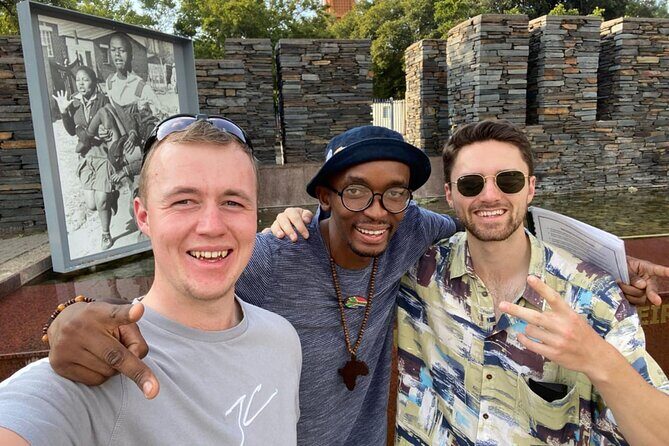
- Apartheid Museum ticket included (2 hours): You get focused time where the story is laid out clearly.
- Small group size (up to 15): Less crowd energy, more chance to ask questions.
- Soweto landmarks in a tight route: FNB Stadium, Orlando Towers, and Vilakazi Street are all quick, efficient stops.
- Mandela House and Hector Pieterson Memorial are optional entries: You can view from outside or pay if you want in-depth access.
- Pickup + air-conditioned vehicle + bottled water: Good comfort support for a 5-hour day.
- Good weather matters: The tour requires decent conditions to run smoothly.
Price and what you actually get for $83.71
At $83.71 per person for about 5 hours, this tour lands in the “serious value” zone if your priority is context. The key is what’s included versus what’s optional.
You’re getting:
- A guided day with an air-conditioned vehicle
- Bottled water
- Pickup offered
- The Apartheid Museum admission ticket included
- Several Soweto landmarks with free admission for the time you spend there
- A mobile ticket
What that means for you: a large chunk of the cost is doing the work for you—getting you into the one place where you need time and structure (the Apartheid Museum). The rest of the day is designed as a route through Soweto landmarks, not a long, slow museum crawl.
Also note the booking rhythm: it’s commonly booked around 23 days in advance on average. That’s a hint to reserve early if you’re traveling during peak periods.
Is it worth it if you’re mainly chasing photos? You’ll get plenty of them (stadium views, Orlando Towers, Vilakazi Street), but this day is more powerful when you treat it like a guided learning walk.
You can also read our reviews of more museum experiences in Pretoria

The core idea: history first, then streets
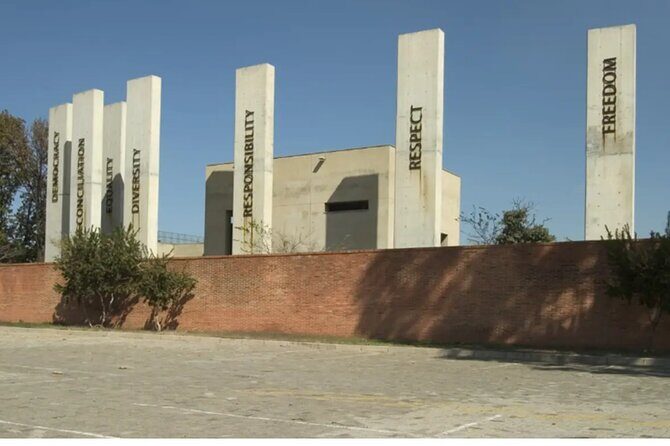
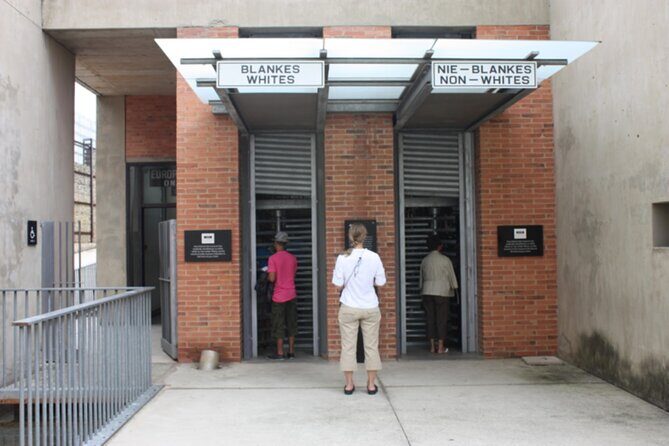
This tour is built around a simple flow. You start with the Apartheid Museum, then you move out into Soweto to connect the museum’s timeline and policies to real places.
That matters because apartheid can feel like a distant label when it’s only taught as dates and laws. Standing in the museum first gives you a framework for what you’re about to see. Then, as you drive and walk through Soweto, the message becomes less like a lecture and more like lived reality.
The tour also covers the apartheid era’s rise and fall, focusing on policies of segregation enforced from 1948 until 1994. That range helps you connect the early institutional system to later resistance and the country’s eventual change.
And because the group is capped at 15 travelers, you’re more likely to get answers in real time instead of watching the guide talk to a wall of noise.
Entering the Apartheid Museum with time to breathe
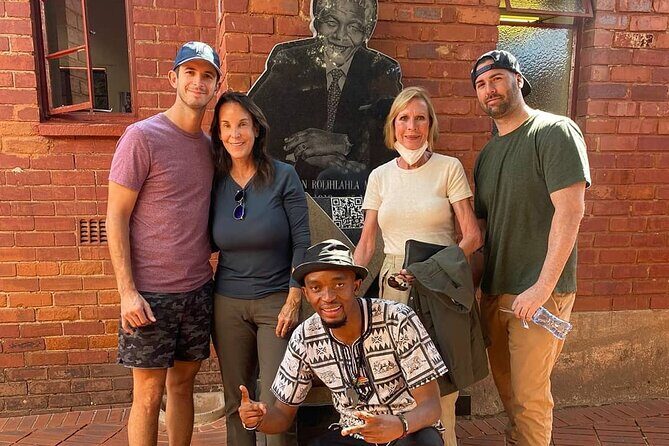
The day begins at the Apartheid Museum, with 2 hours on-site and the admission ticket included. This is your anchor stop, and it’s the part that most directly turns “I read about apartheid once” into “I understand what people endured and how the system worked.”
Two hours is enough to:
- Take in the main narrative without rushing
- Read key sections at a pace that makes sense
- Step back at exhibits that hit hard
Practical tip: don’t try to sprint through. The museum’s power comes from details and how they connect. If you go in like it’s a checklist, you lose the emotional logic that makes the history stick.
The inclusion also saves you hassle. You’re not juggling cash at the start of the day or trying to decide whether you can “fit it in.” The ticket is already part of the package.
FNB Stadium: a 2010 World Cup landmark stop
After the museum, you make a quick stop at FNB Stadium, known for hosting the 2010 Soccer World Cup Final.
This part is short—about 10 minutes—and it’s mainly there as a marker in the modern Johannesburg landscape. You’ll get a pause for photos and orientation, then you move on.
How to think about this stop: it’s not the heart of the apartheid story. It’s more like a hinge between eras—because Johannesburg is not a “then and now” postcard. It’s a city where major international events happen in the same space as deep historical memory nearby.
If you’re the kind of person who likes every stop to have a heavy theme, this one may feel brief. If you like getting bearings and mixing themes, it works.
Orlando Towers: getting your bearings in Soweto

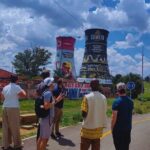
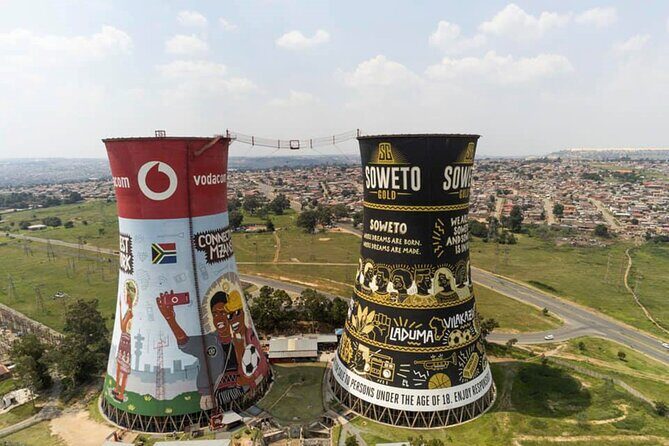
Next up is the Orlando Towers, a Soweto landmark. Expect another 10-minute stop with free admission.
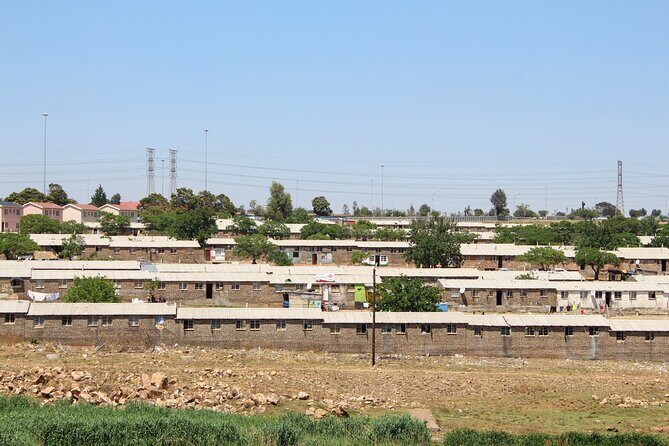
This is one of those moments where a landmark does a job that no museum map can do: it helps you picture where you are in the township and gives the day a clear geographic anchor.
If you’ve never been to Soweto, this kind of quick orientation is helpful. It turns later walking and viewing stops from random scenery into a sequence you can follow.
And because it’s short and free, it doesn’t drain your schedule. You keep momentum for the stops that ask more from you emotionally.





Vilakazi Street: where Mandela and Tutu both connect

Then you head to Vilakazi Street, described as one of the most prestigious streets in the world, tied to two major Nobel Peace Prize winners: Archbishop Desmond Tutu and Nelson Mandela.
You’ll spend about 30 minutes here, and it’s free to visit. This is also the stop where you get time for souvenir shopping.
What I like about this stretch for your experience: it’s not only about big names. It’s also about pacing. Vilakazi Street gives you a more human scale—time to slow down, look around, and interact with the local street economy if you want.
Drawback to consider: because it includes shopping time, you may feel a little pressure if you’re not into browsing. Just treat it as a choice window. If you want photos and atmosphere only, you can focus on that and keep moving.
Mandela House: viewing from outside, with an optional entry
You then go to Mandela House for a 20-minute outside view. Importantly, the entrance fee is not included.
That means you have two choices:
- Stay with the outside viewing experience and keep your day on schedule
- Use the time to enter if you decide it’s worth paying for yourself
I like that the tour doesn’t lock you into one decision. If you’re already museum-fatigued, the outside view can be enough. If you’re the type who wants deeper context, you’ve got the option.
A practical consideration: because you’re traveling with a group, you’ll want to decide early whether you want to try to go in. Waiting until the last minute can make the choice feel rushed.
Hector Pieterson Memorial: the 1976 student uprising overview
The final major learning stop is the Hector Pieterson Memorial. You’ll spend 30 minutes here, but the admission is not included.
This part is focused on the 1976 Soweto Student Uprising. The memorial is a strong closer because it points to resistance and youth activism, not only the machinery of segregation.
How to plan for it:
- If you want the full experience and deeper on-site materials, budget for the entry ticket separately.
- If your focus is quick orientation, you may still get a lot from the time you have—just understand that the complete memorial experience may cost extra.
This stop is also a good example of why you should read the “not included” lines on any tour before you assume everything is covered. The itinerary is thoughtful, but you control how much you want to pay for the final depth.
Safety and comfort: what “small group” feels like in practice
One thing that stood out from actual feedback: the tour felt very safe, and the learning moment that people remembered was being able to walk through a Soweto community with a local person.
You should still use normal common sense in any township visit:
- Stay with your guide
- Don’t wander off on side streets
- Keep your phone and bag controlled on crowded stretches
Comfort-wise, you’ve got the basics that matter for a half-day: air-conditioned vehicle and bottled water. That’s not glamorous, but it makes a difference when you’re spending time outside in the sun and then walking near landmarks.
The max group size of 15 travelers is also a quiet quality marker. It usually means less time waiting and more chances to hear the guide clearly.
Timing and pace: a 5-hour day that doesn’t feel like a blur
The whole itinerary runs about 5 hours. That’s an ideal length for first-timers, because it gives you enough time to absorb one major museum stop and still cover key Soweto sights.
The pace works like this:
- Museum takes the heavy emotional load (2 hours)
- Several landmark/photo stops keep the day moving (10 minutes each)
- Vilakazi Street adds a slower human element (30 minutes)
- Mandela House and Hector Pieterson are shorter, with optional paid entry (20 and 30 minutes)
If you’re the type who hates rushing, this schedule still leaves room for a few moments to reset between stops. But it’s not a slow sightseeing day. It’s more like a guided route with intentional pauses.
Who this tour fits best
This is a good match if:
- You want a structured introduction to Soweto and apartheid with a guide
- You prefer a small group over a big bus crowd
- You care about context, not just landmarks
- You’re okay making a couple of “optional entrance” decisions (Mandela House, Hector Pieterson)
It’s less ideal if:
- You want a long, free-roaming day where you decide every stop
- You strongly dislike any extra paid entries at the end of a tour
- You’re looking for purely recreational sightseeing
Most importantly: if your goal is to understand apartheid’s human impact, this route is built to help you connect museum learning with real locations.
Should you book this Apartheid Museum and Soweto tour?
Yes, you should consider booking if the Apartheid Museum is on your list and you want a guided day that connects it to Soweto landmarks without wasting hours on complicated planning. The value comes from the included museum ticket, the small group size, and the fact that the day is designed as a coherent route—not random hopping.
I’d book it especially if you like the idea of learning with a guide, with comfort support like pickup and bottled water, and you’re open to paying separately for entry if you decide you want the full on-site experience at Mandela House and the Hector Pieterson Memorial.
If you’re traveling with limited time in Johannesburg and want one strong, meaningful outing, this is a practical way to do it.
FAQ
What is the duration of the tour?
The tour lasts about 5 hours.
Where does the tour take place?
It is listed as being in Pretoria, South Africa, but the day visits sites in Soweto and Johannesburg, including the Apartheid Museum and Vilakazi Street.
What is the price per person?
The price is $83.71 per person.
How big is the group?
The maximum group size is 15 travelers.
What’s included in the price?
Included items are bottled water, an air-conditioned vehicle, and a guide. The Apartheid Museum admission ticket is included.
Are there any stops with free admission?
Yes. The tour includes free entry time at FNB Stadium and free entry time for Orlando Towers and Vilakazi Street.
Is admission included for Mandela House?
No. Mandela House is viewed from outside, and entrance fees are not included.
Is admission included for the Hector Pieterson Memorial?
No. Admission for the Hector Pieterson Memorial is not included.
Does the tour offer pickup?
Yes, pickup is offered.
What if the weather is poor?
This tour requires good weather. If it’s canceled due to poor weather, you’ll be offered a different date or a full refund.
Is free cancellation available?
Yes. You can cancel up to 24 hours in advance for a full refund. If you cancel less than 24 hours before the start time, the amount paid will not be refunded.
—
If you tell me your travel dates and whether you’re mainly museum-focused or photo-focused, I can help you decide if this route—and the optional entrances—is the best fit for your day.