REVIEW · JOHANNESBURG
Pretoria City Tour
Book on Viator →Operated by Hedone Afrika Travel and Leisure PTY(Ltd) · Bookable on Viator
Pretoria can feel formal, then surprisingly personal. This 4–5 hour Pretoria City Tour ties together landmark government sights, Afrikaner pioneer story lines, and one very moving memorial stop. Two things I really like are the guided way history is explained (often with guides such as Martin or Lesiba) and the tight route that gets you from major sights without wasting time. One thing to watch: admission fees aren’t included at the big-ticket museums, and lunch isn’t included either.
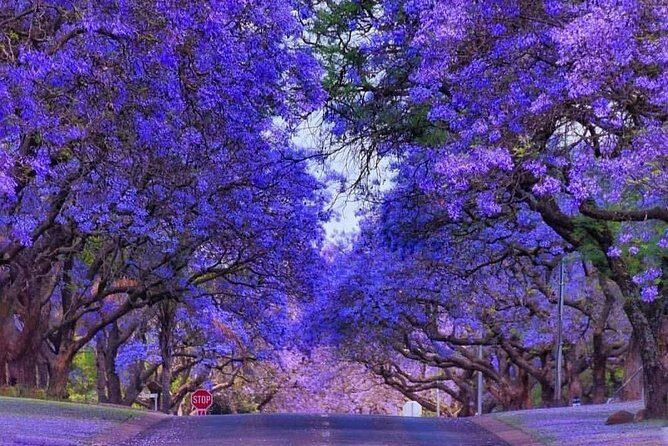
Pretoria is also known as Tshwane and as the Jacaranda City, thanks to those spring purple blooms that can make the streets look almost unreal. Even if you miss jacaranda season, you still get the city’s distinctive academic feel—universities, research centers, and embassies sit alongside official power.
This works best if you want a guided orientation with strong context, not a long wander. You’ll move at a steady pace, and if you prefer slow, do-it-yourself roaming, you may want to pair this with extra time on your own after you know your bearings.
In This Review
- Key highlights you’ll actually notice
- Pretoria’s Tshwane identity: power, universities, and jacarandas
- Getting value in the time box: how the route actually flows
- Voortrekker Monument: pioneers, not just postcards
- Church Square’s 1850s layout: where markets met faith
- The academic city angle: UNISA and Pretoria’s student power
- A quick nature-history thread near the Apies River and old reserves
- Union Buildings: where the view matches the theme
- Freedom Park on Salvokop Hill: the emotional climax
- Price and what you’re really paying for ($108.52)
- Pickup, private comfort, and making it run smoothly
- Who this Pretoria City Tour suits best
- Should you book? My take on the decision
- FAQ
- How long is the Pretoria City Tour?
- What does the tour cost per person?
- Is pickup included?
- Is this tour private?
- What’s included in the price?
- Are admissions included for all stops?
- Do I need a lunch plan?
- What if plans change and I need to cancel?
- How does confirmation work after booking?
Key highlights you’ll actually notice
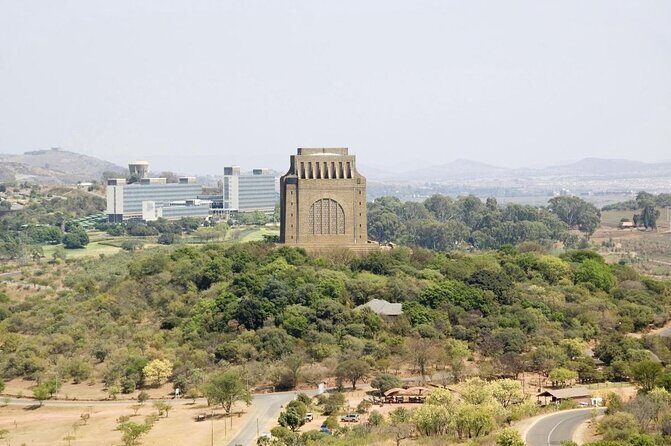
- A guided Voortrekker Monument stop focused on pioneers from 1836/7 and the long arc into later conflicts
- Free time at Church Square in Pretoria’s historic center, anchored by Marthinus Pretorius’s original plan
- Union Buildings viewpoints on Meintjieskop with a quick, satisfying photo window and context on South Africa’s executive seat
- Freedom Park on Salvokop Hill with memorial names across South African wars, World Wars, and apartheid-era losses
- Small historical details that pop up along the route, like early electricity and even a milk-in-cement story
- An efficient 4–5 hour format with air-conditioned transport, bottled water, and private-group comfort
Pretoria’s Tshwane identity: power, universities, and jacarandas
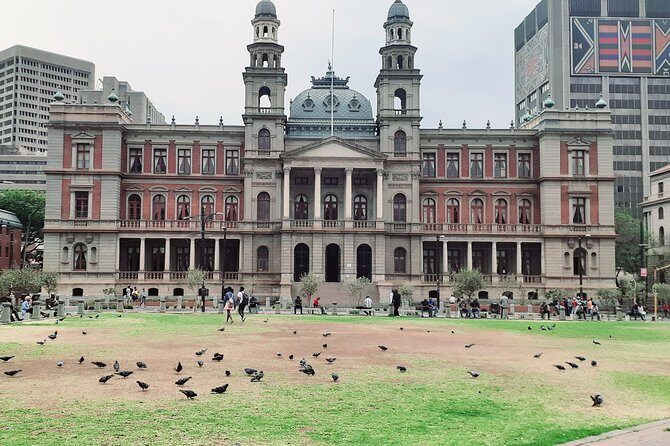
Pretoria, officially tied to Tshwane, is one of South Africa’s three capital cities. Cape Town is the legislative capital, Bloemfontein is the judicial capital, and Pretoria is where the administrative branch and many foreign embassies are based. That’s why it can look more orderly than some other cities you’ll see in the country.
But Pretoria isn’t just government buildings and paperwork. It’s often described as an academic city, with multiple universities plus major research institutions like the CSIR and the Human Sciences Research Council. During the tour, this comes across in how the guide frames the city: as a place where ideas, policy, and education grew alongside settlement and conflict.
And yes, the jacarandas matter. When they bloom, Pretoria can shift from gray city tones to a widespread purple wash. Even if your dates aren’t perfect, you’re still walking away with a clearer sense of why Pretoria earns that nickname and how the city’s character shows up in daily life.
You can also read our reviews of more city tours in Johannesburg
Getting value in the time box: how the route actually flows
The tour runs about 4 to 5 hours, which is a sweet spot if you’re staying in Johannesburg and want a solid day trip without turning it into a full-day slog. You’ll travel in an air-conditioned vehicle, and bottled water is included—small comforts that matter in warm weather.
The stop timings are also structured so you get depth where it counts:
- A guided museum-style experience at the Voortrekker Monument for about an hour (with admission not included)
- A half-hour cultural-and-urban moment at Church Square (free)
- A short, scenic government overview at the Union Buildings (free)
- The longest and most reflective stop at Freedom Park for about two hours (admission not included)
So you’re not trying to cram everything into a quick photo sweep. You’re getting enough guided explanation to make the sights feel connected.
Voortrekker Monument: pioneers, not just postcards
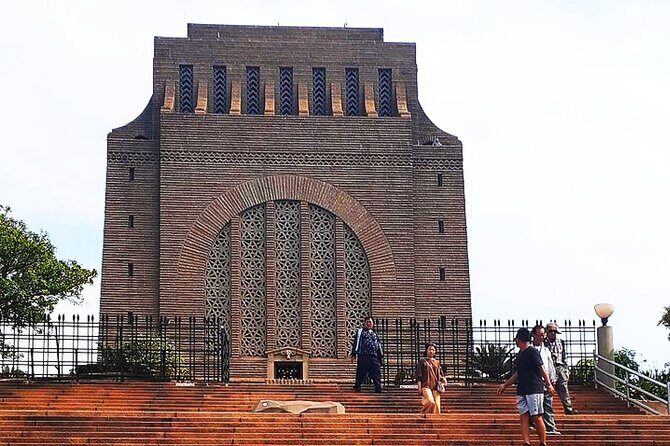
Your first big anchor is the Voortrekker Monument, with a guided tour focusing on pioneers moving from the Cape into the interior around 1836/7. This is where the tour’s storytelling starts to click: you’re not simply seeing a monument, you’re getting the framework for how people moved, why they moved, and how those movements fed later chapters of South African history.
This stop also leans into the conflict timeline people associate with South Africa—elements connected to the Anglo-Boer War and the Second World War appear in the broader themes. The value here is context. If you’ve only heard short versions of Afrikaner history, the guide-style explanation helps you connect the dots without drowning you in names.
Small details can make a big difference at this kind of museum, and this tour includes them. You may hear about the Presidential Residence being the first in Pretoria to be lit by electricity, plus a practical construction story about cement mixed with milk because the available cement quality was poor. Those are the kinds of facts that make the past feel less like a textbook and more like real choices people had to make.
Budget note: the admission ticket for this stop isn’t included, so add that to your planning. Also wear comfortable shoes—museum spaces can involve uneven surfaces and some indoor walking.
Church Square’s 1850s layout: where markets met faith
Next comes Church Square, set in Pretoria’s historic center. The founder, Marthinus Pretorius, determined the square should function as both a market place and church yard—an early city-planning idea that still shapes how the center feels.
You’ll learn that Church Square was later named for the church buildings located at its center, and that this arrangement was in place from 1856 to 1905. It’s a short stop (about 30 minutes), but it’s a useful reset after the heavier museum material. You get to see how civic life worked before Pretoria’s present-day government identity fully took over the skyline.
This part is also one of the easiest wins for value: admission is free. Even if you just use the time to slow down, take a few photos, and breathe, it helps you understand the city’s original rhythm.
The academic city angle: UNISA and Pretoria’s student power
One of the tour’s subtler strengths is how it frames Pretoria as a brainy, education-driven place. UNISA—often called one of the world’s mega universities—plays a huge role in that story.
You’ll hear big scale facts: UNISA is described as the largest university system in both South Africa and Africa by enrollment, attracting about a third of all higher education students in South Africa, with over 300,000 students across colleges and affiliates, including international students from 130 countries. It also has a long institutional lineage: founded in 1873 as the University of the Cape of Good Hope, then later shifted into a distance education role in 1946.
Why does this matter for your experience? Because Pretoria feels like an administrative capital, but also like a city where education and research power decision-making. That blend helps explain why the city can feel more thoughtful and structured than you might expect.




A quick nature-history thread near the Apies River and old reserves
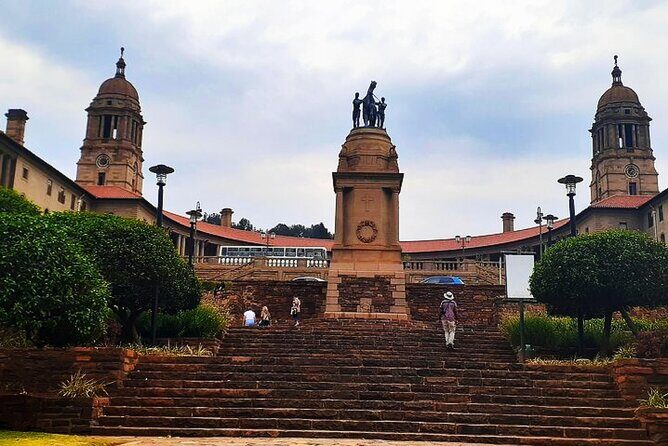
Between major monuments, the tour’s commentary connects Pretoria’s edges to older layers of the land. A highlight is the nature reserve proclaimed by President Paul Kruger on 1 February 1895. That reserve is described as about 60 hectares, and when paired with the contiguous Groenkloof Nature Reserve, it’s noted as the oldest nature reserves on the African continent.
You’ll also hear about the Apies River flowing through the area and the presence of two natural water sources nearby. The tour’s route passes through a landscape that includes a recreational resort setup, with facilities such as a caravan park, a swimming pool, a lapa, a playground, and barbecue areas.
Then there’s the human history: ruins linked to Lucas Cornelius Bronkhorst (1795–1875) are located near the resort. The Bronkhorst family was part of Hendrik Potgieter’s trek party during the Great Trek and were described as the first owners of farms in the district where Pretoria was later established.
Even if you only catch a partial view from the vehicle, this kind of history-thread helps. Pretoria doesn’t just sit on paper. It sits on settlement patterns, water access, and land decisions made long before government ministries took over.
Union Buildings: where the view matches the theme
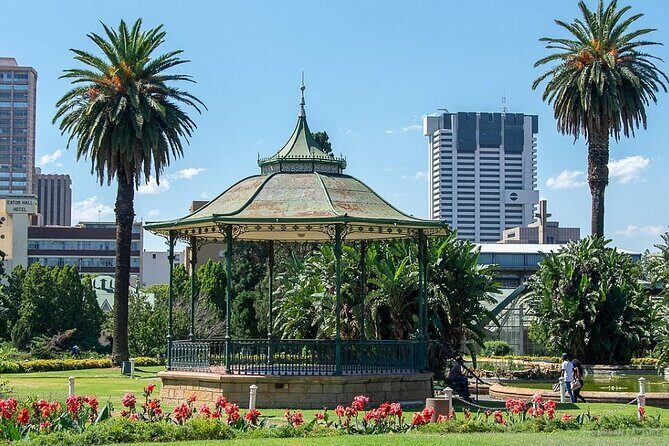
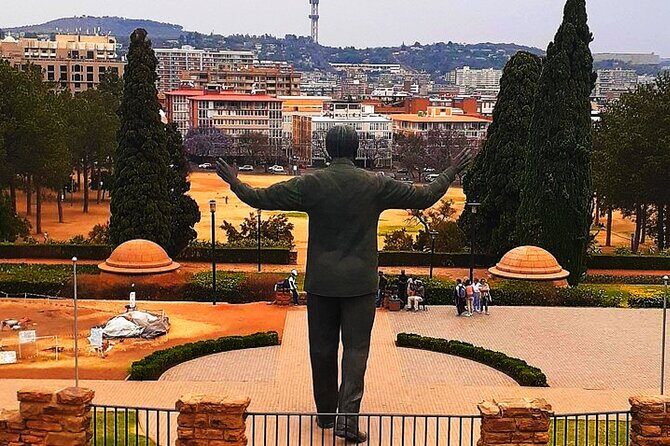
The Union Buildings are one of the biggest photo-and-context wins on the tour. These buildings sit at the highest point of Pretoria on Meintjieskop at the northern end of Arcadia. They’re also described as a national heritage site, the official seat of South Africa’s government, and the workplace/offices of the President of South Africa.
The architecture story adds weight. The Union Buildings were designed from light sandstone by Sir Herbert Baker, and his collaboration with Sir Edwin Lutyens is mentioned in relation to other major buildings (including work connected to New Delhi in 1931 and beyond, in the broader Baker/Lutyens architectural story).
Practically, you get about 45 minutes here, and it’s another value win because admission is free. For most people, this becomes the moment the tour feels like a true city orientation: government power in a visible setting, backed by a design story that helps you appreciate why it became an iconic site.
If you want the best photos, think about timing. Light can change how the sandstone looks, and the views from the hill are part of the point.
Freedom Park on Salvokop Hill: the emotional climax
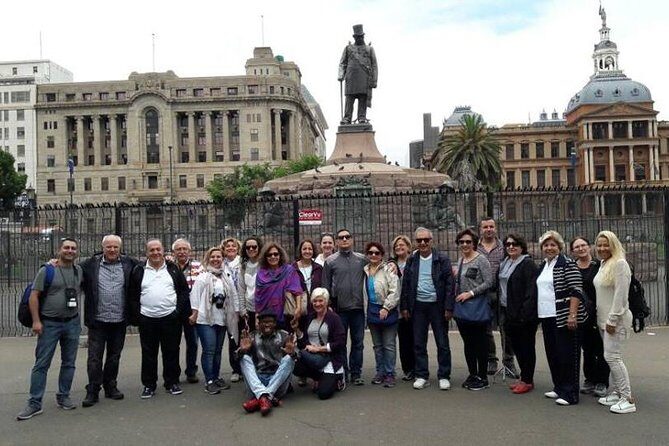
Freedom Park is the tour’s longest stop and the one with the strongest emotional tone. It’s a heritage site and museum dedicated to those who fought for freedom and human rights in South Africa. The setting is on Salvokop Hill, and the layout connects memorial elements through shared themes of freedom and human rights.
This is where the tour stops being mostly about “what happened” and becomes more about “what it cost.” The memorial includes a list of names of people killed across major periods: South African Wars, World War I, World War II, and during the apartheid era.
You’ll spend about two hours here. Admission is not included, so again, plan a little budget for it. Also give yourself permission to slow down. This isn’t a quick stop; the value comes from letting the place do its work.
In the best-guided moments, the tour doesn’t force emotion. It gives you context so your reaction feels connected to the story instead of random.
Price and what you’re really paying for ($108.52)
At $108.52 per person, this tour sits in the “short but structured” category. You’re paying for more than transportation. You’re paying for:
- A guided narrative that links monuments to real historical context
- Time efficiency, with a tight route over about 4–5 hours
- Comfort extras, including an air-conditioned vehicle and bottled water
What you’re not paying for is equally important:
- Admission tickets are not included at the Voortrekker Monument and Freedom Park
- Lunch and any additional meal add-ons aren’t included (lunch or a single drink can be added to a full-day tour, but that’s not part of the base format here)
- “All fees and taxes” aren’t included
So the best value comes when you treat this as a guided orientation. If you mainly wanted to sit by the window and take photos, you’d probably feel the cost more. If you want meaning—and you’re okay budgeting for two paid-entry stops—this is a solid deal.
Pickup, private comfort, and making it run smoothly
This is offered with pickup, and it’s designed as a private tour/activity for your group only. That matters more than it sounds. When you’re inside a vehicle with only your group, the guide can set the pace and tailor the focus without negotiating around other schedules.
You also get a mobile ticket, which is usually one less thing to worry about on the day. And because it’s near public transportation, it’s flexible if you need a backup plan.
In short: you should show up ready for a guided day, not a free-for-all. The whole point is that the tour organizes Pretoria into a story you can actually remember.
Who this Pretoria City Tour suits best
This tour is a great fit if:
- You want a guided history-heavy introduction without turning it into a full research project
- You like government-and-monument destinations but also want the human-rights side
- You’re interested in Afrikaner pioneer themes and how they connect to later conflict timelines
- You prefer private group comfort, pickup help, and clear pacing
It may not be ideal if you want long independent wandering, beach-time vibes, or a “just show me the pretty streets” itinerary. Pretoria can be more about structure and meaning than pure scenery, and this tour leans into that.
Should you book? My take on the decision
Book this tour if you want to understand Pretoria fast and feel like you got the key story beats—pioneers, civic planning, government symbolism, and then Freedom Park’s memorial focus. The price makes sense when you factor in guided interpretation and the fact that you’re covering multiple major sites in one afternoon window.
Skip it or adjust expectations if you hate museum admissions being separate or you need a totally light, casual tour. Also, if you’re not in a headspace for reflective memorial spaces, Freedom Park may feel like too much in one sitting.
If you’re aiming for a smart first Pretoria day, this one is hard to beat.
FAQ
How long is the Pretoria City Tour?
The tour lasts about 4 to 5 hours.
What does the tour cost per person?
The price is $108.52 per person.
Is pickup included?
Yes, pickup is offered.
Is this tour private?
Yes. It’s listed as a private tour/activity, so only your group participates.
What’s included in the price?
Included items are an air-conditioned vehicle, private transportation, and bottled water.
Are admissions included for all stops?
No. Admission tickets are not included for the Voortrekker Monument and Freedom Park. Church Square and the Union Buildings are free.
Do I need a lunch plan?
Lunch isn’t included. Lunch or a single drink can be added to a full-day tour, but the base price does not include meals.
What if plans change and I need to cancel?
You can cancel for a full refund up to 24 hours before the experience’s start time.
How does confirmation work after booking?
Confirmation is received at booking time unless you book within 12 hours of travel. In that case, confirmation is received as soon as possible, based on availability.