REVIEW · JOHANNESBURG
Pretoria tour, Half Day experience
Book on Viator →Operated by Hominids Tours & Travel · Bookable on Viator
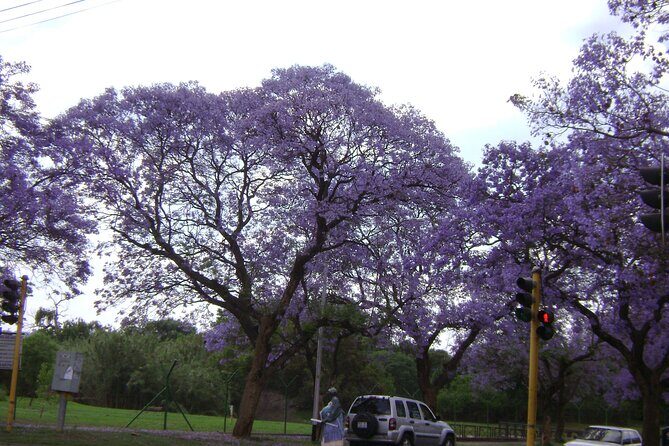
Jacarandas or not, Pretoria hits like a story. In about four hours you get Voortrekker Monument views plus a stop at Paul Kruger’s museum house, with real details that make South African history feel close. You also get a feel for why Pretoria matters as the seat of government, not just another city on the map.
One possible drawback: the route is packed, so even though the big monument stop is longer, some sites are shorter looks. If you prefer slow museum time, you may want to plan extra time on your own after the tour.
In This Review
- Key things I’d bookmark before you go
- A tight route, in the best way: four hours in Pretoria
- Voortrekker Monument: Great Trek memory and a view that sets context
- Ditsong Kruger Museum: Paul Kruger’s house across from the church
- Pretoria City Hall and the clock tower bells by Sir George Heys
- Melrose House: the Vereeniging Peace signing on 31 May 1902
- Union Buildings on Meintjies Kop: where government and architecture meet
- Why the guide can make or break your experience: Francois and Ben
- Price and value: $68.97 for major Pretoria landmarks
- Practical tips for a smooth half-day (and better photos)
- Should you book this Pretoria half-day tour?
- FAQ
- How long is the Pretoria half-day tour?
- What does the tour cost?
- Is pickup offered?
- Is there a mobile ticket?
- What sites are included in the route?
- Are admissions included or free?
- How big is the group?
- Is free cancellation available?
Key things I’d bookmark before you go
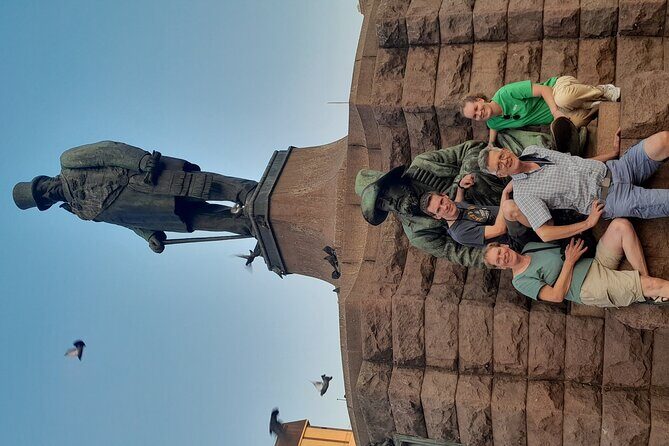
- Small group size (max 8 people) keeps it from feeling rushed and lets you ask questions
- Voortrekker Monument gives you a 2-hour grounding in the Great Trek and battles like Blood River
- Ditsong Kruger Museum includes admission and lets you see Paul Kruger’s home details up close
- Sir George Heys connects two stops: City Hall bells and the Melrose House peace story
- Union Buildings is a quick but meaningful look at South Africa’s administrative capital
A tight route, in the best way: four hours in Pretoria
This is a half-day tour that works for real schedules. You’re on the go for about 4 hours, with a small group capped at 8 people—big enough to meet others, small enough that the guide can actually manage pace and questions. Pickup is offered, and you’ll use a mobile ticket, which makes check-in simple.
Value-wise, I like that you’re not paying only for driving around. Multiple stops are free or have admission included. That means your money goes toward guided context—what to look for, what it means, and why the city’s landmarks connect.
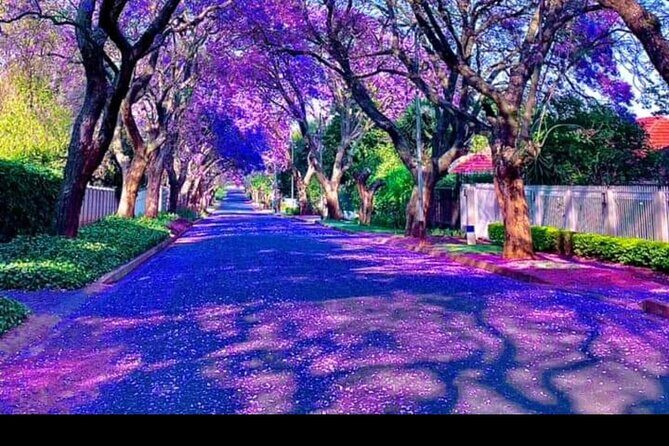
And the Pretoria angle is the whole point. The tour leans into Pretoria’s role in South African public life, from the early settler era, to Oom Paul, to the peace that reshaped the country, and finally to the seat of government on Meintjies Kop. You’ll also hear why people talk about Pretoria as a jacaranda city—think pretty streets and a city identity that feels more intentional than accidental.
The only “watch it” part is time. You’ll cover a lot of major sites, so don’t expect long reading sessions at every stop.
You can also read our reviews of more tours and experiences in Johannesburg.


Voortrekker Monument: Great Trek memory and a view that sets context
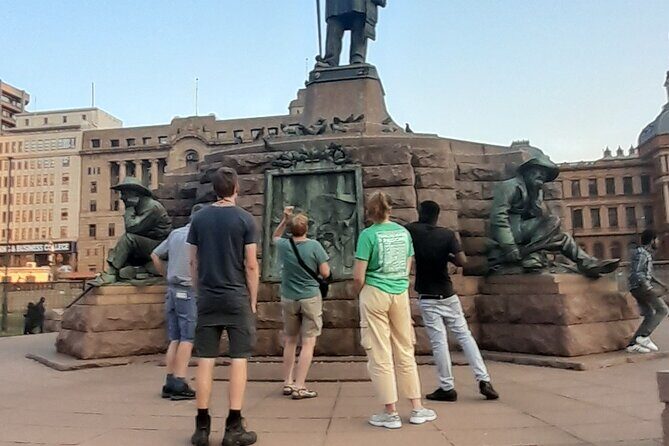
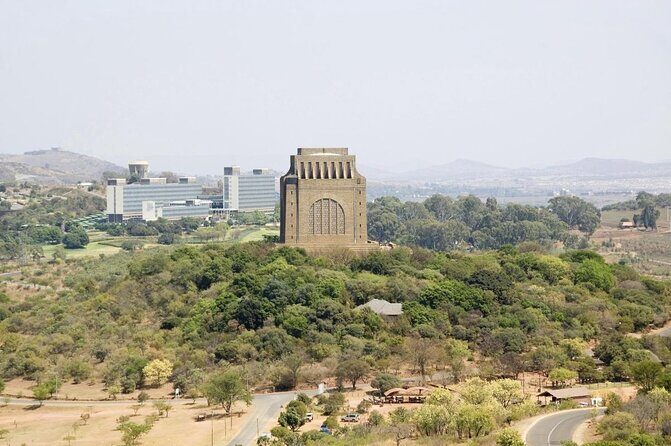
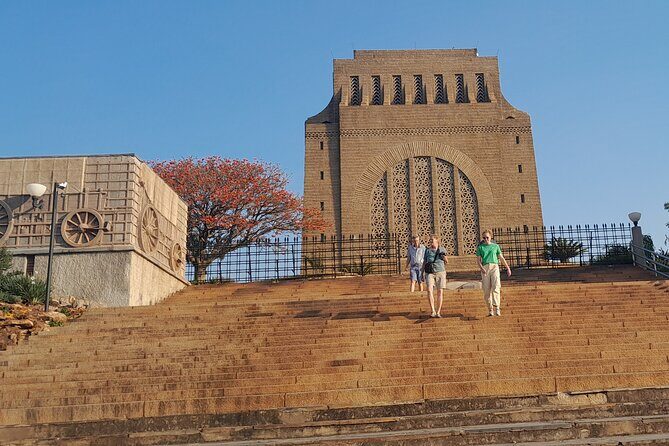
Your first anchor stop is Voortrekker Monument, with free admission and about 2 hours on site. This is one of those places where the building and the story are inseparable. The monument commemorates the Great Trek beginning in 1836, when settlers aimed to establish the Transvaal Colony. The tour frames the setting as more than legend: it also points to the conflicts that came with settlement, including the Battle of Blood River.
What I like about starting here is that it gives you “who’s who” background fast. Before you hit museums and government buildings, you understand the early power shifts and conflicts that shaped later politics. It’s also a strong orientation moment in Pretoria—you can look around and mentally place the city’s key institutions in a longer timeline.
Practical tip: treat this stop like your warm-up lap. If you ask your guide a couple of questions early—how the Great Trek ties to later events—you’ll get more out of the next stops. And wear comfortable shoes. Even without a stated challenge level, monuments usually mean outdoor walking and stairs.
Ditsong Kruger Museum: Paul Kruger’s house across from the church
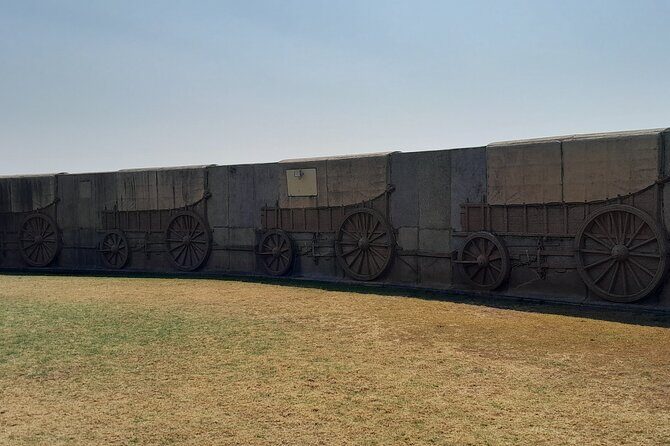
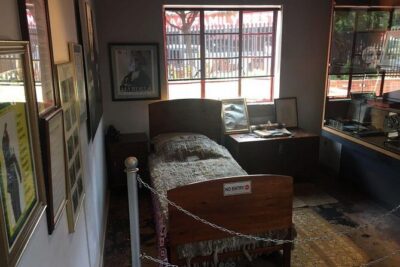
Next comes Ditsong Kruger Museum, centered on Paul Kruger’s home on Nkomo Street (No. 60). Admission is included, and you get about 30 minutes.
This isn’t just a plaque-and-photo museum stop. The guide points you toward the house details that help you visualize daily life. The home is described as having a galvanized tin roof and a veranda, and it contains old original fitting furniture used by the Kruger family. That matters, because it shifts Kruger from a name in a textbook to a person who lived somewhere very specific.
A great detail: the house sits directly opposite the Gereformeerde kerk, the church Oom Paul and his wife used to attend on Sundays. The tour notes that he would give a word or two if he was needed, even though he was never a preacher. It’s a small human touch that makes the setting feel lived-in rather than staged.
Another “wait, that’s cool” moment is the welcome near the entrance. You’ll see two marble lions donated by a friend of the Krugers, Barney Barnato. It’s the kind of symbol that tells you how prominent and connected the people of the era were.
Because this stop is shorter, I’d recommend you focus on what looks different or personal: the veranda layout, the household furniture, and anything the guide connects to Kruger’s public role.
Pretoria City Hall and the clock tower bells by Sir George Heys
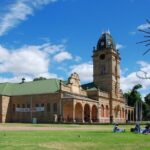
Between the museum and the Union Buildings, you’ll pass Pretoria City Hall, with its dome/domed clock tower, inaugurated in 1935. A key detail the guide shares here is the carillon of 32 cylindrical bells, donated by Sir George Heys, the first owner of Melrose House.
This is a good stop for two reasons.
First, it’s a quick way to spot how Pretoria’s architecture reflects civic pride and money behind the scenes. Second, it sets up a payoff later. You’re effectively learning how the same influential name shows up again—so when you reach Melrose House, the story doesn’t feel random. It feels connected.
Since no exact time is listed for this part, expect it to be a shorter “look and learn” break. Use it for photos, but also listen. The bells detail is the kind of fact that sticks once you hear the names linked across stops.
Melrose House: the Vereeniging Peace signing on 31 May 1902
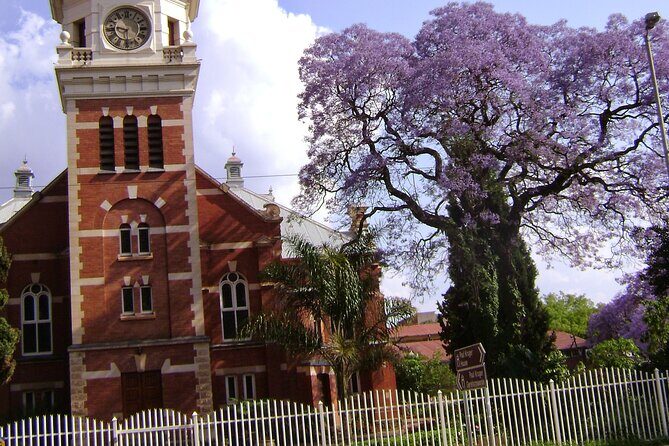
Then you’re at Melrose House in Jacob Mare Street, and this is where the political timeline turns into something concrete. The tour highlights that the signing of the Vereeniging Peace took place here on 31 May 1902, ending the war of South Africa.
This stop matters because it’s not only about a war; it’s about the moment a new direction gets agreed to. You’ll likely feel the emotional weight of the date once your guide frames it—because peace agreements aren’t abstract. They change what comes next for ordinary people, and that’s the real reason you’re standing in a specific room at a specific time.
The story gets even more layered thanks to George Heys, who is described as having many mysteries. During the war, the house was requisitioned by the British as their imperial headquarters in South Africa. After that, it became the residential of Lord Roberts, the commander in chief of the British forces.
So Melrose House isn’t just “a site where peace happened.” It’s a place that also served an opposing command structure. That push-pull is exactly why this stop feels vivid. You’re watching history switch hands—sometimes literally inside walls like these.
If your guide has a good rhythm, this stop should feel like the story’s hinge between older conflicts and later governance.


Union Buildings on Meintjies Kop: where government and architecture meet
Your final major site is the Union Buildings, South Africa’s government headquarters, based at Meintlies Kop. This is one of the classic “photo + meaning” stops.
The tour explains the design: it was created by Sir Herbert Baker in Renaissance style, using classic idioms. Construction began in 1910 and was completed in 1913. Admission is free, and you’ll have about 30 minutes here.
Why I think this stop is essential in a half-day route: it shows you the end result of the earlier story. You started with the Great Trek era. You moved through Paul Kruger’s home world. You reached the peace that helped shape a new political order. Now you land in the place built to symbolize administration and state power.
Even if you’re not a total architecture person, you’ll notice the design approach: it’s formal, intentional, and built to represent authority. I’d use this time to ask yourself a simple question while you look around: how does the building’s presence make you feel about governance? That’s the point—these walls are meant to carry weight.
Why the guide can make or break your experience: Francois and Ben
A good historical tour lives or dies by the guide’s clarity, pacing, and ability to connect the dots without turning everything into a lecture.
In the best version of this tour, that clarity showed up strongly with guide Francois, who helped people understand South Africa history and politics through a local lens. Another guide, Ben Modisane, earned praise for explaining things clearly and calmly. That calm matters. When you’re dealing with intense events—settlement conflicts, war, and peace—you want the facts delivered in a way that feels organized, not overwhelming.
One extra detail worth noting: on at least one occasion, Ben followed up after the tour by helping a participant get from their hotel to the train station. That kind of extra support isn’t something you should assume will happen, but it does signal that the guides take real care with how your day ends.
If your tour group includes questions, don’t be shy. Ask for one clarification early—why a specific date matters, or what a building symbol means. The best guides lock onto what you’re curious about.
Price and value: $68.97 for major Pretoria landmarks
At $68.97 per person, this tour isn’t priced like a bargain bus ride, but it also isn’t treating you like a high-end VIP. For a half-day, the value comes from the combination of guided storytelling, pickup, small group size, and admissions.
Here’s why the math makes sense based on what’s included:
- Voortrekker Monument: admission free
- Ditsong Kruger Museum: admission included
- Union Buildings: admission free
That means you’re not just paying for a driver and a route. You’re paying for interpretation across several big-picture sites. When your day includes a museum house, a peace treaty location, and the government headquarters, you’re saving yourself from trying to stitch these stops together alone.
Also, the average booking lead time is about 35 days, which usually hints that this is a popular “first taste of Pretoria” style tour. Popular doesn’t automatically mean perfect, but it does suggest the route is well recognized.
Practical tips for a smooth half-day (and better photos)
This experience calls for moderate physical fitness, and it stays mostly outdoors around monuments and government buildings. That means you should plan like it’s a walking day, not a showroom day.
Here’s what helps:
- Wear comfortable shoes. Outdoor walking plus curbside stops can add up fast.
- Bring sun protection. Even if Pretoria skies are changeable, you’ll likely be outside at multiple points.
- Set yourself a goal: pick one theme to listen for, like how power shifts from the Great Trek era to Kruger’s time to the Peace signing and finally to government administration.
- Use the guide time for questions. With a half-day format, asking one good question can make a whole stop click.
If you’re traveling with a service animal, this tour allows service animals. And since it’s near public transportation, you aren’t stuck if plans change last minute.
Finally: if you care about museums, remember that some stops are short by design. You’ll get key context on-site, then you can follow up later on your own if you want more.
Should you book this Pretoria half-day tour?
I’d book it if you want a guided overview that actually connects events, not just buildings. This is a smart choice when you have limited time and you want Pretoria to make sense—especially with the story thread from Voortrekker Monument to Kruger’s house, then into Melrose House and ending at the Union Buildings.
I’d skip or add extra time if you’re the type who needs long museum reading sessions. The route is efficient, and you’ll move on while parts of the sites could easily take longer.
If you like history but also like to feel grounded in place, this tour hits a very usable sweet spot: short enough to fit a schedule, structured enough that the city feels coherent by the end of the day.
FAQ
How long is the Pretoria half-day tour?
The tour lasts about 4 hours.
What does the tour cost?
It costs $68.97 per person.
Is pickup offered?
Yes, pickup is offered.
Is there a mobile ticket?
Yes, you’ll use a mobile ticket.
What sites are included in the route?
You’ll visit Voortrekker Monument, Ditsong Kruger Museum, Pretoria City Hall (clock tower/city hall area), Melrose House, and the Union Buildings.
Are admissions included or free?
Voortrekker Monument and the Union Buildings are free. Admission for Ditsong Kruger Museum is included.
How big is the group?
The tour has a maximum of 8 people.
Is free cancellation available?
Yes. You can cancel up to 24 hours in advance for a full refund.