REVIEW · JOHANNESBURG
Johannesburg Historical, Apartheid Museum & Soweto
Book on Viator →Operated by Hedone Afrika Travel and Leisure PTY(Ltd) · Bookable on Viator
A fast day, with real South African lessons. This private Johannesburg and Soweto run ties together Constitution Hill’s human-rights story and the Apartheid Museum’s rise-and-fall lesson with smart stops across town, using an air-conditioned vehicle to move between areas quickly. I also like that the guide approach is personal, and names like Lesiba come up for a reason: he links neighborhoods to history so the places make sense as you go.
The main trade-off is simple: this is a tight, multi-stop day. Some attractions require separate entry fees (notably the Apartheid Museum), so it helps to set aside extra cash or double-check admissions before you go.
If you want a quick, guided overview of Johannesburg and Soweto that still feels grounded in real stories, this format hits the mark. You’ll cover a lot of ground without spending your precious time wrestling with public transport, and you’ll get viewpoints from both the polished city-center side and the memorial and community side of Soweto.
In This Review
- Key things that make this tour worth your time
- A Johannesburg highlights day that makes sense in limited time
- Constitution Hill: prisons, courts, and a view of history from the ridge
- The early gold days beneath a modern city: the mine stope story
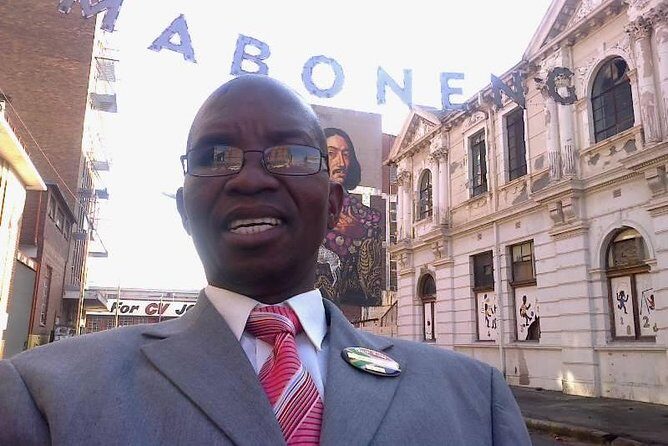
- Maboneng Precinct: from old industrial warehouses to a place of light
- Nelson Mandela Square, Top of Africa views, and getting oriented fast
- Vilakazi Street: Mandela and Desmond Tutu in one neighborhood
- Mandela House (included): inside the personal side of the story
- Hector Pieterson Memorial: remembering June 16 through one child’s life
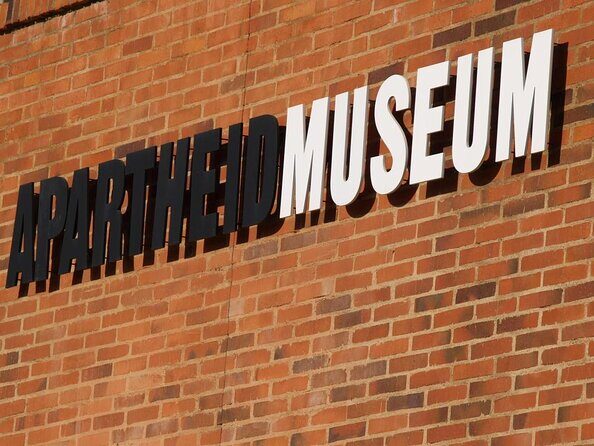
- Apartheid Museum: the big finish that ties the day together
- Orlando Towers, Diepkloof, and the built clues of apartheid planning
- Mzimhlophe station protest history and the Elephant Houses
- The Coloured township area called Bulte and the meaning of the mine dumps
- Price and value: why $107.48 can work for the right traveler
- Who should book this tour (and who might want something else)
- Final thought: should you book this Johannesburg and Soweto day?
- FAQ
- How long is the Johannesburg Historical, Apartheid Museum & Soweto tour?
- What’s included in the tour price?
- Are tickets included for the major sites?
- Is pickup offered?
- Is this tour private?
- What is the cancellation policy?
Key things that make this tour worth your time
- Private, air-conditioned transport to connect key sites without the long delays of public buses
- Constitution Hill + Apartheid Museum for a strong, chronological understanding of South Africa’s past
- Soweto essentials on Vilakazi Street with time at Mandela House and the Hector Pieterson Memorial area
- Maboneng Precinct’s regeneration story tied to the meaning of Maboneng as a place of light
- Short stops that still matter at places like Orlando Towers and Diepkloof, where apartheid planning shows up in the built environment
- Guides who communicate clearly, with a name like Lesiba standing out for friendly, practical local insight
A Johannesburg highlights day that makes sense in limited time
Johannesburg is spread out, and travel time can quietly eat your day. This tour is built to solve that problem: you start in the city, then work your way through the Mandela-era sites and memorials in Soweto, ending with a deep historical anchor at the Apartheid Museum.
The value here isn’t just speed. It’s the way the stops are grouped so you’re not bouncing randomly between unrelated places. You’re seeing how power, law, protest, and community life fit together—first through institutions and architecture, then through personal stories and remembrance.
This is also a good option if you’re traveling with people who don’t want to sit for hours in one museum. You’ll get enough time at major sites (Constitution Hill and Mandela House both have admissions included) while still keeping momentum.
You can also read our reviews of more historical tours in Johannesburg


Constitution Hill: prisons, courts, and a view of history from the ridge
Constitution Hill Human Rights Precinct is the kind of place where the setting matters. The precinct sits on a ridge overlooking central Johannesburg, with the sense that you’re seeing the city from above—an interesting counterpoint to the buildings below that once held people in custody.
You’ll spend about 1 hour 30 minutes here, and admission is included. This stop is powerful because it shows how the same ground can shift from confinement to constitutional democracy. The historic prisons (now museums) sit side by side with the Constitutional Court, a symbol of South Africa’s post-apartheid future.
There are a few ways to get more from the visit:
- Go slowly in the prison spaces. Even if you’re a fast reader, give your mind a moment to absorb what you’re seeing.
- Pay attention to the institutional design. The layout and security logic help you understand how control worked, not just what the laws were.
- Use your guide’s framing. A good guide helps you connect names, dates, and what each building represents.
One more practical note: places like this can be emotionally heavy. If you’re sensitive to grim history, plan for it and don’t cram a second heavy stop immediately after without a brief decompression moment.
The early gold days beneath a modern city: the mine stope story
Before you even reach the bigger set-piece museums, there’s a fascinating thread that connects Johannesburg’s present to its earliest gold-mining days. During construction of Standard Bank’s headquarters in the city center, builders uncovered an entrance to a long-forgotten mine stope dating back to the city’s earliest gold rush period.
What I like about this stop is that it’s not abstract history. It’s an archaeological-looking time capsule preserved during building completion and now open daily. The stope is named for Ignatius Phillip Ferreira—a farmer, soldier, and prospector who left Grahamstown in the Eastern Cape in 1886. He founded one of the area’s first mining camps in July 1886, then struck gold just three months later.
This is a small stop compared to the museum-heavy parts of the day, but it adds a crucial layer: Johannesburg didn’t only become a modern metropolis. It became that through extraction, labor, and upheaval. When you later visit places tied to apartheid and human rights, you’re carrying a better sense of how the city’s foundations were built.
Maboneng Precinct: from old industrial warehouses to a place of light
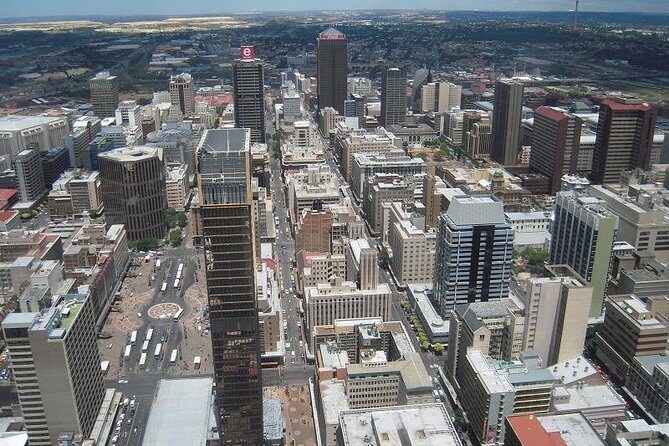
Maboneng Precinct is the kind of neighborhood stop that can turn a history day into something more three-dimensional. This area grew out of the work of entrepreneur Jonathan Liebmann, who bought up many rundown warehouses and factories on the eastern edge of the inner city and helped transform them.
The word Maboneng means place of light, and the precinct’s goal is to shift an area once linked with urban decay and crime into something safer and more active for living, working, and playing. If you’ve visited other globally known renovation districts, you’ll see echoes—but the South African context is what matters here.
You’ll have around 1 hour here, and entry is free. Use that time to do two things:
- Walk at a comfortable pace and notice the contrast between older industrial structures and newer uses.
- Ask your guide what changed and why. The story isn’t only about design. It’s about shifting safety, ownership, and how city life is supported.
Maboneng is a good reminder that Johannesburg isn’t only conflict and memorials. It’s also change, business energy, and people trying to build a different daily rhythm.
Nelson Mandela Square, Top of Africa views, and getting oriented fast
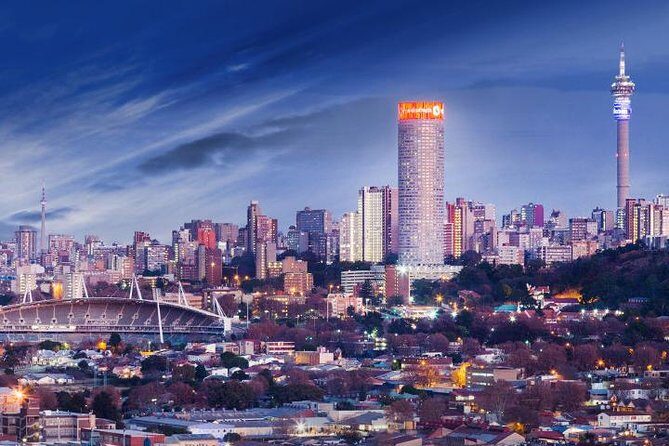
Between the bigger historical stops, you’ll also pass through well-known city landmarks that help you orient yourself. The route includes the Top of Africa building and Nelson Mandela Square, both of which give you recognizable reference points for Johannesburg’s modern skyline.
Then there’s a quick science-and-industry flavor stop connected to gold processing: a stamp battery, or stamp mill. This is tied to crushing gold-bearing rock brought from underground. Even in short form, it helps you connect what you’ve been told about mining to the physical process that made the gold rush real.
These smaller city-center moments matter more than they seem. They help you understand the setting you’ll later interpret in Soweto: a city built on mining wealth, then later shaped by law, segregation, protest, and resistance.
You can also read our reviews of more museum experiences in Johannesburg


Vilakazi Street: Mandela and Desmond Tutu in one neighborhood
When the tour reaches Soweto, the day shifts from museums and institutions to names you’ve already heard—but now in real streets.
Vilakazi Street is famous for a simple, striking reason: it’s the only street in the world associated with two Nobel Laureates as residents—Nelson Mandela and Archbishop Emeritus Desmond Tutu. You’ll have about 15 minutes here, so this isn’t a long stroll, but it sets the tone.
What I like about short stops on this kind of tour is that they give you a sense of place without turning the day into a blur of walking. You’ll also notice that the meaning of Vilakazi Street isn’t only in history texts. It’s in who lives there now and the everyday stories that continue.
Practical tip: this stop is brief, so if there’s a particular question you want answered—about where to focus inside Mandela-related sites—ask your guide before you move on.
Mandela House (included): inside the personal side of the story

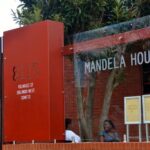
Mandela House is the emotional anchor for many visitors, and here you actually get admission included. The museum is at 8115 Vilakazi Street, where the Mandela family lived from 1946 to the 1990s.
You’ll spend about 30 minutes here. That’s enough time to understand what the museum is trying to do: celebrate Mandela’s life through artwork and personal interpretation rather than only dates and documents.
This is also where your prior stops pay off. After Constitution Hill’s institutional narrative, Mandela House brings it down to human scale. It’s a shift from systems to a person—and then from a person to the wider struggle.
If you’re a visitor who likes museums but hates feeling rushed, 30 minutes can still feel tight. Still, for a multi-stop day, it’s a smart duration. You get the core experience without sacrificing the other memorial and neighborhood context later in Soweto.
Hector Pieterson Memorial: remembering June 16 through one child’s life

From Mandela-related sites, the tour continues with the Hector Pieterson Memorial. You’ll have about 30 minutes here, and admission isn’t listed as included.
This memorial commemorates 12-year-old Hector’s sacrifice on June 16—the first child to die by police bullet. Hector is buried in Avalon Cemetery, where many apartheid victims are also buried. Even if you’ve read about this event before, seeing it in place gives it a different weight.
What helps here is to let the memorial work on you. Don’t treat it as a quick photo stop. Use the time to absorb the meaning behind the date and the personal story. Then carry that feeling forward into the rest of the day, where you’ll see how protest and community life played out in different parts of Soweto.
Apartheid Museum: the big finish that ties the day together
The Apartheid Museum is the heavy hitter, and the stop is listed at about 2 hours. Admission is not included, so budget for that. If you’re doing this as part of a multi-stop day, you’ll want to be mentally ready: this museum covers the rise and fall of apartheid in a way that can hit hard.
The reason this stop works as a finish is that it gives you a structured historical overview after you’ve already seen:
- legal and human-rights symbols at Constitution Hill
- neighborhood change narratives at Maboneng
- Mandela and Tutu-associated heritage in Soweto
- memorials tied to specific acts of resistance and sacrifice
By the time you get to the Apartheid Museum, you’re not walking in cold. You’re walking in with questions and context already in your head.
If you only do one museum while in Johannesburg, this is the one that tends to justify itself for most first-time visitors. It’s also the stop where time is most valuable. If you feel yourself getting tired near the end of the day, still try to keep your attention steady inside.
Orlando Towers, Diepkloof, and the built clues of apartheid planning
Not every stop here is a museum. Some are about reading the city itself—how apartheid planning shaped where people lived and what infrastructure meant.
At Orlando Towers, you get a short look (about 15 minutes). The cooling towers are noted for making for one of the world’s epic bungee jumps. Even if you’re not planning to jump, the point is that these structures turned into iconic landmarks, and they’re tied to the area’s identity.
Then comes Diepkloof Park, about 15 minutes. The notes mention Diepkloof Extension Upper Class and the fact that hostels were built to house large numbers of single male migrant workers. That detail is important because it shows how apartheid’s labor system wasn’t only about law and segregation. It was also about housing design and where workers could be placed.
If you’re the kind of traveler who likes to connect history to physical space, these short stops can be surprisingly meaningful. They’re not long, and they’re not always emotionally flashy, but they help explain the everyday machinery of discrimination.
Mzimhlophe station protest history and the Elephant Houses
One of the more intriguing Soweto elements on this route is tied to the Treason Trial era. You’ll pass demonstrations at Mzimhlophe station in Soweto, where protests highlighted injustices of the South African government.
The notes also mention that the area is home to unique Elephant Houses. You might not get a long guided explanation on a short tour day, but if your guide points out what makes these structures distinctive, it’s exactly the kind of local detail that turns a route into a story.
This is also a good reminder of how protest history often lives in very specific places—station areas, public spaces, and the routes people used when they gathered. Seeing these points helps you understand apartheid as something contested in daily life, not only in textbooks.
The Coloured township area called Bulte and the meaning of the mine dumps
Another neighborhood note in the day is a Coloured township area colloquially called Bulte, meaning hills. The name Bulte was coined as a form of endearment by residents and neighbors, and it’s associated with the mine dumps surrounding the township.
I like including this kind of stop because it broadens the story beyond only a single group or a single set of dates. The apartheid system was layered, and different communities were pushed and shaped in different ways.
Also, the mine dumps are a practical reminder: the mining story didn’t stop at the mine shafts. It continued into how land looked, where people lived, and how neighborhoods developed around that altered environment.
Price and value: why $107.48 can work for the right traveler
At $107.48 per person, this tour isn’t a budget bus ride, but it’s also not priced like a full-day private sightseeing charter that includes multiple major paid attractions. The value mainly comes from:
- an air-conditioned vehicle and private-group format
- bottled water
- all fees and taxes covered in the tour price
- the fact that you cover many key sites in one day instead of piecing together transport and timing yourself
What can change your total cost is admission. Apartheid Museum is listed as not included, while Constitution Hill is included and Mandela House is included. Some other stops are free or listed as not included. So, if you’re trying to keep a strict budget, plan for museum entry at least for the Apartheid Museum.
The optional part is lunch. Lunch isn’t included, but it can be added. Snacks and alcoholic beverages are not included either.
The biggest value question isn’t only price. It’s whether you want a packed, guided route. If you like structure and you’re short on time, this price-to-effort ratio often feels fair.
Who should book this tour (and who might want something else)
This works best for:
- first-time visitors who want a coherent Johannesburg + Soweto overview without wasting time figuring out routes
- travelers who want context before and after major museums
- people who prefer private guidance and clear communication
It may not be ideal if:
- you want only one or two major museums and lots of slow wandering
- you strongly prefer free-entry, no-paid-admission days
- your schedule needs long, flexible breaks between stops
If you’re traveling with family, the private format can make a big difference because it’s easier to adjust pacing when someone gets tired or wants a slightly different focus.
Final thought: should you book this Johannesburg and Soweto day?
I’d book this tour if you want a guided day that ties together constitutional justice, apartheid education, and Mandela-era places, all without losing half your day to transit. The combination of Constitution Hill and the Apartheid Museum is the backbone, and the Soweto stops give the story a human face.
I’d hesitate only if you’re the type who wants museum time to expand without limits. In that case, you might feel the day is a bit too packed. For most visitors, though, this is a smart way to see a lot, learn a lot, and still keep the day moving.
FAQ
How long is the Johannesburg Historical, Apartheid Museum & Soweto tour?
The duration is listed as 1 to 7 hours approximately, depending on the timing and flow of the day.
What’s included in the tour price?
The tour includes all fees and taxes, an air-conditioned vehicle, and bottled water. Lunch can be added, but lunch, snacks, and alcoholic beverages are not included.
Are tickets included for the major sites?
Admission is included for Constitution Hill Human Rights Precinct (ticket included) and Mandela House (ticket included). Maboneng Precinct is listed as free. The Apartheid Museum is listed as not included. Other stops are listed as not included where specified.
Is pickup offered?
Yes. Pickup is offered, and the tour is noted as starting during the listed operating hours (Monday to Tuesday, 8:30 AM to 1:30 PM).
Is this tour private?
Yes. It’s a private tour/activity, meaning only your group participates.
What is the cancellation policy?
You can cancel for a full refund up to 24 hours in advance of the experience start time. If you cancel less than 24 hours before, the amount paid is not refunded.