REVIEW · JOHANNESBURG
Soweto Township Tours
Book on Viator →Operated by Johannesburg and soweto township tours · Bookable on Viator
Soweto teaches without turning people into scenery. This private, door-to-door Johannesburg day trip is led by a born-and-raised Sowetan, and the focus stays on people—past and present. It pairs major anti-apartheid sites with everyday stops, so you get context instead of just a photo run.
I love how much of the day is shaped by local conversation. A guide named Jabulani (a Soweto resident) brings it down to real life: what things were like then, and what South Africa looks like now, in plain language you can actually follow.
One thing to keep in mind: entrance fees are at your own expense, and several stops include museums or heritage sites that cost extra time and money. Also, the schedule is full—if you hate walking or you need long breaks, you’ll want to pace yourself.
In This Review
- Key highlights you’ll actually feel during the day
- Why This Soweto Tour Feels Personal, Not Like a Drive-By
- Getting Picked Up Around Johannesburg (and Not Losing Half Your Day)
- Stop 1: Apartheid Museum (Go In Ready to Spend Time)
- Stop 2: Driving Into Soweto and Getting Your Bearings
- Stop 3: FNB Stadium (Soccer City) and the Nearby Power of Place
- Stop 4: Diepkloof Park (A Short Time, a Helpful Zoom-Out)
- Stop 5: Chris Hani Baragwanath Hospital (Scale You Can Feel)
- Stop 6: Walter Sisulu Square and the Freedom Charter
- Stop 7: Hector Pieterson Museum and Memorial (Plan for Emotional Weight)
- Stop 8: Vilakazi Street (A Rare Street With Mandela and Tutu Connections)
- Stop 9: Mandela House (Orlando West, the House That Holds the Years)
- Stop 10: Orlando Towers and the Idea of Reuse
- Price and What You’re Actually Paying For (USD 56.95, Plus Entrances)
- Who Should Book This Soweto Township Tour?
- Should You Book Soweto Township Tours?
- FAQ
- How long is the Soweto tour?
- Is this a private tour?
- Does the tour include hotel pickup?
- What’s included in the price?
- Are museum entrance fees included?
- Is lunch included?
- What stops are included during the day?
- Where does the tour start and end?
- How far in advance should I book?
- What’s the cancellation policy?
Key highlights you’ll actually feel during the day
- Private tour with pickup so you avoid the stress of juggling trains, taxis, and meeting points
- A Soweto resident guide like Jabulani who explains rather than lectures
- Apartheid Museum first to set context before you move into the township
- Mandela-era sites in Soweto including Mandela House and the memorial to Hector Pieterson
- Local-life stops near a major football stadium, plus time around everyday community spaces
- A full 8-hour day that mixes heavy history with human scale moments
Why This Soweto Tour Feels Personal, Not Like a Drive-By

A lot of township tours get it wrong: they treat communities like a set, and people like props. This one is built differently. You’re with a guide from the area, in a private setting, and the goal is understanding—how the apartheid system worked, and what life looks like now.
I also like that the day doesn’t stop at museums. After you learn what happened, you keep moving through Soweto and see how people live: sports culture near FNB Stadium, everyday community areas, and major landmarks tied to the struggle for freedom. It helps you connect the past to the present without forcing it.
If you’re sensitive to heavy topics, plan your mindset before you go. Some stops deal with very real violence from the 1976 uprising era. You don’t need to toughen yourself up, but you should expect an emotional day—and let it be that.
You can also read our reviews of more tours and experiences in Johannesburg.



Getting Picked Up Around Johannesburg (and Not Losing Half Your Day)
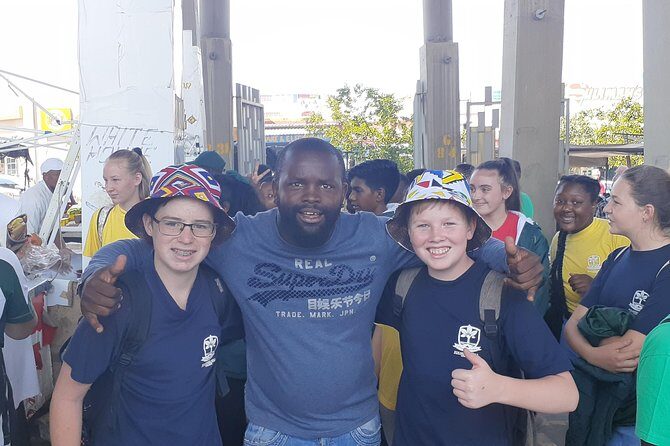
This tour is designed as private, door-to-door. The main benefit is simple: you spend less energy figuring out transport and more time actually seeing Soweto.
You’ll travel in an air-conditioned vehicle, which matters in Johannesburg heat. The day runs about 8 hours, and those hours are valuable because some stops are time-intensive—especially the first museum segment.
One practical note: the tour’s listed meeting point is at O.R. Tambo International Airport (1 Jones Rd, Kempton Park, Johannesburg 1632), but the experience highlights also say pickup is offered at your hotel. In real life, what that means for you is straightforward: confirm your exact pickup time and location after booking so you’re not standing around guessing.
Stop 1: Apartheid Museum (Go In Ready to Spend Time)
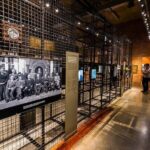
Your day starts at a self-guiding experience at the Apartheid Museum. The schedule calls for at least 2 hours minimum, and I agree—that’s the kind of museum where skimming can leave you confused. This is the place where you start building the mental framework for everything you’ll see later in Soweto.
Because it’s self-guided, you control your pace. If you’re the type who likes reading and looking carefully, you’ll be comfortable here. If you prefer audio or guided storytelling, you may want to spend a bit extra up front choosing which sections matter most to you.
Cost-wise, the schedule lists the Apartheid Museum as admission ticket free, but the overall tour note says museum entrances are at your own expense. So I recommend you treat this as: some elements may be covered or listed differently, but you should still plan for possible extra museum costs later in the day.
Stop 2: Driving Into Soweto and Getting Your Bearings
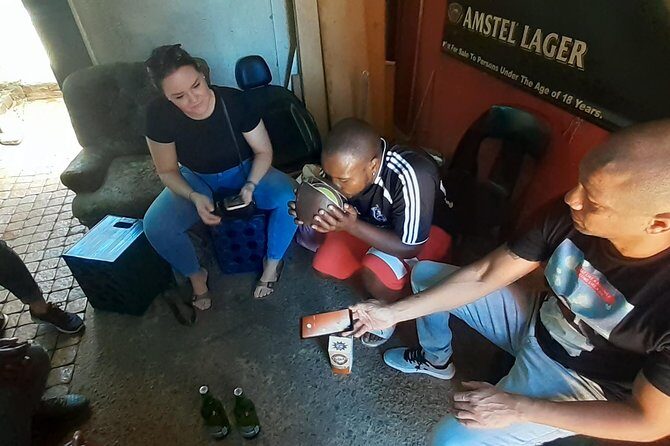
After the museum, you head into Soweto and you’ll get introduced to it as the biggest township in South Africa. That orientation matters more than people think. If you jump straight to landmarks without understanding how Soweto fits into the apartheid system, it’s easy to miss the bigger meaning.
This portion is about setting the map in your head: where you are, why it developed, and how the geography connects to policy. It also helps you judge what you’re seeing as more than just scenery.
The best part here is the tone. You’re not just watching a checklist. You’re getting a guide’s interpretation of what you’re about to experience.
Stop 3: FNB Stadium (Soccer City) and the Nearby Power of Place
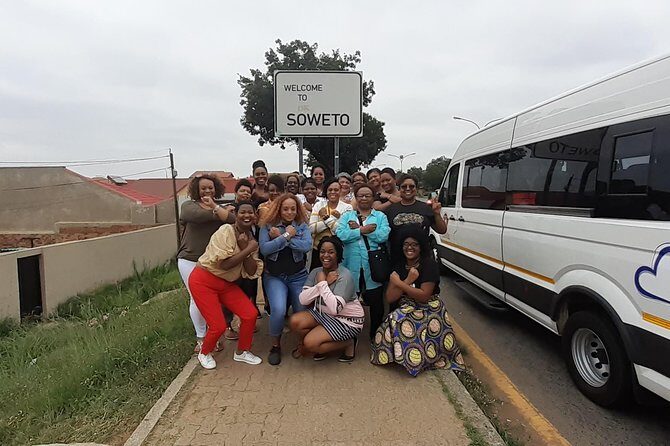
At FNB Stadium—also known as Soccer City—you get a quick stop, about 10 minutes. It’s the kind of landmark that instantly anchors Johannesburg in global attention, but the tour keeps you from getting stuck in sports-only thinking.
You’ll learn how the stadium fits into the region. It’s tied to major South African football culture and also sits near national football administration spaces. Even during a short visit, it’s a good reminder that Soweto is not only about apartheid history; it’s also about modern identity.
If you’re a sports fan, this stop will feel satisfying. If you’re not, think of it as a reference point: it tells you something about how communities claim space and energy.


Stop 4: Diepkloof Park (A Short Time, a Helpful Zoom-Out)
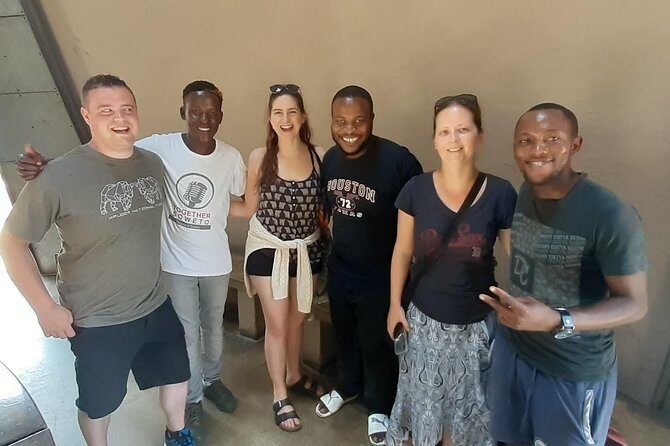
Next comes Diepkloof, a zone of Soweto in the southwest Johannesburg area. The stop is listed at about 15 minutes, so this isn’t the place for deep exploration. Instead, it functions like a zoom-out: you see how Soweto connects to its surrounding areas and different parts of the township map.
What I like about including a time-limited neighborhood stop is that it keeps the day from becoming all monuments and no people. You catch glimpses of how local space feels and looks, which helps later when you’re standing at sites tied to specific events.
Bring your patience for short stops. In a day like this, the value comes from adding multiple layers without turning it into an overnight expedition.
Stop 5: Chris Hani Baragwanath Hospital (Scale You Can Feel)
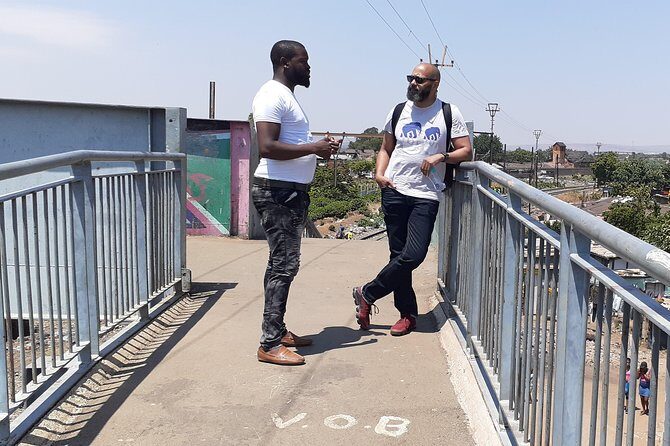
Then you go to Chris Hani Baragwanath Hospital, listed as about 10 minutes. This is no small stop. It’s described as the largest hospital in Africa, and the numbers given are staggering: thousands of staff and thousands of beds, plus a huge campus footprint.
Even in a short time, seeing a facility on that scale can shift how you think about Soweto’s role in the wider Johannesburg region. It’s a reminder that the township is not isolated—it serves major needs, trains medical professionals, and runs as a working system.
This is also one of those stops where a good guide earns their pay. If they talk about health care in everyday terms, you’ll leave with a more grounded understanding than you’d get from only visiting memorials.
Stop 6: Walter Sisulu Square and the Freedom Charter
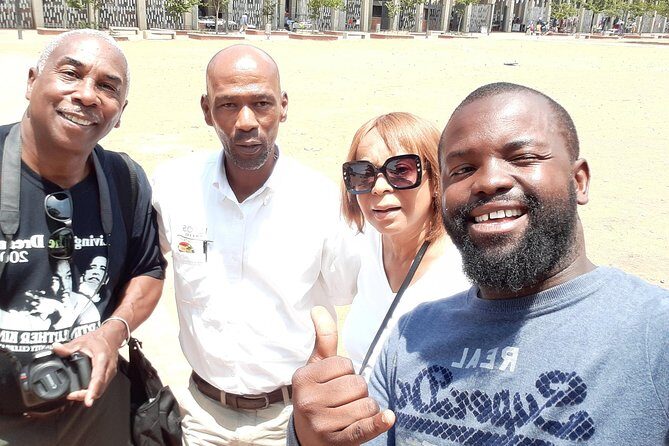
At Walter Sisulu Square, you spend about 1 hour. This is the site of the Congress of the People in 1955, where the Freedom Charter was drawn up—an alternative vision to apartheid rule.
What makes this stop especially meaningful is the direct link between ideas and action. The Freedom Charter emphasized a non-racial society and rights, and it remains described as a cornerstone for the political vision that followed.
If you like political context (and you should for a day built around apartheid history), this is one of the best-value stops for your time. The hours here are about understanding the language of freedom—not just the tragedy that followed.
Stop 7: Hector Pieterson Museum and Memorial (Plan for Emotional Weight)
Next up: the Hector Pieterson Museum and Memorial in Orlando West. This stop is about 45 minutes, and the schedule notes that admission isn’t included.
This is named for Hector Pieterson, who was killed on 16 June 1976 during the Soweto Uprising. The museum covers the events leading to the uprising, including the tragedy involving protesting schoolchildren.
I recommend going in ready to slow down. Even if you only have 45 minutes, you’ll get more by taking breaks to read carefully and look at the information that repeats across rooms. The power of this site comes from understanding how young people became symbols of resistance.
Given the admission note, budget for this stop. Don’t rely on hoping it’s covered, because the tour data flags museum entrances as at your own expense.
Stop 8: Vilakazi Street (A Rare Street With Mandela and Tutu Connections)
Then you move to Vilakazi Street for about 1 hour. This is one of Soweto’s most famous stretches because it connects to big names in South Africa’s story.
Vilakazi Street is named after Benedict Wallet Vilakazi, a Zulu poet and educator. The schedule also notes that this is where Nelson Mandela and Desmond Tutu once lived—so you’re standing in a living thread of the country’s leadership and moral authority.
The admission note says this stop is not included, but for this portion, what you’ll likely do is walk, absorb the setting, and take in the neighborhood feel. It’s less about paying to enter a room and more about seeing where history physically happened.
One practical tip: plan on comfortable shoes. This part works better when you can move at an easy pace.
Stop 9: Mandela House (Orlando West, the House That Holds the Years)
Finally, you visit Mandela House—the Nelson Mandela National Museum, where Mandela lived from 1946 to 1962. The schedule gives 45 minutes, and again, admission is not included.
This is the most famous domestic-history stop on the day, and it’s worth doing even if you think you already know the facts. Being inside or around the preserved setting makes the timeline feel less abstract.
If you’re short on energy, you might be tempted to rush. Don’t. Use your guide’s explanations to pick a few details that help the years snap into place: what life looked like, what restrictions meant, and how leadership worked under pressure.
And because entrance fees are at your own expense here, budget time and money for getting in without stress.
Stop 10: Orlando Towers and the Idea of Reuse
The last stop is Orlando Towers, connected to Orlando Power Station—a decommissioned coal-fired power station that served Johannesburg for over 50 years. In 2006, work started to transform the site into an entertainment and business center.
The time is brief (about 20 minutes), so keep expectations realistic. This isn’t a long architectural tour. It’s more like a closing “future” note: a place once tied to heavy industry now being repurposed.
I like including an end stop like this because it stops the day from feeling stuck in tragedy. Even in a place shaped by apartheid, communities are creating new uses and new rhythms.
Price and What You’re Actually Paying For (USD 56.95, Plus Entrances)
At $56.95 per person, this tour is priced in a way that can make sense—especially because it’s private and includes an air-conditioned vehicle. The big value is the human part: a local guide who can explain what you’re seeing in a way that clicks.
But you need to know what isn’t included. The tour explicitly notes that lunch is not included, and museum entrances are at your own expense. Some scheduled stops are marked as admission ticket free, and others are not included—so treat the day as mixed cost.
To budget smartly, plan on:
- Museum time where admission applies (notably the Hector Pieterson Museum and Mandela House)
- A lunch break on your own (bring patience or a simple snack strategy)
- A bit of flexibility, because the museums can take real time even when the route says 45 minutes
If you’re doing this as part of a longer Johannesburg trip, this tour tends to work best when you don’t stack too many other activities the same day. You’ll want a calm evening afterward to process what you learned.
Who Should Book This Soweto Township Tour?
I’d recommend this tour if you want a private, guided way to see the most important Soweto heritage sites without feeling like you’re watching from behind glass. It’s also a strong fit if you care about how the struggle against apartheid connects to daily life—sports, community spaces, and institutions.
It’s especially good for couples, solo travelers who want a guide’s perspective, and anyone who prefers door-to-door convenience over public transport navigation. The tour is listed as suitable for most travelers, and the vehicle is air-conditioned, which helps for comfort.
You might choose differently if you want a slower pace with long museum time everywhere, or if you hate paying additional entrance fees. This day is structured to cover a lot, so it rewards people who can handle transitions.
Should You Book Soweto Township Tours?
If you want an honest, local-led day in Johannesburg that goes past monuments into real context, this is a solid choice. The standout is the Soweto resident guide experience, highlighted by the presence of a guide named Jabulani, and the way the day balances history with everyday places like FNB Stadium and major community institutions.
My advice: do it if you’re ready for emotional sites like Hector Pieterson and Mandela House, and if you can budget extra for museum entrances and lunch. If you want a light, relaxed day, this won’t be that.
Go in with comfortable shoes, a respectful mindset, and the willingness to learn. The payoff is a day that helps you understand Soweto as a real place, not a themed stop.
FAQ
How long is the Soweto tour?
The tour is listed at about 8 hours (approx.).
Is this a private tour?
Yes. It’s a private tour/activity, and only your group participates.
Does the tour include hotel pickup?
The highlights say pickup is offered direct at your hotel. The activity also lists a meeting point at O.R. Tambo International Airport for coordination, so confirm your exact pickup details.
What’s included in the price?
Included features are an air-conditioned vehicle, and the schedule notes pickup offered and a mobile ticket.
Are museum entrance fees included?
Museum entrances are not included, and the tour states that all entrance fees are at your own expense. Some specific stops show free admission in the schedule, but you should still plan for paid entries at sites marked not included.
Is lunch included?
No, lunch is not included.
What stops are included during the day?
The route includes the Apartheid Museum, Soweto orientation time, FNB Stadium, Diepkloof Park, Chris Hani Baragwanath Hospital, Walter Sisulu Square, Hector Pieterson Museum and Memorial, Vilakazi Street, Mandela House, and Orlando Towers.
Where does the tour start and end?
The listed start meeting point is O.R. Tambo International Airport (1 Jones Rd, Kempton Park, Johannesburg 1632). The activity ends back at the meeting point.
How far in advance should I book?
The tour is commonly booked about 57 days in advance on average.
What’s the cancellation policy?
Free cancellation is available up to 24 hours in advance for a full refund. Cancel less than 24 hours before the experience start time, and you won’t get a refund.