REVIEW · JOHANNESBURG
Johannesburg: Maboneng Street Art & Culture Tour
Book on Viator →Operated by One Day Africa · Bookable on Viator
Street art talks back in Johannesburg. This Maboneng walk uses a local guide to connect murals, graffiti, and galleries to real community stories and shifting attitudes.
I love how the guide explains the meaning behind the artwork, not just what’s on the wall. I also love the small-group feel, with time to ask questions and actually look closely at details you’d miss on your own.
One consideration: it’s only about 2 hours, so you’ll come away inspired, but you won’t see every single piece in Maboneng.
In This Review
- Key takeaways before you go
- Why Maboneng street art needs a guide (and not just a camera)
- Where you start at Maboneng Society (and the Fox & Berea coffee stop)
- The 2-hour walk: what you actually do with each stop
- Stop 1: Maboneng murals, art, and galleries with real stories
- Stop 2: Johannesburg through the lens of what the walls show
- Stop 3: a newly constructed neighborhood and how change shows on walls
- Stop 4: Home of the Bean at Fox and Berea Street under the bridge
- The guide makes the difference: Refiloe, Mulalo Mphuma, and more
- Safety, group size, and the walking pace you can handle
- Price and value: what $37.51 buys you in Maboneng
- What to bring and how to get the most from your photos
- Who should book this tour, and who might skip it
- Should you book the Johannesburg Maboneng Street Art & Culture Tour?
- FAQ
- How long is the Johannesburg Maboneng Street Art & Culture Tour?
- What does the tour cost?
- How many people are in the group?
- Where is the meeting point?
- What should I know about tickets?
- What is included in the tour price?
- Is free cancellation available?
Key takeaways before you go
- Stories behind the murals: you’ll learn what inspired artists and how street art is affecting local perspectives.
- A guided shortcut through Maboneng Precinct: fewer wrong turns, more time looking at art.
- A mix of styles: expect murals and graffiti, plus the neighborhood’s art-galleries vibe.
- Small group size (max 10): easier pacing, better conversation, and less crowd pressure.
- A practical end point for coffee and snacks: the tour funnels you toward Fox and Berea Street under the bridge.
Why Maboneng street art needs a guide (and not just a camera)
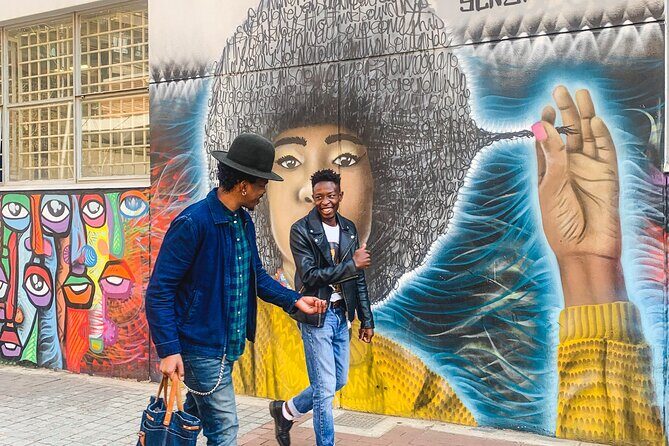
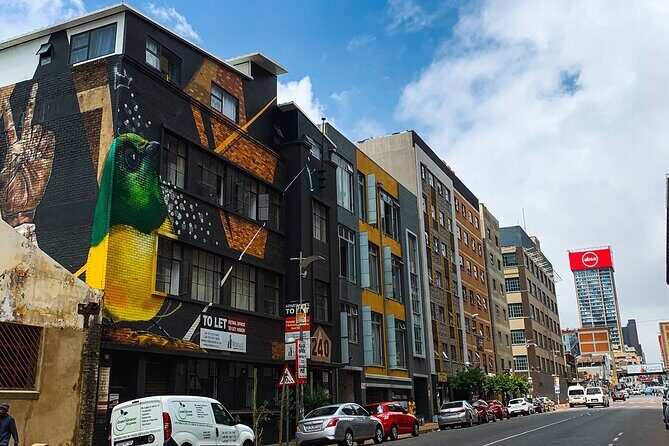
Maboneng is the kind of Johannesburg area where you can spend hours wandering and still feel like you only scratched the surface. The walls are covered in art, but the best part is the context: who made it, why it exists, and what it’s trying to say.
That’s exactly where this tour earns its place. A local guide helps you read the neighborhood. You’re not only looking at murals and graffiti for color and cool factor. You’re also hearing the human side—how artists get their ideas, and how street art can shift attitudes in community groups. It’s the difference between seeing street art as decoration and seeing it as communication.
You’ll also get a reality check on Maboneng’s evolution. One of the most useful themes the tour surfaces is how the area has been changing over time, including the effects of gentrification efforts. The tone is practical, not dramatic: you’ll understand what’s being built up, what’s staying local, and why that tension matters when you’re standing in front of a mural.
And yes, you’ll want your phone or camera ready. The artwork is easy to photograph, but it’s the stories that make you slow down and frame better shots.
A few more Johannesburg tours and experiences worth a look
Where you start at Maboneng Society (and the Fox & Berea coffee stop)
The tour starts at Maboneng Society, 26 Van Beek St, New Doornfontein, Johannesburg, 2001. The end point is the same location, so you’re not dealing with a complex route logistics puzzle.
Here’s the one detail that matters day-of: if you arrive early, head to the coffee shop called Home of the Bean. It’s at the corner of Fox and Berea Street under the bridge. The advice is simple: wait inside the coffee shop if you get there before your tour starts. If anything shifts, they’ll reach out by WhatsApp or message around 30 minutes before.
Wear shoes that work for walking. This is a neighborhood stroll, and the tour is built around seeing and stopping. Bring a light layer too, because Johannesburg weather can flip.
The coffee stop is also useful for your trip energy. By the time you’re finished with murals and neighborhood context, you’ll likely want a caffeine break and the chance to browse local shops nearby. Even if you don’t plan to buy anything, it’s a nice place to reset your brain after all the visual input.
The 2-hour walk: what you actually do with each stop
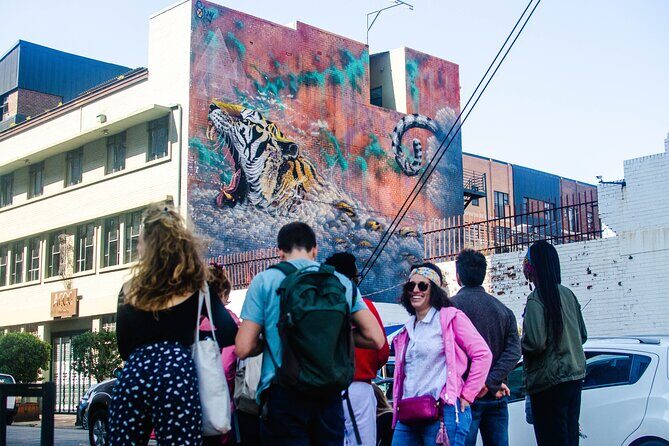
This tour is set up as a guided walk through Maboneng’s art-heavy streets. It’s about 2 hours, and the flow is designed so you don’t wander aimlessly. Instead, each section adds context to what you’re seeing.
Stop 1: Maboneng murals, art, and galleries with real stories
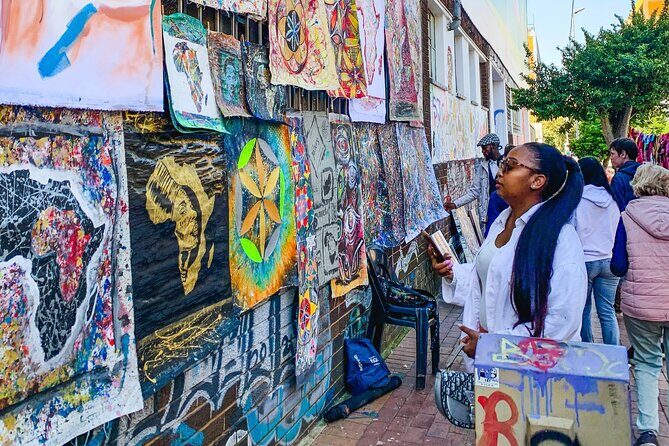
You begin in the heart of Maboneng, where murals, galleries, and graffiti live close together. Your guide leads you through the neighborhood and shares stories behind artworks and artists, including what inspired them and how street art is changing perspectives in local community groups.
This is the core value of the tour. Art on a wall can look random until someone helps you connect the dots—social themes, local identity, and the way messages get shaped by the artist’s world. The guide’s job here is to make you notice things: the colors, the symbols, and what seems to be the point of the piece beyond style.
Expect stops that feel like mini-history lessons, but said in a street-level way—where art meets everyday life.
Stop 2: Johannesburg through the lens of what the walls show
The next stretch keeps the focus on the art and beauty of what makes Johannesburg. This is more than a photo walk. You’re still learning how the neighborhood’s look connects to the city’s identity.
What I like about this setup is that it prevents the tour from becoming repetitive. After you’ve learned how to read a few pieces, you’re moving on to the bigger picture: how this district fits into Johannesburg’s wider story.
If you’re the type who always wonders what a mural is actually saying, this portion will keep your attention. If you’re less into symbolism and more into the aesthetic, it still works because the guide helps you appreciate both craft and message.




Stop 3: a newly constructed neighborhood and how change shows on walls
One stop is described as a newly constructed neighborhood. That matters, because street art often reflects change—new money, new foot traffic, new tensions, and new opportunities.
This part of the walk is where you’ll start to see street art not only as expression, but also as commentary on development. Maboneng has been part of gentrification efforts, and the tour’s conversation keeps it grounded in what’s happening on the street now—what’s improved, what’s disputed, and how artists respond when a neighborhood shifts around them.
You don’t need to have any background before you go. The guide’s job is to connect the dots in plain language while you’re walking right past the evidence.
Stop 4: Home of the Bean at Fox and Berea Street under the bridge
Then you hit the practical finish: Home of the Bean, the coffee shop at Fox and Berea Street under the bridge. This is likely your moment to slow down, look at the results of your photo hunt, and take a short break.
It’s also a smart stop for timing. If you want to keep the momentum going, you’re close to local shopping and eating options afterward. Even if you don’t plan to eat or shop, grabbing a drink here is an easy way to turn the tour into an actual experience, not just a walking route.
The guide makes the difference: Refiloe, Mulalo Mphuma, and more
A tour like this lives or dies on the guide. Here, the guide experience looks consistently strong in past groups, and a few names come up often.
For example, guides such as Refiloe have been praised for being professional, friendly, and engaging. People also mention feeling safe during the walk, plus getting strong context on the art and on Johannesburg history and culture. Another name that shows up is Mulalo Mphuma, noted for sharing plenty of information about the city and the local people living in the area.
A third name that appears in guide descriptions is Given. The point isn’t that you’ll get a specific person—it’s that the tour seems to attract guides who can connect street art to neighborhood change without turning it into a lecture.
Here’s what you should hope to get from any guide on this route:
- clear explanations of what you’re seeing
- stories that connect art to community life
- an easy pace for questions
- a calm, confident vibe that helps you feel comfortable walking these streets with a plan
From the tone in the guide-led experiences people describe, the best moments are the ones where the guide notices details first and then points them out. That transforms the murals from random images into something you can actually interpret.
Safety, group size, and the walking pace you can handle
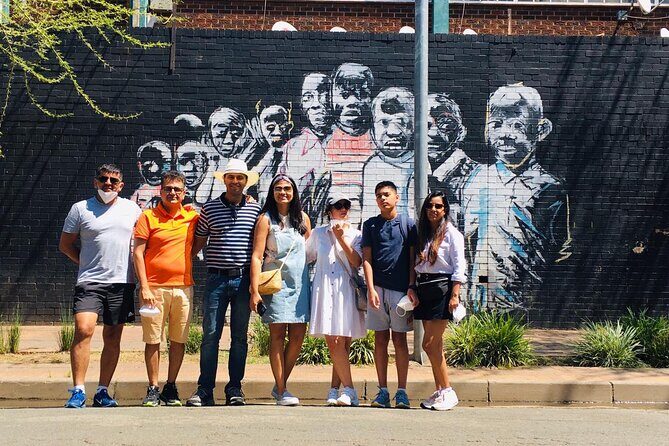
This is a walking tour with a max group size of 10 travelers. That small cap matters. It keeps the group from stretching out and also makes it easier for the guide to keep track of everyone.
You’re also told it’s near public transportation, so you can make your day easier if you’re hopping in and out of Johannesburg by transit. The tour is built for most travelers to participate, which usually means you’re not dealing with extreme steps or long transfers between distant sights.
Still, treat it like a city walk. Keep your phone secure, watch your footing, and stay with the group. If you’re traveling solo, the small group helps too. You get the social support of being with a local guide, without the pressure of a huge crowd.
The biggest “safety” tool here isn’t just the route. It’s having someone who knows how to move through the neighborhood and when to pause. You’ll also likely feel calmer because you’re not improvising where to go next.
Price and value: what $37.51 buys you in Maboneng
At $37.51 per person, this is priced like a focused, guided neighborhood experience rather than a big-day bus tour. For me, the value comes from three things.
First, you’re paying for a guide who can explain street art meaning and local stories while you’re standing in front of the work. That’s not a “nice extra.” It’s the entire point of the tour.
Second, the group size stays small (max 10). In a place like Maboneng, where the best moments are in close-up looking, small groups tend to feel more personal and less chaotic.
Third, the tour saves you time and confusion. Maboneng has murals and galleries around many corners. Without help, you can absolutely wander. But with help, you’re more likely to hit the strongest storytelling stops in the time you have.
One note: the listing says included: N/A and that additional items are not included. Translation: you’re not paying for meals or purchases. If you want coffee or anything else, plan to pay that separately.
What to bring and how to get the most from your photos
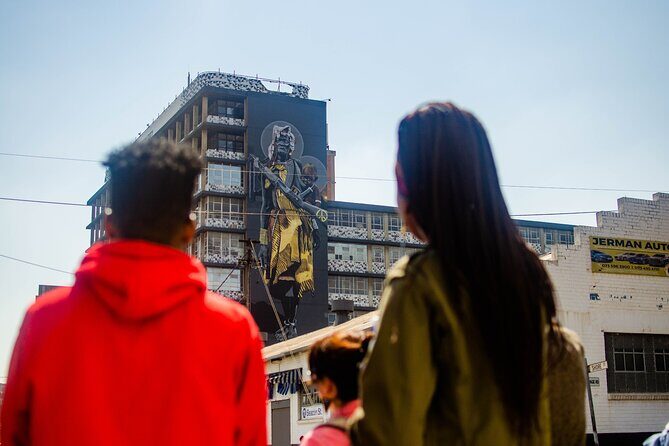
This tour revolves around looking. That means your gear should support seeing, not just snapping.
Bring:
- comfortable walking shoes
- a charged phone or camera
- a light layer if you get out in early or late weather
I also recommend keeping your phone ready but not glued to your hand. The guide’s best stories come when you actually stand still and look. If you’re constantly walking and filming, you’ll miss the details the guide points out.
If you arrive early, go to Home of the Bean and wait inside. It’s the simplest way to keep your start time smooth and stress-free.
Finally, don’t overpack your schedule on this day. Two hours goes fast when you stop often, read pieces up close, and ask questions.
Who should book this tour, and who might skip it
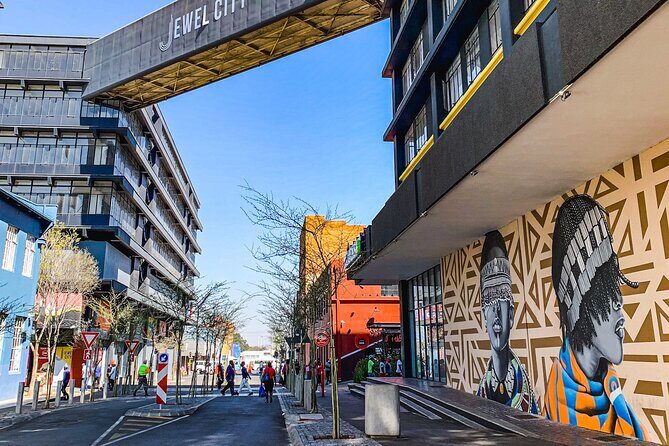
This is a strong fit if you:
- love street art and want the meaning behind it
- enjoy walking tours with local storytelling
- want an introduction to Maboneng Precinct without getting lost
- are curious about how art connects to community change and development
You might skip it if:
- you have very limited time and only want one quick photo-stop
- you hate walking tours and prefer indoor, sit-down experiences
- you’re only interested in art at a distance and don’t care about context
If you’re on a first trip to Johannesburg and you want one guided “taste” of the city’s creative side, this tour makes sense.
Should you book the Johannesburg Maboneng Street Art & Culture Tour?
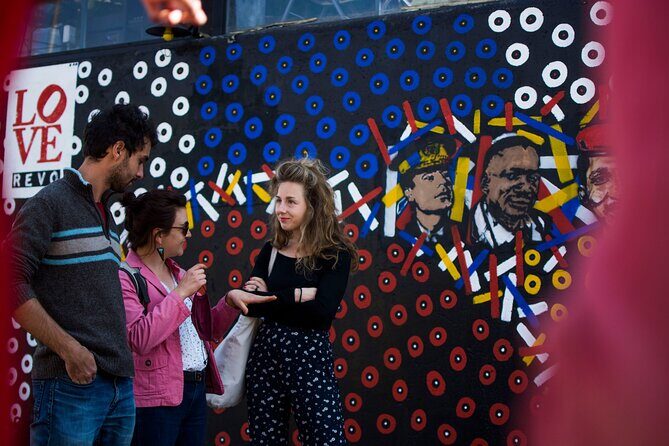
Yes, if you want to see Maboneng and understand what you’re seeing. The best reason to book is the guide-led context: stories behind murals and graffiti, plus neighborhood perspective on how this area is evolving.
I’d book it for the small-group format, the focus on art meaning, and the fact that the tour is short enough to fit into a packed itinerary. If you’re the type who usually walks past street art wondering what it means, this is exactly the kind of tour that changes that habit.
If you’re going, plan for comfortable walking and bring your camera. Then take a breath when you stop at the artwork. That’s when Maboneng clicks.
FAQ
How long is the Johannesburg Maboneng Street Art & Culture Tour?
The tour lasts about 2 hours.
What does the tour cost?
The price is $37.51 per person.
How many people are in the group?
The maximum group size is 10 travelers.
Where is the meeting point?
You meet at Maboneng Society, 26 Van Beek St, New Doornfontein, Johannesburg, 2001, South Africa.
What should I know about tickets?
This experience uses a mobile ticket. Confirmation is received at the time of booking.
What is included in the tour price?
The experience details list included as N/A, and they note that additional items and costs are not included.
Is free cancellation available?
Yes. You can cancel for a full refund up to 24 hours in advance of the experience start time.