REVIEW · JOHANNESBURG
Johannesburg City Walking Excursion
Book on GetYourGuide →Operated by Johannesburg Excursions · Bookable on GetYourGuide
Joburg reads like a living textbook. On this guided walk, you connect the city’s past and present by moving neighborhood to neighborhood, with real landmarks and real street art as your cues. You’ll also hit iconic spots like the Nelson Mandela Bridge and the art-heavy streets of Maboneng.
I especially like how the guide makes complicated South African history feel practical, not academic. Two stops in particular stuck with me: the Market Theatre and Mary Fitzgerald Square for music and art context, and the Chancellor’s House area where you learn about Mandela and OR Tambo’s legal work.
One thing to consider: this is not a sit-and-watch tour. You’ll be walking a lot, so plan for long stretches and bring proper shoes.
In This Review
- Key highlights worth your attention
- Why a Joburg walking tour is the right kind of learning
- Starting at Wing Republic: your first map of the city
- Braamfontein to Newtown and the Nelson Mandela Bridge moment
- Newtown’s creative stops: Market Theatre and Mary Fitzgerald Square
- Workers Compound and the labourers immigration laws context
- Ferreira Market, Chancellor’s House, and the legal legacy of Mandela and OR Tambo
- Main Street to Gandhi Square: naming, industry, and city meaning
- Carlton Centre and ABSA Gallery: skyline views plus African art
- Maboneng: where the art world becomes street-level
- Lunch and the Home of the Bean coffee stop
- Price, value, and what you should budget for
- Who this Johannesburg city walking excursion suits best
- Should you book this tour?
- FAQ
- What is included in the Johannesburg City Walking Excursion?
- Do I need to pay for entry tickets?
- Where does the tour start and end?
- Is hotel pickup and drop-off included?
- What should I bring for the walking route?
- Is this tour wheelchair accessible?
Key highlights worth your attention
- Braamfontein to Newtown on foot for an easy-to-follow city storyline
- Market Theatre and Mary Fitzgerald Square tied to South African music and art
- Workers Compound with labourers immigration laws context that explains how policy shaped daily life
- Ferreira Market and Chancellor’s House with a focus on Mandela and OR Tambo as attorneys
- Carlton Centre plus ABSA Gallery for a modern mix of skyline views and African art
- Maboneng art world where street art and local creators make the city feel personal
Why a Joburg walking tour is the right kind of learning
Johannesburg can feel confusing at first. It’s big, layered, and full of contrasts. That’s exactly why a structured walking tour works so well here: you get safe routing, a clear path, and a guide who can translate what you’re seeing into why it matters.
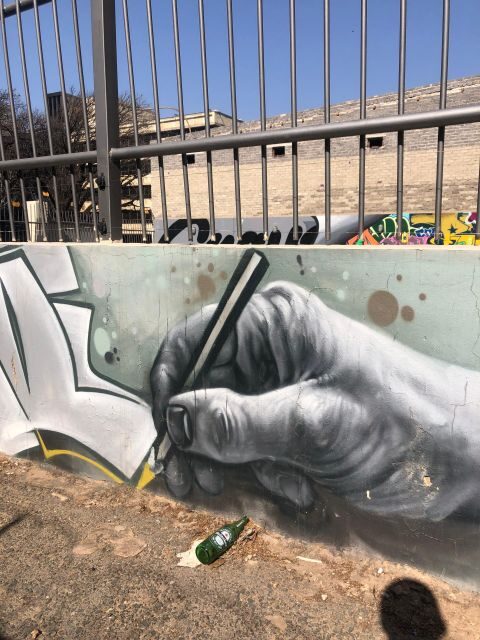
This tour is built around that idea. You’re not just ticking off famous points. You’re walking through areas tied to Johannesburg’s role in South Africa’s history, including conflicts and the forces that shaped the diverse country you see today. The route also gives you time to look closely at the smaller stuff: street art, public spaces, and how different neighborhoods use design and culture to express identity.
You’ll also get a “sense of place” fast. Instead of arriving and guessing what’s important, the tour starts with an overview at the Wing Republic area. From there, the day becomes a guided thread: bridge to theatre square, immigration-laws context to markets and court connections, skyline views and gallery art, then the more creative end of town in Maboneng.
The price is $40 per person, which is a fair deal for a guided, multi-stop day. You also get local lunch and transportation during the tour, so you’re not paying extra just to keep moving. Entry tickets are not included, though, so if any stop requires paid admission, you’ll handle that separately.
You can also read our reviews of more walking tours in Johannesburg



Starting at Wing Republic: your first map of the city
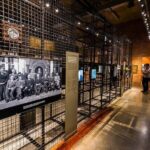
The tour begins at a restaurant meeting point with black-and-white artwork on the wall. It’s a good mental marker: you’re in the city, but you’re starting the day with something visually memorable and easy to find.
From there, your guide sets the tone with an overview of Johannesburg and how the city evolved. This matters more than it sounds. In Joburg, history can feel scattered across buildings, streets, and names. Getting a framework early helps you read what you see later—especially in neighborhoods where the past is still visible in the urban layout.
The route is then designed to connect zones that many visitors never bother to walk between. That’s where the value shows up: you’re not just getting a guided commentary. You’re getting a planned walk that links key cultural and historical areas into one flow.
Braamfontein to Newtown and the Nelson Mandela Bridge moment
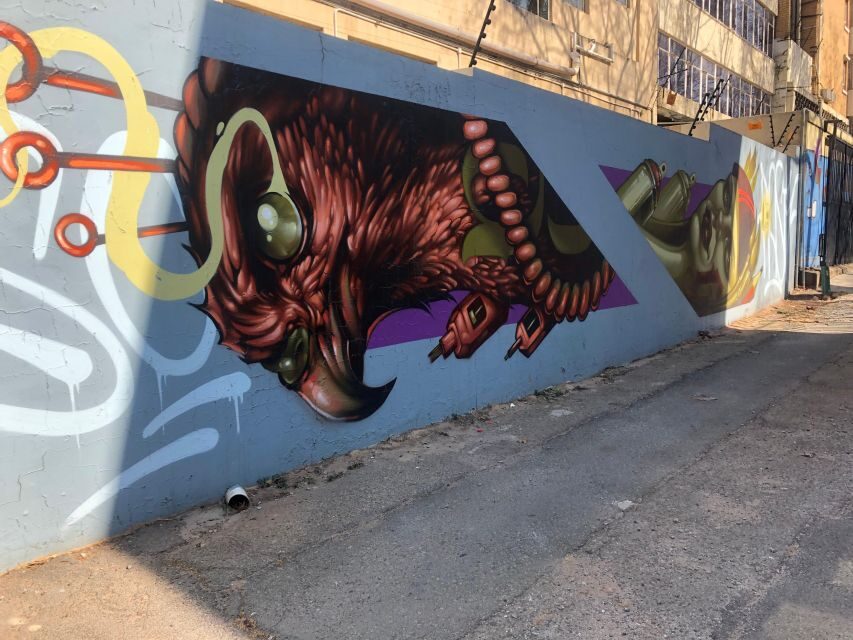
One of the best parts of this tour is the core walking stretch from Braamfontein to Newtown. It’s the kind of walk where the city keeps changing as you go, and the guide keeps explaining what’s behind those changes.
You’ll also get a chance to see the Nelson Mandela Bridge. Even if you’ve seen photos, seeing it in the context of surrounding streets helps. Bridges are more than structure here—they’re part of how the city connects people and neighborhoods. When you add historical framing from your guide, the bridge becomes a symbol you can actually place on the map.
As you roll into Newtown, the tour pivots toward culture. The first big culture stop is the Market Theatre, followed by Mary Fitzgerald Square. You’ll learn how these spaces relate to South African music and art, which is useful because it gives culture a location. It’s not just national headlines—it’s where creative life has taken physical form in Johannesburg.
Practical tip: wear sunglasses and keep water handy. This part of the day is outdoors, and the tour runs despite the weather, so sun and wind both count.
Newtown’s creative stops: Market Theatre and Mary Fitzgerald Square
The Market Theatre area is where you’ll start noticing how Johannesburg uses performance and public space to shape identity. The guide connects music and art to the story of the city, which is helpful if you want culture without vague talk.
Mary Fitzgerald Square is another key piece of the same puzzle. The idea is that these places are not random: they help explain why Johannesburg became a stage for creative voices and how public culture can reflect bigger social shifts.
If you’re the type of traveler who likes to understand why a neighborhood has the vibe it has, this is one of the stops that rewards you most. You’ll likely find it much easier to “see” the city after these cultural landmarks than before them.
A small caution: this section can involve time spent looking at the environment and listening carefully, not just passing by. If you rush or stay glued to your phone, you’ll miss some of the context your guide is giving.
Workers Compound and the labourers immigration laws context

Next comes a section that feels heavier. You walk to the Workers Compound, where you’ll learn about labourers immigration laws of South Africa. This is the kind of topic that can change how you understand everyday spaces. Laws don’t just stay on paper—they influence who could live where, how communities formed, and what opportunities were available.
You’ll also see a Science Discovery centre in this area. That pairing matters. It prevents the day from being only about conflict and policy. Instead, it adds a counterbalance: learning, curiosity, and education as part of how people shape their future.
This stop is valuable for two reasons. First, it adds context for why Johannesburg’s neighborhoods can feel so distinct from one another. Second, it gives you a more complete picture of city life than a purely entertainment-focused itinerary.
If you want to understand Joburg as more than a skyline and street art, this is one of the best anchors on the route.
You can also read our reviews of more city tours in Johannesburg



Ferreira Market, Chancellor’s House, and the legal legacy of Mandela and OR Tambo
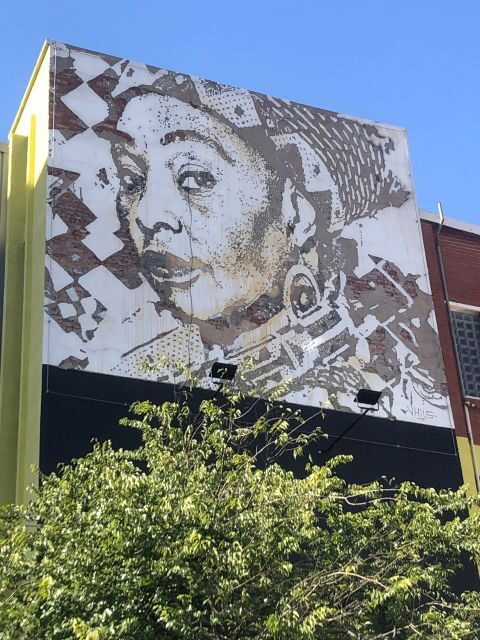
After the Workers Compound area, the tour moves to the Ferreira Market region and then heads toward Chancellor’s House. This is a strong history section because it connects people to profession, not just events to dates.
At Chancellor’s House, you learn about the life of Nelson Mandela and OR Tambo as attorneys. That detail is worth paying attention to. It reframes them from only iconic leaders into working legal minds who were involved in the systems of their day. You’ll also get a chance to see the magistrate court, which helps you connect the storytelling to real civic space.
Even if legal history isn’t your usual travel interest, this part can land well because it’s tied to physical places you can stand in. You’re walking, looking, and hearing the story in the same setting, so it feels less abstract.
If you’re short on time in Johannesburg, this stop is one reason you’d still pick this tour. It gives you a grounded understanding of major figures through their everyday work.
Main Street to Gandhi Square: naming, industry, and city meaning

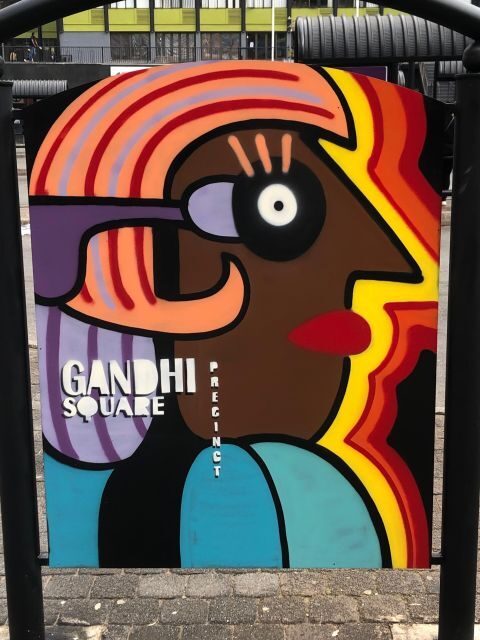
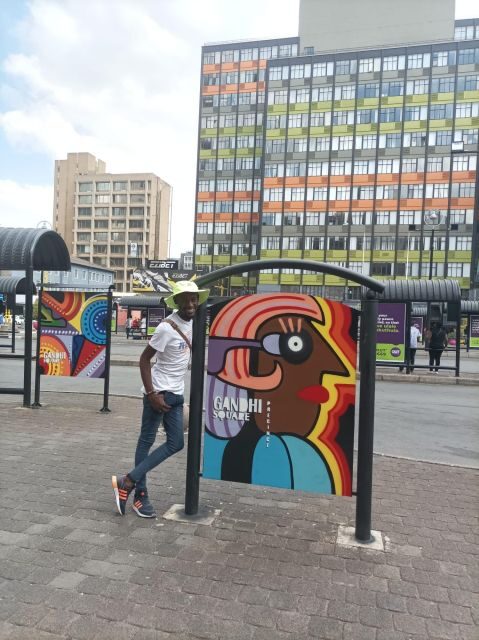
From there, you walk along Main Street to Gandhi Square, named after Mahatma Gandhi. Naming matters in Johannesburg, and your guide uses that fact to help you read the city as a map of ideas.
At Gandhi Square, you’ll learn about South Africa’s biggest industry. The tour doesn’t treat this as a random fact. It’s presented as a key piece of the city’s identity—something that shaped jobs, movement, and the wider economy.
This section also has a nice rhythm shift. After a more serious legal history block, the route opens up with a large public square setting. That makes it easier to absorb the message without feeling like you’re carrying too much intensity at every step.
Carlton Centre and ABSA Gallery: skyline views plus African art
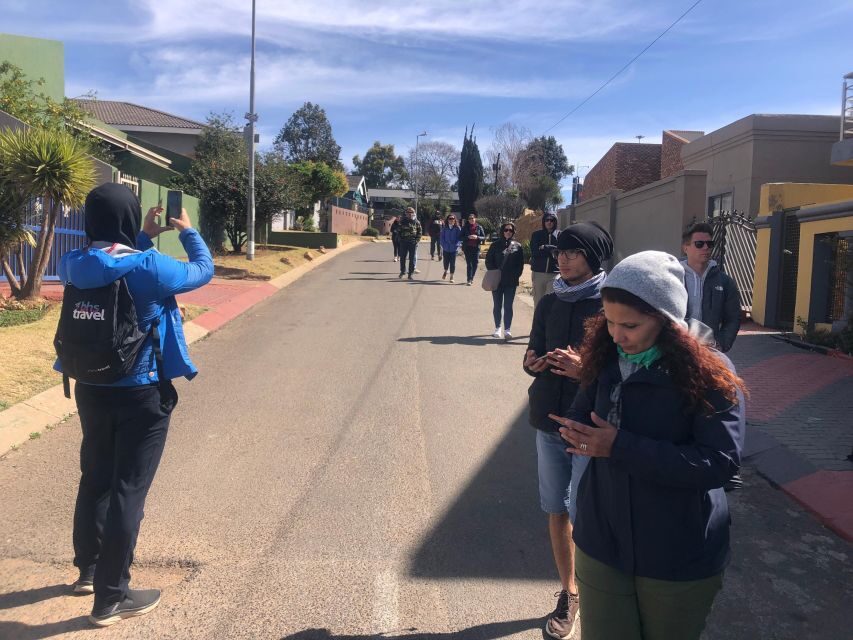
Now you get a more modern, visual payoff. You’ll reach the Carlton Centre, described as the fifth tallest building in Africa. Even without going inside (entry tickets aren’t included), it’s the kind of landmark that gives you a sense of scale. Johannesburg isn’t small-town energy. It’s a large-city story, and this building helps you feel that.
Next is the ABSA gallery, where they exhibit different art works by artists from across Africa. This works well because it gives you a bridge between what you’ve learned earlier in the day and what you’ll see later in Maboneng. You’ll be able to compare styles: gallery art with formal framing, and street art with public access.
This part is also a nice photo break, as long as you keep moving. Don’t stand in one spot all day. Your guide’s route works best when you follow the pacing.
Maboneng: where the art world becomes street-level
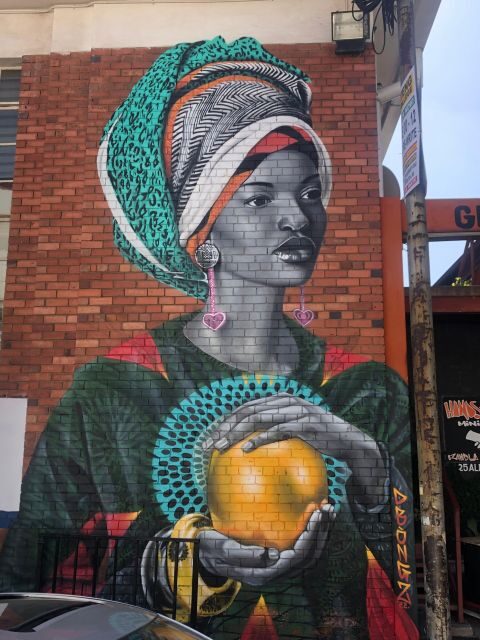
The last location is Maboneng, which the tour frames as Johannesburg’s art world. This is where you’ll see the local artists and their work, and it’s also where the day starts to feel more optimistic.
Maboneng is the tour’s creative closing chapter. You’ve already had street art references earlier, you’ve seen art in a formal gallery setting, and now you reach the part of the city where creativity is the street’s job. If you like walking through places where local creators show their work without the museum filter, you’ll probably enjoy this section a lot.
It’s also a smart end to a walking day. The energy tends to be lighter, and it’s a good place to look around before you head back.
Lunch and the Home of the Bean coffee stop
This tour includes a local lunch, which is a practical win. Food breaks help you keep pace and keep your mood up, especially on a long walking route.
At the end, the tour finishes at Home of the bean, a coffee shop where it is easier to get an Uber back. That detail matters more than it sounds. In Johannesburg, being done and having a straightforward pickup point makes the day feel complete instead of ending in confusion.
If you’re keeping a tight travel schedule, this “end in a ridesimple place” approach is exactly what you want.
Price, value, and what you should budget for
At $40 per person, this tour is strong value if you want guided history and a day built around real city stops. You’re paying for three things you’d otherwise do separately: a local guide, structured routing between neighborhoods, and transportation during the tour plus lunch.
What’s not included: entry tickets. Since the tour includes gallery and court-adjacent areas, double-check on the day whether any stop has paid admission. I’d plan a little extra just in case.
Also think about your time. This is a walking tour with multiple districts. If you tried to build the same route on your own, you’d lose the context that makes each place meaningful, and you’d spend more time figuring out logistics.
One more value note: the tour is rated 4.3 out of 12 reviews, with guides praised for making Joburg feel both safe and interesting. One issue that did show up in the feedback was a case where no one turned up, so I’d recommend you confirm your start time and meeting point the day of the tour.
Who this Johannesburg city walking excursion suits best
You’ll likely love this tour if you:
- want a guided overview of Joburg’s history and current conditions without hopping between too many random spots
- care about culture as place-based history, from theatre squares to galleries
- enjoy walking and learning at the same time
You may not love it if:
- you prefer short walks or have limited mobility (it’s not suitable for wheelchair users)
- you get worn out by outdoor walking, especially since the tour runs in varying weather
This also makes a great first-day activity in Johannesburg if you want a foundation before branching out on your own.
Should you book this tour?
Yes, I’d book it if you want a guided, human-sized way to understand Johannesburg. The route links major areas like Braamfontein, Newtown, Ferreira Market, and Maboneng into a single story, and the guide-led explanations turn landmarks into meaning. Add a included lunch and the ease of ending near Home of the Bean, and it feels like a solid half-day to full-day plan built for real visitors, not just photo chasers.
Just go in ready for walking, bring sun protection, and have a bit of flexibility for weather. If you want, tell me your travel dates and what you care most about—history, street art, or art galleries—and I’ll suggest what to prioritize in Johannesburg around this tour.
FAQ
What is included in the Johannesburg City Walking Excursion?
The tour includes local lunch and transportation during the tour.
Do I need to pay for entry tickets?
Entry tickets are not included, so if any stop charges admission, you’ll need to cover it separately.
Where does the tour start and end?
It starts at a restaurant meeting point with black-and-white artwork. It ends back at the meeting point.
Is hotel pickup and drop-off included?
No. Hotel pickup and drop-off are not included.
What should I bring for the walking route?
Bring comfortable shoes, sunglasses, a sun hat, a camera, biodegradable sunscreen, a jacket, comfortable clothes, hand sanitizer or tissues, and a power bank.
Is this tour wheelchair accessible?
No. The experience is not suitable for wheelchair users.