REVIEW · JOHANNESBURG
Private Tour of Johannesburg, Soweto and Apartheid Museum
Book on Viator →Operated by Lanzate Tours · Bookable on Viator
Joburg has a story you can walk through. This private day trip turns “Johannesburg” into something you can actually picture, starting with hotel pickup and a smart sweep of the city’s major landmarks before heading to Soweto. You also get Constitution Hill, a site where South Africa’s legal transformation is built right into the old prison space.
Two things I really like about this tour are how it uses specific places—not just general facts—to explain apartheid and democracy, and how the guide keeps the pace steady from museum to street-level history in Soweto. One possible drawback: lunch isn’t included, and with an 8-hour schedule you’ll want to plan for meals on your own time.
In This Review
- Key highlights at a glance
- A smart one-day plan for Johannesburg contrasts
- Nelson Mandela Square: quick orientation and a photo that actually fits
- Constitution Hill Human Rights Precinct: law, prison, and the symbolism you can’t fake
- The Apartheid Museum: Essence of the Nation at museum speed
- Driving through Johannesburg: gold-era clues and the Top of Africa moment
- FNB Stadium: The Gourd, Mandela’s 1990 speech, and a quick photo
- Vilakazi Street in Soweto: the walk that connects 1976 to everyday life
- Mandela House: short visit, big weight
- Timing and pace: an 8-hour day with real walking
- Price and value: what $131.53 really covers
- Who should book this tour (and who might want to tweak plans)
- Final verdict: should you book this Johannesburg, Soweto and Apartheid Museum tour?
- FAQ
- What time does the tour start?
- How long is the tour?
- Is hotel pickup included?
- Is this a private tour?
- What language is the guide?
- Are admission tickets included for Constitution Hill and the Apartheid Museum?
- Do we need admission tickets for Nelson Mandela Square?
- Is lunch included?
- Do we enter FNB Stadium or just see it from outside?
- Does the tour depend on weather?
Key highlights at a glance
- Constitution Hill, built from the old prison story: You’ll see how the Constitutional Court sits on a site tied to Gandhi and Mandela imprisonment.
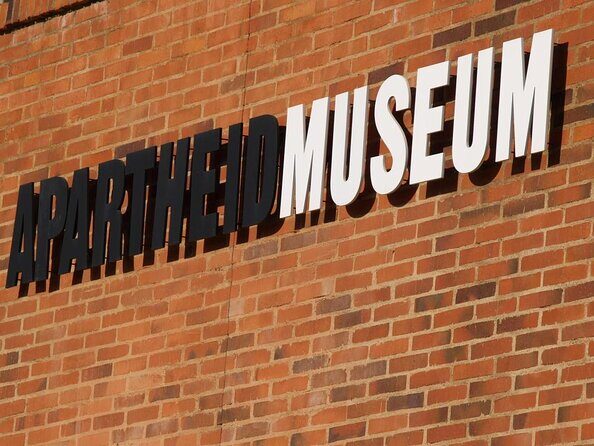
- Apartheid Museum with a clear emotional focus: The museum is known as the Essence of the Nation, built around the tragedy and struggle for democracy.
- Soweto on foot, centered on Vilakazi Street: You’ll walk and see the street connection between Nelson Mandela and Desmond Tutu as Nobel Peace Prize winners.
- Mandela House with admission included: A short but meaningful visit to the place where Mandela lived with his family.
- FNB Stadium photo stop instead of a long detour: You get the World Cup stadium context and Mandela’s 1990 speech connection without losing half the day.
- Spanish-language private guiding: From experienced guides like Irma or Daniela, you’ll get interpretation that keeps the day coherent.
A smart one-day plan for Johannesburg contrasts
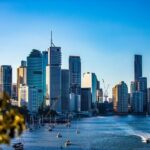
Johannesburg can feel like three different cities stacked on top of each other: finance and skyscrapers downtown, the grit and memory of apartheid in the museum world, and then Soweto’s street-level history and community life. What makes this tour work is that it doesn’t just “add stops.” It connects them so you understand why each place matters, and how Johannesburg’s modern identity grew out of struggle.
You start with pickup (air-conditioned vehicle) and a morning start at 9:00 am, so you’re not wasting daylight. You’ll also move efficiently between sites, which matters because these places aren’t close enough to wander between on your own time without turning your day into traffic math.
This is also a private tour, meaning it’s only your group. That gives you a real advantage with questions—especially when a topic like apartheid can’t be covered well with a few captions and a quick glance at a wall.
You can also read our reviews of more private tours in Johannesburg

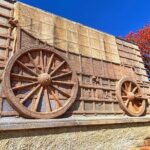

Nelson Mandela Square: quick orientation and a photo that actually fits
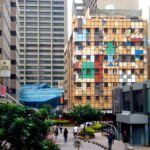
The first major moment is Nelson Mandela Square, in Johannesburg’s financial area. It’s a free stop with about 20 minutes on the clock—long enough to take the photo and get your bearings, short enough that you’re not losing momentum before the heavier history begins.
Why it helps: downtown Johannesburg can feel abstract if you arrive with no context. This stop acts like a visual “anchor.” Then, as you drive toward Constitution Hill and the older city core, you start seeing how the same city can be both modern commerce and a stage for painful transformation.
Constitution Hill Human Rights Precinct: law, prison, and the symbolism you can’t fake
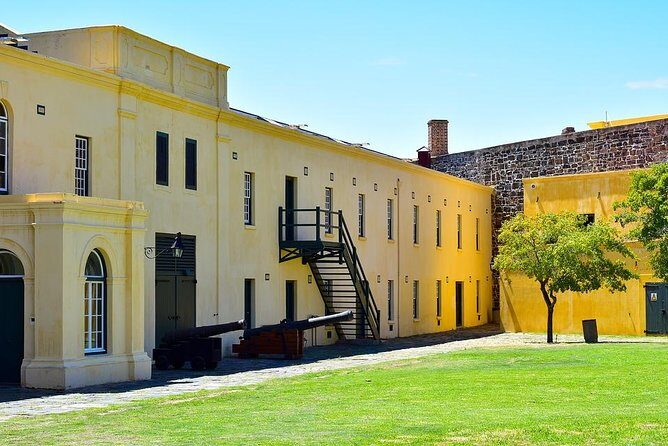
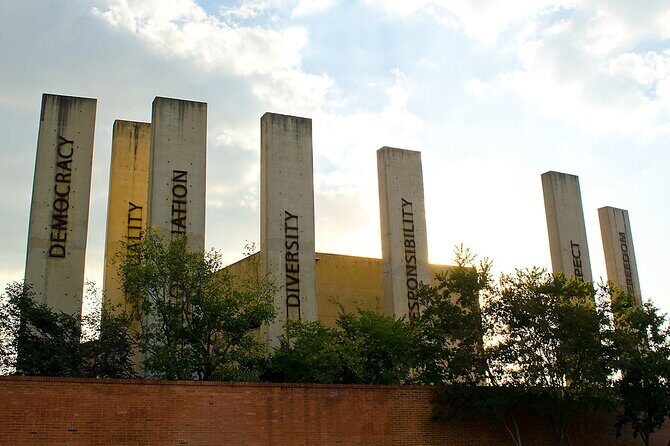
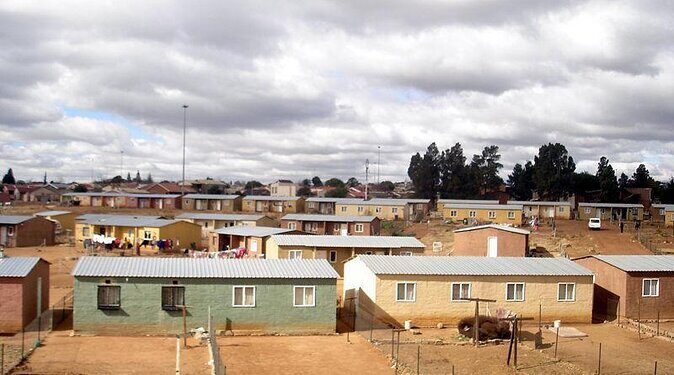
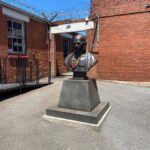
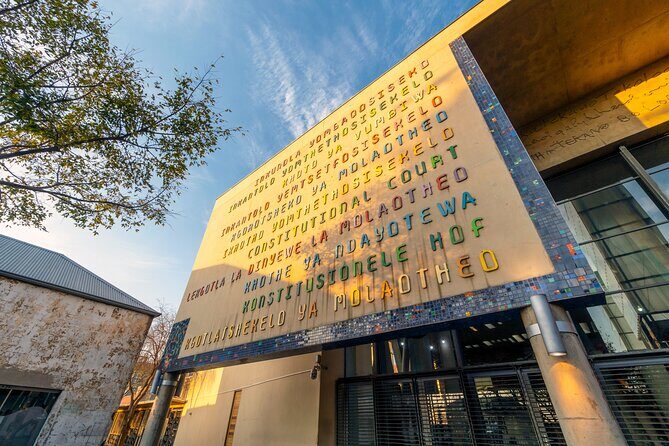
Constitution Hill is a living museum that tells South Africa’s path toward democracy. The standout here is that it’s not symbolic in a vague way—it’s physical. The Constitutional Court building is designed uniquely in the world, and it’s on a site with bricks from an old prison where Gandhi and Mandela were imprisoned.
That detail changes how you experience the place. You’re not just learning history from a timeline. You’re standing in a setting where the same walls and materials can be read as both confinement and rights. That’s powerful, and it’s also educational in a very practical way: the guide can point out how architecture and space tell political stories even when you don’t know the country well yet.
Expect about 1 hour here, with admission included. Give yourself a bit of mental breathing room—Constitution Hill works best when you slow down for a moment and let the meaning settle before you head to the next museum.
The Apartheid Museum: Essence of the Nation at museum speed
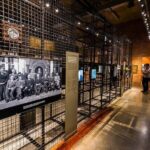
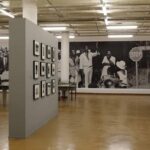
Next comes the Apartheid Museum, often described as the Essence of the Nation. The museum uses its spaces and walls to represent the tragedy, destruction, brutality, and struggle of a people for democracy.
This is where the day becomes more emotionally direct. The museum is focused on the rise and fall of apartheid, and it opened in 2001 as one of the first of its kind. You also get admission included, with about 1 hour 30 minutes allocated—enough time to take in more than just the highlights, especially with an engaged Spanish-language guide.
Practical tip: don’t try to “collect everything” in one pass. Instead, let the guide’s structure help you. If you listen closely to how the exhibits are organized around change over time, you’ll walk out with a more usable understanding than if you treat it like a checklist.
Driving through Johannesburg: gold-era clues and the Top of Africa moment
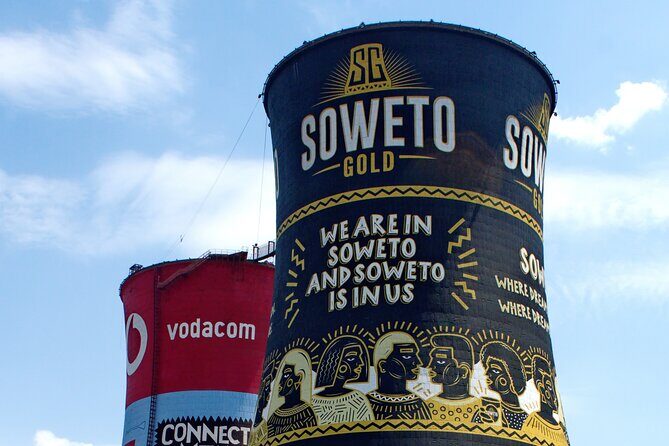
Between the big history stops, you get a city drive that helps you connect the dots. You’ll head through the area where Johannesburg’s gold deposits were discovered, which is part of how the city became what it is.
You’ll also pass the Top of Africa building, known for being the tallest building not only in South Africa, but across the entire continent of Africa. It can feel like a random detour if you don’t know why it matters, but it’s actually a good contrast point: wealth, power, and growth emerged alongside exploitation—and apartheid shaped how that wealth was controlled.
You’ll also pass through picturesque and more avant-garde suburbs, including the suburb where Nelson Mandela lived. You won’t have time to explore those neighborhoods like a local, but the drive helps you build mental geography. That matters later when you reach Soweto and see how the city’s story isn’t one single narrative.
You can also read our reviews of more museum experiences in Johannesburg

FNB Stadium: The Gourd, Mandela’s 1990 speech, and a quick photo
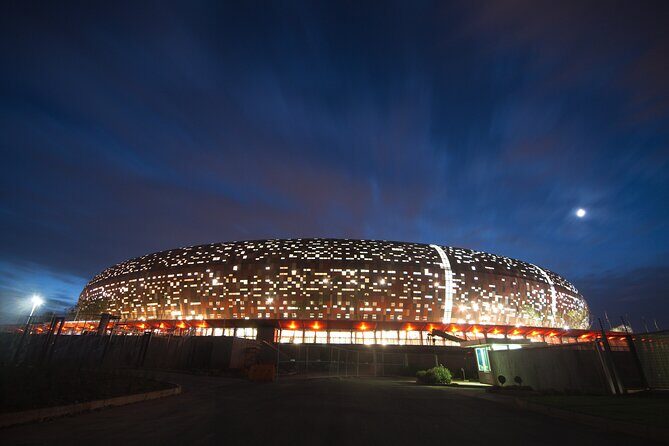
The FNB Stadium stop is a short one—about 15 minutes—with photo opportunities from outside. Still, it’s packed with context.
The stadium was designed as the main association football venue for the 2010 World Cup and has a capacity of 94,736. It’s nicknamed The Gourd due to its resemblance to the African pot gourd. But the historical link is what makes it more than sports trivia: it was the venue for Nelson Mandela’s first speech in Johannesburg after his release in 1990, and it also hosted the 2010 FIFA World Cup Final between the Netherlands and Spain.
Because it’s outside-only, don’t expect a stadium tour. Expect quick framing photos and a clear explanation of why the place sits in the national memory. If you’re a soccer fan, you’ll probably enjoy how fast you can switch from museum gravity to stadium symbolism without losing meaning.
Vilakazi Street in Soweto: the walk that connects 1976 to everyday life
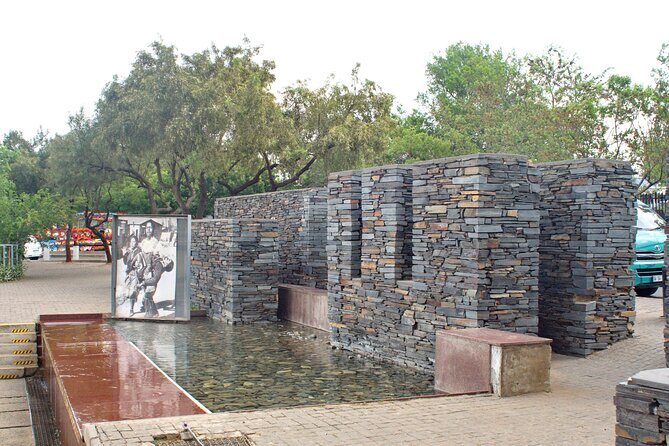
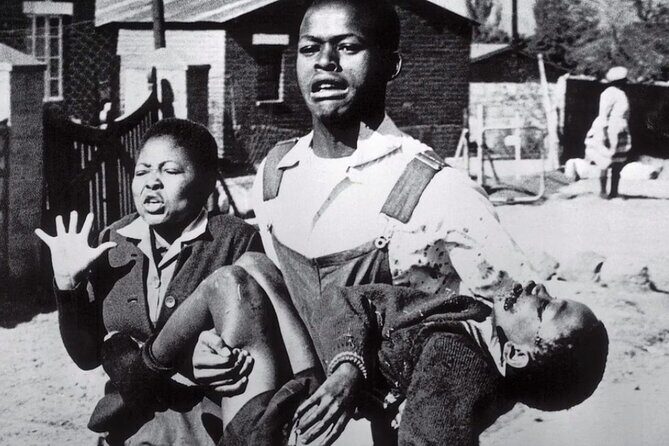
Now you move into Soweto, and this is where the tour shifts from museums to streets. You’ll pass the football stadium on the way, then arrive in Soweto and walk through the neighborhood where the events of 1976 influenced the struggle for freedom.
The walk is guided, and the key value is that you’re not just watching buildings. You’re seeing how a place holds memories, and how your guide can connect that to the larger political story. If you’ve ever visited a museum and thought, I get it, but how does it live today, this part helps answer that.
You’ll go down Vilakazi Street, famous as the only street in the world where two Nobel Peace Prize winners once lived: Nelson Mandela and Desmond Tutu. There’s also time to haggle at craft stalls. And yes, you’ll have time to grab lunch on your own—since lunch isn’t included, this is usually your practical window to eat without rushing.
Mandela House: short visit, big weight
Mandela House is the final Mandela-focused stop, with admission included and about 20 minutes. It’s located on Vilakazi Street and is one of the most recognizable landmarks on the map of South African history.
This visit works best if you treat it as a focused moment rather than a long wandering session. The time is short on purpose, and your guide’s job is to highlight what you should notice and what questions you should ask. You’ll also connect back to the Nobel Peace Prize fact: the street itself is historically linked to both Mandela and Desmond Tutu.
If you’re sensitive to intense history, it’s also a good point in the day to pace yourself. You’ve already seen the broader apartheid narrative at the museum; this is the personal scale of that story—Mandela’s home and family life.
Timing and pace: an 8-hour day with real walking
This tour runs about 8 hours, starting at 9:00 am. The pacing is built around short, purposeful blocks: 20 minutes at Mandela Square, 1 hour at Constitution Hill, 1 hour 30 minutes at the Apartheid Museum, a quick stadium photo stop, and then about 1 hour walking Vilakazi Street plus the shorter Mandela House visit.
What that means for you:
- You’ll be on your feet in Soweto, with walking through streets and stops for explanation.
- You’ll likely want water and comfortable shoes.
- You’ll need to plan lunch yourself, even though there’s time for it.
One more practical note: the experience is said to require good weather. If skies are rough, the tour may be offered a different date or a full refund. So if you’re scheduling a Johannesburg day, leave some flexibility.
Price and value: what $131.53 really covers
At $131.53 per person, this is priced like a full guided day rather than a “cheap sightseeing bundle.” The key reason it feels like decent value is what’s included.
You get:
- Pickup and private transportation in an air-conditioned vehicle
- All fees and taxes
- A guide in Spanish
- Admission included for Constitution Hill, the Apartheid Museum, and Mandela House
- A few timed photo and walk stops that keep the day efficient
Lunch isn’t included, and that’s the main extra cost you should expect. But if you were to arrange transport plus pay separate museum admissions and guide time, the private structure usually adds up quickly.
In plain terms: you’re paying for a guide who connects the political story across multiple locations, not for a driver who drops you off at five random points.
Who should book this tour (and who might want to tweak plans)
This tour is a great fit if:
- You want a guided introduction to Johannesburg that includes apartheid context and Mandela-related sites
- You prefer Spanish-language explanation over guessing from signs
- You only have one day and want to cover Soweto plus the key museums without chaos
- You like structured pacing: short stops where you can absorb meaning, plus walking where the story becomes real
It might not be the best choice if:
- You want a long, slow self-paced day with lots of independent time for cafes and wandering
- You strongly prefer to skip emotionally heavy museum content (in which case, you might consider choosing only one of the history sites)
Final verdict: should you book this Johannesburg, Soweto and Apartheid Museum tour?
If your goal is to understand Johannesburg in a way that actually sticks, I’d book it. The combination of Constitution Hill’s prison-to-democracy symbolism and the Apartheid Museum’s focus on apartheid’s rise and fall gives you structure. Then the Soweto walk on Vilakazi Street and the Mandela House visit bring the story down to daily space.
I’d only hesitate if you hate walking for long stretches or you’re traveling on a tight food budget, since lunch is on you. If you can handle that, this tour is an efficient, well-paced way to get the essentials with context—and to ask questions without having to coordinate everything yourself.
FAQ
What time does the tour start?
The tour starts at 9:00 am.
How long is the tour?
It lasts about 8 hours.
Is hotel pickup included?
Yes. Pickup is offered, and the tour includes private transportation.
Is this a private tour?
Yes. It’s private, meaning only your group participates.
What language is the guide?
The guide is in Spanish.
Are admission tickets included for Constitution Hill and the Apartheid Museum?
Yes. Admission for Constitution Hill and the Apartheid Museum is included.
Do we need admission tickets for Nelson Mandela Square?
No. Admission at Nelson Mandela Square is free.
Is lunch included?
No. Lunch is excluded, though you’ll have time around Vilakazi Street to eat on your own.
Do we enter FNB Stadium or just see it from outside?
You’ll be able to take photos from outside the stadium. Admission is not included.
Does the tour depend on weather?
Yes. The experience requires good weather, and if it’s canceled due to poor weather, you’ll be offered a different date or a full refund.