REVIEW · JOHANNESBURG
Pretoria Historical Tour
Book on Viator →Operated by Vaya Africa Travels. · Bookable on Viator
Pretoria history rolls by fast. This guided tour strings together the big, story-heavy landmarks of Pretoria into one smooth route, with an English-speaking guide and air-conditioned vehicle comfort between stops. I especially like how it covers both the political side and the human side of South Africa’s past, from Union Buildings to places tied to Nelson Mandela.
The other thing I really like is how the pacing is built for first-timers: you get guided context at the sites that matter most, without having to plan each museum visit yourself. One drawback to keep in mind: some stops are brief (around 30 minutes), so if you’re the type who wants to wander slowly and read every label twice, you’ll have to choose what to focus on.
In This Review
- Key things to know before you go
- Pretoria in One Guided Pass: Fast, Air-Conditioned Sightseeing
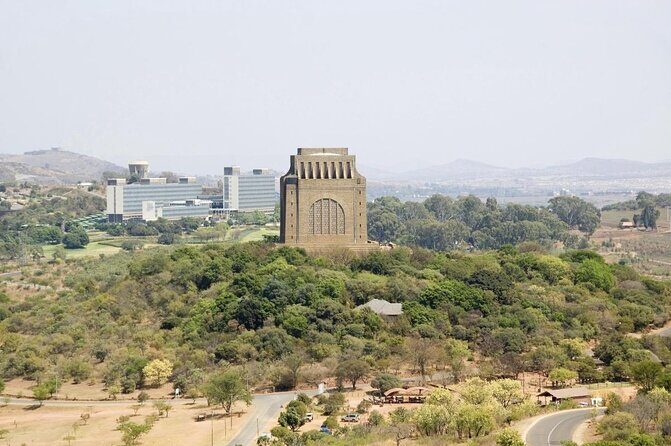
- Voortrekker Monument: Obstacles and Victories in One Big Start
- Kruger House Museum: Paul Kruger’s World, ZAR Hall, and a Personal Train
- Church Square: Pretoria’s Geographical Centre and Mandela’s Justice House Link
- Melrose House Museum: The Vereeniging Peace Treaty After the Anglo-Boer War
- Union Buildings: Presidential Offices Since 1913 and Mandela in the Gardens
- Price and Logistics: Does $125.31 Feel Fair?
- Who This Tour Fits Best (and the One Thing to Watch)
- Should You Book the Pretoria Historical Tour?
Key things to know before you go
- Voortrekker Monument first: a long, ticketed start that sets the tone for European settlement and the Voortrekker story.
- Kruger House Museum time well used: you get a guided look at Paul Kruger’s home and displays tied to his presidency.
- Church Square is the center of it: quick stop, but major meaning, including Justice House linked to Mandela during the Rivonia Trial.
- Two free museum-style stops: Church Square and Melrose House Museum cost you nothing at the door on this route.
- Union Buildings gets the last word: presidential offices since 1913 and Mandela gardens make a strong finishing stop.
- Private feel, small-group energy: only your group participates, so you’ll have more chances to ask questions (especially if your guide is Ben or Thabang-level sharp).
Pretoria in One Guided Pass: Fast, Air-Conditioned Sightseeing
I like tours that help you get your bearings fast. This one is designed to do that in a half-day-style loop, moving between Pretoria’s most famous landmark clusters without you having to wrestle with directions, parking, or timetable math.
The included air-conditioned vehicle matters more than you’d think. Pretoria can be bright and hot, and sitting through long transit in a stuffy car is the fastest way to lose your museum mood. Here, you’re kept comfortable as you hop from site to site.
You’ll also benefit from the guided narration. An English-speaking guide helps connect what you’re seeing to what it meant at the time. In a good tour, that context turns a building into a story. In the best moments, it turns the story into a better understanding of present-day South Africa too. One guide on this circuit, Thabang, was praised for explaining the importance of Pretoria and also how people live in South Africa today while you’re out there.
That said, the format is not built for slow, independent browsing. Think of it as a guided route with “you’ll learn the essentials” energy. If you’re trying to squeeze in a lot of reading on your own, you may want extra time at the monument or return to places later.
You can also read our reviews of more historical tours in Johannesburg


Voortrekker Monument: Obstacles and Victories in One Big Start
You begin at the Voortrekker Monument, and you spend the longest stretch of time here. The site focuses on the movement of the Voortrekkers into the interior—especially the obstacles and victories tied to that journey. It’s historically framed, but it’s not just a “look and leave” stop. With about two hours allocated, you’ll have time to take in the main displays without rushing.
This is a strong first stop for two reasons. First, it gives you a framework for understanding later-era politics and how power and identity formed in the region. Second, it’s one of those places where architecture and museum storytelling work together, so the guide can point out what to watch for instead of letting you guess.
A practical tip: treat this stop like your anchor. If you end up wanting to spend extra time anywhere, it’s usually here—because the rest of the day has shorter windows. If you’re traveling with kids or friends who don’t love long exhibits, this might still be the one you compromise on, since it’s the most time-heavy stop in the itinerary.
Also, because admission is included for this location on the tour, you’ll avoid that tiny but annoying moment of figuring out prices and tickets mid-plan. It’s smoother when your first major entrance is already handled.
Kruger House Museum: Paul Kruger’s World, ZAR Hall, and a Personal Train
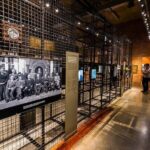
Next up is the Kruger House Museum, the old home of President Johan Paul Kruger. This stop feels different from the monument. Instead of a large-scale narrative, you’re in a real home space, with exhibits that show what was presented to him in his presidential role.
What makes this stop worth your attention is the mix of political story plus personal artifacts. You’ll see items connected to his presidency, including displays in the ZAR Hall, along with furniture used by Kruger’s family. There’s also mention of his personal train being on display—an example of how travel, power, and status show up in material objects.
About an hour is set aside here, which is usually a good length for a guided museum stop. Long enough to absorb the highlights, not so long that everyone starts zoning out.
Possible drawback: the museum is still a museum. If you’re traveling with people who prefer outdoor sights only, they might find this part more detail-heavy than they expected. But if you like understanding how leadership worked—how presidents lived, how they were honored, how the state functioned—you’ll likely enjoy the human-meets-history angle.
If your guide is someone like Ben, this stop can click. Ben was specifically praised for being very knowledgeable and flexible on a private tour. Even if your group’s pace differs from the planned timetable, a guide who adapts can make the museum feel more like a conversation than a checklist.
Church Square: Pretoria’s Geographical Centre and Mandela’s Justice House Link
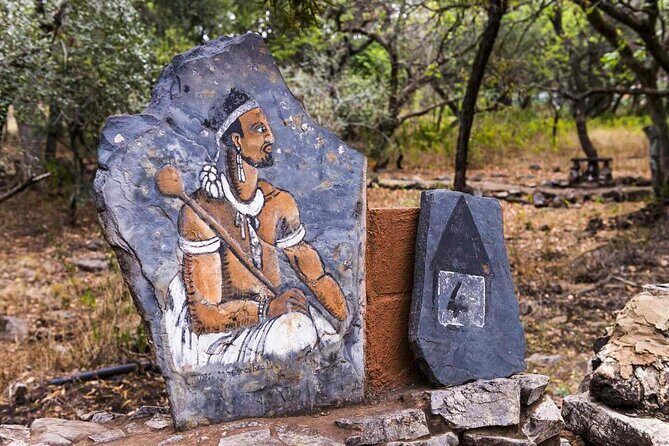
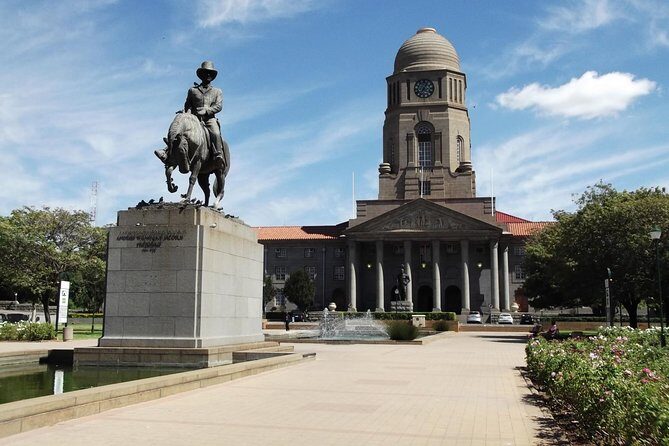
After the museum time, you shift to Church Square, the geographical centre of Pretoria. This stop is shorter—about 30 minutes—and admission is free here. Even so, the site pack a big punch.
The tour points you to key historical buildings around the square, including Justice House, which is linked to Nelson Mandela being sentenced to life imprisonment during the Rivonia Trial. There’s also a statue of Johan Paul Kruger.
This is one of those stops where your guide’s phrasing matters. You’re not just looking at a square and a statue; you’re standing in a place connected to legal and political history that shaped South Africa. You’ll want to keep the mood respectful, because it’s tied to a moment of immense consequence.
Practical expectation: with only 30 minutes, you won’t absorb everything on your own. Instead, use the time to understand the big connections:
- Church Square as the city’s anchor point
- Justice House as a major court-history landmark
- The Kruger statue as a reminder of the era this tour traces
If you love walking tours and hate “stop and go,” this one might feel like a quick punctuation mark. But it’s also a smart use of time: it sets you up emotionally and historically for the final stops.
Melrose House Museum: The Vereeniging Peace Treaty After the Anglo-Boer War

Then you’ll head to Melrose House Museum, again around 30 minutes and free on this route. This is where the peace treaty of Vereeniging was signed after the Anglo-Boer War.
This stop is valuable because it shifts the story from conflict into outcomes. Museums can get stuck in the drama of wars, but peace treaties are where borders, power, and future possibilities get written down. Even in a short visit, it helps you see that history moves in steps: confrontation, negotiation, and then a reshaped reality.
One thing I’d suggest: don’t treat this as a quick photo op. Ask your guide how the treaty relates to the wider timeline you’re seeing around Pretoria—especially the political leadership side you’ve already encountered at the monument and Kruger’s house.
Because the stop is brief, you’ll likely focus on the basics: what Vereeniging meant and why it mattered. If you want more, you can build on it later by reading about the Anglo-Boer War and the transition periods afterward. On this tour, though, you’ll get a clear entry point.




Union Buildings: Presidential Offices Since 1913 and Mandela in the Gardens

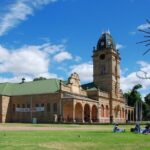
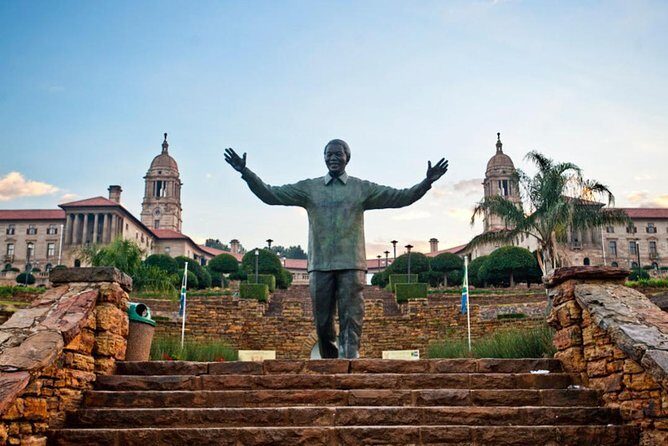
Your last stop is the Union Buildings, and it’s an excellent capstone. This is the president’s office (the tour notes it from 1913 during the Union of South Africa) and it sits on the highest point of Pretoria. The grounds include a statue of Nelson Mandela, which gives the visit a strong emotional ending.
Even with only about 30 minutes, Union Buildings can change how you think about everything you just saw. The earlier stops trace how power evolved—through migrations, leadership, and legal conflict. Here, you end up with the symbol of state authority in a post-union era, along with a reminder of Mandela’s role in South Africa’s modern story.
This is also a great place for practical “mental mapping.” After you’ve visited several sites, your brain starts to connect dots: which era you’re in, what kinds of institutions existed, and how public spaces reflect political change. Union Buildings gives you a place to land that thinking.
A quick note: because it’s a major government site, your time may feel more structured than a typical museum. That’s normal. The upside is that it keeps the day focused and prevents you from wandering into random detours.
Price and Logistics: Does $125.31 Feel Fair?
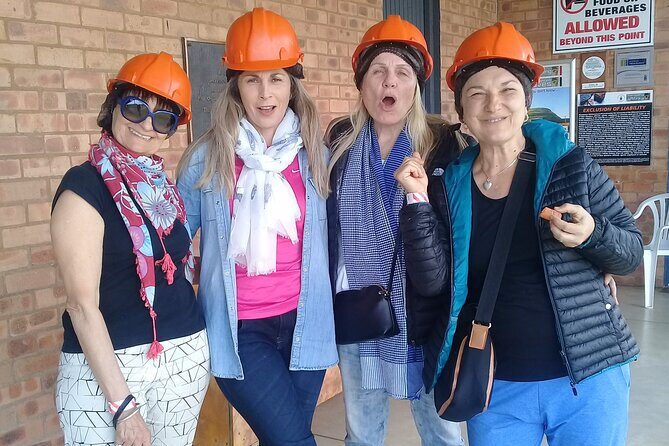
At $125.31 per person, you’re paying for more than just access to a few buildings. You’re buying a guided route that bundles transport plus guided interpretation plus admissions for multiple stops.
Here’s where the value shows up:
- Air-conditioned vehicle included: you’re not paying separately for transit or burning time figuring out how to move between sites.
- English-speaking guide: the guide turns the stops into a connected story instead of isolated photos.
- Admissions included for two key sites: Voortrekker Monument and Kruger Museum include tickets on this route.
- Multiple free stops: Church Square, Melrose House Museum, and Union Buildings are listed as admission-free on the itinerary.
- Mobile ticket: small convenience, but it reduces friction on the day.
If you tried to do this on your own, you’d still pay for tickets at the monument and Kruger museum, plus you’d have to manage your own route, timing, and interpretation. Even if transport costs weren’t huge, you’d lose the “somebody else did the planning” advantage.
One consideration: because the itinerary has a fixed structure and shorter segments after the long first stop, you may feel slightly rushed at the free sites. That doesn’t make the tour bad. It just means it’s optimized for efficient overview, not slow museum wandering.
Who This Tour Fits Best (and the One Thing to Watch)

This tour suits you if you’re:
- A first-timer to Pretoria and you want a clear highlights route
- Interested in political and social history, not just scenic sightseeing
- Traveling with limited time and want to avoid research stress
- The type who appreciates a guide helping you understand what you’re looking at
It may be less ideal if:
- You want to spend hours inside each museum or you read every exhibit label in detail
- You prefer completely independent pacing with no structured timing
- Your group’s needs are highly flexible, because the route is built around set stops and set time blocks
Also, use a simple travel habit: confirm your pickup details early and keep communication ready. There was at least one negative experience tied to an unattended pickup moment and lack of response. That doesn’t mean it will happen to you, but it’s a reminder that timing matters in Johannesburg-area tours.
If you do that, you’re stacking the odds in your favor, and the rest of the experience can be exactly what it promises: comfortable transport, a guided story arc, and a clean checklist of Pretoria must-sees.
Should You Book the Pretoria Historical Tour?
I’d book it if your goal is a well-rounded Pretoria overview in one go—Voortrekker Monument to frame the early narrative, Kruger House to humanize leadership, then Mandela-linked sites at Justice House and the finishing mood at Union Buildings. The combination of included tickets for two major attractions plus free access to three additional stops makes it practical value.
I’d think twice if you’re the kind of traveler who needs unhurried time in every museum room. This tour is guided and efficient. It’s not a slow, soak-every-detail marathon.
If you choose to go, you’ll likely come away with better context and a more connected sense of Pretoria’s timeline—especially if you get a guide like Ben, Thabang, or Cosmo, who were praised for flexibility, clear explanations, and punctual attention.