REVIEW · JOHANNESBURG
Explore Soweto 8 Hour Tour with Lunch and Museum Visit
Book on Viator →Operated by Khambanathi Tours · Bookable on Viator
Soweto in one guided day. I love how this tour stitches together major freedom-history stops like Hector Pieterson Memorial and the Apartheid Museum into one clear story, and I love that lunch is included right on Vilakazi Street. The only real downside is the pace: 8 hours means you’ll see the key places, but you won’t linger all day in any one spot.
You start with morning pickup and ride in an air-conditioned vehicle with WiFi onboard, which matters in Johannesburg heat and traffic. With a small group size (up to 10), the day feels more personal and less like you’re herded between photos.
You’ll be moving through places that hit hard emotionally, especially at the memorials and museums. I’d plan for that and wear comfortable shoes, because even when the schedule is tight, the walk to viewpoints and exhibit areas adds up.
In This Review
- Key highlights to notice before you go
- Getting from Johannesburg to Soweto: the small-group ride
- FNB Stadium (Soccer City): where sport meets politics
- Vilakazi Street and Soweto: Mandela, Tutu, and the everyday city
- Hector Pieterson Museum and Memorial: 1976 through a child’s eyes
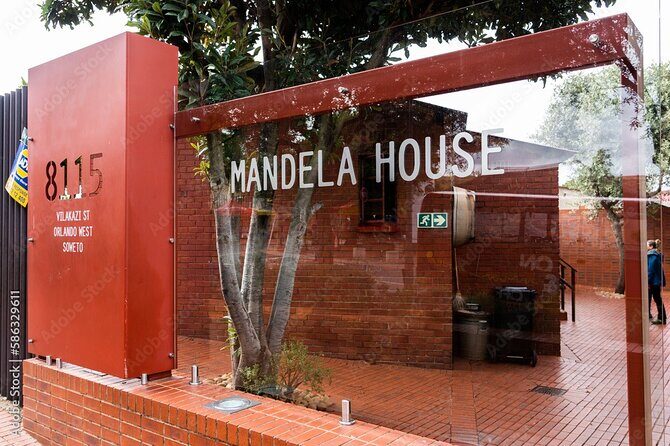
- Mandela House on Vilakazi Street: the personal side of the icon
- Sakhumzi Restaurant lunch on Vilakazi Street: pap, chakalaka, and grilled meat
- Apartheid Museum in Johannesburg: the story you can walk through
- How the 8-hour schedule really feels: pace, comfort, and expectations
- Price and value for $114.03: what you’re paying for
- Who this Soweto and Apartheid Museum tour suits best
- Should you book this tour?
- FAQ
- How long is the Soweto tour?
- What time does the tour start?
- What’s the group size limit?
- Is pickup offered?
- What’s included in the price?
- Do I need to buy museum tickets?
- What kind of lunch is included?
- Are alcoholic drinks included with lunch?
- How far in advance should I book?
- Can I get a refund if I cancel?
Key highlights to notice before you go
- FNB Stadium’s political footnotes: big events beyond football, from Mandela’s early speeches to famous concerts.
- Vilakazi Street’s Nobel link: the rare detail that Mandela and Desmond Tutu both lived on the same street.
- Hector Pieterson Memorial’s turning-point story: 1976 protests told through the name on the museum.
- Mandela House as a “human scale” stop: a modest home that helps you picture the person, not just the icon.
- Sakhumzi lunch on Vilakazi Street: included buffet with pap, chakalaka, and grilled options (alcohol not included).
- Apartheid Museum with interactive exhibits: plan on spending real time with the exhibits and films.
Getting from Johannesburg to Soweto: the small-group ride
This is a full-day program built around one simple idea: you can’t understand Johannesburg and Soweto in an hour, but you also don’t need an entire week to get oriented. The tour starts at 9:00 am, and you’ll generally get picked up so you don’t have to juggle transport on arrival.
The vehicle is air-conditioned, and there’s WiFi onboard plus bottled water. That might sound like minor comfort, but in practical terms it helps you stay focused. When you aren’t fried by the weather, you actually absorb what you’re seeing instead of just surviving the ride.
The group is limited to 10 travelers, which is a nice sweet spot. Big buses can make the experience feel anonymous; smaller groups help your guide manage pacing and questions. It also helps if you’re sensitive to noise and crowd levels. You’ll still be out in public spaces, but you’re not stuck in a crush.
One more practical note: you’re traveling between key sites in different neighborhoods. That means time can be affected by traffic, so the best expectation is structure, not spontaneity. You’ll get a plan, you’ll follow it, and you’ll still have moments to look around at street level.
You can also read our reviews of more museum experiences in Johannesburg

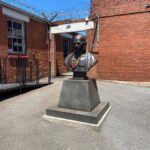
FNB Stadium (Soccer City): where sport meets politics
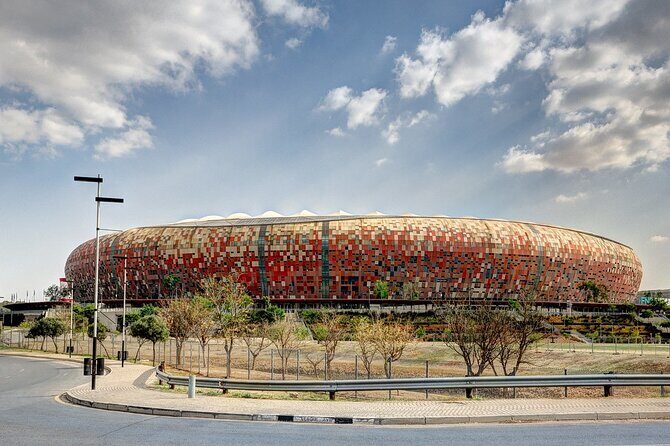
The day begins at FNB Stadium, also called Soccer City. It’s famous for being the largest stadium in Africa, and it has that iconic calabash-inspired design—shaped like an African cooking pot. The visual alone is worth the stop, because it signals that this is South Africa on its own terms, not borrowed from somewhere else.
What I like here is the way the guide connects sport to national milestones. The stadium hosted opening and closing ceremonies for the 2010 FIFA World Cup, but it also has moments that sit deeper than football: Nelson Mandela’s first speech in Johannesburg after his release, plus major concerts by global artists like Beyoncé and U2.
This is a good “orientation” stop because it reminds you that modern South Africa is not a museum exhibit stuck in time. It’s a living country where public stages—sports, music, ceremony—touch politics and identity.
Time-wise, don’t expect a long stop. Think of it as a solid kickoff: a place to understand the scale and symbolism, then you move on to the neighborhoods where the story becomes personal.
Vilakazi Street and Soweto: Mandela, Tutu, and the everyday city
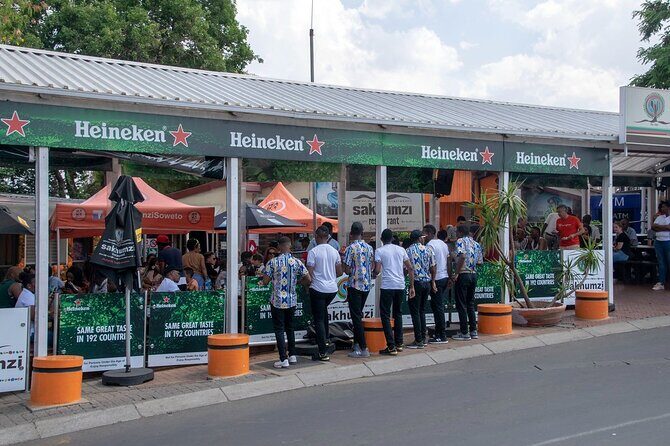
Soweto is often described as a township, but that word can under-sell it. The tour frames Soweto as the heartbeat of South Africa’s fight for freedom and as a place of ongoing culture and resilience. You’re not just visiting history; you’re seeing where history happened and where daily life continues.
Your main base here is the Soweto area around Vilakazi Street. This street is famous for a rare Nobel connection: it’s the only street in the world known for having housed two Nobel Prize winners, Nelson Mandela and Desmond Tutu. That detail is small on paper, but it lands in a big way once you’re standing there—because it ties together different eras of leadership into one physical place.
You also visit Hector Pieterson Memorial during the Soweto portion of the day. That’s important: it keeps the storyline from turning into “look and move on.” Instead, you’re guided to pay homage to the youth who mattered in the 1976 Soweto Uprising.
A practical consideration: expect a lot of street motion. Even if your guide keeps the day organized, you’ll still walk through parts of Soweto. Comfortable shoes help. If you’re the kind of person who likes to sit down and linger for long stretches, you’ll need to accept that this tour is designed for coverage, not slow travel.
Hector Pieterson Museum and Memorial: 1976 through a child’s eyes
The Hector Pieterson Memorial and Museum is the emotional center of this experience. It’s dedicated to Hector Pieterson, who became an iconic symbol of resistance during the June 16, 1976 uprising. The museum highlights the tragedy of a 12-year-old at the start of violent escalation during protests over the enforcement of Afrikaans in schools.
The story is tied to the famous photograph: Hector is carried by a fellow student while his sister runs alongside in anguish. That image helped the world pay attention to the brutality of apartheid, and it’s the reason the memorial matters even if you come in with zero background.
This stop lasts about 30 minutes, and that’s a good reminder to set expectations. You’ll get a focused visit that respects the site’s gravity, but you won’t have hours and hours to read everything. If you love museums and want to take your time, you might wish for longer here—but the tight schedule is part of how the tour fits in everything else.
You’ll leave with a clearer sense of why Soweto is remembered the way it is: not as an abstract political chapter, but as a turning point that involved real kids, real families, and real consequences.
Mandela House on Vilakazi Street: the personal side of the icon
After the memorial, the tour heads to Mandela House, located on Vilakazi Street. This former home belonged to Nelson Mandela, South Africa’s first democratically elected president. He lived there with his family before his imprisonment began in 1962.
What makes this stop work (especially in an 8-hour day) is the scale. Instead of a monument that can feel distant, you’re seeing a modest home that helps you imagine the daily reality behind the headlines. The museum focuses on original furnishings, photographs, and memorabilia tied to his path—from lawyer to freedom fighter.
If you’ve only ever seen Mandela as a statue or a name, this is where he becomes human again. It’s also one of the best places to slow down mentally, because the story is told through objects and rooms rather than only dates and speeches.
One caution: some parts of the Mandela House visit may involve indoor viewing. If you’re sensitive to crowds in enclosed museum spaces, go in prepared to move steadily with your group.
A few more Johannesburg tours and experiences worth a look



Sakhumzi Restaurant lunch on Vilakazi Street: pap, chakalaka, and grilled meat
Lunch is included, and it’s served at Sakhumzi Restaurant on Vilakazi Street. This is not a random stop designed to keep you on schedule. The idea is to take a break in the middle of the neighborhoods you’re learning about, while still eating something clearly South African.
The lunch is a buffet-style meal, and the description calls out traditional favorites such as pap and chakalaka, plus grilled meats. There are also vegetarian options, which is a big practical win if your group has mixed diets.
The atmosphere is part of the experience too. It’s described as lively, with local music that fits the street setting near landmarks like Mandela House.
Two practical tips:
- Alcoholic beverages aren’t included, so if you want wine/beer with lunch, plan to pay extra.
- If you have allergies, you’ll want to be ready to ask staff on-site, because the provided details focus on standard buffet offerings, not specific allergy handling.
After lunch, you’ll head toward the last major museum stop. Eating a real meal here helps you stay present for what comes next.
Apartheid Museum in Johannesburg: the story you can walk through
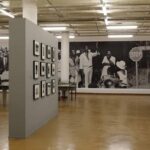
The Apartheid Museum is the final big “deep learn” stop, with about 2 hours on the grounds. This museum is designed to tell the story of apartheid and South Africa’s path to democracy through interactive exhibits, photographs, films, and personal accounts.
The focus areas include racial classification, resistance movements, and the rise of leaders like Nelson Mandela. The museum design itself is symbolic, and that matters because it turns learning into something more physical than reading alone.
If you want one practical way to enjoy this stop: don’t rush it. Give yourself time for the films and interactive exhibits, not just the panels. In a day like this, it’s easy to skim. But the museum is built so that your understanding improves as you connect themes across rooms.
Also, it’s emotional. Even if you’re not a history nerd, the combination of personal accounts and film clips can land hard. Think of it as a respectful space to process what you’ve already seen in Soweto.
How the 8-hour schedule really feels: pace, comfort, and expectations
On paper, the timing looks balanced: time at FNB Stadium, around 4 hours in Soweto, 30 minutes at Hector Pieterson Memorial and Museum, 1 hour for lunch, and 2 hours at the Apartheid Museum. That leaves you with a full day that covers the main storyline without leaving you behind.
Here’s the tradeoff: you’ll be in motion. This tour is best for people who want structure, not freedom to wander for hours on their own. You’ll get meaningful time in the major sites, but you won’t see every side street detail or every exhibit section at maximum depth.
Comfort perks help you handle that. You’ll have air-conditioning during the ride, WiFi if you want to keep up with plans, and bottled water. Still, bring a small layer for museum air-conditioning and keep your phone charged—museums are more fun when you can reference what you’re reading.
Best expectation setting: this is a “guided orientation + key stops” day. If you’re the type who wants to fully live inside one museum wing, you may feel the schedule is tight. If you want the big picture plus major anchor sites, it’s a strong match.
Price and value for $114.03: what you’re paying for
At $114.03 per person, the price is in the “serious day trip” category, but it’s not just about the drive. You’re paying for three things that add up quickly in South Africa:
1) Transportation in an air-conditioned vehicle with onboard comfort (WiFi + water).
2) A guided flow through the area’s most important sites, including explanations you’d be unlikely to get on your own in the same time window.
3) Included admissions for at least the Hector Pieterson Museum and Memorial and the Apartheid Museum, plus lunch included at Sakhumzi.
That’s what makes the value feel real: the tour bundles time and entry costs into one price, so you’re not figuring out ticket logistics mid-day.
One more factor is demand. The tour is described as commonly booked around 140 days in advance on average. That doesn’t mean you can’t book later, but it does tell you this day trip is popular. If you have fixed travel dates, booking earlier is simply safer.
Alcohol isn’t included, so budget for that if you like a drink with lunch. Otherwise, you’re mostly covered.
Who this Soweto and Apartheid Museum tour suits best
This tour fits best if you:
- want a focused look at Soweto plus the Apartheid Museum in one day
- prefer guidance that explains what you’re seeing (not just where to stand for photos)
- like the idea of pairing major historical sites with a practical included lunch
- enjoy learning with a small group (up to 10), rather than a large bus
It may be less ideal if you:
- need lots of free time to wander and choose your own pacing
- dislike emotionally heavy museum experiences
- struggle with walking between sites (even though the schedule is organized, it’s still a moving day)
Since it says most travelers can participate, there’s no “extreme adventure” vibe here. It’s city sightseeing with meaningful stops—more walking than a pure sit-back tour.
Should you book this tour?
I’d book it if you want the most important Johannesburg and Soweto story beats without turning your day into logistics. The best reasons are practical: included admissions for major museums, an included lunch in Soweto, and a small-group structure that keeps the experience human.
Choose another option only if you’re the kind of traveler who needs hours to read every label and you’ll be annoyed by a tight schedule. Otherwise, this is a solid way to get oriented, learn the key events, and leave with a clearer sense of how Soweto and Johannesburg connect to South Africa’s path to democracy.
If you do book, plan to arrive ready for walking and take a moment before the memorials to settle your expectations. This tour isn’t built for casual detours—it’s built to help you understand.
FAQ
How long is the Soweto tour?
The experience runs for about 8 hours.
What time does the tour start?
The start time is 9:00 am.
What’s the group size limit?
The maximum group size is 10 travelers.
Is pickup offered?
Yes, pickup is offered.
What’s included in the price?
Air-conditioned vehicle, WiFi on board, lunch, bottled water, and admission tickets for the Hector Pieterson Museum and Memorial, Sakhumzi Restaurant lunch, and the Apartheid Museum.
Do I need to buy museum tickets?
Admission tickets are included for the Hector Pieterson Museum and Memorial and the Apartheid Museum, based on the tour details.
What kind of lunch is included?
Lunch is included at Sakhumzi Restaurant as a buffet-style meal with traditional South African options, including pap, chakalaka, and grilled meats, plus vegetarian options.
Are alcoholic drinks included with lunch?
No. Alcoholic beverages are not included.
How far in advance should I book?
The tour is described as averaging about 140 days booked in advance, so booking early is wise for fixed dates.
Can I get a refund if I cancel?
Yes. Free cancellation is available up to 24 hours in advance for a full refund, based on the tour’s local time cutoff.